
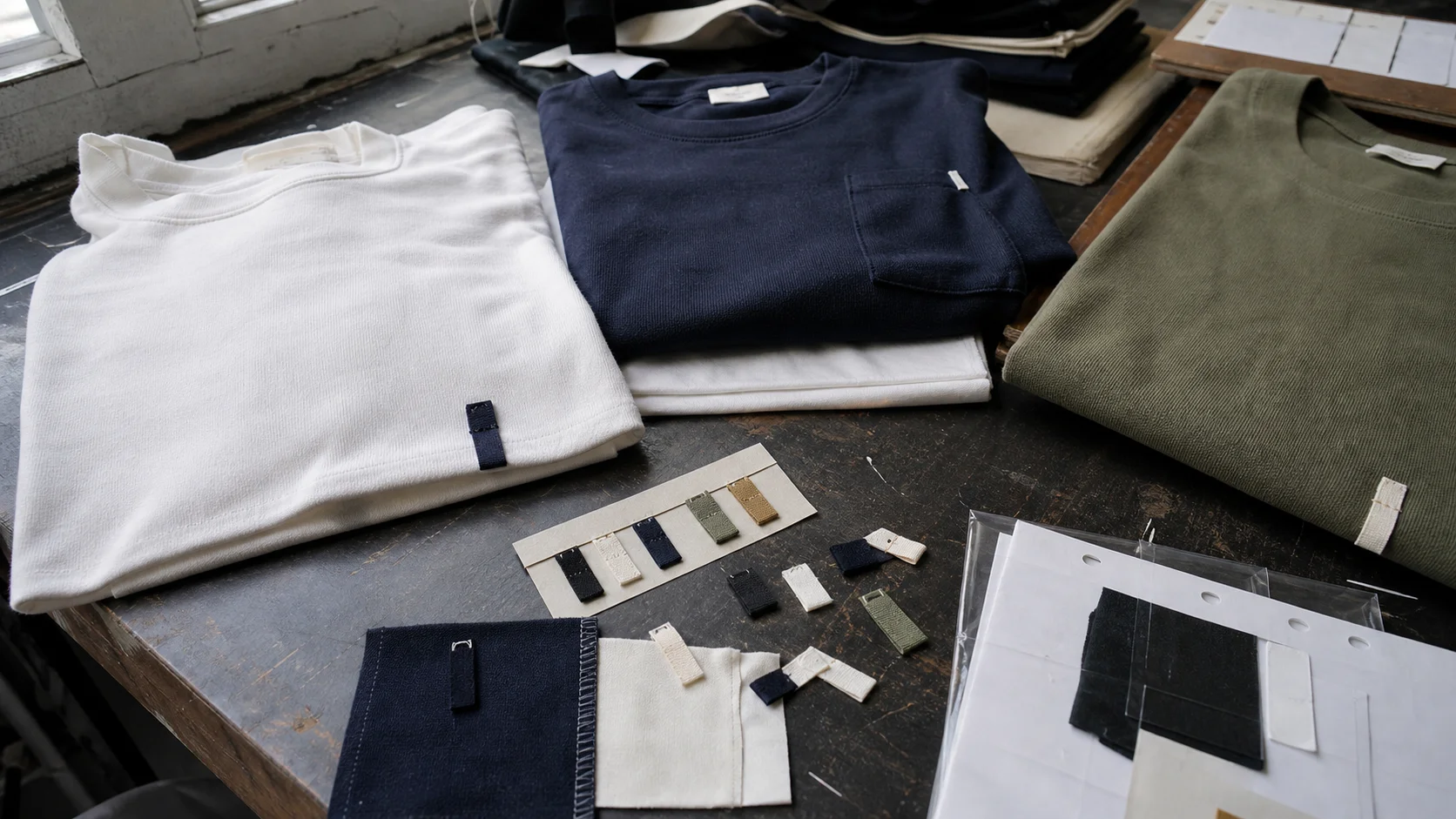
A focused SEO outline for pharmacy operations teams reviewing micro embroidery tab size grading, legibility, placement, compliance, and production-ready...
Micro Embroidery Tabs for Pharmacy Ops Review - Fabrikn production reference
Category: Decoration & Printing
Micro embroidery tabs are small branded fabric elements used on pharmacy uniforms, lab coats, scrub tops, jackets, pouches, tote inserts, and operational accessories. For pharmacy operations teams, the challenge is not only whether the decoration looks sharp. The bigger question is whether a tiny embroidered tab can stay legible, consistent across sizes, comfortable in daily wear, and compliant with internal uniform standards.
This review focuses on pharmacy operations teams micro embroidery tab size grading review: how to plan the tab dimensions, embroidery density, placement rules, sample approvals, inspection points, and production tradeoffs before placing a bulk order. In pharmacy environments, small decoration errors are visible because uniforms are often clean, minimal, and standardized. A tab that is too large can look promotional. A tab that is too small may lose legibility after washing. Size grading matters because the same tab can look balanced on a unisex XL scrub top but oversized on a women’s XS jacket pocket.
For sourcing teams, the practical goal is simple: create a repeatable decoration spec that works across garment sizes, staff roles, and reorder cycles without causing avoidable quality issues.
Micro embroidery tabs are small pieces of woven, twill, canvas, satin, grosgrain, polyester, cotton blend, or performance fabric decorated with embroidery and then attached to a garment or accessory. The tab may be folded into a seam, stitched onto the surface, inserted at a pocket edge, or used as a small brand flag.
In the pharmacy operations context, these tabs usually carry a simplified brand mark, department identifier, color code, initials, or internal program icon. They are not the same as full chest embroidery. Their purpose is subtle identification rather than large-scale branding.
A typical micro tab may measure from 15 mm to 45 mm wide and 8 mm to 20 mm high, depending on the garment and artwork. Some teams use long narrow tabs near pocket openings. Others use small folded flag tabs at side seams or sleeve hems. The right choice depends on how visible the tab needs to be, how often the garment is washed, and whether the decoration has to support staff recognition, team segmentation, or brand consistency.
Micro embroidery tabs sit in the Decoration & Printing category, but they overlap heavily with trim development. Sourcing teams should treat them as a component, not only a logo application. That means reviewing fabric base, backing, fold method, stitch density, thread shade, edge finish, attachment seam, shrinkage, and wash durability.
Pharmacy operations teams often manage several staff groups: pharmacists, technicians, fulfillment staff, inventory teams, clinical support, delivery coordinators, and administrative personnel. Uniform decoration has to help the operation look organized without creating visual clutter.
Micro tabs work well when a large logo would be too loud or when the uniform already includes name badges, ID cards, role patches, or departmental color coding. They also support a cleaner look for pharmacy settings where staff interact with patients, healthcare partners, or regulated products.
The tradeoff is that micro tabs are unforgiving. Small artwork leaves little room for detail. Tiny text may not survive embroidery. A tab that looks fine in a digital mockup can look crowded once stitched. Pharmacy teams should be especially careful with fine icons, registered marks, multi-line wording, and low-contrast thread colors.
For broader production support, sourcing teams can review garment decoration and manufacturing options through Fabrikn’s services.
Size grading is the process of adjusting dimensions, placement, or proportion across garment sizes. For micro embroidery tabs, the main question is whether the tab should remain one fixed size across all garments or be graded for different size ranges.
Most pharmacy uniform programs prefer one standardized tab size because it simplifies trim ordering, inventory control, and quality inspection. That approach is practical, especially when the tab is small and placed at a pocket edge, hem, sleeve opening, or side seam. Still, one-size tab logic can fail when the garments range from petite XS to extended 5XL, or when the tab placement changes between men’s, women’s, and unisex styles.
For many pharmacy operations teams, placement-only grading is the best compromise. The tab remains the same size, but its distance from a pocket edge, hem, or side seam is adjusted by garment size or style. This avoids the operational headache of managing multiple tab sizes while still addressing proportion.
Purchasing judgment: If the tab carries only a small icon or color code, keep one size. If it carries a brand wordmark, department name, or compliance-related identifier, test at least two dimensions before approving the standard.
There is no universal tab size for pharmacy operations uniforms. The best dimension depends on artwork, garment type, and visibility requirements. Still, several ranges are common in production.
Tab Size Range Typical Use Artwork Suitability Purchasing Note 15 mm x 8 mm to 20 mm x 10 mm Very small side seam flag, sleeve hem marker Single icon, color block, simple initials Too small for most readable text 25 mm x 10 mm to 30 mm x 12 mm Pocket edge tab, scrub side seam, accessory label Short logo, simple icon, one-letter department code Often the safest micro range 35 mm x 12 mm to 45 mm x 18 mm Outerwear, tote, pouch, lab coat pocket tab Compact wordmark, short department name May look less “micro” on smaller garments 50 mm+ width Visible branding or operational patch alternative More text and detail Better treated as a small badge, not a micro tabFor pharmacy ops, the most practical starting point is often 25 mm to 35 mm wide. This range gives the embroidery machine enough space to form a simple mark while keeping the decoration discreet. If the artwork includes text, the buyer should question whether embroidery is the correct method. Woven labels, heat transfer, silicone print, or jacquard woven tabs may reproduce fine letters more cleanly.
Small does not automatically mean comfortable. A tab with dense embroidery, stiff backing, and a folded seam can create a hard edge. This matters on scrub tops and lab coats worn through long shifts. The risk is highest at side seams, sleeve openings, collar areas, and any location that touches skin or underlayers.
Buyers should request hand-feel samples with the final backing, thread, and fold method. A soft tab may be acceptable on a chest pocket but irritating inside a sleeve seam. Surface-applied tabs should be tested for edge lift after washing and abrasion.
A micro embroidery tab is only as good as its base material. Pharmacy uniforms are typically washed frequently, sometimes at higher temperatures depending on facility policies. The tab fabric, thread, and attachment stitching need to withstand repeated laundering without curling, fraying, bleeding, or shrinking out of alignment.
Polyester embroidery thread is commonly preferred for uniforms because it handles repeated washing and abrasion better than rayon in many workwear settings. Thread shade should be selected against the final tab fabric, not only against a digital Pantone reference. Small marks lose contrast quickly when thread and base colors are close.
Backing choice is another technical point. Tear-away backing may be cleaner for some tabs, while cut-away backing can improve stability on stretch or lightweight bases. For micro tabs, excess backing creates bulk. Too little backing can cause distortion and uneven stitch formation. The correct backing should be confirmed during sampling, not assumed from a standard embroidery setup.
A good spec sheet prevents repeated clarification during production. It also helps when the same tab is used across multiple garment categories or reordered months later.
Micro embroidery has physical limits. Digitized artwork may look clean on a screen, but thread has thickness, stitches need space, and fabric moves under the needle. Pharmacy operations teams should be conservative with detail because the uniform environment favors clarity over decorative complexity.
The safest approach is to simplify the artwork before digitizing. If the team wants a pharmacy symbol, choose a bold version. If the brand mark contains small internal shapes, request a micro-adapted artwork file. This should be treated as a separate decoration asset, not a scaled-down version of the main logo.
Purchasing judgment: If stakeholders insist on small text, ask for a stitched sample before committing. If the sample needs explanation to be understood, the tab is not production-ready.
High stitch density can make a small tab feel premium, but it can also create puckering, stiffness, and thread crowding. Low density may look weak or allow the base fabric to show through. The digitizer should balance coverage with flexibility.
Micro tabs often benefit from simplified fills, satin stitches where appropriate, and reduced color changes. Too many color changes increase cost and raise the chance of registration issues. For pharmacy uniforms, a clean one-color or two-color tab is usually more reliable than a complex miniature logo.
Placement should be decided with the actual work environment in mind. Pharmacy staff may wear ID badges, carry pens, scan devices, stock shelves, handle medications, and move between counters, storage, and patient-facing spaces. A tab should not interfere with equipment or create snag points.
For pharmacy ops, chest pocket and side seam placements are the most common candidates. Chest pocket tabs are easier to audit visually. Side seam tabs are cleaner but less functional if the tab needs to communicate role, department, or location.
Small tabs expose placement errors. A 5 mm shift may be minor on a full chest logo, but it can look obvious on a 25 mm tab. Buyers should set realistic tolerances, commonly in the range of plus or minus 3 mm to 5 mm, depending on garment construction and attachment method. Very tight tolerances may increase rejection rates, especially on stretchy or curved areas.
Placement charts should include a measurement diagram, not only written instructions. Reference points must be stable. Measuring from a curved neckline or flexible pocket edge can create inconsistency. If the tab is attached before garment assembly, the supplier should define the panel-stage measurement and verify final appearance after sewing.
Sampling is where most micro tab problems should be caught. A digital mockup is useful for alignment discussions, but it cannot prove stitch clarity, hand feel, fabric movement, or wash durability.
For pharmacy operations teams, approval should involve both brand stakeholders and practical uniform users. Brand teams may focus on logo accuracy. Operations teams will notice whether the tab catches on pockets, conflicts with badges, or becomes uncomfortable during long shifts.
If the project includes several uniform styles, one approved tab sample is not enough. The same tab should be reviewed on each garment family. Scrub fabric, lab coat twill, fleece, softshell, and polo knit all behave differently.
Minimum order quantities vary by supplier, material, and production method. For micro embroidery tabs, MOQs are often driven by trim setup, embroidery digitizing, thread changes, and attachment labor rather than the tab size itself.
Small pilot programs may face a cost problem. A 75-piece pharmacy team order can be technically possible, but the tab setup and attachment labor may make the unit cost high. In those cases, buyers should compare micro embroidery tabs against direct embroidery, woven labels, or heat transfers.
Typical development and production timelines can vary widely. A cautious planning range is:
Lead time can stretch if the base fabric is custom dyed, if the thread color requires special sourcing, if multiple tab sizes are introduced, or if the first strike-off fails legibility review. Shipping mode, seasonal capacity, and holiday calendars also matter.
Teams planning a new uniform rollout should leave time for at least one revision. Micro embroidery often needs adjustment after the first stitched sample. Rushing that step is a common cause of bulk disappointment.
Micro embroidery tabs need specific inspection standards. General garment QC may miss tab issues if inspectors are not told what to measure and compare.
Inspection should include the full size spread. If only medium garments are checked, size-specific placement errors can pass unnoticed. Extended sizes may have pocket repositioning, longer body length, or adjusted seam angles that change the tab’s visual location.
For teams setting up a new vendor workflow, it is worth aligning production responsibilities early. The tab maker, embroidery supplier, garment factory, and final QC team may not be the same party. Clear ownership prevents the common argument where each supplier says the defect came from another stage.
Micro embroidery tabs are a good fit when the decoration needs to be discreet, durable, and repeatable. They are less suitable when the artwork is complex, the order is very small, or the team needs highly visible identification from a distance.
The main purchasing tradeoff is between subtlety and clarity. A micro tab looks refined, but it cannot do the work of a large badge or chest logo. If pharmacy staff need to be identified quickly by patients or internal teams, a tab may need to be paired with name badges, color-coded scrub sets, or larger role embroidery.
Cost should be evaluated as a total program cost, not just a trim unit price. Include digitizing, sample rounds, tab production, attachment labor, inspection time, rejected pieces, and reorder management. A tab that costs little as a component can become expensive if the artwork requires repeated revisions or if multiple sizes create inventory confusion.
Micro embroidery tabs are only one decoration route. Pharmacy operations teams should compare them with alternatives before locking the specification.
Method Strength Weakness Best Use Micro embroidered tab Durable, tactile, subtle, premium feel Limited detail and small text clarity Minimal branding and durable uniform trim Woven label tab Better detail at small size Less dimensional than embroidery Tiny logos, small words, clean edges Direct embroidery Recognizable uniform decoration Can pucker lightweight fabric Chest logos, names, department marks Heat transfer Good for fine detail and color Durability depends on application and laundering Logos on performance fabrics and small runs Printed label or patch Can reproduce complex graphics May feel less premium; abrasion risk varies Detailed branding and temporary programsIf the brand mark is highly detailed, a woven tab may be the better answer. If the program needs staff names, direct embroidery or badge systems will be clearer. If the rollout is short-term, heat transfer may reduce setup complexity. Micro embroidery tabs make the most sense when the team values quiet consistency and is willing to approve a simplified design.
A strong specification should be written before bulk pricing is finalized. Suppliers can quote more accurately when they know the tab size, artwork complexity, placement, fabric, attachment method, and testing expectations. Vague requests such as “small embroidered logo tab on pocket” invite inconsistent samples and avoidable revisions.
For custom apparel programs, it is better to discuss these details before production sampling. Sourcing teams can use Fabrikn’s contact page to start a project conversation or clarify development requirements.
The following examples are practical planning references, not universal rules. Exact measurements should be confirmed with the garment pattern and approved sample.
For scrub tops, a 25 mm x 10 mm or 30 mm x 12 mm tab at the chest pocket edge is usually a reasonable starting point. The challenge is pocket proportion. On smaller sizes, the pocket may be narrow, so the tab can dominate. On larger sizes, the same tab may look subtle but acceptable.
Placement-only grading works well here. Keep the tab fixed, but define its distance from the pocket side edge and top opening. If the pocket is used for pens or scanners, avoid placing the tab where it blocks access.
Lab coats can accept a slightly larger tab, especially if the fabric is heavier. A 30 mm to 40 mm wide tab may look balanced near a chest pocket or lower pocket seam. White lab coats create contrast challenges. Dark thread may be legible, but any color bleeding or loose thread is highly visible.
Buyers should test wash performance carefully for white or light garments. Thread bleeding, base fabric crocking, and edge discoloration are more damaging on pharmacy lab coats than on dark uniforms.
Outerwear can support larger tabs, but pile, stretch, and thickness complicate attachment. A micro tab may need stronger stitching or backing to prevent curling. Surface-mounted tabs on fleece should be tested for edge lift and abrasion.
If the jacket already has a chest logo, the micro tab should not compete with it. A sleeve hem or lower side placement may be cleaner.
Pouches, totes, and organizer bags offer more placement freedom. Tabs can be used for brand consistency or department coding. The main risk is abrasion. Bags rub against counters, shelves, carts, and vehicles. The tab edge and embroidery thread should be reviewed for snagging and wear.
Pharmacy operations teams often reorder uniforms as staff changes occur. A micro tab spec should be built for repeatability. Keep an approved physical standard, digital artwork file, stitch file reference, thread colors, and placement chart. If the first order is successful but the reorder uses a different tab supplier, small differences can become visible across staff uniforms.
Stocking extra tabs may be sensible when the program uses the same tab across multiple garments. It can reduce reorder lead time and help maintain consistency. The downside is inventory risk if branding changes or if the tab spec is revised after wear testing.
For larger programs, a controlled trim library is useful. Each tab version should have a revision number and approval date. Old versions should be separated or destroyed if they are no longer approved. Mixed tab versions are a real risk in uniform programs with recurring small batches.
Before approving micro embroidery tabs for pharmacy operations teams, buyers should answer five practical questions.
Micro embroidery tabs can give pharmacy uniforms a controlled, professional detail when they are engineered correctly. The best programs keep the design simple, test the smallest and largest sizes, approve a physical strike-off, and define placement with measurable references. The weak programs rely on digital mockups and discover too late that the logo is unreadable, the tab curls, or the placement varies by size.
For buyers comparing decoration methods or building a pharmacy uniform program, it helps to work with a production partner that understands both apparel construction and decoration limits. Learn more about the sourcing approach through Fabrikn’s about page.
Get a free quote from Fabrikn — your trusted B2B clothing manufacturer with 10+ years of experience. MOQ as low as 200 pieces.
Get a Free Quote →A micro embroidery tab is a small fabric trim decorated with embroidery and attached to a pharmacy uniform or accessory. It may show a simplified logo, icon, department code, or color identifier. It is usually more subtle than direct chest embroidery.
A common practical range is 25 mm to 35 mm wide and 10 mm to 12 mm high. Smaller tabs may work for icons or color coding, while larger tabs may be needed for short wordmarks. The final size should be tested on the smallest and largest garment sizes.
Many programs use one fixed tab size for simplicity. Placement-only grading is often a better choice than creating multiple tab sizes. Multiple tab sizes can improve proportion but increase the risk of incorrect attachment and trim inventory confusion.
Small text is risky. Embroidery thread has physical limits, and tiny letters can close up or become unreadable. If text is required, test a stitched strike-off before bulk approval. Woven labels may be better for very fine detail.
Typical MOQs may range from 500 to 2,000 pieces for custom tabs only, depending on supplier and construction. When attached to custom uniforms, MOQs often depend on the garment program and may range from 100 to 500 garments per style or color.
Artwork and digitizing may take a few business days. Strike-offs often take 5 to 10 business days. Bulk tab production can take 2 to 4 weeks after approval, while full garment production may take 4 to 10+ weeks depending on fabric, quantity, and factory capacity.
The main risks are unreadable embroidery, thread color mismatch, skewed placement, tab curling, frayed edges, puckering, color bleeding, and discomfort from stiff backing or bulky attachment stitching.
They are better when the buyer wants a tactile, embroidered look with simple artwork. Woven labels are often better for tiny text, detailed logos, and sharper small-scale graphics. The decision should be based on artwork complexity, durability requirements, and cost.
Common placements include chest pocket edges, side seams, sleeve hems, and lower front hems. Chest pocket tabs are more visible, while side seam tabs are subtler. Placement should not interfere with badges, pens, scanners, PPE, or pocket use.
Buyers should approve the physical embroidered tab, final garment placement, size grading approach, thread colors, backing, edge finish, attachment method, wash performance, and QC tolerances before bulk production begins.