
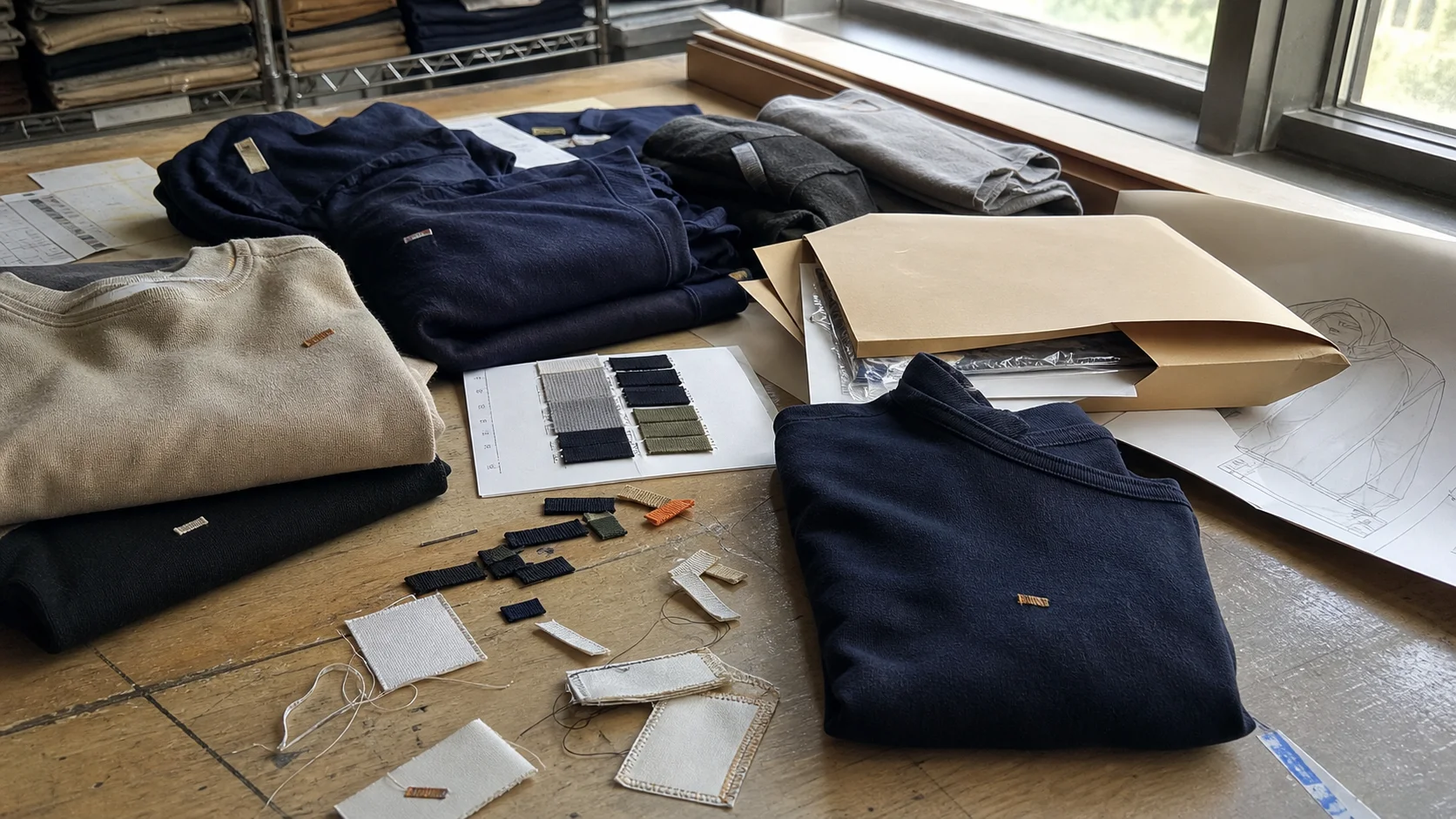
A clinic purchasing-focused outline for evaluating micro embroidery tab reorders, with attention to stitch consistency, proof control, repeatability, and...
Micro Embroidery Tabs Reorder Risk Review - Fabrikn production reference
Micro embroidery tabs look simple on paper, but reorder risk builds fast when clinics depend on consistency across uniforms, lab coats, scrubs, bags, and patient-facing apparel. A small logo tab can become a sourcing problem if the stitch count shifts, the base fabric changes, the backing behaves differently, or the supplier quietly swaps thread lots between replenishment runs. For clinic purchasing teams, the real job is not just placing a reorder. It is making sure the second, third, and tenth run match the approved standard well enough that staff appearance stays consistent and the program stays within budget.
This review breaks down the main reorder risks, how to reduce them, and what clinic buyers should lock in before they approve a repeat order. It is written for buyers who need dependable decoration, not decorative theory. The best outcome is boring: the same tab, the same attachment method, the same color, the same hand feel, and no surprise delays when inventory gets tight.
Micro embroidery tabs are small embroidered labels or decoration patches used to carry a logo, department mark, size cue, or brand identifier on apparel and accessories. In clinic programs, they are often used where buyers want a cleaner look than large chest embroidery, but still need a durable, washable brand signal. The “micro” part usually means limited design space, which makes stitch density, thread thickness, and edge finishing more important than they would be on a larger patch.
Most tabs are built with a base fabric, stitched design, and a finished edge. Some are sewn directly into garments. Others are heat applied, Velcro-backed, or attached as woven/embroidered accessories. The attachment method affects reorder risk as much as the decoration itself, because a tab that looks identical may behave very differently in production or during laundering.
Clinic purchasing teams usually care about three things: consistency, speed, and cost control. Micro embroidery tabs threaten all three if the reorder process is loose. A small change in thread sheen can make two batches look mismatched under fluorescent lighting. A thicker backing can create a stiff edge that staff notice immediately. A delayed trim source can push a replenishment order past the date when uniforms run short.
There is also a compliance and presentation angle. Clinics often want a professional, tidy look across front desk, nursing, allied health, and support staff. If one replenishment looks visibly different from the last, the problem may not be a safety issue, but it still reads as a quality failure. Reorder discipline is cheaper than fixing mixed inventory after the fact.
Thread color is one of the most common reorder variables. Even when a supplier uses the same color code, different dye lots can shift slightly. In small logos, a subtle shift is enough to make a tab look off next to previously issued stock. For clinics, that matters because staff uniforms often circulate across shifts and departments, so mismatches are easy to spot.
Micro designs are sensitive to stitch count. If a factory reduces stitches to save time or improve production speed, fine details may blur, open up, or lose edge definition. If the design was originally approved at a certain density, keep that record. A reorder should not be treated as a fresh interpretation unless the buyer wants a redesign.
Backing choices affect comfort, durability, and application method. A stiffer backing may improve shape retention but can irritate wearers on lightweight garments. A softer backing can feel better but may curl or distort after repeated washing. Reorders often go wrong when the supplier substitutes a different stabilizer or adhesive without flagging it.
A tab that was originally sewn on can arrive with heat-seal backing, or a Velcro system may change hook-and-loop quality. Those shifts create problems downstream for clinic staff, laundry vendors, and in-house tailoring teams. Buyers should treat attachment method as part of the spec, not an optional detail.
Small products are still vulnerable to size drift. A 2 mm change can matter on a narrow tab or on a garment where the tab sits near a seam, pocket edge, or zipper. For repeated orders, the supplier should hold finished dimensions to a practical tolerance, and the buyer should know what that tolerance is before signing off.
Laser-cut, embroidered merrowed, and stitched edges behave differently over time. Some finishes look sharp at delivery but start fraying after laundering or abrasion. Others hold up better but appear bulkier. A reorder risk review should examine edge finish alongside aesthetics, because clinics need the item to survive frequent washing and wear.
Sometimes the biggest change is not in production but in the file. Old production files get replaced, mislabeled, or recreated from a low-resolution image. Once that happens, the second run may no longer match the first run exactly. Clinic buyers should keep a locked reference file and a photo of the approved sample, not rely on memory or email threads.
The safest repeat orders are the ones built on clear specifications. If the supplier has to guess, reorder risk increases. For clinic purchasing teams, the spec sheet should cover the following items in practical detail.
Fabric and trim details matter more than many buyers expect. For example, a polyester twill base may perform differently from felt or satin under repeated washing. Thread choice also matters: rayon can give a softer sheen, while polyester tends to hold up better in harsher laundry conditions. The right answer depends on the garment, washing cycle, and brand standard, not on price alone.
For standard embroidery tabs in B2B programs, typical MOQ ranges often land around 100 to 500 pieces per design for simple repeat orders, with higher minimums when the item uses special backing, custom cutting, or multiple thread changes. Some factories will accept smaller quantities, but unit cost usually rises quickly. Buyers should compare the savings from a lower MOQ against the risk of weak replenishment flexibility.
Repeat orders should still pass through a disciplined approval process, even if the design is already on file. A clinic should not approve a reorder based only on a past invoice. A better process is more controlled and protects the buyer when the result is not quite right.
For unchanged repeat orders, some suppliers may offer a fast-track sample review using archived materials. That can save time, but buyers should be careful. “Same as last time” is only useful if the last time was documented well and the supplier still has the same materials available. If the mill, thread source, or adhesive has changed, request a new sample.
Best practice for clinic buyers: treat every reorder as a controlled repeat, not a blind duplicate. The paperwork should prove that the new run matches the approved standard or clearly states what changed.
For broader sourcing support, some teams keep a vendor shortlist and process notes on one page, then send repeat requests through a central contact path like /contact-us/. That reduces email fragmentation and helps procurement keep a clean approval trail.
Micro embroidery tabs usually have shorter lead times than complex garment programs, but clinic buyers should still plan for material availability, sample approval, and capacity bottlenecks. A simple reorder might take about 7 to 14 days for production after approval when materials are in stock. Custom colors, special backing, or busy peak seasons can push that closer to 3 to 5 weeks. Shipping time is a separate variable and can easily become the longest part of the order.
Lead time depends on several factors:
MOQ is worth a careful tradeoff review. Lower MOQ helps if the clinic has multiple departments, fluctuating headcount, or uncertain branding rollout. Higher MOQ usually lowers unit cost and reduces the risk of running out mid-cycle. Buyers should not let price per piece drive the decision alone. If a design changes often, a smaller MOQ can be the cheaper option over a full year because it prevents dead stock.
Inspection should focus on repeatability, not only cosmetics. A tab can look acceptable in a sample photo and still create problems in bulk. The most common inspection risks include loose threads, inconsistent density, wrong backing, poor cut accuracy, and color mismatch between lots. Small decoration items can also hide defects because the flaws are easy to miss when the piece is packed flat.
Useful inspection checkpoints include:
For clinic use, wash testing matters if the tab is sewn onto washable garments. A supplier may claim the decoration is durable, but buyers should still ask how the item behaves after laundering. If the tab peels, curls, or warps after wash cycles, the entire batch loses value. That risk is higher when the backing is not matched to the garment fabric or the washing conditions are harsher than the supplier assumed.
Some teams work with a production services page to understand what decoration methods are available before ordering. A useful starting point is /services/, where buyers can review capability areas before narrowing down specs. That is more efficient than asking for quotes on a vague description and then correcting the quote later.
Clinic buyers do not need a long questionnaire. They need the right one. The goal is to find out whether the supplier can repeat the order faithfully and what risks sit behind the quote.
If a supplier cannot answer those questions clearly, that is a warning sign. It does not necessarily mean the supplier is poor. It does mean the buyer needs stronger documentation and tighter control. Clinic programs are not ideal for loose sourcing habits because appearance consistency matters and reorders can be urgent.
For clinics, the safest approach is to standardize the few things that create the most variation. That usually means locking artwork, thread colors, base fabric, and attachment method. Buyers can leave some flexibility on packaging or minor finishing details, but they should be strict where the staff will notice mismatch immediately.
A practical purchasing policy usually includes three rules. First, no artwork changes without a new approval cycle. Second, no material substitutions without written sign-off. Third, no bulk repeat order without a current reference sample or approved photo record. Those rules sound conservative, but they reduce costly rework and prevent disputes over “close enough.”
Tradeoffs are real. If the team demands exact material replication, the cost may rise and the sourcing pool may narrow. If the team wants the lowest unit price, the chance of variation increases. The right balance depends on how visible the tab is, how often the garment is washed, and how much stock the clinic can carry. For high-visibility roles, quality consistency should usually win over a slightly lower price.
Before placing the next order, it helps to keep the supplier relationship organized and accessible. Internal contact information, product notes, and service scope can be aligned through a central hub such as /about-us/, especially when multiple departments or locations are involved in the same purchasing decision.
Micro embroidery tab reorder risk is rarely about one dramatic failure. It usually comes from small changes that add up: a color shift here, a different backing there, a looser approval trail, a rushed reorder when stock runs low. Clinic purchasing teams can avoid most of that risk by locking the spec, documenting the approved sample, checking supplier stability, and treating each repeat order as a controlled production event.
The strongest programs are the simplest to manage. They use clear references, realistic lead-time planning, sensible MOQ decisions, and focused inspection checks. That approach keeps clinic apparel consistent, protects budget, and avoids the scramble that follows a bad replenishment.
Get a free quote from Fabrikn — your trusted B2B clothing manufacturer with 10+ years of experience. MOQ as low as 200 pieces.
Get a Free Quote →Color drift and material substitution are usually the biggest risks. In small decorations, even minor changes become visible quickly, especially when uniforms are worn across multiple departments.
Many suppliers quote roughly 100 to 500 pieces per design for simple repeat orders. Special materials, custom backing, or highly detailed artwork can push MOQ higher.
Yes, at least in some form. Unchanged repeat orders may not need a full new sample, but they should still be checked against the approved reference and confirmed in writing before bulk production.
Artwork version, thread colors, stitch density, size, backing type, edge finish, and base fabric are the core details. If those are not locked, the risk of variation rises fast.
If materials are available and approval is straightforward, production can often take 7 to 14 days. Custom materials, peak season load, or extra inspection requirements can extend that to several weeks.
They can, but only if the garment fabric and laundry conditions are compatible with the adhesive. Heat-applied products should be tested carefully because repeated washing can weaken the bond if the spec is not well matched.