
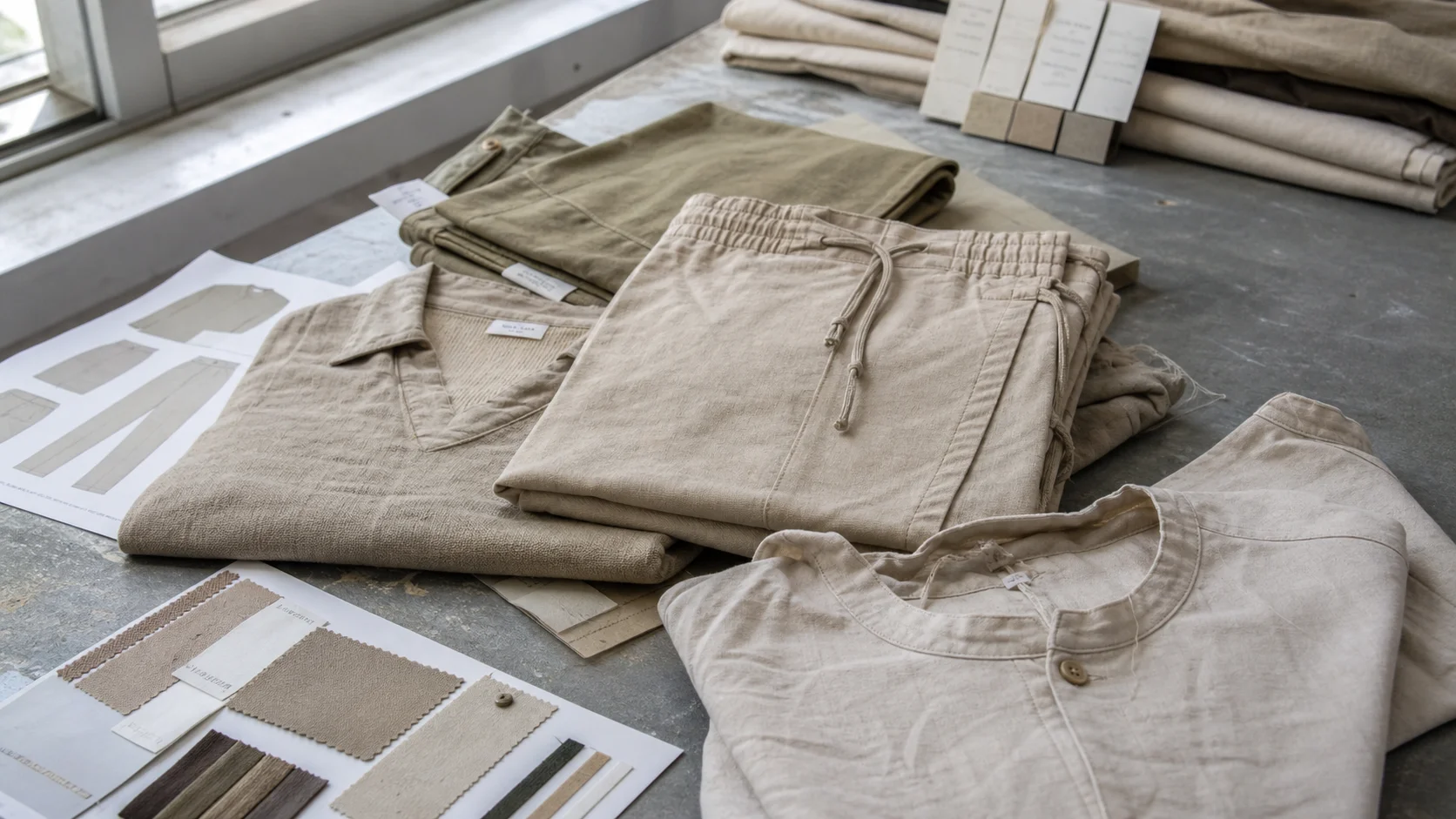
A buyer-focused review of mono-material resort workwear uniforms, print durability, wash performance, and sustainability tradeoffs for hospitality...
Mono-Material Resort Uniforms Durability Review - Sustainable Fashion manufacturing guide
Resort uniform buyers are under pressure to make sustainability claims more credible without weakening daily performance. Mono-material workwear sounds like a clean answer: one fiber family, simpler recycling pathway, fewer mixed-fiber complications, and a clearer story for guests and corporate buyers. The real question is more practical. Can mono-material resort uniforms survive repeated laundering, sunlight, perspiration, salt air, stains, and decoration without looking tired halfway through the season?
This review looks at mono-material resort uniform durability from a sourcing and production standpoint. The focus is not theory. It covers fabric choices, print and embroidery durability, sample approval, MOQ expectations, lead-time risks, trim decisions, inspection checkpoints, and the tradeoffs resort buyers should consider before placing a bulk order.
For buyers developing sustainable resort uniforms, the best results usually come from narrowing the design brief early. A mono-material uniform can be durable, but only when the fiber, construction, decoration method, trims, and care label are planned together. Treating “mono-material” as a last-minute sustainability label is where quality problems usually start.
A mono-material uniform is made mainly from one fiber type or one compatible fiber family. In apparel sourcing, this often means 100% cotton, 100% recycled polyester, 100% polyester, 100% nylon, or a construction where fabric, thread, labels, and trims are selected to avoid incompatible blends. The goal is to reduce barriers to recycling and simplify end-of-life handling.
For resort uniforms, the term needs careful definition in the tech pack. A polo shirt made from 100% recycled polyester body fabric but sewn with cotton thread, decorated with PVC transfer, and finished with mixed-metal snaps is not fully mono-material in a strict sense. It may still be more recyclable than a polyester-cotton-spandex blend, but buyers should not overstate the claim.
A practical sourcing definition is often more achievable: main fabric, sewing thread, and major components are from the same polymer or fiber family, while unavoidable trims are minimized and documented. This approach gives resorts a more honest sustainability position and reduces production friction.
Purchasing judgment: mono-material should be treated as a design and procurement rule, not a marketing phrase. If recyclability is part of the claim, specify acceptable trims, decoration chemistry, and care-label materials before sampling starts.
Resort buyers also need to separate “mono-material” from “low impact.” A 100% polyester uniform may be easier to recycle than a blended garment, but it is not automatically better in every environmental category. A 100% cotton garment may be natural fiber-based, yet heavy cotton can consume more water in processing and may fade faster under harsh laundering. The right choice depends on use case, service department, laundry model, climate, and brand priorities.
Buyers building a new program can review broader manufacturing support through Fabrikn’s services when they need product development, sampling, and production coordination for uniform programs.
Resort uniforms are not worn like casual fashion. A guest-facing shirt may be laundered several times a week. Housekeeping, spa, maintenance, food service, landscaping, and beach staff uniforms face different stress points. One fabric cannot perform equally well for every department unless the design is kept very basic.
The most important durability factors are wash resistance, colorfastness, seam strength, abrasion resistance, dimensional stability, pilling resistance, print or embroidery retention, perspiration fastness, and resistance to chlorine or salt exposure. In warm climates, breathability and odor control also matter, but those benefits must be balanced against fabric strength and shrinkage.
These conditions make durability testing more important than a standard showroom review. A uniform can look excellent in a sales sample and still fail after 15 commercial wash cycles. Buyers should ask for performance evidence or arrange their own wash trial using the laundry process the resort actually uses.
Print durability deserves special attention. Resort uniforms often carry logos, department names, sleeve marks, or decorative prints. A weak print can make a garment look cheap before the fabric itself fails. For premium resort brands, visual aging is a purchasing risk because staff presentation directly affects guest perception.
Mono-material resort uniforms usually fall into several fabric categories. Each has advantages and limits. Buyers should avoid choosing fiber type based only on sustainability messaging. The garment role should drive the decision.
Mono-Material Option Best Resort Uses Durability Strengths Main Risks Purchasing Verdict 100% Recycled Polyester Polos, housekeeping tunics, active service uniforms, pool staff shirts Good wash stability, quick drying, strong color retention, lower shrinkage Heat sensitivity, odor retention, snagging in some knits, synthetic handfeel Strong option for high-laundry programs if fabric weight and anti-pilling are controlled 100% Polyester Front desk blouses, dresses, resort shirts, printed uniforms Good print compatibility, crease resistance, dimensional stability Can feel warm, may shine with wear, poor breathability in dense weaves Commercially reliable, but premium resorts should check handfeel carefully 100% Cotton Casual shirts, kitchen support, boutique resort uniforms, relaxed hospitality looks Comfortable, breathable, familiar natural fiber appeal Shrinkage, fading, slower drying, wrinkling, weaker colorfastness in dark shades Good for natural positioning, weaker for heavy industrial laundry unless tested thoroughly 100% Organic Cotton Eco-resort shirts, spa uniforms, relaxed guest-facing apparel Strong sustainability story, good comfort Same cotton durability issues; certification and availability can affect lead time Useful for brand storytelling, not always the most durable workwear route 100% Nylon Outer layers, rain shells, utility pieces, water-adjacent staff apparel High abrasion resistance, lightweight strength, quick drying Heat sensitivity, dye variation, limited suitability for formal uniforms Good for technical pieces, less suitable for full resort uniform programsRecycled polyester is one of the most practical mono-material choices for resort workwear. It supports a clearer circularity claim than blended polyester-cotton products and usually performs well in repeated washing. For polos, housekeeping tops, spa tunics, and outdoor staff shirts, recycled polyester can deliver good color retention and fast drying.
The fabric specification matters. A 140 gsm lightweight knit may feel cool but can snag, cling, or become transparent in light colors. A 180 to 220 gsm pique or interlock may look more substantial and hold embroidery better, but it can feel warm in humid climates. For woven shirts, 100% polyester plain weave, dobby, or microfiber constructions can be durable, though breathability should be checked before bulk approval.
Anti-pilling performance is important. Low-quality polyester knits may develop surface fuzz after repeated wash and friction. Buyers should request pilling test results where available and run their own wear simulation if the order is large. Snagging is another risk for pool, maintenance, and housekeeping roles where staff handle carts, keys, radios, and tools.
The main tradeoff is comfort. Polyester is stable, but some staff may find it less breathable than cotton. Mesh panels, lighter constructions, moisture-wicking finishes, and looser fits can help, but finishes may complicate sustainability claims and may not last forever. Specify whether performance finishes are acceptable, and ask whether they affect recyclability or restricted substance compliance.
Cotton gives resorts a relaxed, premium, natural feel. It works well for eco-lodges, wellness resorts, boutique properties, and casual dining uniforms where brand image leans soft rather than corporate. Cotton is easier for staff to accept in hot weather because it feels familiar and breathable.
Durability is more complicated. Cotton can shrink, fade, wrinkle, and absorb stains. Dark navy, black, forest green, and deep resort brand colors may lose freshness after repeated washing. White cotton uniforms can yellow or pick up stains depending on laundry chemicals and sunscreen exposure. Heavy cotton lasts longer structurally but may be uncomfortable in humid service areas.
Pre-shrunk fabric, compact yarn, mercerized cotton, and garment wash processes can improve stability and handfeel. Each adds cost. Buyers should also check whether the garment will be laundered domestically, by hotel laundry, or through an industrial service. Cotton that performs acceptably in home washing may shrink or fade faster in commercial cycles.
Organic cotton adds a stronger sustainability story, but certification, shade consistency, and fabric availability need early confirmation. For small resort groups, organic cotton MOQs may be harder to manage than standard cotton or polyester. If the program needs multiple departments and colors, fabric consolidation becomes important.
Standard polyester remains widely used because it is predictable. It is strong, stable, and compatible with many print methods. For buyers focused on decoration durability, polyester can be easier to manage than cotton because sublimation and disperse dye printing can create long-lasting designs when properly executed.
The risk is perceived quality. Cheap polyester can look shiny, feel hot, and create static. In luxury resort settings, fabric handfeel is part of the guest-facing image. A shirt that performs well technically but looks like budget uniform stock may not be acceptable. Buyers should review fabric drape, opacity, collar recovery, and surface sheen under natural light, not only under sample-room lighting.
Polyester also needs careful heat control. Excessive pressing, transfer application, or tumble drying can cause glazing, shrinkage, print distortion, or seam puckering. Care labels and laundry instructions must match real operating conditions. If the resort laundry uses high heat, the supplier should test against that process before bulk production.
Nylon is strong and useful for outerwear, rain layers, utility aprons, and certain outdoor roles. It is less common for full resort uniforms because it can feel technical rather than hospitality-oriented. It may be valuable for marina, excursions, landscaping, or wet-weather teams.
Dye consistency and heat sensitivity should be watched. Nylon can be durable in abrasion, but not every decoration method is suitable. Buyers should confirm print adhesion and wash performance before approving logos or reflective marks. A nylon jacket may be a good mono-material technical layer, while the main shirt program may still use polyester or cotton.
Print durability can make or break a resort uniform program. Guests notice peeling logos, cracked chest marks, and faded sleeve branding. Staff also lose confidence in uniforms that look worn too quickly. For mono-material uniforms, decoration must be chosen for both appearance and end-of-life compatibility.
Sublimation is often the strongest choice for 100% polyester resort uniforms when all-over prints, subtle resort patterns, sleeve branding, or permanent logos are needed. The dye bonds with polyester fibers, so the design does not sit as a thick layer on top. This reduces cracking and peeling risk.
There are limits. Sublimation works best on white or light polyester base fabrics. It is not suitable for cotton. It can show color variation if fabric lots differ or if heat press control is inconsistent. On thin fabrics, all-over sublimation can make the uniform look sporty rather than refined. Luxury resorts may prefer tonal jacquard, embroidery, or small logo placement instead.
Buyers should review sublimation strike-offs before salesman samples. Check brand color accuracy, motif scale, print placement, and shade repeatability. For bulk orders, request lab dips or printed fabric swatches using the actual base fabric, not a generic polyester quality.
Screen printing can be durable, especially for simple logos and bold graphics. On cotton, water-based or discharge-style effects may feel softer, while plastisol-type prints can be stronger but heavier. On polyester, ink migration and curing temperature need attention. Poor curing is one of the main reasons prints crack, peel, or wash down early.
For resort uniforms, a small chest print may be acceptable, but large prints can reduce breathability and comfort. Thick prints on back panels may feel uncomfortable in hot weather. If the uniform is part of a sustainability program, buyers should ask about ink type, restricted substance compliance, and whether the ink conflicts with recycling objectives.
Heat transfers are convenient for small orders, staff names, department marks, and multi-color logos. They are also risky in high-laundry resort programs. Low-quality transfers can peel at the edges, crack across stretch areas, or become shiny after repeated heat exposure.
If transfers are necessary, specify industrial-wash-grade materials and test them on the exact fabric. Avoid placing transfers over high-stretch zones, heavy seam intersections, or areas exposed to repeated abrasion from radios and aprons. A transfer that survives a gentle wash test may not survive the resort laundry cycle.
Embroidery is a reliable branding method for many resort uniforms. It looks established and handles washing well when stitch density, backing, thread, and placement are controlled. For mono-material polyester uniforms, polyester embroidery thread is the logical choice. For cotton uniforms, cotton thread may support the mono-material story but may not be as durable or colorfast as polyester embroidery thread.
The main risk is puckering. Light polyester knits, fine cotton poplin, and thin resort shirts can distort around dense logos. Buyers should approve embroidery on the actual garment, not only on a fabric swatch. Stitch count should be kept reasonable. Oversized logos may create stiffness and reduce comfort.
Purchasing judgment: for polyester mono-material uniforms, sublimation and polyester embroidery are usually stronger decoration choices than low-grade transfers. For cotton programs, keep prints small, test wash performance, and avoid heavy decoration that shortens perceived garment life.
The biggest hidden problem in mono-material workwear is trims. Buttons, zippers, labels, interlinings, elastic, drawcords, snaps, buckles, and embroidery backing can break the mono-material claim. The more complex the design, the harder the claim becomes.
Resort buyers should decide which level of mono-material compliance is required. A strict version may use polyester fabric, polyester thread, polyester buttons, polyester labels, and minimal decoration. A practical version may allow small non-polyester trims if they can be removed before recycling. The strict version supports clearer sustainability messaging, but it may limit design options and increase development time.
Construction also affects durability. Resort uniforms often fail at seams, collars, sleeve hems, pocket corners, and placket areas before the fabric wears out. A sustainable uniform that tears quickly is not a sustainable purchase. Longer garment life usually has more value than a cleaner material claim on paper.
For polos, collar recovery and placket reinforcement matter. For shirts, collar points, button attachment, and sleeve seam strength should be checked. For tunics and housekeeping uniforms, side seams, pocket bartacks, and movement allowance are important. For trousers or shorts, waistband stability, seat seam strength, and pocket bags need close review.
Buyers should specify seam type, stitch density, reinforcement points, and thread quality in the tech pack. A vague tech pack invites cost cutting. If the garment is intended for industrial laundering, seams need to withstand repeated mechanical action and drying heat.
A proper sample approval process reduces durability surprises. Resort buyers should not jump from a fabric swatch to bulk production. Mono-material programs need extra checking because fiber choice, trims, and decoration are interconnected.
Buyers should request at least one washed sample before final approval. Five wash cycles are useful for early screening, but 10 to 20 cycles give a more realistic view for uniform programs. For high-volume staff uniforms, testing to 25 cycles or more may be worthwhile, especially for dark colors and decorated garments.
Common test areas include shrinkage, twisting, shade change, print cracking, embroidery puckering, seam slippage, pilling, and collar distortion. For outdoor uniforms, add lightfastness review. For pool, spa, and maintenance departments, consider perspiration, chlorine, sunscreen, and chemical exposure where relevant.
If the order is important, buyers should keep a sealed approved pre-production sample. This gives the factory, quality inspector, and buyer a physical reference for bulk checking. Without a sealed sample, disputes over shade, handfeel, logo size, and finishing are harder to resolve.
MOQ depends on fabric availability, dyeing method, garment complexity, decoration, and supplier setup. Resort buyers often need multiple departments, sizes, colors, and gender fits, which can fragment order quantities. Mono-material requirements may increase MOQ if fabric or trims must be custom sourced.
These ranges are general sourcing benchmarks, not fixed promises. A supplier may accept lower quantities for repeat buyers, stock fabric, simple designs, or sampling-led development. MOQ can rise when buyers request certified recycled content, organic certification, custom trims, special packaging, or strict mono-material compliance.
Lead time also varies. A basic stock-fabric uniform with embroidery may take 4 to 7 weeks after sample approval. Custom dyeing, custom trims, and printed fabrics may push production to 8 to 12 weeks. Complex resort programs with several departments, size grading, lab dips, fittings, and pre-production testing can take 12 to 16 weeks or more from initial development to delivery readiness.
The safest purchasing approach is to plan uniforms at least one season ahead. Resorts that need uniforms for a new opening, rebrand, or peak season should avoid late-stage material changes. Changing from a blended fabric to a mono-material fabric after fit approval can affect shrinkage, drape, print color, and measurement stability.
Buyers can start a sourcing discussion through Fabrikn’s contact page if they need help aligning uniform requirements, sampling, and production timelines.
Inspection is essential for resort uniform durability because defects can spread across large staff teams quickly. A small issue in a fashion order may be manageable. In a uniform program, inconsistent shade, weak seams, or logo placement errors become highly visible when many employees stand together.
Resort buyers should set an acceptable quality limit before inspection. Common AQL levels vary by product and buyer risk tolerance, but uniform buyers often apply stricter checks for visible defects and measurement consistency. If the resort opening date is fixed, rework time may be limited, so inspection should occur before final shipment, not after arrival.
A wash test from bulk production is also useful. Pre-production samples can perform well while bulk fabric behaves slightly differently due to dye lot, finishing, or production handling. Pulling random pieces from bulk and washing them before shipment can catch serious issues before the goods travel.
One common risk is mixed lots. If a supplier uses more than one fabric batch, shade and shrinkage can vary. This is especially visible in front desk uniforms, dining shirts, and group photos where staff stand side by side. Buyers should require lot control and carton segregation when multiple fabric lots are unavoidable.
Mono-material resort uniforms can be a good purchasing decision when the program is designed around the material from the beginning. Polyester-based mono-material uniforms are usually the most durable and scalable for frequent laundering, especially when using sublimation or compatible polyester embroidery. Cotton-based mono-material uniforms can work well for softer, natural resort aesthetics, but they need stronger testing for shrinkage, fading, and staining.
The strongest buying strategy is to match fiber to department. Pool, housekeeping, and outdoor service teams may benefit from quick-drying polyester. Spa, wellness, and boutique guest-facing teams may prefer cotton or softer polyester woven styles. Maintenance and excursion teams may need nylon or stronger technical fabrics. A resort-wide sustainability program does not require every garment to use the same fabric, but it should apply the same disciplined material logic.
Buyers should also consider total cost per wear. A cheaper mono-material shirt that lasts 20 washes may cost more in practice than a better-engineered uniform that lasts 60 washes. Sustainability claims are stronger when the garment has a long service life and a realistic end-of-life pathway.
For buyers comparing supplier support, it is worth reviewing Fabrikn’s background to understand how product development and manufacturing coordination can support apparel programs with sustainability requirements.
A cautious buyer should not approve bulk production until fabric, fit, trims, decoration, and wash performance are aligned. This may add time at the start, but it reduces replacement costs, guest-facing inconsistency, and sustainability claim risk later.
Final purchasing judgment: mono-material resort uniforms are worth considering, especially for recycled polyester programs, but durability depends on disciplined specification. The best orders keep design simple, trims compatible, decoration tested, and laundry conditions realistic.
Get a free quote from Fabrikn — your trusted B2B clothing manufacturer with 10+ years of experience. MOQ as low as 200 pieces.
Get a Free Quote →Not automatically. A 100% recycled polyester uniform can be very durable, especially for repeated washing, but a poorly specified mono-material garment can still fail quickly. Blended fabrics may offer comfort or stretch advantages. The purchasing decision should compare wash durability, shrinkage, colorfastness, staff comfort, and end-of-life goals.
For high-laundry resort workwear, 100% recycled polyester is often the most practical option. It offers good color retention, fast drying, and dimensional stability. For spa, wellness, or boutique resort settings, 100% cotton or organic cotton may fit the brand better, but buyers should test shrinkage and fading carefully.
Not always. Recyclability depends on the full bill of materials, including thread, buttons, labels, interlining, decoration, and contamination from wear. A uniform made from one primary fabric is easier to recycle than a complex blend, but buyers should avoid making full recyclability claims unless the end-of-life process is confirmed.
Sublimation is usually one of the most durable print methods for 100% polyester because the dye becomes part of the fiber coloration. Polyester embroidery is also durable for logos. Heat transfers can work, but they should be industrial-wash tested before bulk approval.
Typical MOQs may start around 100 to 300 pieces per style or color for stock fabrics and simple decoration. Custom-dyed or certified fabrics often require 300 to 800 pieces per color. Custom woven fabrics, jacquards, or complex programs can require 800 to 1,500 pieces or more.
Basic stock-fabric programs may take 4 to 7 weeks after sample approval. Custom fabrics, lab dips, trims, print development, and durability testing can extend production to 8 to 12 weeks. Multi-department resort programs may need 12 to 16 weeks or more from development to shipment readiness.
Buyers should test shrinkage, colorfastness, pilling, seam strength, print or embroidery durability, collar recovery, and appearance after repeated laundering. Outdoor resort uniforms should also be reviewed for lightfastness, perspiration effects, and exposure to sunscreen, salt, chlorine, or cleaning chemicals where relevant.
Yes, cotton can work well for relaxed, natural, or wellness-focused resort uniforms. The tradeoff is durability under heavy washing. Cotton may shrink, fade, wrinkle, and stain more readily than polyester. Pre-shrunk fabric, good construction, and wash testing are important.
Buyers should specify thread, buttons, labels, and major trims from the same fiber family where possible. For polyester garments, polyester thread and polyester labels are logical choices. Non-compatible trims should be minimized, removable, and clearly documented in the bill of materials.
Shade inconsistency is one of the biggest risks because staff often stand together in the same environment. Logo placement, seam strength, print condition, measurement consistency, and packing accuracy are also critical. A sealed pre-production sample and bulk wash check reduce shipment risk.