
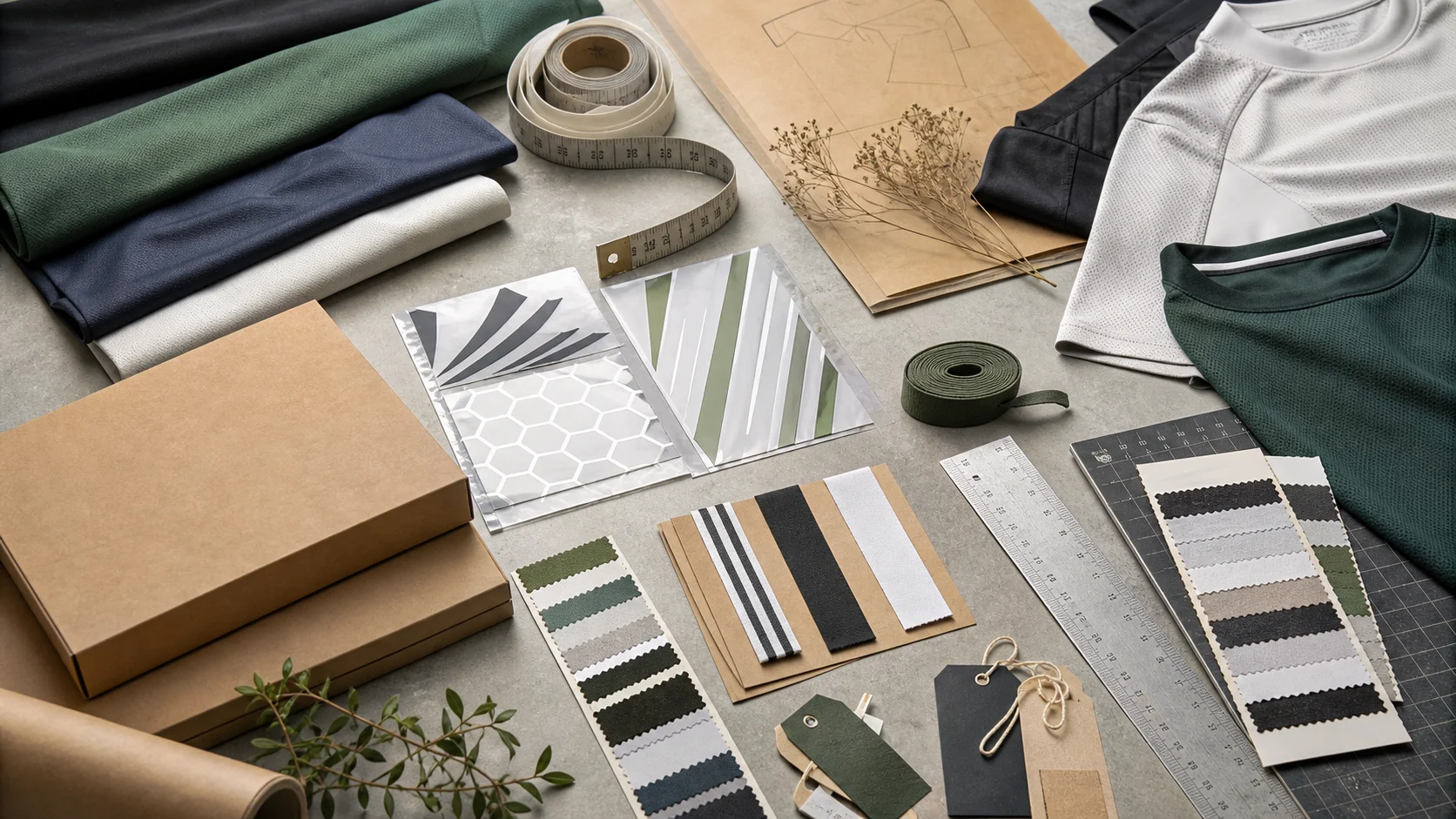
ODM Clothing Manufacturer China with checks for samples, fit, MOQ, QC evidence, pricing terms, and delivery risk.
Fast answer: ODM Clothing Manufacturer China: Range Development, MOQ, Quality, and Cost should be judged by production evidence, not by a generic sourcing promise. The buyer needs sample proof, cost breakdowns, QC checkpoints, and delivery buffers in writing.
Ask for recent sample photos, measurement tolerances, fabric or print test assumptions, decoration test notes, packing examples, and a named inspection checkpoint. These details show whether the team can repeat an approved sample at bulk volume.
Separate garment cost, decoration, labels, packaging, sampling, testing, freight, and rush charges. When every cost line is visible, it becomes easier to reduce colorways, adjust size depth, or reserve more time for sampling.
The first reason brands call an odm clothing manufacturer china partner is brutally simple: they need to move before the market moves on without them. A strong program can cut product development time by 30-50% versus building from scratch in-house, and that gap is often the difference between a timely launch and a dusty sample rack.
I have seen teams with three people do the work of twelve by leaning on factory-developed blocks, existing wash recipes, and ready-made fabric libraries instead of starting from zero.
After 200+ factory visits across 8 countries, one pattern keeps repeating. Small brands do not choose ODM because they lack ambition; they choose it because they need proof fast, usually one style, two colorways, and a 300-500 piece first run before they commit cash to a deeper seasonal range.
That pressure is real when paid ads, wholesale appointments, and cash flow all hit at once. A reliable manufacturer in China can help brands move from concept to production without losing momentum.
Coastal China tends to move faster than inland production bases because trim houses, fabric mills, and sample rooms sit within a 24-72 hour radius. In one Guangdong visit, a factory sourced rib knit, woven labels, and YKK zippers in two days. An inland plant needed eight days for the same request because every component traveled farther and was checked less often.
Here is what many buyers miss: larger factories often deliver tighter quality control than tiny workshops, even when the per-piece price is lower. A line running 80-90% efficiency usually has documented inline checks, stable operators, and fewer improvisations. In a 40-person workshop, I have seen beautiful salesman samples and weak bulk consistency on the same order.
The trade-off is real. Lower upfront cost can mean less design control, fewer pattern revisions, and a silhouette that feels familiar rather than distinctly branded. For early-stage labels, that trade is often rational. For established labels, it can get expensive fast if the collection starts to look like everyone else’s 180 GSM tee with a new label sewn in.
ODM means the factory offers existing or semi-developed styles that buyers can adapt. OEM starts with the buyer’s full specification, usually a tech pack, graded measurements, fabric callouts, construction notes, and packaging rules. Private label overlaps with ODM, but it usually involves fewer changes and a faster launch window, often 2-4 weeks shorter because the skeleton already exists.
Ownership is where the money lives. Ask whether the base pattern is shared, modified, or fully exclusive. A shared block can be fine for a test run, especially at MOQ 300-500 pieces, but it weakens differentiation if three other brands launch the same sleeve shape and neckline. A fully exclusive pattern costs more, yet it protects brand identity far better.
I have sat in meetings where a factory called a template-based offer “custom development.” That is not fraud, but it is not true OEM either. If the sample room only changes color, print, or a pocket shape, you are buying adaptation, not original engineering. That matters for long-term pricing, repeat ordering, and IP control.
Private label clothing services usually work best for brands that need speed and low risk. OEM is better for technical fit, unusual grading, or a signature item that must not resemble the market too closely. For cut-and-sew projects, I have seen brands improve margin by 8-12% only after moving from a basic template to proper cut and sew manufacturing.
Choosing between them comes down to price, sample speed, MOQ, trend responsiveness, and long-term brand value. Need a market test in 30-45 days? ODM wins. Need a proprietary jacket with bonded seams, taped zips, and an exact armhole? OEM earns its higher cost.
The sticker price is never the whole bill. For an order with an odm clothing manufacturer china partner, I usually map five buckets before I quote anything to a brand: sample fee, pattern correction, fabric sourcing, trims and packaging, freight. A sample might cost $40-$150 depending on complexity, while re-sampling after fit changes can add another $60-$120 per round.
Unit cost shifts sharply with MOQ. A 300-piece run can cost 15-35% more per unit than a 1,000-piece run because the factory spreads setup, cutting, and inspection costs across fewer units. A basic 180 GSM cotton tee might land around $3.20-$5.80 at 1,000 pieces, while the same shirt at 300 pieces may jump to $4.40-$7.20 depending on wash, print, and labeling.
Hoodies move differently. A French terry 320 GSM hoodie with embroidery, brushed fleece, and a metal tip drawcord can range from $8.50-$15.00 at scale, but a small run can push past $18.00 if the factory sources specialty rib, dye lots, and custom packing. Knitwear climbs faster because yarn quality, gauge consistency, and shrink control all affect the final margin.
Outerwear is where budgets get punished. A lightly insulated jacket with a nylon shell, 3-4 panels of quilting, and a basic water-repellent finish may start near $16-$28 per piece, yet add a bonded membrane, hidden seam tape, or a stricter color standard and the cost can rise by 20-40%. According to AATCC, standardized textile tests matter because performance claims without test data are just marketing.
Hidden costs are where new buyers bleed margin. Color approval rounds can add 1-2 weeks. Lab tests for colorfastness, shrinkage, or azo compliance may add $80-$250 per style. Shipping from the Pearl River Delta to Los Angeles can be $1,200-$3,500 for a small cartonized order, depending on season and service level. If you need compliance references, OEKO-TEX remains a useful benchmark for restricted substances and consumer trust.
China still has an edge in many categories because of sample libraries, trim density, and the sheer number of mills that can support an ODM program. Vietnam can be strong for simpler cut-and-sew basics and some knits. Bangladesh often wins on low-cost bulk for large runs. Turkey can outperform on speed to Europe and certain fashion knits, but China still tends to offer more ready-made development depth for a 300-1,000 piece launch.
For sourcing strategy and market context, the U.S. International Trade Administration textiles and apparel resources are also helpful when comparing regions and export conditions.
Quality is not the showroom sample. It is the bulk order after 500 pieces, two wash cycles, and one rushed packing day. When I visited factories in Zhejiang and Fujian, the best operators did not brag about style boards. They showed stitch density, shrinkage reports, and inspection logs.
Inspect stitching consistency, not just smooth fabric. Check seam allowance against the spec, then compare five random garments for size variance. On a tee, I want under 1 cm variance across chest and length on a basic program; on a structured hoodie, I want controlled tolerance and documented measurement points. Shrinkage control matters too. A 3-5% shrink after wash can wreck fit if nobody pretests the fabric.
Capacity tells you more than slogans. A plant running at 80-90% efficiency with stable lines usually has better discipline than a cheap shop that is always desperate for work. Stable operators know where defects appear, how to slow a line without stopping it, and how to spot a bad dye lot before 2,000 meters are cut.
Ask for fabric and trim checks: GSM, yarn count, composition tolerance, button pull tests, zipper cycle counts, and wash test results. If they cannot show the source of a 320 GSM French terry or the shrinkage record after enzyme wash versus stone wash, they are guessing. For premium babywear, the bar is even higher, which is why I send brands to custom baby clothing manufacturing only after we verify safety, hand-feel, and trim integrity.
Different regions specialize differently. Some Guangdong hubs excel at speed and variety. Certain Zhejiang clusters are stronger in knitwear depth. Parts of Fujian still do solid outerwear finishing. Red flags are obvious once you know what to watch for: too many rejected samples, vague answers about QC checkpoints, no inline inspection record, and no traceable fabric source. A factory that cannot answer those questions is not ready for serious volume.
For standards around environmentally responsible materials, Textile Exchange is a useful authority to review when a supplier mentions preferred fibers or traceable inputs.
Sampling and bulk production move on different clocks. A simple style can sample in 3-10 days, but revision cycles often take 15-30 days if fit, fabric, or trim changes. Bulk production usually runs 20-45 days, depending on complexity, dyeing, and how quickly approvals land.
MOQ is fluid, not fixed. Basic tees may start around 300-500 pieces, while technical outerwear often demands 1,000+ units because the factory must buy more fabric, reserve more line time, and absorb more setup risk. I have seen a hoodie program accepted at 400 pieces in one factory and rejected at 800 in another, simply because the second factory had a stricter dye-house minimum.
Season matters. Fabric booking can add 1-3 weeks during peak periods, especially before spring drop and Q4 holiday shipping windows. A brand trying to launch in 35 days should choose existing bodies, in-stock materials, and standard trims. Original development rarely survives that schedule without compromises, and delays usually start with the fabric mill, not the sewing line.
Shipping congestion is another silent delay. A clean production run can still miss a market window if port space tightens or color approvals stall for 4-5 days. The smartest buyers build buffer into their calendar and do not pretend a 10-day design change will behave like a 2-day email thread. If timing is tight, I tell brands to prioritize ODM bodies over custom innovation and to request a quote from Fabrikn’s clothing sourcing team early, before the best fabric lots disappear.
Sales decks are cheap. Documents are not. I ask for a business license, export history, compliance certificates, audit reports, and references from buyers in a similar category. A factory making 20,000 tees a month is not automatically right for a 400-piece premium hoodie line, even if the salesperson speaks fluent category language.
Then I verify ownership of the process. Does the factory own the sample, or is it outsourcing pattern work to a freelancer, printing to one subcontractor, and sewing to another? That can work, but it changes accountability. When one link fails, the blame game starts. A real producer can name the pattern maker, QC lead, and shipping coordinator without hesitation.
Ask for a pre-production checklist. It should cover fabric reservation, trim confirmation, measurement specs, wash standards, packaging details, and carton marking. If they cannot produce that list before deposit, they are not organized enough for repeat business. I also like to see how they handle corrections. The difference between a responsive salesman and a capable factory is simple: who owns pattern revision, who signs QC, and who books freight.
Price matters, but it should not be the only lens. A decision matrix helps. I score MOQ fit, communication speed, category expertise, defect rate history, and willingness to grant exclusivity on a 1-5 scale. A factory that scores well on four of five can be better than the cheapest option by 12-18% if it reduces returns and remakes.
For brands comparing positioning, private label clothing services can be a fast bridge, but they should not hide weak controls behind a polished catalog. My rule is blunt: if a factory refuses transparency on sampling, testing, or exclusivity, I move on.
Before you commit, confirm whether the factory is a true manufacturer, a trading supplier, or a hybrid operation. The answer affects communication speed, quality accountability, and long-term production stability.
A clean 30-day sourcing workflow beats a messy 90-day scramble. Start by shortlisting five factories, requesting catalogs, and comparing sample quality across at least two categories. Then confirm MOQ, price bands, and whether the factory can hold your fabric for two to three weeks while you finish approvals.
Build the pilot carefully. I usually recommend 200-500 units for a first order if the product is new to the brand and the market response is still uncertain. That scale is large enough to reveal fit issues, carton damage, and labeling mistakes, but small enough that a mistake does not crush cash flow.
Negotiate the details that protect margin and brand value: payment terms, defect thresholds, rework policy, delivery windows, and ownership of custom changes. If the factory agrees to a lower MOQ but keeps the right to resell your modified body, you have not protected differentiation. If the agreement is good, keep records on lead time, defect rate, landed cost, and sell-through by style.
That data becomes your next-season playbook. Last year I worked with a brand that reduced its return rate from 14% to 6% after tracking size variance across three fit rounds and two bulk lots. The best ODM programs are not one-off wins; they are disciplined systems, and they deserve that level of attention.
Use ODM when speed, cash efficiency, and market testing matter more than deep originality. Use OEM when the garment is central to your identity and worth the extra 3-6 weeks of development. If you want a practical starting point, compare three factories, request two samples each, and verify one quote with landed cost before you commit to bulk.
For buyers who need a production roadmap, the right manufacturer and supplier combination should balance bulk capacity, custom options, and wholesale pricing without sacrificing quality. If you are still narrowing the field, keep your shortlist tight and let the numbers, the samples, and the factory’s answers do the talking.
It is a factory in China that offers existing or semi-developed garment styles that buyers can adapt. In practice, that usually means faster sampling, often 3-10 days for simple items, and lower development cost than fully custom OEM work.
Basic tees can start around $3.20-$5.80 at 1,000 pieces, while a 300-piece run may be 15-35% higher per unit. Hoodies, knitwear, and outerwear cost more because fabric, construction, and testing requirements increase quickly.
Simple samples often take 3-10 days, while revision cycles can take 15-30 days. Bulk production usually needs 20-45 days, and peak-season fabric booking can add 1-3 extra weeks.
Yes, but you must ask directly whether the base pattern is shared, modified, or exclusive. Exclusivity often costs more, yet it protects brand identity and reduces the risk that similar styles appear in other buyers’ collections.
Request a business license, export history, compliance certificates, audit reports, and references from similar buyers. Then ask for a pre-production checklist covering fabric, trims, measurements, packaging, QC checkpoints, and shipment timing.