
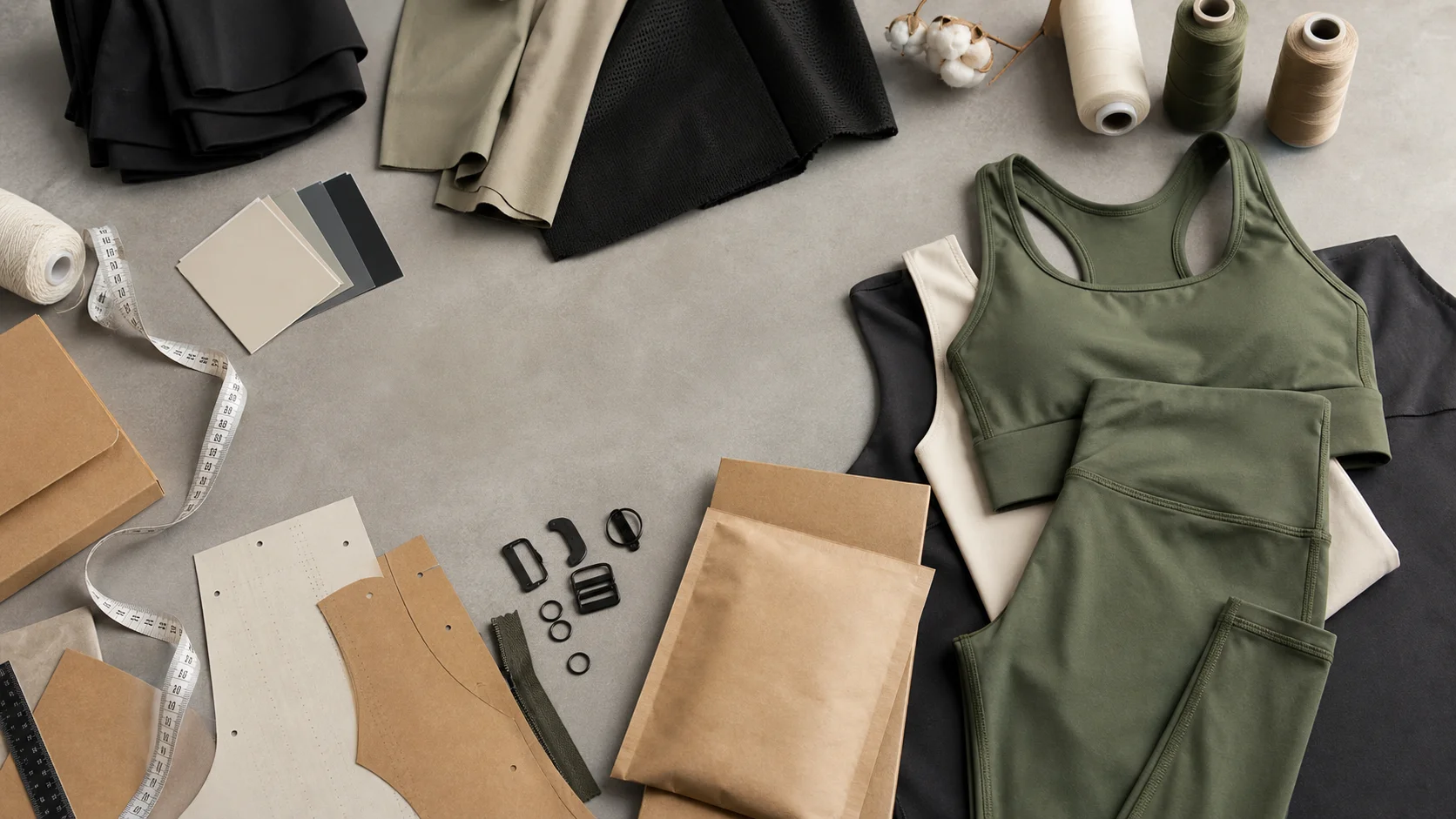
A focused outline for national gym merchandise buyers estimating OEM activewear set order costs, including pricing drivers, decoration choices, minimums,...
OEM Activewear Set Order Costs for Gym Buyers - Fabrikn production reference
For national gym merchandise buyers, the real question is not just what an OEM activewear set costs. The better question is what drives the landed cost, where the numbers move, and which choices protect margin without creating quality risk. A set can look simple on a quote sheet and still vary sharply once fabric, trims, print method, packout, sample rounds, and shipping are fully counted.
This matters more for gym programs than for many other apparel categories. Activewear sets are often ordered in size runs, re-ordered by season, and sold alongside branded membership merchandise. That means cost control needs to be consistent, not opportunistic. A buyer who understands the structure of OEM pricing can compare factories more accurately, negotiate better, and avoid the common mistake of chasing the lowest unit price while losing money on late revisions, rejected samples, or weak repeat quality.
For a broader view of how custom production is typically handled, see Fabrikn services, or use the contact page to request a quote review. Company background is available on the about page.
An OEM activewear set usually includes a top and bottom, though some gym programs add a bra, jacket, or layering piece. The cost is shaped by four main buckets: fabric, construction, decoration, and program scale. Each one carries tradeoffs.
Fabric is usually the largest variable. A basic polyester-spandex interlock costs less than a brushed, high-compression, moisture-wicking knit with a soft hand. Weight also matters. A lighter legging fabric may price well, but it can become transparent during squat testing or wear down faster at the knees. Buyers should treat “cheapest fabric” as a warning sign unless the end use is truly low intensity.
Construction affects both cost and performance. Flatlock seams, bonded hems, gussets, hidden waist pockets, and reinforced stitch programs all add labor. On a set sold under a gym brand, those details can be worth paying for because they reduce returns and complaints. A saving of a few cents at source can disappear once fit issues start showing up in stores or member orders.
Decoration is the third major driver. Screen print, heat transfer, silicone print, embroidery, woven labels, and custom hang tags all sit on top of the base garment cost. Large logo placements and multiple decoration points raise not only unit cost but also defect risk. More print areas mean more opportunities for registration problems, poor adhesion, or color inconsistency.
Program scale affects all of the above. Higher volume usually lowers fabric cost, labor spread, and carton or packing charges. Smaller programs pay more because the factory has to recover setup, pattern, cutting, and sample development expenses over fewer units. Buyers sometimes ask for a “bulk price” while holding volume too low for the factory to price efficiently. That usually produces weak quotes or overpromised lead times.
Minimum order quantity varies by factory capability, fabric type, and decoration method. For OEM activewear sets, typical MOQ ranges often look like this:
These are practical ranges, not fixed rules. A supplier with in-house fabric sourcing and strong production planning may accept lower volume. A factory that must buy custom dyed fabric or outside trims will usually hold the line on MOQ because the material risk is real. Buyers should expect lower MOQ requests to cost more per set, and that premium is often justified.
For national gym merchandise buyers, the most efficient approach is usually to group orders by core color and shared body fabric. A black training set and a navy training set may be better priced if they share the same base fabric and trim package, even when the logo application changes. Splitting too early into many SKUs tends to raise cost fast.
Sample approval is where many budget problems begin. A clean sample process keeps later production costs under control. A loose one creates rework, delays, and avoidable waste.
Most OEM set programs should move through a sequence like this:
Each step can add time, but skipping steps usually costs more later. Gym buyers often want speed because launch dates are tied to membership campaigns or new equipment rollouts. That pressure is understandable. The better tradeoff is to protect the one or two approval stages that actually prevent expensive mistakes. Fit and fabric approval matter most for activewear sets because stretch recovery, opacity, and seam behavior all affect customer satisfaction.
One practical cost point: sampling is rarely free in a meaningful OEM program. A factory may absorb a basic proto sample, yet custom development, pattern revisions, lab dips, strike-offs, and courier charges are often billed separately. A buyer should budget for those items up front instead of treating them as surprises.
Fabric specifications deserve close attention because small wording changes can create large cost movement. A gym buyer should confirm the following on every quote:
Higher spandex content generally improves stretch and comfort, but it can increase cost and sometimes complicate dye consistency. Nylon-based fabrics often feel smoother and more premium, yet they can price above polyester depending on market conditions. Brushed back fabrics are popular for warmer training or lifestyle sets, but they are not always the best choice for high-sweat studio use.
Trims are easy to overlook. Waist elastics, drawcords, zipper quality, hook-and-loop closures, molded labels, heat-transfer care labels, and custom zipper pulls all influence cost and lead time. The more custom the trim package, the more the factory must coordinate with outside suppliers. That increases the chance of a delay if one component arrives late or fails inspection.
Buyers should be careful with “premium” add-ons that do not support the end use. A reflective logo may be useful for outdoor training. A complex bonded pocket on a basic gym set may add cost without improving sales. Good purchasing judgment means paying for visible quality, not decorative complexity for its own sake.
Lead time for OEM activewear sets depends on more than sewing capacity. The critical path usually includes fabric sourcing, lab approvals, trim confirmation, sample signoff, cutting, sewing, finishing, packing, and shipment booking. Any one of those can extend the calendar.
Typical production timing for a straightforward program often falls in the 30 to 60 day range after final approval and deposit, but that assumes fabric is available and the order is not heavily customized. Custom-dyed fabric, special trims, and busy seasonal schedules can push that to 60 to 90 days or longer. International shipping adds another layer, especially if buyers are working against launch windows or retail event dates.
Lead times also depend on how fast the buyer responds. Delayed comments on samples can add a week or more to a schedule with no change in factory capacity. The same is true when buyers change color, size specs, or logo placement after approval. Those revisions often trigger new samples, revised trims, and sometimes a new cutting marker.
For national gym merchandise buyers, planning around launch dates is the safer strategy. Orders for member bundles, event merch, and new location openings should be placed with enough buffer for a quality check and a second round of corrections if needed. Rushed programs often pay premium freight or accept partial shipments, both of which reduce margin.
Inspection is where a low quote can become an expensive order. A factory may quote well but still fail on stitching, fit tolerance, shade consistency, or decoration quality. Activewear sets are exposed to stress testing more than many categories, so quality control needs to be realistic.
Common risk points include:
Inspection standards should be agreed before bulk production starts. Many buyers use inline checks, final random inspection, or third-party inspection services. The exact method matters less than having a clear tolerance sheet and accountability on defects. Without that, factories may interpret “acceptable” differently from the buyer.
Hidden cost often appears in rework, sorting, relabeling, and shipment holds. A program that needs repacking because size stickers were wrong can lose time and money even if the garments themselves are sound. National buyers should take carton labeling, barcode accuracy, and pack ratios seriously. Those details are operational, not administrative.
National gym buyers need a price structure that scales across locations and seasons. That usually means choosing a set of core SKUs with limited variation. Too many custom options weaken purchasing leverage and complicate replenishment.
There are three common strategies:
The best choice depends on how the merchandise is sold. A free member giveaway can use a cheaper construction than a retail item. A branded retail line usually needs better fabric, stronger sewing, and tighter visual consistency. Buyers sometimes try to force one garment to serve both purposes. That usually results in a compromise that satisfies neither channel.
Volume commitments matter. If the gym network can forecast by quarter, factories can plan fabric purchases more efficiently. That often improves pricing and reduces the risk of stockouts. Splitting an annual program into smaller unplanned orders may look flexible, but the total cost is usually higher. Planning is not just operational discipline. It is a pricing tool.
A useful way to think about OEM activewear set pricing is to separate factory cost from landed cost. Factory cost may include materials, labor, packaging, and basic overhead. Landed cost adds freight, duty, import handling, inspection, and any last-mile distribution.
Cost Element Typical Effect on Price Buyer Note Base fabric High Largest variable in most set programs Cut and sew labor Medium Increases with complex seams and fit details Trims and labels Low to medium Can rise quickly with custom items Decoration Low to high Depends on print method and number of placements Sampling and development Medium at low volume Should be amortized into total program cost Freight and duty Medium to high Varies by route, Incoterm, and shipment timing Inspection and rework Unpredictable Strong specs reduce the riskAs a practical rule, a buyer should compare quotes only after normalizing the scope. If one supplier includes custom woven labels, hang tags, and polybag inserts while another leaves those out, the unit price comparison is misleading. The same logic applies to shipping terms. A low FOB number can be less useful than a slightly higher quote that already reflects better packing and more reliable production control.
The cheapest OEM activewear quote is often the one that leaves out the costs a buyer will still have to pay later. A useful quote is complete, comparable, and clear about what is included.
Comparing suppliers well is mostly a documentation exercise. The purchase decision should be based on the same technical scope across every quote. Ask each supplier to confirm the same points in writing:
One practical issue is that some factories quote aggressively on first inquiry and recover margin later through scope changes. A buyer can avoid that by anchoring the quote to a detailed tech pack and asking for exceptions to be listed line by line. Any vague response should be treated as incomplete, not as a bargain.
Quote comparison should also account for the supplier’s communication quality. Slow answers during sampling often become slow responses during production. In a national program, that friction can be expensive. The lowest-price vendor is not always the most economical if they create repeated follow-up work for the merchandising team.
For national gym merchandise buyers, the right OEM activewear set order cost is the one that matches the use case. Low-cost programs need discipline around fabric choice, decoration, and approval speed. Premium programs need tighter standards and stronger control over sizing and finish. In both cases, the buyer should insist on complete specifications, written approval checkpoints, and a cost breakdown that explains what is included.
The most reliable savings usually come from simplification, not pressure. Fewer fabrics, fewer trims, fewer SKUs, and fewer last-minute changes create a better price than constant negotiating after the quote is already weak. That is the purchasing reality behind activewear sets. Clear scope saves money. Unclear scope spends it.
Get a free quote from Fabrikn — your trusted B2B clothing manufacturer with 10+ years of experience. MOQ as low as 200 pieces.
Get a Free Quote →Typical MOQ ranges are often 300 to 500 sets for simpler programs and 500 to 1,000 sets or more for custom fabrics, special trims, or more complex construction. The exact number depends on the factory’s setup and sourcing model.
The quoted scope is usually not identical. One supplier may include better fabric, stronger stitching, packaging, labels, or sampling support. Another may leave out freight, decoration, or testing. A clean comparison needs the same technical spec on both sides.
A normal process includes fabric approval, proto sample, fit sample, and pre-production approval before bulk. Custom colors or prints may also require lab dips or strike-offs. Rushing past those checks increases the chance of bulk mistakes.
After final approval, many programs run 30 to 60 days. Custom fabric, custom trim sourcing, and heavy seasonal demand can push lead time to 60 to 90 days or more. Shipping time should be added separately.
Common problem areas include fabric shade variation, print defects, size inconsistency, relabeling, and repacking. Inspection failures can create rework charges, freight delays, or partial shipment problems.
It depends on how the set is used. Giveaway items can justify simpler construction. Retail and branded member merchandise usually need better fabric, fit, and finish because the customer sees and wears them more often. The right cost level is the one that matches the selling price and the brand expectation.