
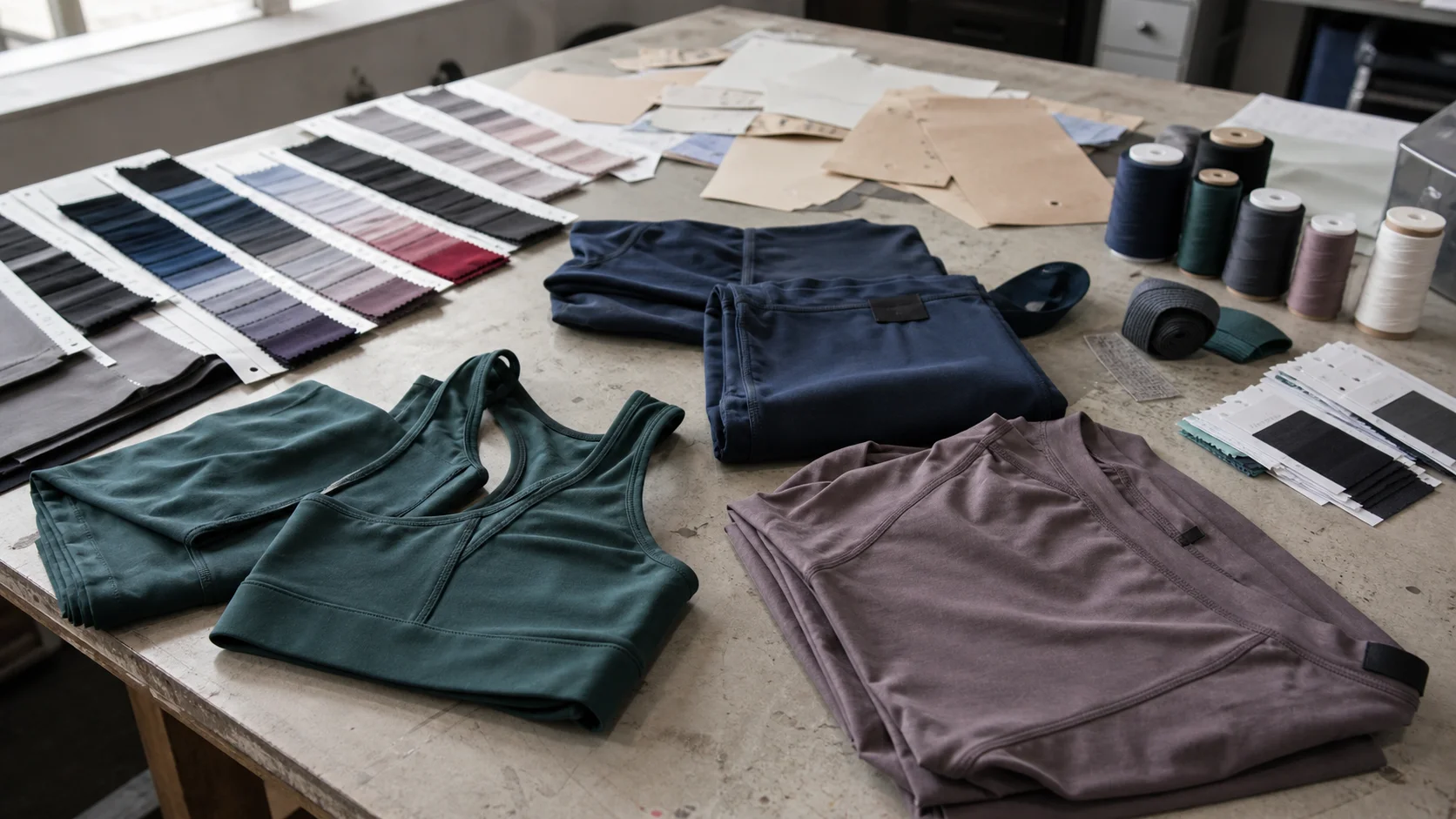
A buyer-focused outline for foodservice chains evaluating OEM chef coats, with size grading, pricing drivers, and production details that affect...
OEM Chef Coats Size Grading Pricing Buyers - Fabrikn production reference
OEM chef coats for foodservice chains are not just a uniform purchase. They are a repeat-order program built around fit consistency, fabric durability, embroidery or logo control, and predictable replacement cycles. When a chain standardizes chef coats across locations, the garment has to work for line cooks, sous chefs, pastry teams, and managers who may all need the same visual identity but not the same fit profile.
That is where OEM matters. A supplier is producing to your spec rather than offering a stock item with a logo added later. The buyer controls the pattern, size chart, fabric, button or snap type, collar shape, sleeve length, venting, pocket layout, and branding placement. For foodservice chains, the upside is consistency. The tradeoff is that weak technical decisions show up in cost, sample rounds, and returns.
For sourcing teams, the priority is usually not the cheapest unit price. It is the lowest total program cost over several reorder cycles. That means the initial factory quote, grading logic, shrinkage allowance, replacement rate, and repairability all matter. A coat that looks inexpensive on paper can become costly if the fit is unstable across sizes or if the fabric fails after repeated industrial laundering.
Size grading sounds simple until a chain wants the same chef coat in a wide size spread, often from XS to 5XL or beyond. Each step in the grade changes chest, waist, hip, sleeve length, shoulder width, and sometimes body length. If the pattern is poorly drafted, the larger sizes can look boxy while the smaller sizes fit tight in the shoulders or sleeves.
Buyers should expect grading to affect both development cost and production cost. The first sample usually covers only one base size, but the factory may charge extra for additional fit samples or size-set samples. When grading is complex, every size can require a pattern adjustment rather than a simple incremental change. That creates labor cost and review time.
Typical OEM MOQ ranges for chef coats vary by factory and material, but many suppliers want 300 to 1,000 pieces per colorway or style. Some can support lower MOQs, especially for simple constructions or stock fabric programs, yet low quantity does not remove grading cost. In fact, smaller orders often carry a higher per-unit price because pattern development, marker planning, and setup are spread across fewer pieces.
One common buyer mistake is to treat grading as a one-time technical task. In practice, grading has a commercial effect every time the chain changes size ratios, adds a new sleeve length, or adjusts fit for a different region. A well-run program locks the size spec early and treats later changes as controlled revisions.
Chef coat pricing is shaped by more than fabric weight. A sourcing team should ask for a cost breakdown that separates garment construction, fabric, trims, decoration, packaging, and freight assumptions. That is the cleanest way to see where price moves are coming from.
Pricing Driver What It Changes Buyer Judgment Fabric weight and fiber blend Hand feel, durability, breathability, wash performance Midweight poly-cotton often balances cost and maintenance better than pure cotton Button or snap hardware Ease of use, replacement risk, heat resistance Snaps can be practical, but check retention strength and wash performance Embroidery or heat transfer Branding cost and decoration lead time Embroidery is durable; transfers can be faster but may age differently under wash cycles Size range Grading work and marker efficiency Wide runs from XS to 5XL usually raise complexity and cut loss Packaging method Fold quality, labeling, store-level distribution Individual polybagging and size stickers add cost but reduce DC sorting errors Wash standard Fabric selection and stitching requirements Industrial laundering specs should be stated early, not after sample approvalMost buyers underestimate the price impact of decoration placement. A left chest logo is simple. A sleeve logo, back neck print, custom woven label set, or contrast piping adds labor and may slow sewing operations. On large chain orders, even a modest trim change can create a noticeable budget delta.
Fabric availability matters as much as nominal price. If the target cloth is imported or dyed to a custom shade, production can depend on mill lead time and dye lot stability. A lower fabric price is not useful if it introduces shade variation across a multi-location order. Consistency is usually worth paying for.
For foodservice chains, the cheapest garment is rarely the best choice if it shrinks too much, fades early, or creates staff complaints about heat buildup. Buyers should price the cost of returns, replacements, and staff reissue time before approving a lower-cost spec.
A practical size run starts with actual wearer data. For chains, that usually means a sample of employee measurements or a review of historical issue records. If the chain already knows which sizes move fastest, the order can be built around that demand curve rather than a generic retail size spread.
Many uniform programs use a distribution such as S to 3XL, with larger and smaller sizes held in lower quantities. Some operations need XXS or 4XL to 5XL, particularly where staff uniforms must fit across a broader workforce. The important point is to avoid overbuying slow sizes just because the factory prefers a neat size curve.
Good size grading should support movement in a hot kitchen. Chef coats need enough room through the chest and back for reaching, lifting, and repeated arm motion. A coat that fits well in a static fit session can still fail in service if the underarm and sleeve cap are too tight.
Buyers should request a measurement spec sheet with clear tolerances. Chest, body length, sleeve length, shoulder width, cuff opening, and collar drop all need to be documented. A tolerance that is too tight drives rejection risk; one that is too loose can create visible inconsistency between branches.
For chain programs, the safest commercial choice is usually not the most fashionable cut. It is the fit that survives repeated wear, industrial washing, and staff turnover without creating avoidable size complaints.
Sample approval should not be treated as a formality. For OEM chef coats, the usual path is base pattern approval, proto sample, fit sample, size-set sample if needed, and pre-production sample. Some factories compress these steps on simple orders, but buyers should still insist on written confirmation of what each sample stage covers.
The first sample should confirm the silhouette and core construction. The fit sample should be worn by a real body type that reflects the intended user group, not only a standard mannequin measurement. If the size range is wide, size-set samples can expose grading issues before bulk cutting starts.
Approval should cover more than appearance. Buyers should check seam strength, collar stand behavior, button spacing, pocket depth, shrinkage expectation, and logo location after laundering. A coat that looks acceptable on arrival can change after the first wash. That is especially true if the fabric blend, finishing, or fusible components are not fully controlled.
For chain buyers, a proper sample process saves money. It also slows the calendar, and that is worth accepting. Cutting bulk before fit and shrinkage have been confirmed is a false saving. Any supplier that pushes too hard to skip samples is shifting risk to the buyer.
Chef coat fabric is usually chosen from poly-cotton blends, cotton-rich blends, or performance fabrics with moisture-management claims. Cotton can feel better in heat, while polyester helps with durability, wrinkle resistance, and lower maintenance. The right answer depends on laundering frequency, climate, and how strict the chain is about appearance retention.
Typical spec points to define include fabric composition, yarn count or thread count where relevant, weight in GSM or oz/yd, color fastness requirements, shrinkage limits, and pilling resistance. For foodservice, wash durability is often more important than surface softness. A fabric that feels premium in hand but breaks down in laundering can cost more over the program life.
Trim decisions are equally commercial. Buttons can be classic and easy to replace, but snaps may speed up wear and removal. Hidden plackets look cleaner but add construction time. Mesh panels improve ventilation, though they may change the garment’s formal look and raise fabric matching requirements.
Construction details that deserve attention include:
A buyer should decide early whether the program is trying to optimize appearance, comfort, or durability. A coat cannot be equally strong in all three areas at the lowest cost. The best sourcing result is usually a deliberate compromise, not a vague request for “premium quality.”
OEM chef coat lead time depends on more than sewing capacity. Fabric booking, trim sourcing, sample approval, dyeing, decoration, packing, and freight all sit on the critical path. A simple repeat order from existing fabric may move faster than a first-time program with custom materials.
Typical lead times can fall around 30 to 60 days after sample approval for simpler repeat programs, with longer timelines when fabric is custom dyed, branding is complex, or the size range is broad. Buyers should ask whether the stated lead time starts from PO issue, deposit receipt, or final sample approval. Those are not the same thing.
MOQ pressure often comes from fabric and decoration rather than sewing alone. If the factory is sourcing custom cloth, the mill may demand a minimum run that exceeds the buyer’s initial quantity. That can be manageable for a chain with predictable replenishment, but it is risky for a one-off launch. In that case, a stock-supported fabric and standard trim package may be the better commercial decision.
There is also a hidden MOQ issue in sizing. Some factories quote one garment price, but then quietly assume a standard ratio across sizes. When the actual size mix is irregular, the marker yield may worsen and the effective cost rises. Buyers should request a quote based on the real size breakdown they intend to order.
Inspection is where uniform programs either become stable or start leaking margin. The most common risks in OEM chef coats are size inconsistency, shade variation, poor logo alignment, seam puckering, button failure, and shrinkage outside spec. A chain that reorders regularly will feel these defects quickly because staff compare garments across locations and across batches.
Size issues usually appear first in the shoulder and sleeve. If grading is not disciplined, larger sizes may rise too much in body length or lose proportion in the collar and pocket placement. That is more than a visual problem. It affects comfort and staff acceptance, and it can create reissue expense.
Shade variation becomes serious when orders are split across production lots. The safest approach is to lock fabric lots for the whole order wherever possible and to approve shade bands before bulk. If a supplier cannot control shade well, the chain should expect some risk in reorder continuity.
Inspection should also test laundering behavior, not just carton appearance. If a garment is destined for industrial wash, the buyer needs a realistic wash test or at least an agreed test protocol. Early shrinkage or seam distortion is expensive because it usually appears after the product has already been distributed.
On foodservice apparel, a low defect rate is worth more than a slightly better quote. Replacement orders, staff complaints, and branch-level inconsistencies can erase the initial savings quickly.
When bidding OEM chef coats for a chain, the tender should separate design, development, bulk price, and replenishment terms. A supplier may be competitive on first order but expensive on reorders if they have not priced the program for continuity. Buyers should ask for both launch pricing and repeat pricing.
Negotiation should focus on controllable variables. Fabric standardization, simplified trim, fewer decoration positions, and a narrower size range can all lower cost without damaging the core use case. The wrong place to cut is usually the technical spec for wash durability or the fit allowances that keep staff comfortable.
A useful RFQ package should include the technical pack, size breakdown, logo files, packaging requirements, target delivery date, and inspection standard. The more precise the buyer is, the less room there is for quote drift later. Ambiguous briefs often produce attractive initial prices that rise once the factory discovers the missing details.
For chain buyers, it is wise to quote the program in stages. Ask for a development cost, sample cost, production cost, and replenishment cost. That makes it easier to compare suppliers on real economics rather than on a single headline number.
Choosing an OEM partner for chef coats is partly a technical decision and partly a program-management decision. The supplier must be able to handle pattern grading, size consistency, trimming, labeling, and repeat orders without constant supervision. For a foodservice chain, reliability usually matters more than a flashy catalog.
Fabrikn’s service model can be a starting point for buyers who need a structured OEM discussion, especially when they want to move from concept to spec control and sampling. See the services page for the general scope of support, or use the contact page to start an OEM conversation around quantity, fit, and branding needs. Buyers who want more context on the company can review the about page before sending an RFQ.
The practical question is whether the partner can support the order after the first shipment. Good OEM sourcing is not just about approving one sample. It is about keeping future reorders aligned on size, price, and finish so the chain does not have to rework the spec every season.
Get a free quote from Fabrikn — your trusted B2B clothing manufacturer with 10+ years of experience. MOQ as low as 200 pieces.
Get a Free Quote →Many factories ask for 300 to 1,000 pieces per style or color, though simpler repeat programs or stock-supported fabrics may go lower. MOQ often rises if the fabric is custom dyed or the decoration is complex.
A practical process usually includes a base sample, a fit sample, and a pre-production sample. Wide size ranges may also require a size-set sample to check grading before bulk cutting.
There is no single best answer. Poly-cotton blends are common because they balance durability, comfort, and maintenance. Cotton-rich fabrics can feel cooler, while performance blends may hold appearance better under repeated laundering.
Include garment measurements, grading rules, fabric composition and weight, trim details, logo placement, shrinkage tolerance, wash requirements, packaging instructions, and inspection standards. Missing details usually show up later as cost or delay.
Prices move when fabric markets change, when decoration complexity changes, or when the supplier’s assumptions about size mix, packaging, or freight were incomplete. Reorder pricing should be requested separately, not assumed to match launch pricing.
For most chain programs, it is inconsistent sizing after production or after laundering. That creates staff complaints, branch-level mismatch, and avoidable replacement cost.
Simple repeat orders may run around 30 to 60 days after sample approval. Custom fabric, larger size ranges, or additional decoration can extend that timeline. The start point matters, so buyers should confirm whether lead time begins at PO, deposit, or approval.