
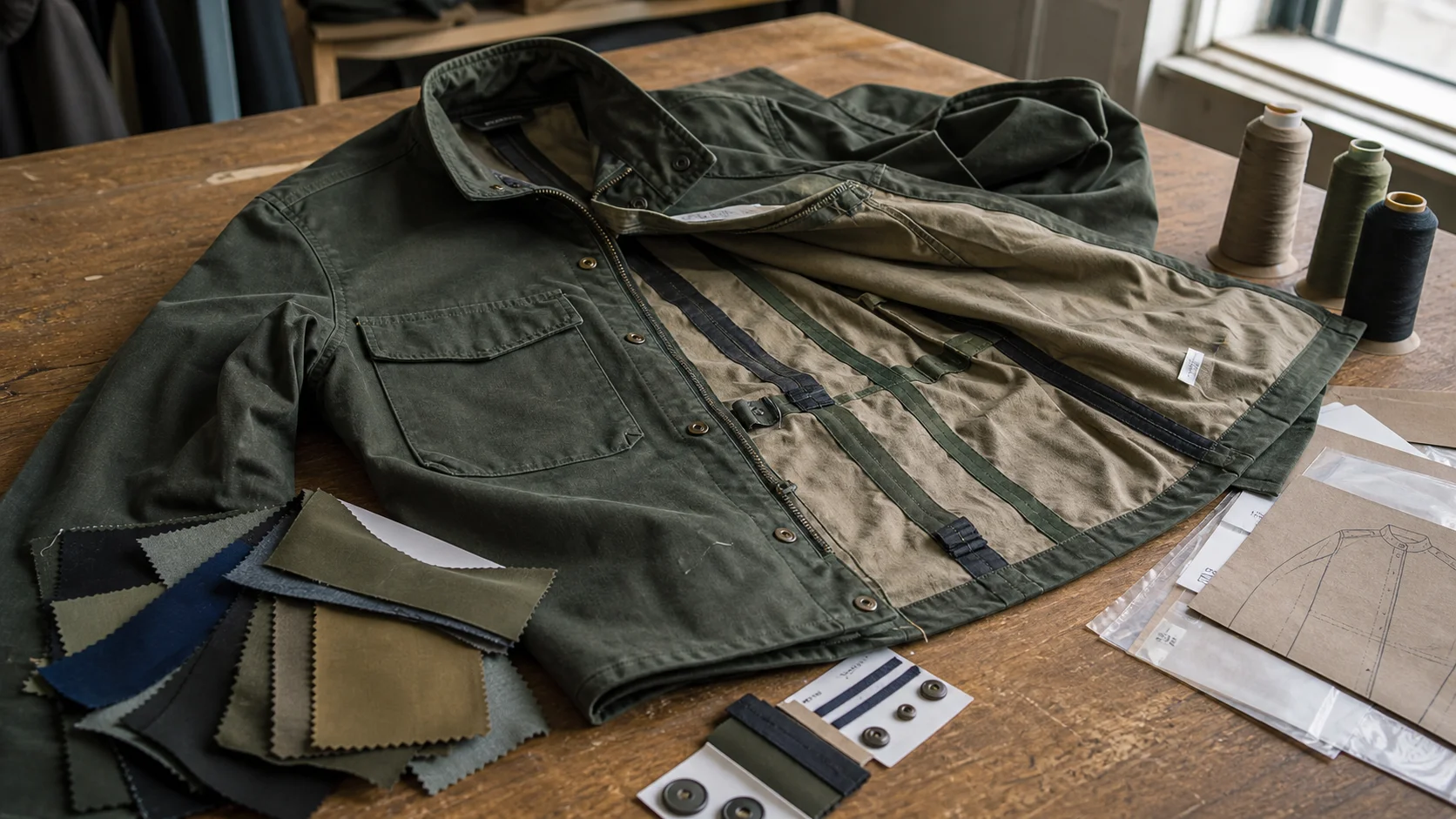
A buyer-focused outline for dining groups that need OEM restaurant uniforms built around seam strength testing, failure points, test methods, and...
OEM Restaurant Uniforms Seam Strength Testing - Fabrikn production reference
For dining group buyers, OEM restaurant uniforms are not just a branding exercise. They are a working part of the operation, and seam performance decides whether the garment survives repeated wear, hot washes, fast turnarounds, and daily stretching at stress points like shoulders, side seams, pockets, and crotch areas in utility styles. Seam strength testing is one of the most practical ways to judge whether a supplier can deliver uniforms that look acceptable on day one and still hold up after service cycles.
This matters in activewear and teamwear sourcing because restaurant apparel sits between image and function. Aprons, chef coats, front-of-house shirts, server tunics, and stretch pants all need enough structure to keep their shape, but they also need movement and comfort. Weak construction shows up fast. A seam failure in a dining group uniform is not a minor defect. It creates replacement cost, brand inconsistency, and avoidable service disruption.
Restaurant uniforms are exposed to a harder life than many buyers expect. Staff bend, reach, twist, carry trays, lean into counters, and work long shifts in heated spaces. Garments are washed often, sometimes under aggressive laundering conditions that would be considered harsh for standard casual apparel. Seam construction has to survive not only pull force, but repeated stress over time.
Dining group buyers should treat seam strength as a control point for total cost, not just product quality. A shirt that fails early generates repeat orders, rush freight, and spare stock pressure. An apron that tears at the pocket edge can create safety and presentation issues in a single service week. The problem is rarely one weak component. It is usually a combination of construction choices: stitch density, thread type, seam allowance, fabric weight, and how the pattern was engineered around stress points.
For restaurant uniforms, seam strength is not an abstract lab metric. It is a proxy for how well the garment will survive service reality, laundering, and repeated movement.
Buyers usually do best when they test the seam that is most likely to fail in use, not only the seam that looks easiest to measure. For OEM restaurant uniforms, focus on side seams, shoulder seams, armhole seams, sleeve set-in points, pocket attachments, waistband seams, crotch seams in trousers, and apron tie joins. If the design includes embroidery, patches, or heat transfer placement near a seam, that area deserves attention as well because added decoration can stiffen the fabric and concentrate stress.
The basic question is simple: does the seam hold under expected use, after expected washing, and without distortion? That means the buyer should not look only at one lab number. A seam can technically pass one test and still perform poorly if the thread is too brittle, the allowance is too narrow, or the stitch density is too low for the fabric.
Suppliers may use different testing methods depending on garment type and fabric construction. Buyers do not need to memorize every standard, but they do need to ask which method was used and whether the result reflects the end use of the garment. A test on a light woven shirt seam does not translate cleanly to a heavy chef jacket or a stretch uniform pant.
This measures the force required to break the seam itself. It is a direct indicator of construction robustness. It is useful for shirts, coats, aprons, and woven tops where seam failure is a primary risk. The result should be interpreted alongside fabric strength. A strong fabric with a weak seam is still a weak garment.
Seam slippage matters most on woven fabrics with low stability or slippery surfaces. The stitches may hold, but the fabric can open under load. This is important for restaurant shirts, aprons, and structured outer layers where the garment must keep a neat line after repeated use.
For stretch-heavy styles, buyers often need to understand whether the fabric recovers around the seam and whether the seam distorts after movement. Uniform pants and fitted front-of-house pieces can fail by stretching out rather than tearing cleanly.
Seam testing should not stop at the machine. Laundering affects thread integrity, shrinkage, puckering, and seam alignment. A garment that passes a bench test but fails after several wash cycles is not acceptable for recurring fleet orders.
Test Area Why It Matters Common Buyer Risk Side seams High movement and repeated stress Split seams during service Shoulders and armholes Lift, reach, and carry motion Tension failure or seam twisting Pockets and pocket corners Load-bearing and daily handling Corner tears and reinforcement loss Waistbands and crotch seams Movement and fit retention Open seams or deformation Apron ties and joins High pull force in use Attachment failureSeam strength is built into the spec sheet long before testing begins. If the buyer only reviews a finished sample without controlling the construction details, the result is often inconsistent across reorder production. Dining group buyers should ask for fabric composition, GSM or fabric weight, thread specification, stitch type, seam allowance, and reinforcement details in writing.
For restaurant uniforms, typical fabric choices include cotton twill, cotton-poly blends, poly-cotton poplin, stretch woven fabrics, and durable knit blends for more casual front-of-house styles. Heavier fabrics usually improve abrasion resistance, but they can reduce comfort and increase laundering time. Lighter fabrics improve breathability, but may require more careful seam design and reinforcement.
Thread selection matters more than many buyers expect. Polyester core-spun thread is common because it balances strength and laundering stability. Pure cotton thread can behave differently in repeated washes. Needle size, stitch density, and seam type also affect final performance. A very tight stitch can create unnecessary perforation in some fabrics. A loose stitch can reduce holding power and make the seam look soft or unstable.
OEM uniform projects usually move faster when the buyer approves samples in stages. A practical process starts with a tech pack or product brief, then a proto sample, then a size set if the order includes multiple sizes, and finally a pre-production sample or sealed sample for production reference. Skipping stages saves time only on paper. In practice, it raises the risk of repeating mistakes in bulk production.
For seam strength work, the sample review should include more than visual fit. Buyers should check seam line appearance, consistency at corners, reinforcement at stress points, and how the sample behaves under simple manual stress. If possible, test laundering on the approved sample before final production sign-off. That is a small delay compared with reworking hundreds or thousands of garments later.
Sampling timelines depend on fabric sourcing, trim availability, logo method, and revision count. A straightforward uniform style may move through sampling in 1 to 3 weeks, while complex styles with custom fabrics, specialty trims, or multiple fit revisions can take longer. Buyers should build time for corrections into the schedule. The fastest sample is not always the best sample, and speed should not replace traceability.
MOQ for OEM restaurant uniforms varies by style complexity, fabric type, and customization level. For many suppliers, a practical starting point may be 100 to 300 pieces per color or style for simple designs, while more customized uniform programs often sit higher. Some factories can handle lower trial quantities, but that usually comes with tradeoffs in price, fabric flexibility, or scheduling priority. Dining group buyers should judge the MOQ against true rollout needs, not just the initial budget.
Lead time depends on sample approval speed, fabric availability, dyeing if custom colors are required, trim sourcing, logo method, and factory workload. A common production window for straightforward uniform programs may fall around 30 to 60 days after final approval, but that range can move quickly if fabrics are not in stock or if decorative details are complex. Imported trim, special buttons, custom zippers, and embroidered badges often add time. Buyers should not finalize launch dates before confirming these dependencies.
When ordering for a multi-location dining group, it is usually better to align initial production with a disciplined test order. That allows the buyer to validate fit, laundering, and seam performance before scaling. It may cost a little more per unit, but the tradeoff is lower risk across the full fleet.
Inspection is where seam strength promises either hold up or fall apart. The most common failures are not dramatic tears. They are the smaller faults that point to weak process control: inconsistent stitch length, skipped stitches, uneven seam allowance, poor corner reinforcement, puckering after wash, thread breakage at stress points, and mismatched garment panels that pull against each other.
Dining group buyers should ask the supplier what inspection standard is used and how seam defects are graded. A clean-looking garment can still fail if seam measurements vary too much from one size to another. The risk grows when production includes multiple colors, multiple logo placements, or mixed fabric lots. Quality control has to check both appearance and engineering.
One practical point is worth keeping in mind: the softer the fabric, the more important the seam design becomes. Stretch blends and lightweight wovens often look better on the rack, but they can punish weak stitching. Heavy fabrics can hide workmanship flaws for a while, then fail under wash and movement. There is no fabric that excuses poor construction.
Before placing an OEM restaurant uniform order, buyers should get the key construction details into the purchase record. That makes it easier to compare suppliers and easier to hold the factory accountable if problems appear later.
Dining group buyers often focus on logo accuracy and color match first. Those matter, but seam performance deserves equal attention. Uniform programs work best when appearance, durability, and replenishment planning are treated as one decision instead of three disconnected ones.
A serious OEM supplier should be able to explain how seam strength is controlled in production, not just say the garments are “strong” or “good quality.” Buyers should look for evidence that the factory understands fabric behavior, reinforcement methods, and the realities of repeat laundering. A supplier that can talk clearly about stitch type, construction choice, and inspection points usually offers a safer path than one that only talks about price.
This is also where commercial judgment matters. The lowest quote can be the most expensive option if the garments fail early or arrive late. A slightly higher-priced factory may still be the better buy if it can lock construction consistency, support sample revisions, and keep replacement risk down. For dining group buyers, supply reliability often saves more money than a small unit-cost difference.
For buyers who need a starting point for sourcing conversations, see the factory capability overview on services, review the company background on about us, or reach out through contact us to discuss uniform program requirements.
OEM restaurant uniforms should be evaluated as working garments, not decorative merchandise. Seam strength testing gives dining group buyers a practical way to compare suppliers, reduce replacement risk, and set a higher standard before bulk production begins. The best outcome usually comes from a disciplined process: clear specs, staged sample approval, realistic MOQ planning, and inspection that focuses on the seams most likely to fail in service.
Buyers who treat seam testing as a core sourcing step tend to get better program stability over time. That matters across front-of-house, back-of-house, and multi-location rollout programs where consistency is more valuable than a low headline price.
Get a free quote from Fabrikn — your trusted B2B clothing manufacturer with 10+ years of experience. MOQ as low as 200 pieces.
Get a Free Quote →It is a check on how much force a seam can handle before it fails, slips, or distorts. For restaurant uniforms, the test helps predict how the garment will perform under movement, washing, and repeated service use.
Start with side seams, shoulders, armholes, pockets, waistbands, crotch seams in pants, and apron ties. Those are the areas most likely to carry repeated stress.
Typical MOQ often starts around 100 to 300 pieces per style or color for simpler orders. Custom fabrics, special trims, or multiple decoration methods can push MOQ higher.
Many straightforward styles take about 1 to 3 weeks for initial sampling, then longer if revisions are needed. Fabric sourcing, custom trims, and logo work can extend the timeline.
Yes. Seam strength should be reviewed before and after washing because laundering can expose thread weakness, shrinkage, puckering, and seam distortion that a dry sample will not show.
The biggest risk is a garment that looks acceptable in sample form but fails after production, washing, or daily movement. That usually comes from weak reinforcement, poor stitch settings, or incomplete spec control.