
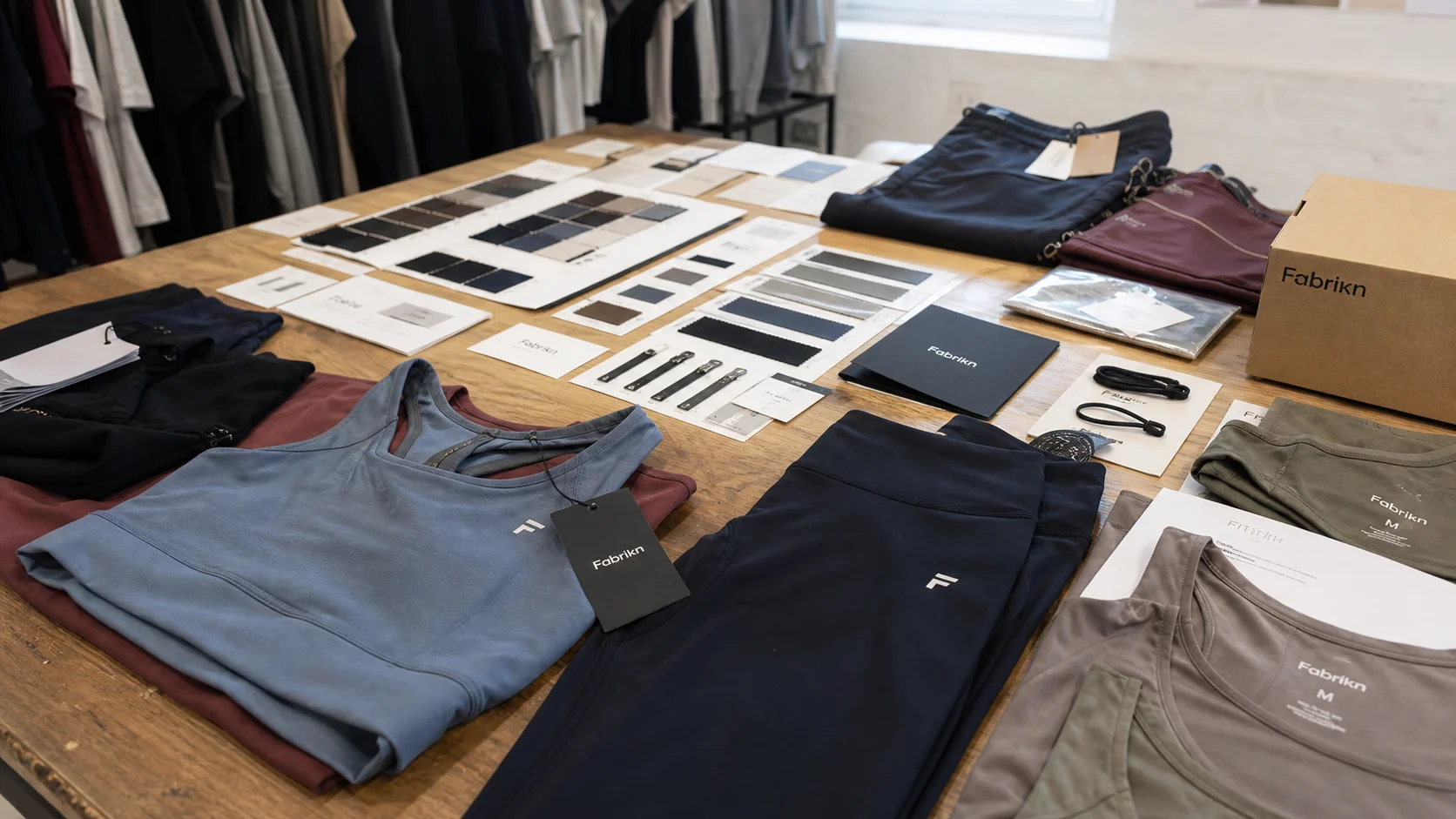
A product-specific outline for industrial safety retailers evaluating OEM safety vests with fabric testing, covering fabric performance, visibility standards, trim construction, labeling, compliance documentation, and production approval points.
OEM Safety Vests With Fabric Testing to Source - Fabrikn production reference
OEM safety vests with fabric testing are a practical sourcing category for industrial safety retailers that need repeatable quality, private-label control, and fewer failures in the field. In this segment, buyers are not just purchasing fluorescent garments with reflective tape. They are buying visibility performance, trim durability, labeling accuracy, wash stability, and a product that has to hold up across warehouses, construction sites, logistics yards, utilities work, and general industrial use.
That is why fabric testing matters before bulk production starts. A vest can look acceptable at the proto stage and still fail after washing, abrasion, heat exposure, or routine wear. Color can shift. Reflective tape can peel or crease badly. Mesh can snag too easily. Zippers can jam. Hook-and-loop closures can lose grip faster than expected. These are not minor cosmetic issues for safety retailers. They affect returns, retailer reputation, and reorder confidence.
For industrial safety retailers, OEM development creates room to control fit, branding, pocket layout, fabric weight, trim grade, packaging, and target price architecture. It also creates more responsibility. Once you move from stock goods to OEM safety vests, you need a cleaner approval process, tighter spec sheets, and more disciplined quality gates.
The best sourcing approach usually starts with three questions. First, what safety-use environment is the vest designed for? Second, what testing level is necessary for the fabric and trims? Third, which features actually drive sell-through versus which ones only add cost? Buyers that answer those questions early tend to avoid the most common sourcing mistakes.
If you are building or expanding a private-label range in this category, it helps to align product development, fabric testing, and production planning from the start rather than treating testing as a late-stage compliance task. Retailers looking for broader sourcing support can review Fabrikn services before starting a development program.
Industrial safety retailers often move to OEM safety vests for one simple reason: standard catalog products rarely cover every price point, feature set, and branding need in the same range. Off-the-shelf styles are useful for fast replenishment, but they limit differentiation. OEM sourcing gives retailers more control over the commercial offer.
In practical terms, OEM can help retailers:
A basic warehouse visitor vest and a loaded surveyor-style safety vest should not be sourced the same way. The first is typically price-sensitive and volume-driven. The second depends more on pocket functionality, trim performance, and user comfort. Retailers that treat both as identical sourcing projects often end up overengineering one style and under-specifying the other.
OEM also gives retailers the ability to rationalize design details that matter operationally. A pocket placed too low can be awkward for workers wearing tool belts. A zipper gauge that is too light may not survive repeated use. Reflective tape width affects visibility, but it also affects cost and stiffness. A slightly heavier mesh can improve wear life, but it may reduce airflow in hot environments. These are commercial tradeoffs, not just technical notes.
From a purchasing standpoint, the strongest OEM programs are the ones built around clear use-case segmentation. Buyers should separate lightweight promotional or visitor safety vests from higher-duty industrial styles, flame-resistant variants, and season-specific constructions. That structure makes testing requirements and MOQ planning easier to manage.
Fabric testing is the filter that helps buyers distinguish between a vest that photographs well and a vest that performs consistently. In OEM safety vests, testing should extend beyond the shell fabric alone. The vest is a multi-component product, so testing needs to consider mesh or solid body fabric, reflective tape, closure systems, sewing performance, and color retention.
Start with fiber content confirmation. Most standard safety vests use polyester mesh, polyester tricot, or polyester solid woven constructions, though cotton-blend or flame-resistant options also appear in specialized programs. A supplier’s declared composition should match lab results. If the fabric composition is off, moisture behavior, shrinkage, hand feel, and dye response can all shift.
Fabric weight matters more than many buyers expect. A vest that is too light may save cost but can feel flimsy, snag easily, or lose shape. A heavier fabric may improve durability but affect comfort and shipping cost. GSM tolerances should be agreed in the spec sheet, especially when reorders need to match earlier deliveries. Mesh hole structure, yarn denier, and knit stability should also be checked if the style relies on airflow and low weight.
High-visibility yellow, orange, and lime shades need careful review. Colorfastness to washing, rubbing, perspiration, and light exposure should be assessed based on the target end use. Retailers serving outdoor sectors should pay closer attention to lightfastness. For indoor warehouse use, wash and rub performance may be the more important baseline. Poor color retention can lead to early visual degradation and customer complaints even when the vest remains structurally intact.
Even simple vest programs can run into shrinkage or distortion issues, especially when lightweight knits or mixed-material panels are used. Dimensional stability after washing should be checked if the vest is marketed as reusable rather than disposable or limited-use. A small size change can shift reflective tape placement, pocket alignment, and fit grading.
Industrial safety retailers should not assume that every lightweight polyester fabric is suitable for heavy-use environments. Tensile strength and tear resistance become more relevant when the vest is used on active sites, around equipment, or over workwear layers that create extra strain at seams and closures. Low-cost mesh fabrics can fail quickly at armholes, side seams, or pocket joins if the base material is too weak.
Reflective trim is central to product performance, yet it is often one of the most uneven components in entry-level sourcing. Tape adhesion, stitch security, flexibility, and wash durability should all be reviewed. Some reflective tapes crack sooner than expected, while others lose brightness or edge integrity after laundering. If the program targets repeated-wash industrial use, tape selection should not be treated as a minor trim choice.
Zippers, hook-and-loop, snaps, binding, elastic, and thread quality can all affect final wear life. A vest body fabric may pass initial checks while the closure system becomes the failure point in use. Zip cycling tests, hook-and-loop peel performance, seam slippage review, and trim color migration checks are all worth considering depending on product complexity.
Purchasing judgment: fabric testing is most valuable when it matches the actual risk profile of the vest. A low-cost visitor vest does not need the same test stack as a premium multi-pocket industrial vest, but it still needs enough verification to avoid obvious field failures.
Retailers that skip pre-production testing often discover problems only after bulk goods reach the shelf. At that point, corrective action is slow and expensive. Early testing is cheaper than post-shipment disputes.
Many sourcing delays come from incomplete specifications rather than factory capacity issues. OEM safety vest programs move more smoothly when retailers define the critical product points before sampling starts.
The spec package should usually cover:
One common sourcing mistake is underestimating the importance of fit over layered clothing. Safety vests are often worn over jackets, coveralls, or uniforms. A size chart built for fashion layering may not work for industrial use. Buyers should confirm whether the fit is intended for warm-weather T-shirt wear, year-round uniform wear, or bulky outerwear layering.
Pocket design is another area where cost and usability diverge quickly. More pockets increase utility, but they also raise stitching time, risk of skew, and bulk fabric consumption. If the end customer only needs radio storage and one chest pocket, building a heavily featured surveyor vest may hurt margin without improving sell-through.
Retailers developing several styles should create a tiered platform. For example:
Style Tier Typical Features Best For Entry Light mesh, simple closure, basic tape layout Visitors, low-frequency use, budget retail Mid-Range Improved fabric weight, zipper front, a few utility pockets Warehouse, logistics, general site work Premium Heavy-duty trims, reinforced pockets, advanced layout, stronger tape Frequent-use industrial and field applicationsThis kind of architecture helps the supplier quote accurately and helps the buyer control assortment overlap.
Sampling is where most preventable problems should be caught. In OEM safety vests, an organized approval path matters because even a basic-looking style can carry multiple technical dependencies.
The proto sample checks general construction, fit direction, pocket layout, tape position, and commercial appearance. At this stage, substitute materials may still be used. Buyers should not treat a proto as a final quality benchmark unless fabric and trims are confirmed to production grade.
If size grading or layer allowance is important, a dedicated fit sample is worth the time. This is especially useful for industrial safety retailers serving mixed-user environments where male, female, and unisex fit expectations may differ. Armhole comfort, chest ease, and garment length are frequent review points.
For high-visibility shades, color approval should happen before bulk fabric commitment where possible. Fabric swatches, reflective tape cards, zipper colors, and binding options should be reviewed together, not in isolation. A shade that looks acceptable alone may clash when assembled with other components.
The pre-production sample should represent actual bulk intent as closely as possible. This is the stage to confirm sewing quality, labeling, print or embroidery placement if any, packaging details, and measurement tolerances. If testing is required, this sample or its approved material set should be tied to the test submission.
For broader size runs, a size set can prevent grading mistakes from reaching full production. Some retailers also request top-of-production samples once the line begins. That adds time, but it can be worthwhile on larger orders or new supplier programs.
A careful approval sequence usually adds a little calendar time up front. It often saves far more time than a rushed process that leads to bulk rework, rejected cartons, or repeated sampling after preventable errors.
MOQ and lead time for OEM safety vests vary by complexity, material sourcing, and whether the program uses stock fabrics or custom-developed inputs. Buyers should expect different thresholds for simple and feature-heavy styles.
Typical MOQ ranges often look like this:
These are workable commercial ranges, not fixed rules. Some suppliers will accept lower MOQs on simplified programs if they can use in-stock materials. Others will push the minimum higher when custom reflective tape, uncommon colors, or complex branding details are involved.
Lead time is usually driven by these factors:
For straightforward programs using readily available materials, bulk lead times may fall in the 30 to 60 day range after final approval. More customized programs can extend beyond that, especially if multiple trims are developed or if testing reveals a material that needs to be changed.
Retailers should be cautious about quoting aggressive delivery dates downstream before all approval gates are complete. A supplier may be able to sew quickly, but if the fabric test report is delayed or reflective tape approval changes late, the actual shipment date can move.
Purchasing judgment: if speed matters more than differentiation, source closer to available stock materials. If brand exclusivity matters more, expect higher MOQ and longer calendar commitment.
Industrial safety retailers need to separate three related but distinct topics: compliance requirements, product quality, and shipment inspection. A vest can be sewn neatly and still miss a required visibility performance target. A fabric can pass lab testing and still reach the warehouse with stitching faults. Buyers need all three controls working together.
Safety vest requirements depend on destination market, end-use claims, and product classification. Retailers should confirm what standards or labeling claims are relevant before development begins. If a vest is marketed with visibility or protective performance language, supporting documentation needs to align with that claim. Compliance should never be left to generic supplier assurances.
Inline control matters on styles with multiple pockets, reflective tape application, or contrast panels. Common inline defects include skewed tape placement, uneven pocket attachment, missed bartacks, loose threads, wrong label insertion, and measurement drift. These problems are easier to correct during production than after packing.
Before shipment, a final inspection should review workmanship, measurements, labeling, packaging, carton assortment, and visible shade consistency. On safety vests, inspectors should pay close attention to reflective tape placement symmetry, closure functionality, and any mismatch between approved sample details and packed bulk.
Some of the most common inspection risks in this category include:
Buyers should also watch for substitution risk. In value-driven categories, some suppliers may quote one trim grade and use another if incoming control is weak. That is one reason sample sealing and material approval records are so important.
OEM safety vest sourcing is full of small cost decisions that shape retail performance. Not every cost reduction is worth taking. Not every upgrade creates market value. The goal is to spend where failure risk or buyer perception justifies the extra cost.
Areas where a slightly higher spec often pays back:
Areas where overspecification can hurt margin:
A practical buying method is to divide features into three groups: must-have, performance-enhancing, and optional. Must-have features are the ones tied to visibility function, basic wear life, and retailer claim integrity. Performance-enhancing features improve comfort or durability but may depend on the target customer. Optional features are often styling choices that should only be added if the retail channel supports the price.
This is where OEM programs succeed or fail commercially. A technically strong vest that misses the market price band is still a weak sourcing result. A cheap vest that triggers returns is not a value win either. Retailers need balance.
Before placing a substantial order, industrial safety retailers should review supplier capability with a category-specific lens. A general garment producer is not automatically the right OEM partner for safety vests.
Key questions to ask include:
Retailers should also request a clear breakdown of what is customized versus what is based on stock components. That affects both lead time and reorder consistency. If an OEM program relies heavily on stock fabric availability, the reorder may not match perfectly months later unless the material is reserved or reapproved.
Another useful step is to identify which components are most vulnerable to substitution or inconsistency. In many safety vest programs, those components are reflective tape, zipper quality, mesh weight, and label execution. That is where sourcing control tends to produce the best return.
For industrial safety retailers, the challenge is rarely just finding a supplier that can sew a vest. The harder part is building a sourcing process that controls specifications, testing, approvals, and production risk from start to finish. That includes clarifying use-case requirements, reviewing materials, aligning sample stages, and making sure the final product matches the intended retail position.
Retailers exploring OEM development can review about Fabrikn to understand the company background and sourcing approach. For direct project discussion, timelines, or specification support, buyers can use the contact page.
In a category like Activewear & Teamwear, safety vests may look simple on paper, but the commercial risk sits in the details. Fabric testing, reflective trim performance, fit over uniforms, and packaging accuracy all affect whether a product line scales smoothly. Buyers that manage those details early usually get better reorder stability and fewer avoidable claims later.
Get a free quote from Fabrikn — your trusted B2B clothing manufacturer with 10+ years of experience. MOQ as low as 200 pieces.
Get a Free Quote →OEM safety vests are developed for a buyer’s private-label or custom program rather than purchased only as generic stock goods. The buyer can usually define fabric, trim, fit, pocket layout, branding, and packaging, subject to supplier capability and MOQ.
Fabric testing helps confirm that the vest materials match the intended use. It can identify risks in colorfastness, fabric weight consistency, shrinkage, tear resistance, and trim durability before the goods go into mass production. That reduces return risk and protects retail credibility.
Basic OEM safety vest programs often start around 300 to 800 pieces per style or color when stock materials are used. More customized developments can move into the 800 to 3,000 piece range or higher depending on fabric development, trim customization, and packaging requirements.
Lead time often depends on material availability, sample approvals, testing, and production capacity. Straightforward programs may ship in roughly 30 to 60 days after final approvals, while customized developments can take longer.
Common failure points include reflective tape quality, zipper or hook-and-loop performance, weak mesh, poor pocket stitching, label mistakes, and inconsistent tape placement. These areas deserve extra review during sampling and final inspection.
Mesh is usually better for airflow and lighter wear conditions, while solid fabrics may offer a more structured hand feel or better support for certain pocket configurations. The right choice depends on climate, end use, target price, and durability expectations.
At minimum, buyers should approve the fabric and trim specification, color or lab-dip, measurement chart, sample construction, labeling