
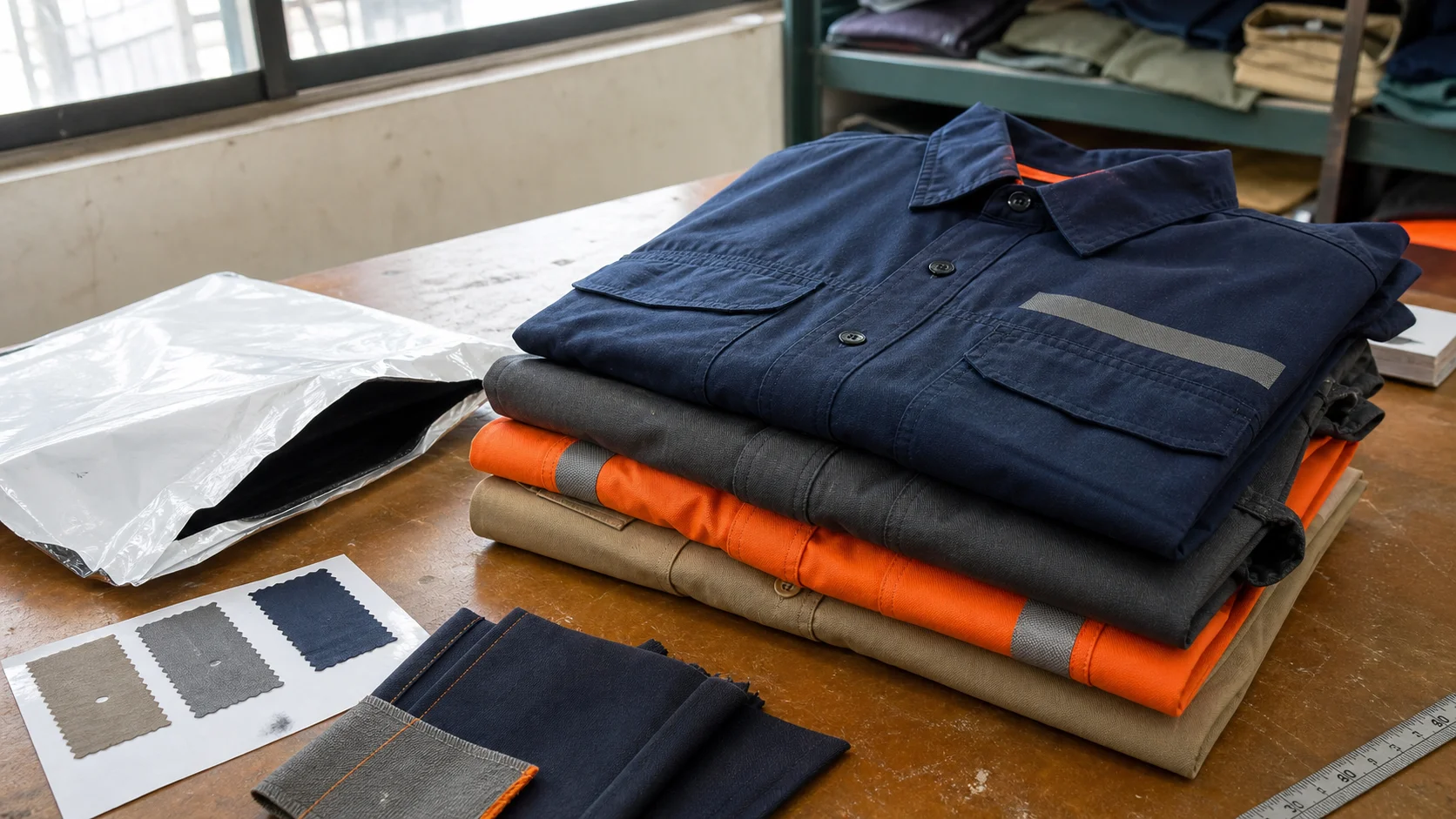
A product-specific outline for facility safety distributors evaluating OEM safety vests with screen printing, with emphasis on decoration specs, compliance details, production artifacts, and sustainable sourcing considerations.
OEM Safety Vests With Screen Printing Quotes - Fabrikn production reference
OEM safety vests with screen printing quotes are a routine sourcing requirement for facility safety distributors, but the buying decision is rarely simple. A vest can look straightforward on paper: fluorescent fabric, reflective tape, front closure, and a printed company mark. In practice, pricing and production stability depend on several technical choices that affect compliance, decoration yield, packaging, and replenishment speed.
For distributors supplying warehouses, manufacturing plants, logistics sites, utilities, and contractor networks, custom safety vests often need to serve two jobs at once. They must function as visibility apparel for active worksites, and they must carry branding or role identification through screen printing. That combination creates tradeoffs. A lower-cost vest body can reduce the quote, but it may also limit print consistency, shorten wear life, or create claims later if reflective trim placement interferes with artwork size.
Buyers in this segment usually need more than a headline price. They need a usable quote structure that clarifies base vest cost, print setup, color count, carton packing, sample charges, and delivery assumptions. They also need to know where a supplier is cautious. A factory that flags fabric variation, mesh distortion, or reflective tape heat sensitivity during decoration is often easier to work with than one that promises everything at the RFQ stage.
For teams reviewing new development or replenishment programs, it helps to start with supplier capability, trim control, and approval process. Pages such as /services/ and /about-us/ are the kinds of internal references buyers often check first when evaluating whether a manufacturing partner can support OEM development and private-label execution.
When distributors request screen printing quotes for OEM safety vests, they are usually asking for a combined manufacturing and decoration price, not just a print-shop add-on. That quote should separate fixed and variable costs. If it does not, comparison becomes difficult and margin planning gets weaker.
In practical terms, a useful quote normally breaks down into the following elements:
Distributors should be careful with unusually low quote formats that bundle all charges into one unit price without explaining print assumptions. That can hide limitations. A supplier may quote a one-color chest logo on a simple mesh vest, while the buyer expects a two-color large back print on a solid knit style. The cost gap can be material, but the real problem is timing. Misalignment often surfaces only after artwork review, which delays approvals and can disrupt launch dates.
One reliable purchasing approach is to request three pricing tiers: blank vest only, one-color one-position screen print, and two-color two-position screen print. This gives a more realistic operating range and helps distributors quote their own end customers without returning to the factory for every variation.
Most quote delays happen because the vest specification is still loose. A screen printing quote is only as accurate as the product brief behind it. Facility safety distributors should lock the core construction points before asking suppliers to price.
The first decision is usually between polyester mesh and polyester solid knit. Mesh is common for breathable, lower-cost programs and lighter-duty indoor applications. Solid knit can present a cleaner surface for printing and may hold shape better under repeated wear. The tradeoff is cost and, in some cases, warmth. Recycled polyester options are increasingly available in both categories, though price and minimums can rise depending on yarn sourcing and color availability.
Typical vest fabric weights often fall around 100 to 140 gsm for mesh and roughly 120 to 160 gsm for solid knit, though each program differs. Lighter fabric can help pricing and ventilation, but it may also reduce print stability if the artwork area is large. Thin mesh is especially prone to movement during decoration. Buyers who need clean logo edges should check whether the factory recommends an underlay, print blocker, or a denser panel construction.
Reflective tape width, composition, and placement all matter. Common widths are 2 inches, sometimes with contrasting trim combinations depending on end-use and regional requirements. The main issue for printing is artwork clearance. Large back logos often compete with horizontal reflective bands. If the vest pattern does not reserve enough printable area, the screen print either becomes too small or requires repositioning that weakens the visual result.
Zipper front, hook-and-loop closure, and snap options each affect cost and wear performance. Zippers usually improve perceived value and repeat usability but add cost. Hook-and-loop is economical and common, though it can wear out faster and catch lint in industrial settings. Pockets, ID windows, mic tabs, and reinforced stress points should be specified early because they change both sewing labor and print placement.
Extended sizes matter more than many quotes reflect. If the program runs from S to 5XL or larger, fabric consumption and carton mix will affect unit cost. Some factories quote on a blended average, while others surcharge above 2XL or 3XL. Distributors should ask which method applies, because blended pricing can look attractive until the actual size curve shifts upward.
Some facility safety programs require alignment with high-visibility performance standards, while others are purely site-identified uniform items. Those are very different products. If a vest is intended to satisfy a visibility standard, buyers should confirm material and design suitability before treating it as a custom promotional item. Decoration that covers too much surface area, or trim changes made for branding reasons, can create downstream compliance issues.
Screen printing remains a strong choice for OEM safety vests when the artwork is bold, quantity is meaningful, and the garment construction supports stable placement. It is often the most economical custom branding method for bulk distributor programs. Still, it is not ideal for every design.
For chest logos, one-color or two-color screen prints are usually straightforward. Back prints require more review. Mesh vests can stretch under the squeegee, which may distort fine details. Very small text, halftones, or gradient-heavy artwork may reproduce poorly on open-hole mesh. In those cases, transfer printing or a solid fabric print panel may be the safer option, even if the unit cost is slightly higher.
Ink choice matters too. Plastisol is commonly used because it is durable and familiar across many production lines, but water-based systems may be preferred in some programs for hand feel or environmental positioning. The right choice depends on substrate compatibility, opacity needs on fluorescent fabric, and wash performance. Buyers should ask what curing controls the factory uses, especially when printing near reflective trim or heat-sensitive components.
Placement tolerance should be written into approvals. Safety vest panels can shift more than fashion tees because of trim bulk, front openings, and lightweight substrates. Expecting perfect placement on every unit is unrealistic. A better approach is to define acceptable print position tolerance, ink adhesion expectations, and artwork simplification rules before bulk starts.
Purchasing judgment: if the program depends on sharp small lettering or complex gradients, screen printing may not be the lowest-risk decoration method even if the initial quote is lower.
MOQ for OEM safety vests with screen printing typically depends on whether the buyer is selecting a stock body for private labeling or developing a custom pattern and trim package. For near-stock or lightly customized styles, typical MOQ can start around 300 to 500 pieces per color, sometimes split across sizes. For fully custom OEM programs with specific fabric, tape layout, pockets, labels, and packaging, MOQ often lands closer to 800 to 1,500 pieces per style-color, and some suppliers may require higher levels if recycled inputs or custom reflective components are involved.
Those ranges are practical, not universal. Buyers should always verify whether MOQ applies per style, per color, per print artwork, or per shipment. A supplier may accept 500 pieces overall but require a minimum number per logo colorway to keep print setup efficient.
A disciplined sample path reduces avoidable claims. The standard sequence often includes:
Skipping the strike-off stage is a common cost-saving move that creates more expensive problems later. On fluorescent fabrics, color contrast can shift visual perception. White ink underbases, black outlines, and metallic-looking effects often behave differently than buyers expect from digital mockups.
Lead times for these programs usually depend less on sewing time than on inputs and approvals. A practical range for repeat styles using accessible materials may be around 30 to 60 days after final approval and deposit, while new custom developments can take longer once sampling, artwork refinement, reflective trim sourcing, and lab checks are included. During busy seasons, decoration capacity can become the bottleneck rather than cut-and-sew.
Distributors should ask three direct timing questions:
The answers matter. A supplier quoting a short sewing lead time may still be exposed to delay if reflective tape or custom woven labels arrive late. Printing queues can also stretch if the factory batches similar ink colors or large back logos together.
Safety vests are not usually the first product category buyers associate with sustainable fashion, yet the connection is real. Sustainability in this segment is less about runway storytelling and more about material selection, product lifespan, packaging reduction, and reorder discipline.
For facility safety distributors, a sustainable OEM vest program can include recycled polyester shell fabrics, more durable closures, repair-friendly construction, and packaging choices that reduce waste. If the vest lasts longer in site rotation, replacement frequency drops. That operational result is more meaningful than a loose green claim on a hangtag.
Recycled polyester mesh and knit fabrics are now widely discussed, but buyers should ask for precise input details rather than accepting broad environmental language. Not all recycled options perform the same way, and not all are equally available in fluorescent shades. Fabric hand feel, tensile stability, and print receptivity can differ from conventional polyester, so the commercial tradeoff should be reviewed honestly.
Packaging is another overlooked point. Many distributor programs default to heavy individual polybagging with multiple stickers and inserts. In some cases that is necessary for downstream handling. In others, simplified packing can reduce waste and cost without affecting warehouse efficiency. Carton optimization also matters. Oversized cartons can damage reflective tape shape and raise freight costs at the same time.
Buyers exploring more responsible sourcing models often want to understand a supplier’s development and communication process before placing orders. For that, an introductory page such as /about-us/ can help frame capabilities, while a direct inquiry route such as /contact-us/ is where detailed product and quote discussions should begin.
Comparing suppliers on unit price alone is a weak method for this category. Facility safety distributors should compare quote quality, not just quote level. A slightly higher price from a supplier that defines fabric, tape, print area, and packaging clearly can be safer than a low price loaded with assumptions.
Useful comparison points include:
There is also a practical margin question. Some distributors need aggressive opening price points for bid business. Others need a more durable mid-tier vest that reduces complaints from industrial accounts. Those programs should not be sourced the same way. Entry-level tender business can justify a simpler vest body and restrained print spec. Long-cycle account business often benefits from a better base garment with cleaner decoration and fewer replacements.
The biggest sourcing risks in OEM safety vests with screen printing are usually not dramatic. They are small specification gaps that multiply during production.
Inspection criteria should be agreed before bulk leaves the line. Print adhesion, artwork position, reflective tape attachment, measurement tolerance, and assortment packing accuracy are common checkpoints. For distributors, packing errors can be as disruptive as sewing defects because warehouse receiving and customer fulfillment both depend on accurate carton assortments.
Purchasing judgment: the highest-risk orders are usually the ones that combine low MOQ, urgent delivery, multi-color prints, and full custom packaging. One of those constraints is manageable. All of them together usually increase claim exposure.
Distributors requesting OEM safety vest quotes can speed up supplier response time by sending a more complete RFQ pack. A concise but technical brief usually works best.
RFQ Item What to Include Why It Matters Vest Style Mesh or solid knit, closure type, pocket count, tape layout Defines the base cost and sewing complexity Fabric Spec Polyester type, target gsm, recycled or conventional Changes cost, hand feel, and print behavior Color Fluorescent yellow, orange, or custom requirement Affects material sourcing and shade approval Artwork Vector files, print size, locations, color count Allows accurate screen and print costing Size Range Planned ratio from smallest to largest sizes Prevents later cost disputes Packaging Individual polybag, barcode, insert, carton marks Impacts labor and warehouse readiness Order Quantity Forecast per style-color and repeat potential Helps suppliers quote realistic tier pricing Delivery Terms Target ship date and preferred Incoterm Clarifies schedule and quote basisIf the RFQ is still exploratory, say so directly and request target pricing based on assumptions. That usually leads to a more honest discussion than asking for a final quote without stable specs. Buyers who need a tailored estimate or technical feedback on a vest program would typically use a contact route such as /contact-us/ after reviewing relevant manufacturing support information on /services/.
OEM safety vests with screen printing for facility safety distributors are a practical sourcing category where technical clarity matters more than sales language. The best quotes are not simply the lowest. They are the ones built on clear vest construction, realistic print assumptions, stated MOQ, defined sample steps, and honest lead-time triggers.
For distributors, the strongest buying position comes from locking the specification early and asking suppliers to separate garment cost from decoration and packaging charges. That makes comparisons cleaner and protects margin planning. It also reduces the risk of approval delays once artwork and reflective layout are reviewed together.
From a sustainable fashion perspective, the category is moving toward better material choices, longer wear life, and reduced waste packaging. Those gains are useful when they are tied to performance and reorder discipline, not vague claims. A safety vest program that holds up in use, prints cleanly, and avoids frequent replacement is usually the more responsible commercial choice.
In short, facility safety distributors should treat these products as technical workwear with branding, not as basic promotional apparel. That mindset usually leads to better quotes, better production outcomes, and fewer surprises after goods ship.
Get a free quote from Fabrikn — your trusted B2B clothing manufacturer with 10+ years of experience. MOQ as low as 200 pieces.
Get a Free Quote →Typical MOQ often starts around 300 to 500 pieces for simpler private-label programs using an existing vest body, while fully custom OEM developments often require around 800 to 1,500 pieces or more per style-color. Actual minimums depend on fabric sourcing, reflective trim, and print complexity.
No. Screen printing is usually cost-effective for bold logos and larger quantities, but very fine detail, gradients, or unstable mesh substrates can make other decoration methods more reliable. Buyers should review artwork feasibility before approving the quote.
Repeat orders on stable materials may run in roughly 30 to 60 days after final approvals, though custom developments can take longer. Lead time depends on fabric readiness, reflective trim sourcing, print capacity, packaging requirements, and how quickly samples are approved.
At minimum, include fabric type, vest construction, reflective tape layout, artwork files, print locations, size range, quantity, packaging requirements, and target delivery terms. Incomplete RFQs often produce quotes that are difficult to compare accurately.
Yes, if the program focuses on durable construction, recycled polyester options where practical, efficient packaging, and lower replacement frequency. The strongest sustainability gains in this category usually come from performance and lifecycle improvement rather than branding claims alone.