
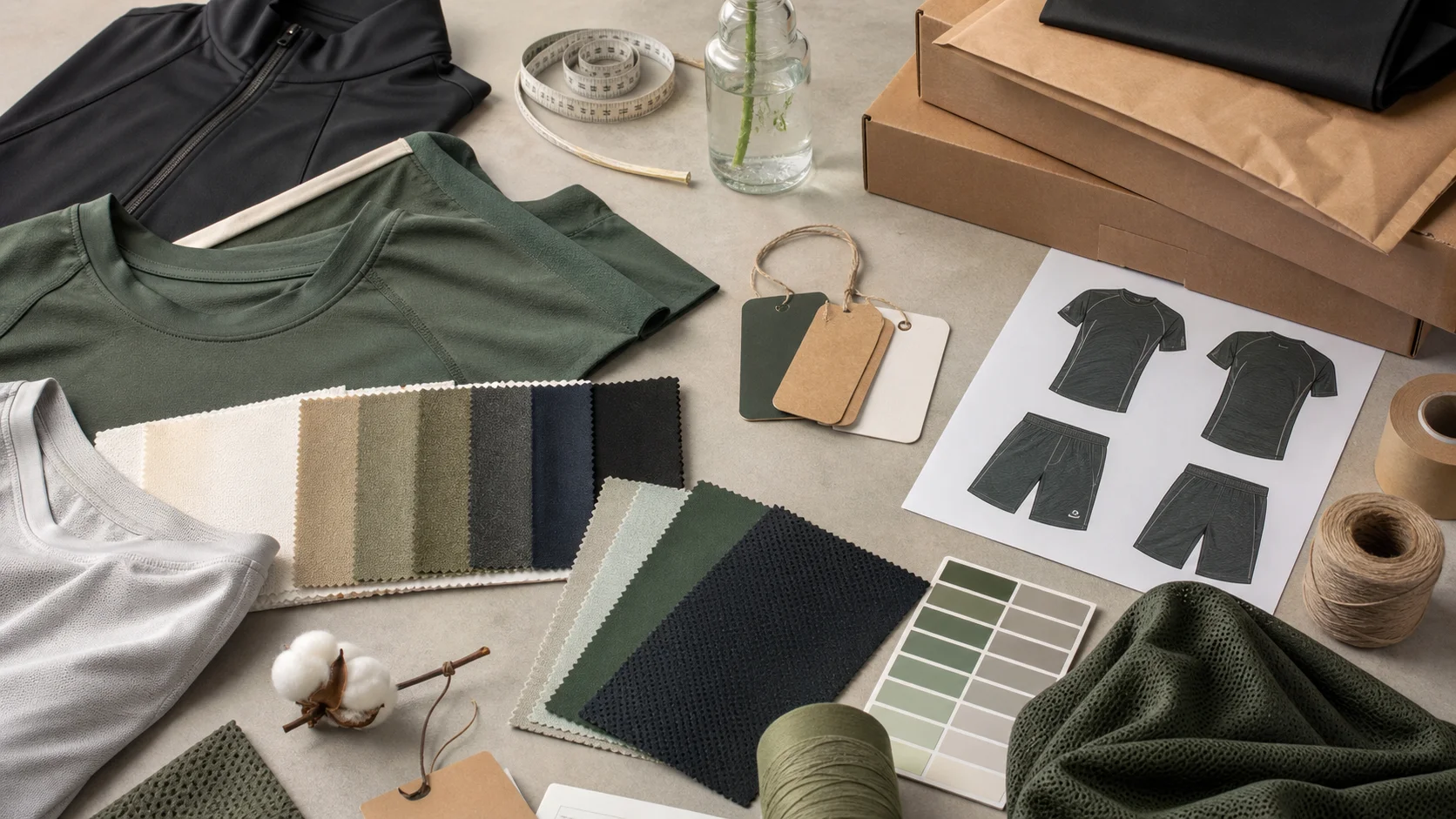
A focused outline for startup sportswear brands sourcing OEM tracksuit trims, covering zippers, drawcords, labels, tapes, hardware, compliance, sampling, and cost decisions tied directly to tracksuit production.
OEM Tracksuit Trim Sourcing for Startup Buyers - Fabrikn production reference
For startup sportswear brands, trim sourcing is rarely treated as a headline issue at the beginning of development. Most attention goes to silhouette, fabric hand feel, fit, and logo placement. That is understandable, but it is also where many early buying mistakes begin. In OEM tracksuit production, trims often decide whether a style feels commercial, durable, and brand-right or looks inconsistent and underdeveloped.
In simple terms, trims include the non-primary materials and finishing components that complete the garment. On a tracksuit, that can mean zippers, cords, toggles, labels, elastic, drawstring tips, tapes, heat transfers, embroidery backings, woven badges, hangtags, polybags, and packaging stickers. Decoration and printing are closely tied to these decisions because logo applications, reflective effects, branded pulls, and tape details must all work with the trim package, not against it.
Startup buyers face extra pressure because they usually work with smaller launch quantities, tighter budgets, and less room for trial-and-error. A large brand may absorb a trim change after sampling. A startup often cannot. One wrong zipper specification, one low-grade cord end, or one delayed custom label can hold the full production line.
That is why trim sourcing needs to be managed as a commercial decision, not just a design detail. A clean tracksuit program depends on balance: visual identity, function, lead time, and MOQ discipline. Buyers who understand this early tend to avoid the most expensive revisions later.
If your brand is still mapping out factory capabilities, it helps to review broader production support options before locking development paths. A useful starting point is https://fabrikn.com/services/, especially when comparing what should be developed in-house versus coordinated through an OEM partner.
Many startup founders underestimate how many trim decisions sit inside one tracksuit set. Even a simple jacket-and-pant program can involve more than a dozen separate components. Some are visible and brand-defining. Others are hidden but critical to performance and quality.
In startup development, the mistake is not usually forgetting these items entirely. The mistake is approving them one by one without viewing the full trim architecture. A jacket may use a premium reverse coil zipper, then get paired with a weak low-density drawcord and a generic heat transfer. The result is a product that feels mixed-grade.
Good sourcing discipline starts with a trim matrix. That matrix should list each component, size, material, color, finish, artwork file status, supplier source, MOQ, lab-dip or strike-off requirement, and approval stage. Without that document, startup buyers end up managing trim by email fragments, which is one of the fastest ways to miss lead-time dependencies.
OEM tracksuit trim sourcing looks straightforward until development begins. Then the tradeoffs become obvious. Startups are usually balancing branding ambition against small-batch economics, and trims expose that conflict immediately.
A factory may accept a tracksuit order at 150 to 300 sets per colorway, but custom zipper pullers, woven labels, jacquard elastic, or molded silicone badges may require 1,000 to 3,000 pieces per design. That gap matters. Buyers either over-purchase trim inventory or downgrade to stock options.
Matching fabric color is already difficult across different dye lots. Matching that same tone on zipper tape, drawcord, elastic, heat transfer, and woven branding is harder. Black is simple. Seasonal fashion shades are not. Matte and shiny surfaces also reflect color differently, which can make “matching” components look off even when they are technically close.
Reflective prints may crack after wash testing. Silicone logos may peel if heat-press settings are wrong. Embroidery can pucker lightweight tricot. High-density prints can feel too stiff on stretch panels. Decoration is not separate from trim sourcing. It depends on the base fabric, pressure settings, curing control, and placement stability.
Bulk fabric can be ready, cut plans approved, and sewing capacity booked, then production stalls because custom drawcord tips or packaging labels are still in transit. Small trims frequently become critical-path items because they are approved late.
Startup buyers often want every trim customized: branded zipper teeth, debossed aglets, molded badge, contrast tape, foil print, custom polybag, and premium hangtag. The result can look good on a concept board, but cost, MOQ, and delay exposure rise quickly. Early-stage sportswear brands usually benefit more from two or three strong branded trim choices than from ten marginal ones.
Trim development works best when it is tied to the tech pack from the first round, not added after the fit sample. Buyers should build a sourcing flow that is simple, documented, and realistic.
There is a practical buying reason for that order. Visible trims drive the perceived value of the tracksuit, while hidden trims affect wear performance. Both matter, but startup budgets do not allow endless revisions. Buyers should therefore prioritize trims that influence sell-through first.
A sensible first collection often uses this mix:
That approach keeps the design intentional without forcing every component into custom development.
Zippers are one of the first places buyers notice quality. Tracksuits commonly use nylon coil or molded plastic zippers, depending on the design and desired look. Reverse coil zippers are popular for cleaner sportswear styling, while molded teeth can create a more structured, utilitarian finish.
Key specifications to confirm include zipper type, gauge, tape color, teeth finish, auto-lock or non-lock slider, puller style, pocket-opening length tolerance, and wash performance. For startup orders, stock zipper bodies with custom pullers often make more commercial sense than fully custom zipper programs.
Typical MOQ for custom pullers may start around 500 to 1,000 pieces per shape, while stock zipper colors can be available at much lower thresholds. The tradeoff is branding depth versus inventory commitment.
Waistband and hood cords can upgrade or cheapen the garment very quickly. Diameter, yarn density, braid quality, tip finish, and color consistency all matter. Metal aglets can look premium, but they add cost, may require coating checks, and can create compliance concerns depending on destination market requirements. Heat-shrink tips cost less and move faster, though they rarely look as elevated.
Toggles and stoppers should be tested for grip strength and attachment security. Weak spring mechanisms are common failure points in lower-grade sourcing.
Elastic affects comfort, recovery, and garment life. Buyers should confirm width, composition, stretch percentage, rebound, logo method, and whether the elastic will be exposed or enclosed. Custom jacquard elastic gives strong branding, but MOQ is often higher than printed elastic or stock elastic solutions.
Typical MOQ ranges can vary from around 500 to 2,000 meters for custom elastic, depending on construction and supplier setup. Startup brands should ask whether leftover elastic can be held for repeat production, because that can improve future costing.
Main labels, size labels, and care labels seem minor until they are wrong. Scratchy label edges, unreadable wash text, inaccurate fiber declarations, or poor heat transfer adhesion create avoidable quality claims. For activewear and tracksuits, heat transfer neck labels are common because they reduce irritation, but they need wash testing and adhesion checks on the exact fabric used.
Woven labels still have value where a more traditional brand signature is needed. Buyers should confirm fold type, edge finish, yarn color matching, text clarity, and placement tolerances.
Silicone badges, TPU patches, and reflective logos sit directly in the Decoration & Printing category because they combine trim sourcing with visual branding performance. These applications should be tested for peel strength, wash resistance, and edge lift, especially on brushed knits or stretch surfaces.
A common startup mistake is choosing a thick badge for a lightweight jacket shell. The badge looks sharp in a flat sample, then distorts the panel during wear. Buyers should match badge weight and stiffness to the fabric structure.
For tracksuits, trims and decoration should be sourced together as one package. A logo print that sits next to a zipper, tape, or badge must align in tone, finish, and durability. Matte trims next to glossy transfers can look unbalanced unless that contrast is intentional.
Common decoration methods for OEM tracksuits include screen printing, silicone printing, heat transfer graphics, embroidery, chenille patches, reflective films, and sublimated tape details. Each option carries a different sourcing and production profile.
Decoration Method Strength Main Risk Best Use Case Screen Print Cost-efficient at scale Hand feel or cracking if overbuilt Simple logos and bold graphics Heat Transfer Clean detail and fast sampling Peeling if press settings are poor Small logos, neck labels, performance styling Embroidery Premium brand perception Puckering on light/stretch fabric Crests, monograms, classic sportswear Silicone/TPU Badge Modern elevated look Edge lift or stiffness mismatch Outerwear-inspired tracksuits Reflective Print Technical sportswear appeal Wash durability variation Running and training capsulesStartup brands should resist stacking too many decoration methods on one style. A tracksuit with embroidery, reflective transfer, printed side tape, and molded badge may look feature-rich, but execution risk rises with each added process. Cleaner assortments are often easier to scale and easier to repeat successfully.
For brands that need help aligning product development choices with manufacturing capability, a background review of the company and production approach can be useful at https://fabrikn.com/about-us/.
Most startup problems in trim sourcing come from timing, not just price. Buyers ask for custom details without building enough calendar for approvals. That creates rushed substitutions late in development.
These are planning ranges, not fixed rules. Supplier capability, material type, tooling, and region all affect the final number. Buyers should always confirm whether MOQ is per color, per size, per logo, or per total order. That detail changes the economics.
A startup should not approve bulk on the assumption that “trim will be close enough.” That approach usually creates avoidable inconsistencies between sample and shipment.
Lead times depend on whether trims are stock, dyed-to-match, printed, molded, or imported from secondary vendors. A stock care label may move quickly. A custom molded zipper pull, matched reflective transfer, and branded elastic combination can extend the critical path significantly. Buyers need to ask for a trim-by-trim timeline, not one general production estimate.
Trim inspection is one of the areas where startup buyers can protect margin without major added cost. A single failed trim can create returns, negative reviews, and costly rework. Bulk apparel quality is not only about sewing.
Pre-production review should also include placement consistency. Tracksuits with side tape, chest logos, or leg branding can look off-balance if trim application shifts even slightly. Decoration tolerances need to be written into the approval standard, not judged casually after the fact.
For startup buyers, the cheapest quality control mistake is the one caught on the trim card or pre-production sample. The expensive one is the same issue discovered after packing.
Inspection risk rises when the factory is managing many outside trim vendors. That does not automatically make the supply chain weak, but it does mean coordination needs closer oversight. Buyers should ask who is responsible for final trim verification before line input.
Trim decisions influence cost more than many startups expect. The issue is not only the unit price of each item. The bigger cost impact often comes from development rounds, MOQ surplus, wastage allowances, tooling fees, and delayed production.
There are a few practical tradeoffs worth stating plainly.
For startup sportswear brands, the best purchasing decision is often selective customization. Put budget into the trims customers actually notice and touch: front zipper pull, waistband branding, logo execution, and packaging presentation. Save on hidden components if performance is still acceptable.
That is not a design compromise. It is usually good range building.
Before final approval, buyers should ask direct operational questions instead of relying on general assurances.
These questions help reveal whether a trim source is truly suitable for startup scaling. The lowest quote is not always the best buy. In trim sourcing, predictability is often worth more than a small unit saving.
If you need to discuss a specific tracksuit development program, trim package, or MOQ challenge, a direct inquiry page such as https://fabrikn.com/contact-us/ is the right place to move the conversation from general planning to actual sourcing requirements.
OEM tracksuit trim sourcing for startup sportswear brands should be handled with the same discipline given to fabric and fit. Trims shape first impression, daily function, and repeatability in bulk production. They also create some of the most common delays in early-stage apparel launches.
The strongest buying approach is usually not the most complicated one. Start with a clear trim matrix. Separate stock options from custom options early. Verify MOQs line by line. Approve visible trims first. Test decoration methods on the actual fabric. Build enough calendar for pre-production trim approval. Keep the first collection branded, but not overloaded.
For startup buyers, that balance matters. A commercially smart tracksuit program is not the one with the highest number of custom details. It is the one that delivers consistent look, dependable wear, manageable cost, and reorder potential.
Get a free quote from Fabrikn — your trusted B2B clothing manufacturer with 10+ years of experience. MOQ as low as 200 pieces.
Get a Free Quote →The highest-priority trims are usually zippers, drawcords, elastic, main branding labels, and logo applications. These affect both visual quality and daily wear performance.
It depends on the trim type, but startup buyers commonly see ranges such as 500 to 1,000 pieces for pullers or badges and 1,000 to 3,000 pieces for woven labels. Custom elastic may be quoted by meter, often from around 500 meters upward.
Most startup brands benefit from a mix of both. Stock trims help control lead time and minimums, while a few carefully selected custom trims can still build brand identity.
Decoration methods such as heat transfers, reflective prints, embroidery, and silicone badges depend on the fabric type, placement, and supporting trims around them. They should be developed as part of one coordinated package.
One of the biggest mistakes is approving garment samples before confirming bulk trim feasibility, MOQ, and lead time. This often leads to substitutions that change the final look or delay shipment.
Use a trim matrix, confirm artwork early, approve strike-offs and pre-production samples, and track every custom item separately from the main garment lead time. Small trims often become critical-path items.