
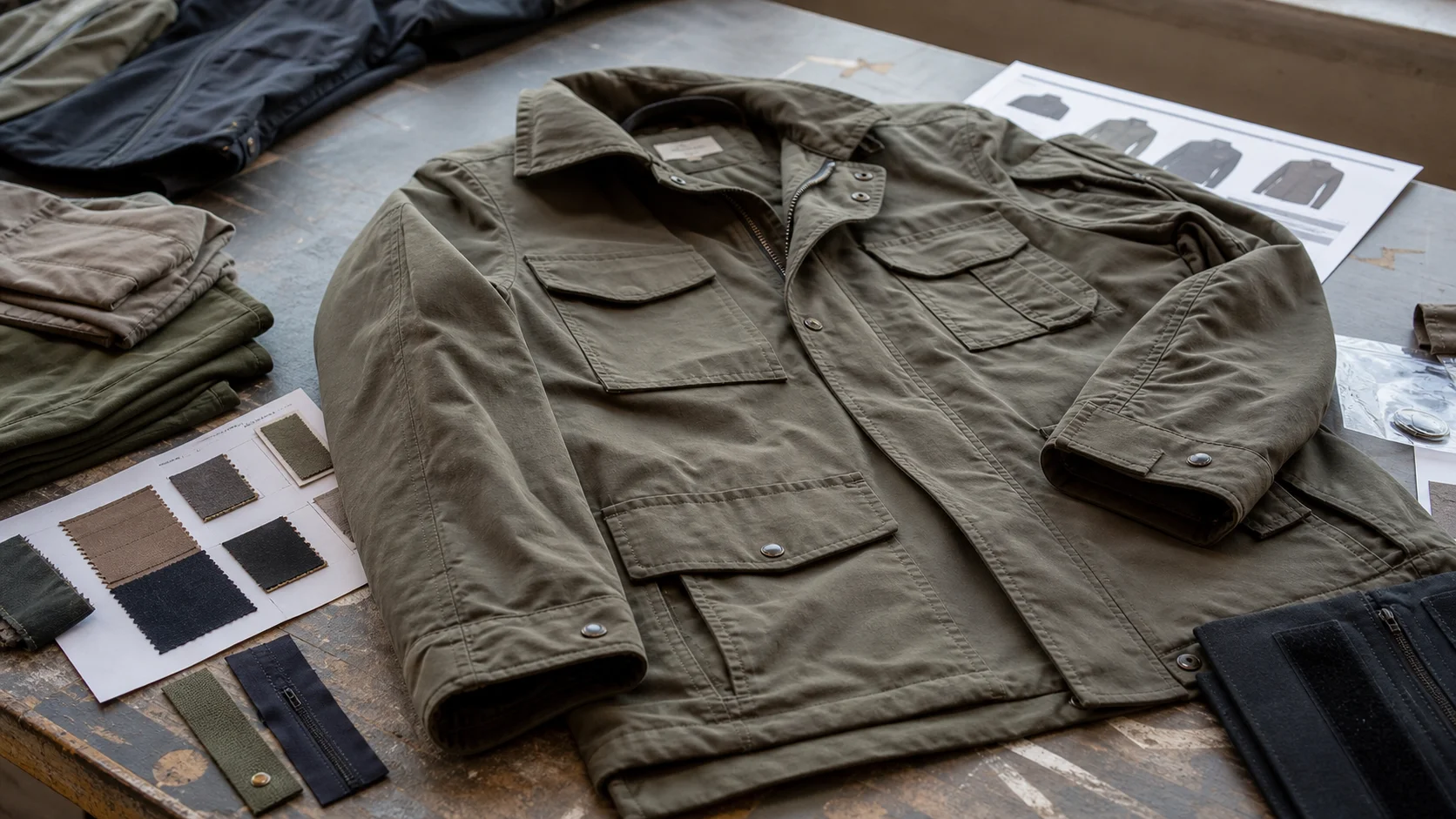
A detailed outline for club distributors evaluating wholesale tracksuit shrinkage testing, with product-specific guidance on fabric behavior, decoration impact, sizing consistency, and bulk order approval steps.
Wholesale Tracksuit Shrinkage Testing for Club Orders - Fabrikn production reference
For club distributor orders, shrinkage testing is not a minor technical step. It is one of the main controls that separates a smooth delivery from a costly size complaint cycle. When buyers source wholesale tracksuits for schools, academies, football clubs, rugby programs, gyms, or multi-team community organizations, the order usually has three pressure points at the same time: consistent sizing, logo decoration accuracy, and repeatability across replenishment runs.
Tracksuits create a particular risk because they are worn as matched sets. If the jacket shrinks differently from the pants, the issue is more visible than with standalone garments. If decorated areas pucker after washing, the product can look low grade even when the original sewing quality was acceptable. If inseam, body length, sleeve length, or waistband recovery changes too much after laundering, clubs often treat the shipment as a sizing failure rather than a normal wash outcome.
That is why wholesale tracksuits shrinkage testing for club distributor orders should be built into sourcing decisions before bulk production starts, not after goods are packed. Buyers that want dependable outcomes should review fabric composition, knit or woven structure, finish type, decoration method, wash test standards, tolerance limits, and sample approval records together.
For importers and distributors managing custom teamwear programs, shrinkage testing also supports clearer communication with decoration teams and end customers. If a supplier cannot explain expected wash performance in plain numbers, the order risk is usually higher than the quoted price suggests. A lower unit price on paper can become expensive once returns, re-decoration, or split-size replacements begin.
Brands and distributors comparing development options can review broader production support at /services/ and share technical order requirements through /contact-us/.
Shrinkage is the measurable dimensional change in a garment or fabric after washing, drying, steaming, or heat exposure. In wholesale tracksuits, the practical concern is not simply whether shrinkage happens. Some dimensional change is normal. The key question is whether the change stays within agreed tolerance and whether it remains balanced across the garment set.
Distributors should separate three issues:
A brushed polyester-cotton fleece tracksuit can behave very differently from an interlock polyester training set. A 100% polyester tricot may show low dimensional shrinkage but still develop heat-related appearance issues during transfer printing or finishing. A cotton-rich jog set may feel more premium to some clubs, but the shrinkage exposure is usually higher unless pre-shrunk finishing and careful pattern allowances are in place.
For club orders, acceptable shrinkage is not only a fabric lab figure. It has to be judged against size spec tolerance, logo placement stability, and the visual match between jacket and trouser after washing.
Most avoidable shrinkage problems show up long before shipment. The issue is often weak pre-production control rather than a single bad wash result. Buyers regularly run into trouble in five areas.
A handfeel swatch or color dip is not enough. If the fabric is selected mainly on appearance and price, the shrinkage profile may be unknown until garment testing, when correction becomes slower and more expensive.
Even when the mill provides shrinkage numbers, the garment pattern may not be adjusted correctly. This matters for cuff length, body length, rise, and leg length. Club distributors should ask whether the supplier has built shrinkage allowance into graded patterns or expects the wash result to stay comfortably inside spec without compensation.
Screen print, heat transfer, silicone badge application, embroidery backing, and sublimated panel joining all affect how the garment performs after wash and heat exposure. Decoration can restrict fabric movement in one zone while the surrounding panel relaxes or shrinks. That creates bubbling, tunneling, or logo edge distortion.
Testing a single medium sample is not always enough for club programs that carry youth and adult size runs. Fabric behavior may be similar, but panel proportions, seam lengths, and decorated area scaling can expose different stress points in larger sizes.
Repeat orders often fail when buyers assume the next bulk lot will behave exactly like the first. Yarn source, finishing conditions, dyeing tension, brushing intensity, and compacting quality can change from lot to lot. Club distributors that rely on repeatable teamwear programs should recheck shrinkage on major replenishment runs, especially when the supplier changes fabric lot or season.
The right test method depends on fabric type, care label claim, and target market. Most distributors do not need to run the laboratory themselves, but they do need to know what is being tested and what the result means.
This is the first useful checkpoint. The factory or nominated lab marks a measured fabric section, washes it under the intended care conditions, then measures warp and weft or course and wale dimensional change. For knit tracksuit fabrics, this step helps flag relaxation shrinkage early.
This test checks the finished tracksuit, often after printing or embroidery. It is more realistic than fabric-only testing because seams, zippers, elastics, rib trims, fusings, and decoration all influence the result. For club distributor orders, garment testing is usually the more commercially relevant benchmark.
In Decoration & Printing work, shrinkage testing should sit alongside logo durability checks. A print may remain attached but still look unacceptable if the surrounding panel shrinks unevenly. Buyers should review cracking, lifting, bubbling, and edge distortion after wash cycles.
Tracksuits decorated with transfers or badges need process-temperature review. A fabric that stays dimensionally stable in standard washing may still react poorly to high heat during application. Polyester-rich styles are especially sensitive to shine, platen marks, or surface distortion if process settings are too aggressive.
Pants legs and sleeves can twist after wash even when overall length shrinkage seems acceptable. For club wear, that creates a visible quality complaint. Side seams rotating forward or backward, especially on knit pants, should be treated as a real commercial defect risk.
Test Area What It Checks Why It Matters for Club Orders Fabric dimensional change Length and width shrinkage before cutting Supports pattern allowance decisions Finished garment wash test Set performance after sewing and trims Shows jacket and pant balance after laundering Decoration wash review Logo appearance and panel distortion Protects club crest and sponsor presentation Heat process check Reaction to transfer or pressing temperatures Reduces decoration-related damage Twisting/skew Seam rotation and leg or sleeve distortion Prevents obvious wear complaintsNot all tracksuit fabrics carry the same shrinkage risk. Buyers should judge fabric by composition, structure, finish, and end use rather than fiber content alone.
These are common in training tracksuits due to durability, color retention, and lower shrinkage risk compared with cotton-rich fleece. The tradeoff is feel. Some club buyers accept the more technical handfeel for better repeatability and easier decoration control. For budget-conscious distributor programs, polyester-based sets are often the safer route if wash stability is the priority.
This option is popular for travel sets, supporter wear, and casual club merch. It can offer better comfort perception and a heavier retail look, especially in the 280 to 340 GSM range. The tradeoff is a broader shrinkage exposure, especially when cotton percentage rises, brushing is deep, or compact finishing is inconsistent.
These can sell well when clubs want premium casualwear. They also need stricter shrinkage control. If a supplier quotes aggressive prices on cotton-rich tracksuits without solid wash data, buyers should be cautious. The risk is not just length loss. Waistband recovery, cuff rebound, and panel torque may also worsen after laundering.
Shrinkage is not only a shell-fabric question. Waist ribs, cuff ribs, pocketing, zipper tapes, mesh linings, and elastic inserts can all respond differently. A shell fabric with acceptable results may still produce a poor finished garment if the trims pull at different rates.
Useful technical points to request from suppliers include:
Because this topic sits in Decoration & Printing, it is worth being direct: many club order complaints blamed on shrinkage are partly decoration management failures. The garment may shrink within a tolerable range, but the decorated area makes the issue look worse.
Screen print is widely used for club branding, sponsor marks, and back names on teamwear. Thick ink deposits, poor curing balance, or incompatible stretch performance can make washed garments appear distorted. If the base fabric contracts and the print film does not move with it, puckering becomes visible around the logo panel.
Transfers are common for smaller MOQ club programs because they allow flexibility. Typical club distributor orders may start around 100 to 300 sets for custom decorated runs, though blank stock-supported programs can work below that and fully custom cut-and-sew projects often start around 300 to 1000 sets per colorway depending on complexity and fabric sourcing. The tradeoff is that transfer application introduces another heat-sensitive process. Low-cost transfers can save money upfront but increase rework risk if wash performance is not checked on the final fabric.
Embroidery gives a durable and familiar clubwear look, but it can stiffen localized areas. On lighter interlock or fleece surfaces, embroidery backing can create differential tension after wash. This does not always fail a lab test, yet it may still fail a club's visual expectations.
For polyester performance tracksuits, sublimated cut panels can reduce some logo cracking concerns because the design is integrated into the fabric. That said, panel stability still matters. Heat-setting quality, seam construction, and panel matching remain important.
The most practical purchasing question is not “Which decoration is best?” It is “Which decoration is most compatible with this fabric, care label, price point, and reorder plan?”
A capable supplier should be willing to discuss decoration compatibility early. Buyers who need development support, wash review coordination, or guidance on suitable logo applications can use /about-us/ to understand production positioning and /contact-us/ to discuss project details.
Club distributor orders benefit from a disciplined approval sequence. Skipping steps to save a week often creates a month of avoidable correction later.
Review composition, GSM, shade, finish, and initial shrinkage data. If the fabric is new, ask for wash results tied to the intended care instruction.
Check style, construction, trim layout, and decoration method. At this stage, fit comments and decoration placement comments should be recorded separately from wash performance remarks.
This is the important checkpoint for shrinkage risk. The sample should be made with bulk-intended fabric, trims, and decoration method. One piece kept unwashed and one piece washed under agreed conditions is a practical comparison approach.
Measure body length, chest, sleeve length, waist, hip, inseam, outseam, cuff opening, and key logo positions before and after wash. For club sets, compare jacket and pant appearance together. A technically acceptable jacket paired with visibly shortened pants still creates a failed commercial result.
For larger programs, a size set is worth the time. Youth sizes, adult core sizes, and at least one top-end size should be reviewed when possible. This is especially useful on fleece and mixed-trim styles.
Do not release bulk on verbal approval alone. The supplier should have a signed or clearly documented approval record with measurements, wash method, tolerance, decoration details, and care label basis.
A practical approval file should include:
MOQ and lead time decisions often affect shrinkage control more than buyers expect. When lead times are too compressed, suppliers may shorten fabric relaxation, testing, or re-approval windows. That increases risk.
For blank or stock-supported tracksuits with later decoration, MOQ can be relatively low, sometimes from a few dozen sets depending on size breakdown and available inventory. For custom wholesale tracksuits with club branding, color-matched trims, and private labeling, many factories look for roughly 100 to 300 sets per style for simpler programs. Fully custom fabric development, multiple panels, or specialized printing often pushes workable MOQ into the 300 to 1000 set range per color or design. Exact numbers vary by supplier setup and fabric source.
The key tradeoff is clear: lower MOQ flexibility often means less room for custom fabric engineering and fewer chances to optimize shrinkage performance. Higher MOQ usually supports better control over fabric booking, test repetition, and production consistency.
Wholesale club orders commonly depend on these timing factors:
A simple stock-body decoration order can move much faster than a custom cut-and-sew tracksuit. Once custom fabric finishing is involved, realistic lead time often expands significantly. Buyers that expect reliable shrinkage control should leave room for at least one corrective loop in case test results miss target.
If a supplier promises very short delivery on a new custom club tracksuit with no clear testing window, that should be treated as a warning sign rather than a commercial advantage.
Pre-shipment inspection often focuses on measurements, workmanship, labeling, packing, and decoration accuracy. Those are necessary checks, but shrinkage-related risks can still slip through if inspection happens only on unwashed garments.
A shipment may pass final measurement at the factory yet still create end-user issues after the first home laundry cycle. This is why sealed sample wash data matters. Final inspection should confirm that bulk construction matches the approved standard, not replace wash testing.
If the order uses more than one fabric lot, inspectors should confirm lot segregation and record consistency. Mixed lots can produce subtle size variation that only becomes obvious after washing.
On tracksuits, logo position can appear acceptable on the table but shift visually once the garment relaxes. This matters on left chest crests, thigh prints, and back sponsor placements.
Waistbands and cuffs deserve extra attention. A garment can hold size after wash but still feel commercially defective if the elastic recovery weakens or the rib ripples.
Inspection Risk What to Check Commercial Impact Fabric lot inconsistency Lot records and appearance matching Uneven fit across the order Decoration distortion Wash-approved logo appearance standard Club branding complaints Trim mismatch Rib, elastic, zipper, and tape behavior Poor set balance after laundering Skew and twisting Leg and sleeve seam alignment Visible quality rejectionWhen sourcing wholesale tracksuits shrinkage testing for club distributor orders, buyers should keep the process commercially grounded. The aim is not to demand every possible lab report. The aim is to control the failure points that are most likely to affect club satisfaction and reorder confidence.
The strongest purchasing judgment in this category is straightforward: choose the supplier that can explain wash performance clearly, not the one that simply says the tracksuits are “pre-shrunk” or “export quality.” Those terms are too vague to protect a club distributor.
In practical sourcing terms, polyester-based performance tracksuits usually offer the safest path for stable dimensions and repeat club replenishment. Cotton-rich fleece tracksuits can still work well, especially for travel or supporter use, but they need tighter development control and more realistic expectations on wash behavior. Neither option is automatically right. The correct choice depends on the club’s use case, decoration method, target price, and reorder model.
For distributors, shrinkage testing should be treated as part of product development, decoration planning, and claims prevention. That is especially true when orders carry crest placement, sponsor graphics, player personalization, or multiple club branches that depend on consistent repeat sizing.
Get a free quote from Fabrikn — your trusted B2B clothing manufacturer with 10+ years of experience. MOQ as low as 200 pieces.
Get a Free Quote →Acceptable levels vary by fabric, market, and care label, but buyers often look for low and balanced dimensional change that stays within agreed garment tolerances. The more important point is consistency across jacket and pants, plus stable decoration appearance after washing.
Finished garments should be tested as well. Fabric-only testing is useful early, but it does not capture the effect of sewing, trims, embroidery, transfers, or print curing on final wash performance.
In many cases, yes. Polyester-based performance fabrics usually present lower dimensional shrinkage risk than cotton-rich fleece or jog fabrics. The tradeoff is a different handfeel and sometimes a less casual look.
Decoration can make shrinkage issues more visible. Even when the garment remains within measurement tolerance, logos may pucker, bubble, or distort if the decoration method is not well matched to the fabric and wash conditions.
Simple custom programs often start around 100 to 300 sets, while fully custom cut-and-sew orders with special fabrics or more complex decoration can require 300 to 1000 sets per colorway. Stock-supported options may allow lower quantities.
It should begin during fabric approval and continue at the pre-production garment stage. Waiting until final inspection is too late, because shrinkage-related corrections usually require changes to fabric finishing, pattern allowances, or decoration settings.
Repeat orders can change if fabric lots, yarn sourcing, finishing tension, or trim supply differ from the original run. That is why replenishment orders should not assume the first approved shrinkage result automatically applies forever.
No. Pre-shipment inspection mainly checks the finished goods before customer use. Shrinkage risk needs to be controlled earlier through fabric testing, wash-approved samples, and documented bulk sealing standards.