
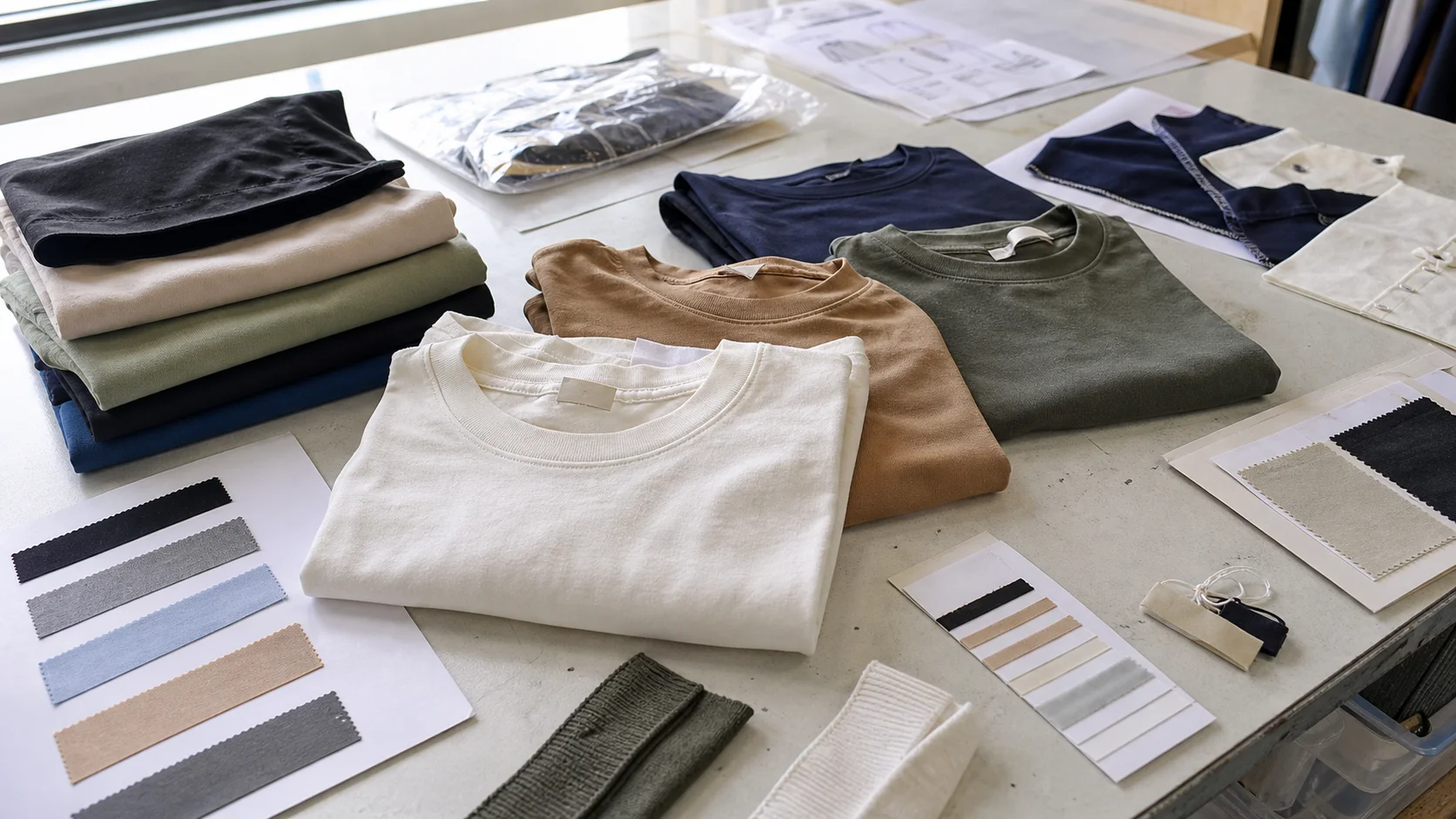
A focused outline for hospitality retailers sourcing OEM screen printed chef coats, covering print specs, fabric performance, sustainability, compliance, packaging, and order planning for retail-ready collections.
OEM Screen Printed Chef Coats for Retail Orders - Fabrikn production reference
OEM screen printing for chef coats hospitality retailer orders sits at the intersection of uniform performance, branded presentation, and production discipline. Retailers in hospitality apparel are not simply buying jackets with a logo. They are sourcing a category that has to survive commercial laundering, repeated wear, kitchen heat, stain exposure, and demanding end-user expectations around comfort and professional appearance.
That is why OEM chef coat programs require tighter control than many basic promotional garments. A restaurant supply retailer, hospitality uniform chain, or workwear distributor usually needs consistent grading, repeatable shade matching, durable printing, and pack accuracy across multiple sizes and colorways. If the order is heading into resale channels, the standard goes up again. Fold, labeling, barcoding, carton assortment, and replenishment planning become part of the manufacturing decision.
For buyers evaluating private label production, the main question is not whether screen printing can be done on chef coats. It can. The real question is whether screen printing is the right decoration method for the fabric, placement, wash requirement, and brand position of the product line. In many cases, it is a practical and cost-efficient choice for chest logos, back graphics, launch collections, culinary school merchandise, and hospitality retail capsules. In other cases, embroidery, heat transfer, or mixed decoration may perform better.
A careful OEM program weighs all of those factors before bulk production starts. Retailers that treat chef coats like ordinary fashion tops often run into avoidable problems: print cracking on tightly woven fabric, strike-off mismatches, excessive shrinkage affecting print hand feel, or size assortments that do not reflect actual kitchen uniform demand. Buyers that define the spec in detail tend to get better repeatability and cleaner margins.
For brands exploring supplier capabilities, a structured manufacturing brief matters. FabrikN outlines broader production support on its services page, which is the right starting point if you are comparing development, sourcing, and order management requirements.
Retail orders for chef coats usually follow one of three models. First, a retailer builds a private label line and wants exclusive styling, sizing, and branding. Second, a hospitality distributor needs standard silhouettes with custom print treatment for specific customer groups. Third, a lifestyle or culinary retail brand wants chef-inspired apparel with commercial credibility.
OEM production supports all three models because it allows the buyer to control:
For retailer orders, this control has a direct margin impact. Off-the-shelf chef coats can fill gaps quickly, but they limit differentiation. OEM development lets the buyer fine-tune the product to target price points and channel expectations. A value-tier line may use a poly-cotton twill for easier care and lower cost. A premium line may shift to organic cotton blends or TENCEL-containing fabrics if the brand wants a more sustainable story and softer hand feel.
The tradeoff is complexity. Once a buyer asks for custom body patterning, custom print placement, branded snaps, woven labels, and retail-ready packing, the order becomes a manufacturing project rather than a simple garment purchase. That means longer sampling cycles, more approval checkpoints, and tighter technical documentation.
Screen printing remains relevant for chef coats because it scales well on medium to large retail orders and can deliver clean, consistent branding when the artwork and fabric are compatible. It is most commonly used for left chest logos, sleeve graphics, large back prints, event collections, culinary school insignia, or branded merchandise tied to hospitality groups.
Screen printing performs best when buyers align the decoration method with the garment surface and wash expectations. Chef coats often use tightly woven twill, poplin, or drill fabrics in cotton-rich or polyester-cotton blends. These surfaces can print well, but ink selection matters. Standard plastisol may offer strong opacity, especially on dark grounds, yet the final hand feel can be too heavy for some premium programs. Water-based systems can feel softer, though wash durability and color vibrancy need to be tested carefully against the actual fabric and aftercare conditions.
Retailers should also watch placement constraints. Chef coats include seams, plackets, pocket edges, double-breasted fronts, and vent panels that can interfere with print registration. A chest logo that looks straightforward in digital artwork may sit too close to a fold line or snap tape in production. This is one reason pre-production sample review is essential.
As a buying rule, screen printing is usually a strong fit when:
It is less ideal when the design includes highly fine detail on textured fabric, when the end user demands a very polished corporate look, or when industrial wash conditions are especially severe. In those cases, embroidery or emblem applications may be a safer choice despite higher cost.
In Sustainable Fashion, chef coats are an interesting category because they are workwear pieces with long service lives. That alone can support a more responsible product strategy if the garment is made for durability, repairability, and repeat use rather than short replacement cycles. Retailers that want a stronger sustainability position should focus less on marketing claims and more on practical material and process choices.
Useful sustainability levers in OEM screen printed chef coat programs include:
There is a purchasing tradeoff here. The most sustainable-looking fabric is not always the best commercial choice for a kitchen uniform. Some recycled or softer-hand materials may not hold shape, stain release, or repeated laundering as well as conventional blends. Buyers need wear testing, wash testing, and print testing before positioning a program as durable hospitality apparel.
A sustainable chef coat program is usually built on longevity and accurate specification, not only on fiber claims.
Screen printing also needs scrutiny. Ink systems, curing control, and print coverage influence both wear life and resource use. A smaller, well-placed logo on a durable coat often makes more commercial and environmental sense than a large print that stiffens the garment and fails early. Retailers that want a credible sourcing discussion should ask practical questions, then compare answers against the product’s actual end use.
If buyers need background on manufacturer positioning and capabilities, the about us page can help frame the conversation before moving into technical development.
The fastest way to lose time in OEM chef coat development is to leave too many variables open. Screen printed uniform products need a clear tech pack and trim sheet before sampling starts. A vague request such as “premium chef jacket with logo print” usually creates rounds of avoidable revision.
Key specs to lock early include:
MOQ often depends on how many of those variables are custom. A relatively standard chef coat body with one or two screen print placements may start around 300 to 500 pieces per style-color in some factories, though many suppliers prefer 500 to 1000 pieces for efficient bulk production. If the buyer wants custom fabric development, multiple sizes, several colors, and private packaging, realistic MOQ can rise higher.
Retailers should not judge MOQ in isolation. A higher MOQ on a stable, repeatable style can be commercially smarter than a very low MOQ on an inconsistent program that cannot scale. The better question is whether the supplier can support reorder continuity with the same base cloth, print standard, and sizing.
Costing for OEM screen printed chef coats is rarely driven by one element alone. Fabric usually carries the largest share, followed by construction complexity and decoration. Printing can remain cost-efficient, but the savings depend on artwork, color count, and run size.
The main cost drivers include:
Buyers often assume screen printing is always the cheapest branding route. On simple large runs, that is often true. Yet on small color-separated orders or highly detailed artwork, the setup cost can reduce the advantage. Embroidery may look more expensive per piece but can be commercially justified on premium chef coats with modest logo size and lower wash-risk perception.
Cost Factor Lower-Cost Option Higher-Cost Option Buyer Tradeoff Fabric Stock poly-cotton twill Custom sustainable blend Cost control versus brand differentiation Printing 1-color chest print Multi-color front and back print Cleaner margin versus stronger visual impact Trims Standard labels and buttons Custom branded trims Simpler production versus stronger private label identity Packing Basic bulk fold Retail-ready individual packing Factory efficiency versus shelf readinessA practical buying approach is to build one core chef coat that can take seasonal print changes rather than launching too many unique bodies at once. This controls pattern cost, fit risk, and production complexity while keeping the retail line fresh.
Sampling is where many retailer orders are won or lost. OEM chef coats need more than a visual sample. The buyer should build a staged approval process that separates fit, fabric, color, print, and packaging so each point is reviewed clearly.
A typical workflow looks like this:
Print strike-off approval is especially important. Reviewing artwork on paper is not enough. The buyer needs to see how the ink sits on the actual chef coat fabric after curing, and ideally after wash testing. A print that appears sharp before washing can soften, crack, distort, or bleed after repeated cycles if the ink-fabric pairing is not stable.
Size approval should also be handled with discipline. Chef coats have a broad size demand curve in hospitality channels, and grading errors quickly become a return issue. Retailers should review not only sample measurements but also tolerance allowances. A supplier with a solid sealing process will document approved points of measure and use them as the reference during inline and final inspection.
Lead time for OEM screen printed chef coats depends on fabric source, sample revision count, print complexity, trim readiness, and order volume. For a repeat style using available fabric and approved artwork, production can move faster than a fully new development. For a new retail launch with custom body, custom fabric, private packaging, and multi-point print, buyers should expect a longer path.
Typical timelines often fall into these broad ranges:
These are only working estimates. The actual delivery window can extend if any of the following are unresolved:
The strongest buyers manage backward from in-store date, not from factory ex-date. That means building time for sample shipping, comment cycles, lab testing if required, bulk inspection, freight planning, customs, and retailer warehouse intake. If the launch window is fixed, reducing style count is often safer than compressing approvals.
Chef coats look simple on paper, but inspection risk is real. The combination of uniform construction and printed branding creates several technical checkpoints that retailers should take seriously.
Common risk areas include:
White chef coats deserve special attention because they show every mark. Factories handling white hospitality garments need good in-line cleanliness controls, careful finishing, and disciplined final checking. Print contamination, handling dirt, and needle oil can create avoidable rejects.
Inspection planning should cover both garment quality and retail compliance. That includes measurement checks, workmanship review, shade consistency, print fastness, label accuracy, barcode accuracy, and carton assortment. Retail orders usually justify pre-shipment inspection at an agreed AQL level, especially on first production runs.
If the print method has not been tested against the actual laundering expectation, the buyer is still in development mode, even if bulk production has started.
Retail buyers sourcing chef coats should look past generic apparel capability claims. The right OEM supplier for this category needs a workable combination of garment construction discipline, print coordination, material sourcing control, and order management accuracy.
Useful supplier evaluation points include:
A supplier should also be prepared to discuss what is not advisable. That is often a positive sign. If a factory pushes every fabric and every print idea without raising wash, opacity, or placement concerns, the buyer may be hearing a sales answer rather than a production answer.
Retailers comparing suppliers should request quotations on the same spec sheet, then compare not just price but also assumptions. One quote may include standard labels and bulk packing while another includes custom hangtags, barcode stickers, and individual polybags. The lower quoted price is not always the better landed-cost choice.
When it is time to move from discussion into quotation and development, the most practical next step is a direct project brief through contact-us, with artwork, target fabric direction, size range, estimated quantities, and required delivery window included from the start.
Before placing an OEM screen printed chef coat order, retailers should confirm the following:
That checklist sounds basic, but it prevents many of the recurring mistakes in hospitality apparel sourcing. Chef coats are functional garments first. Retail branding should support that role, not complicate it. The best OEM outcomes come from balancing appearance, durability, cost, and operational simplicity.
For sustainable fashion retailers, that balance matters even more. A chef coat that looks right in the showroom but fails in service is not a strong product, regardless of its material story. A well-specified garment with durable screen printing, sensible packaging, and a realistic reorder plan is a stronger commercial and sustainability decision.
Get a free quote from Fabrikn — your trusted B2B clothing manufacturer with 10+ years of experience. MOQ as low as 200 pieces.
Get a Free Quote →Typical MOQ often starts around 300 to 500 pieces per style-color for relatively standard programs, while many suppliers prefer 500 to 1000 pieces for better efficiency. Custom fabric, extensive trim development, and multiple colorways can push the practical MOQ higher.
It can be, if the ink system, curing standard, fabric type, and wash requirement are properly matched and tested. Buyers should approve strike-offs on actual fabric and review wash performance before bulk production.
They can fit within a sustainable fashion category when the program emphasizes durable wear life, responsible fabric selection, controlled decoration, and reduced waste in packaging and replenishment. Longevity is a major part of the sustainability case in workwear.
That depends on the price point and end use. Poly-cotton twill remains common for durability and easy care, while cotton-rich or alternative blends may suit premium positioning. The best choice is the one that balances comfort, print compatibility, and laundering performance.
Development and bulk production can range from a few weeks for sampling plus 30 to 75 days for bulk, depending on fabric availability, trim readiness, print complexity, and approval speed. Buyers should calculate from store delivery date backward, not from factory completion date.
The main risk is approving too little before bulk starts. Fit, fabric, print strike-off, wash performance, and packaging all need clear sign-off. First orders benefit from stricter pre-production review and pre-shipment inspection.