
An SEO-focused outline for nursing school buyers evaluating OEM scrubs seam strength testing, with section ideas centered on seam performance, lab methods,...
OEM Scrubs Seam Strength Testing Buyers Guide - Fabrikn production reference
For nursing school programs, scrub uniforms have a different job than fashion-driven activewear. They need to hold up to repeated wear, frequent laundering, lab movement, and long training shifts without seam failure becoming a recurring complaint. Seam strength testing is one of the most useful ways to reduce that risk before bulk production starts.
This guide is written for buyers sourcing OEM scrubs for nursing school programs. It focuses on what seam strength testing can and cannot tell you, how to ask for the right test data, which construction details matter most, and where tradeoffs usually appear between cost, comfort, and durability.
Seam strength testing measures how much force a sewn seam can take before it opens, slips, or breaks. In scrub garments, this matters most at side seams, inseams, armholes, crotch seams, yokes, pocket attachment points, and stress areas near vents or cargo pockets. Nursing school uniforms are expected to move through repeated bending, squatting, lifting, and daily laundering, so seam integrity is not a minor detail.
Buyers sometimes assume stronger fabric automatically means a stronger garment. That is only partly true. A durable knit or woven fabric can still fail if the stitch type, stitch density, needle selection, thread count, seam allowance, or machine tension is wrong. Good seam performance is a system result, not a single-material result.
For OEM scrub programs, the seam is often the first weak point visible to students and faculty. The right test does not promise perfection; it helps screen out weak construction before bulk orders go live.
Nursing school buyers are usually balancing cost controls, uniform consistency, and replacement risk. Seam failure has a direct operational cost. A torn scrub top or split pant leg creates complaints, reorders, and avoidable wear issues across the cohort. In regulated training settings, even small failures can make a program look careless.
Seam strength becomes more important when the scrub program uses lighter-weight polyester-cotton blends, stretch fabrics, or budget-level construction. These fabrics can work well, but they need the right sewing setup and testing discipline. Stretch content can improve comfort, yet it may increase seam stress if the construction does not recover properly after movement.
The practical buyer’s view is simple: if the scrub program is mandatory, the uniform must survive the academic year with controlled replacement rates. That is where seam testing pays off. It is less expensive to reject a weak sample than to replace hundreds of poor-performing garments later.
Suppliers may reference different test methods, and buyers should not accept a generic “passed testing” statement without detail. Ask which standard was used, what specimen type was tested, and what the acceptable threshold is for your style.
This is one of the most common ways to measure seam performance. The seam specimen is pulled until failure. The result shows seam strength in relation to fabric, thread, and construction. It is useful for comparing samples, though the exact number only matters when it is tied to a clear standard or buyer spec.
Seam slippage checks whether yarns in woven fabrics shift apart under load. This matters when using polished poly-cotton woven fabrics with tighter weave structures. A seam can look intact but still open slightly under stress, which is not acceptable in busy training use.
These tests are more common in stretch products and knit-based items. Scrub tops with elastic features, jersey panels, or high-stretch side zones may need added review for how seams behave under multidirectional strain.
Mechanical seam strength alone is not enough. Repeated wash testing gives a better picture of how thread, stitch formation, and finishing hold up after laundering. Shrinkage, puckering, and seam torque can all affect long-term reliability. For nursing school programs, this part is often more useful than a single lab number.
A good buyer request is to ask for both initial seam strength data and post-wash performance. If a supplier only shows a one-time test before laundering, the result may overstate real-world durability.
Seam strength starts with material choice, but the details are usually what separate an acceptable scrub from a weak one. Buyers should confirm the following points before approving bulk production.
Typical OEM scrub fabrics fall in the medium-weight range. Common woven scrub blends may sit around 120 to 180 gsm depending on the handfeel and opacity target. Stretch styles may use a higher elastane percentage, but comfort gains can come with higher stitch sensitivity.
For nursing school use, buyers often choose poly-cotton or polyester-rich blends because they are easier to care for and tend to hold color better. The tradeoff is that low-cost versions can feel stiff or become shiny after frequent washing. A softer hand can be better for student wear, but it should not come at the expense of seam stability.
Polyester thread is the common baseline for scrubs because it resists abrasion and laundering better than many lower-grade alternatives. Thread count and tex size should be matched to fabric weight. An undersized thread can break early, while an oversized thread may damage lightweight fabric or create bulky seams.
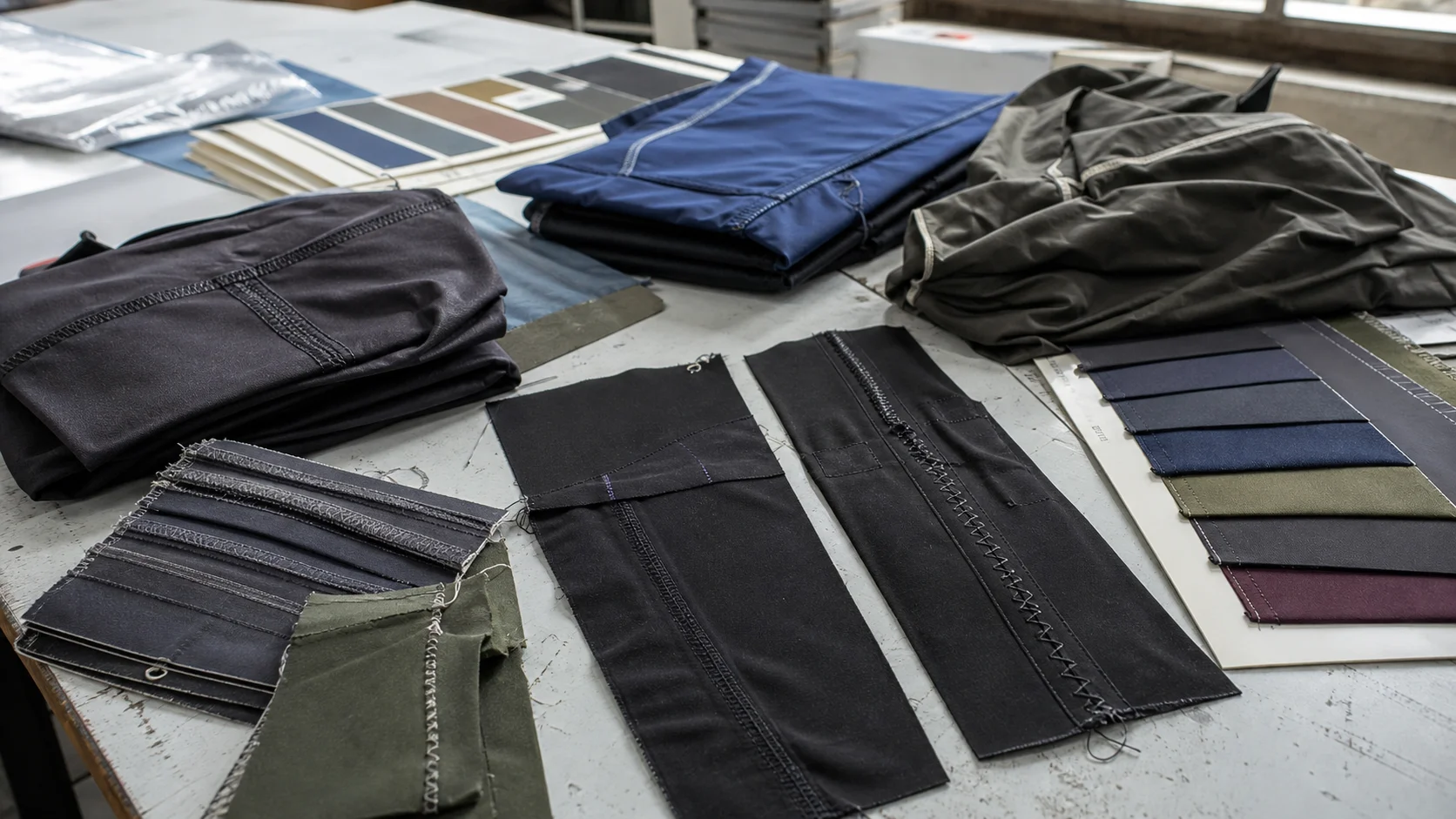
Lockstitch, overlock, coverstitch, and reinforced bar-tack details all appear in scrub production depending on the style. For main seams, buyers should ask for the stitch construction by location, not just a general description. Stitch density that is too low can reduce seam security. Stitch density that is too high can perforate the fabric and weaken the line.
Seam allowance is often overlooked in buyer discussions. Narrow allowances save fabric but can reduce durability and leave less margin for sewing tolerance. Nursing school programs should treat this as a core spec, especially on high-stress pant seams and pocket joins.
Pockets, vents, side slits, and crotch joins often need bar-tacks or reinforced stitching. These details are low-cost compared with full remake risk. For scrub pants, the inseam and crotch area usually deserve closer attention than decorative details.
Component Buyer Focus Risk if Weak Fabric weight Opacity, comfort, and tear resistance Thin feel, early wear, seam stress Thread spec Durability and abrasion resistance Thread breakage, seam opening Stitch density Balance between hold and fabric damage Puckering or weak seam line Seam allowance Construction margin Margin loss after wash or stress Reinforcement Stress points and pocket joins Failure at movement zonesFor nursing school programs, the sample process should be treated as a decision gate, not a formality. A supplier may send a nice-looking proto sample that is not yet close to production reality. Buyers should ask for a clear sequence from pattern confirmation to pre-production approval.
Start with garment measurements, fabric composition, trim details, color references, placement instructions, logo method, and laundering expectations. If the school needs a specific neckline, pocket count, or modesty requirement, that must be locked early. Seam performance can change when panel shapes or pocket placement change.
The first sample is mainly for fit, silhouette, and feature review. It is not enough to approve construction durability. Buyers should inspect stitch consistency, seam flatness, pocket anchoring, and whether stress points have been reinforced properly.
Ask for a sample that has been worn, washed, and rechecked. This gives a better read on shrinkage, seam puckering, thread stability, and any distortion around openings or hems. For student scrubs, this is often the sample that matters most.
Before bulk production, approve a final reference sample made with the intended materials and trims. This sample should be sealed and used as the production benchmark. If the supplier switches thread or fabric later, the buyer should have a reference for dispute resolution.
A cautious buyer should also require test reports on the actual production fabric rather than only on a similar fabric. Small changes in GSM, weave density, or elastane percentage can change seam behavior enough to matter in use.
OEM scrub programs vary widely by supplier, decoration method, and customization level. Typical MOQ ranges for a basic scrub set often start around 300 to 1,000 sets per color or style, though some suppliers will quote lower for repeat business or higher for complex customization. Embroidery, custom labeling, special trims, or multiple size assortments can push MOQs higher.
Lead time depends on sample approval speed, fabric availability, dyeing needs, trimming, and factory capacity. A straightforward production run might take 30 to 60 days after final approval. Custom fabrics or color matching can extend the schedule. Buyers should build extra time for development and re-sampling if seam strength issues appear in the first round.
The common scheduling mistake is to compare only quoted production lead time. That ignores sampling, test review, strike-off approval, and any correction cycle. For school programs, where ordering often follows enrollment windows, the full timeline is the number that matters.
Even when lab testing looks acceptable, inspection can still expose issues that affect seam durability. Buyers should know the usual failure points so they can set clearer acceptance criteria.
Inconsistent tension can cause seam puckering, weak seam lines, or thread loops. This is often visible near curved areas and pocket tops. It is a quality signal, not a cosmetic issue only.
Skipped stitches reduce seam security. Loose thread tails at stress points can become a failure point after wash cycles. These issues usually reflect machine setup or poor in-line control.
If operators do not keep seam allowance consistent, the garment may fit differently from sample to bulk. Weak allowances near side seams and crotch seams are especially risky for scrub pants.
Large pockets, badge holders, pen slots, and decorative tabs add stress to a garment. Buyers should confirm whether the sewing method and fabric weight can support the intended use. A pocket that looks useful on a spec sheet may be a failure point after a semester of daily wear.
Seam issues are sometimes tied to laundering damage rather than pure construction weakness. Fading, shrinkage, and torque can put extra pressure on seams and make a garment feel poorly made even when the sewing was initially acceptable.
For school programs, the best inspection plan combines seam review, wash review, and size consistency checks. A single passing lab report is not enough to de-risk bulk adoption.
Supplier selection should be based on evidence, not a polished quote sheet. A serious OEM partner should be able to explain its seam construction choices, test methods, and correction process in plain terms. That matters more than a low headline price.
Use a supplier that can support product development, not just cut-and-sew. Helpful capabilities include clear tech pack review, fabric sourcing guidance, sample revision control, and documented quality inspection. For more on manufacturing support, see Fabrikn services and the company overview on about us.
Ask whether the supplier can share seam test data by style, not just by fabric family. Also ask how defects are handled if seam strength fails after pre-production approval. The right answer is a documented corrective action path, not a verbal assurance.
If a nursing school order has a fixed launch date, confirm responsiveness early. A supplier that is slow to answer fit corrections usually becomes slower when production issues appear. For direct project inquiries, use contact us.
Not every scrub program needs premium construction across every panel. The smarter approach is targeted durability. Spend more on the seams and reinforcements that students stress most, then keep cost under control on secondary details.
Spend on better thread, consistent stitch density, reinforced pocket joins, and a stable fabric blend. Save carefully on noncritical trim, excessive decorative features, or oversized packaging. That approach usually protects the garment where it counts without overpaying for features students will not notice.
For nursing schools, the most cost-effective choice is often a mid-weight scrub with reliable seam construction and modest stretch, not the lightest fabric or the most fashion-forward cut. Comfort matters, but a uniform that distorts, puckers, or tears will cost more in replacement and dissatisfaction.
One practical rule: if the supplier cannot explain seam testing in terms a buyer can verify, treat the quote as incomplete. The burden is on the supplier to prove the garment can withstand school use.
OEM scrubs for nursing school programs should be judged as a durable-use product, not just a uniform purchase. Seam strength testing gives buyers a disciplined way to compare suppliers, identify construction risks, and reduce avoidable complaints after rollout. The value is not in chasing the highest test number. The value is in making sure the right seams, fabrics, and reinforcements are specified before production starts.
When the approval process is handled properly, seam testing becomes a practical filter. It helps a school buy scrubs that look consistent, wear predictably, and survive the training calendar without avoidable failures.
Get a free quote from Fabrikn — your trusted B2B clothing manufacturer with 10+ years of experience. MOQ as low as 200 pieces.
Get a Free Quote →There is no single universal number that fits every style. The right benchmark depends on fabric weight, seam location, stretch content, and the test method used. Buyers should ask for style-specific results and compare them to the intended use, not an arbitrary pass mark.
Both are useful. Pre-wash results show the base construction quality. Post-wash results show how the seam behaves after laundering, which is closer to real use. For school programs, post-wash review is usually the more practical decision point.
Typical MOQ ranges are often around 300 to 1,000 sets per style or color, though actual minimums depend on customization, trims, and fabric sourcing. Lower MOQs may be possible for simpler repeat orders.
Include measurements, fabric composition, GSM, color reference, stitch or seam requirements, pocket layout, logo placement, trim details, labeling, and washing instructions. Clear technical direction reduces sample revision time and helps protect seam performance.
The main risks are inseam splitting, crotch seam stress, pocket pull-out, and seam puckering after wash. These problems usually point to a combination of weak seam design, poor stitch control, or fabric that is not matched to the use case.
Yes. Sample quality and bulk quality are not always identical. That is why buyers should ask for pre-production approval, sealed reference samples, and in-line inspection checks during production.
For more OEM manufacturing support, review services, learn more on about us, or send a direct request through contact us.