
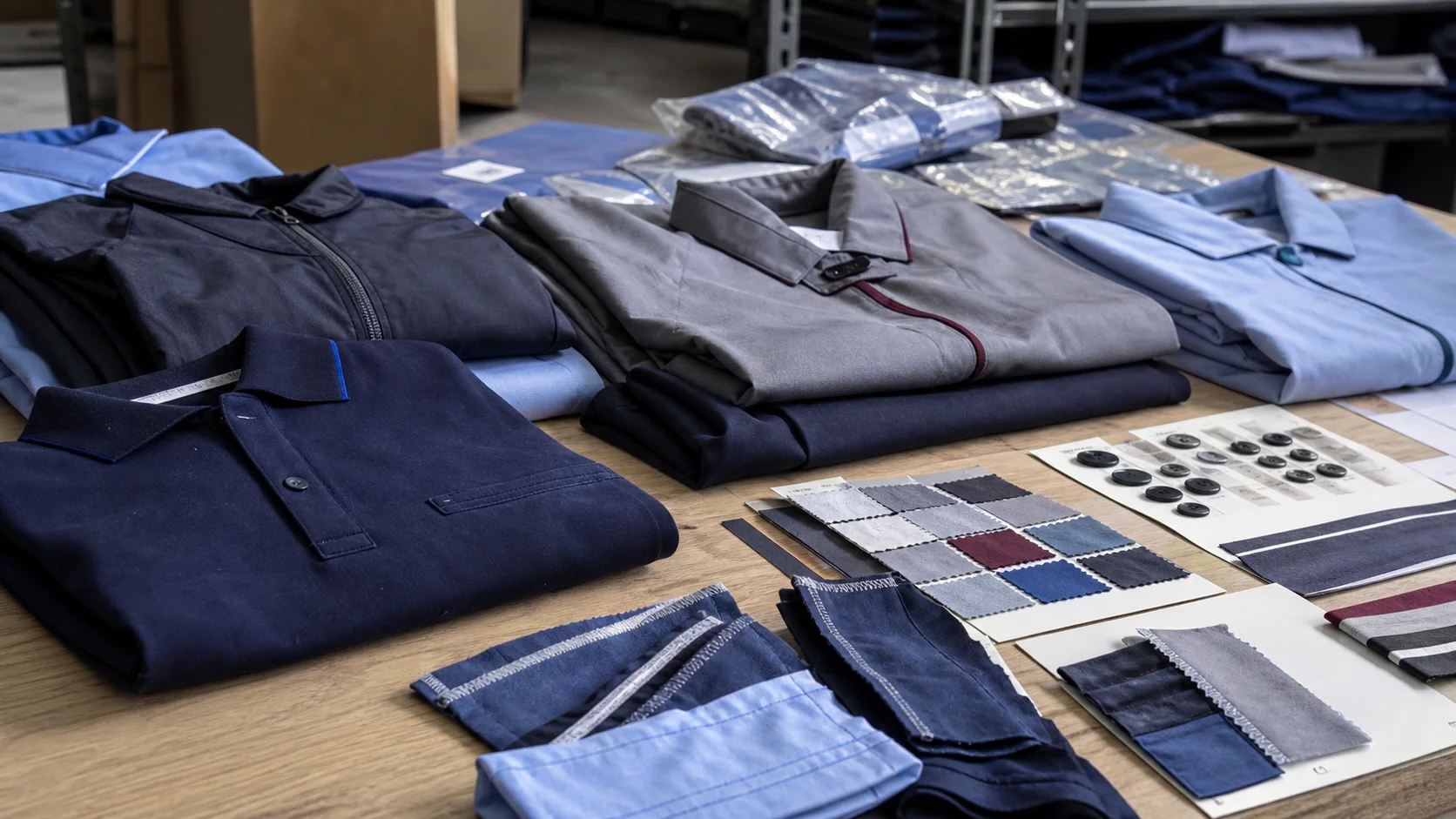
A practical outline for buyers planning OEM sublimated esports uniforms and merchandise, covering fabric choices, print construction, team branding,...
OEM Sublimated Esports Uniforms Buyers Want - Fabrikn production reference
OEM sublimated esports uniforms are one of the more practical private label products in modern team merchandise. Buyers want a garment that looks sharp on stream, carries sponsor graphics cleanly, and still holds up after repeated wear, wash, and travel. That combination is harder than it sounds. A uniform can look strong in a mockup and still fail when the fabric stretches, the collar distorts, or the print loses edge definition under studio lighting.
For esports organizations, the purchase decision is rarely just about apparel. It is about brand consistency, inventory risk, and retail margin. Teams need pieces that can function as player uniforms, fan merchandise, and sponsor inventory without turning into a small production headache. OEM sublimation works well here because it supports full-panel graphics, fast visual customization, and repeatable product development once the base pattern is approved.
The buying standard is not luxury fashion. It is controlled execution. Buyers want predictable sizing, stable color matching, a production process that reduces decoration failure, and a supplier that can manage revisions without turning every round into a new development cycle. That is the real filter.
OEM, or original equipment manufacturing, means the garment is produced to the buyer’s specification under the buyer’s brand. In esports merchandise, that usually includes custom patterns, private label neck prints or woven labels, team colors, sponsor placements, and packaging made for retail or direct-to-consumer fulfillment.
Sublimation is the decoration method most often paired with OEM esports uniforms. The artwork is printed onto transfer paper and then bonded into polyester fabric with heat and pressure. Since the ink becomes part of the fabric surface, the result is lighter than screen print and better suited to all-over graphics. That matters for jerseys, warm-up tops, training shirts, and fan replicas where large areas of gradient, typography, or sponsor logos need to stay crisp.
There is a tradeoff. Sublimation performs best on polyester or high-poly blends. It is not the right answer for every uniform concept, and it is not ideal if the buyer wants a heavy cotton hand feel or a premium embroidery-driven look. The right supplier should say that plainly rather than trying to force every brief into the same production route.
Most buyers in this category are looking for a narrower set of outcomes than a fashion brand would. The list is practical.
In the market, those priorities usually translate into a demand for lightweight performance jerseys, tapered esports silhouettes, raglan or set-in sleeve options, and a polished inside finish. Buyers also care about how the garment reads on camera. Matte fabrics with clean color blocks tend to photograph better than overly shiny materials, though some brands use gloss strategically for a stronger broadcast look.
A useful sourcing judgment is to treat esports uniforms as a merchandising system, not a one-off shirt order. The first sample should prove the pattern and print. The next step should confirm grading, shrinkage, and packaging. A supplier that can only handle one of those steps is a risk when the order grows.
Fabric selection drives most of the result. For sublimated esports uniforms, common choices include 100% polyester interlock, polyester mesh, bird’s eye knit, and performance jersey fabrics with moisture-wicking treatment. Typical weights often fall around 140 to 220 gsm depending on whether the buyer wants a lighter competition jersey or a more substantial retail piece.
Lower gsm fabrics can feel cooler and more athletic, which is useful for long matches and stage wear. Heavier fabrics often look less transparent and can better support high-contrast graphics, but they may hold more heat. That tradeoff should be decided with the actual use case in mind, not by default.
Construction details matter just as much. Buyers usually benefit from reinforced shoulder seams, stable neck rib or self-fabric collars, clean coverstitching, and hem finishes that do not twist after wash. Sublimated graphics should be checked for alignment at side seams, sleeve caps, and collar points. These are the places where cheap production becomes visible fast.
Fit is another decision point. Esports organizations often prefer an athletic or semi-relaxed fit rather than a tight compression profile. That gives players room to layer, travel, or move comfortably on stage. Fan merchandise can lean slightly more relaxed, but the pattern should still preserve the team’s silhouette. Oversized cuts are a separate product line and should not be treated as the same spec.
Private label details should be agreed early. Neck prints, size labels, woven hem tags, care labels, hang tags, and polybag inserts all affect the final presentation. They also affect lead time. Small label changes can be easy to approve and still add days to factory scheduling if they arrive late.
Good sublimation starts with art preparation. The factory needs print-ready files with clear placement, true sponsor colors where possible, and accurate garment panels. Buyers should not send a flat logo sheet and expect the result to land perfectly. A proper tech pack or detailed artwork map reduces revision cycles and prevents confusion around panel breaks.
The normal approval path includes a digital mockup, then a strike-off or sample print, then a fit sample or pre-production sample if the garment is pattern-heavy. For more complex uniforms, it is common to approve both the color strike and the sewing construction separately. That step slows the process a little, but it is cheaper than correcting a full production run.
The strongest sublimated uniforms use polyester fabrics with good ink uptake and controlled stretch. If the fabric stretches too far, fine details can distort. If the dye transfer is inconsistent, blacks can look weak and reds can shift. Buyers should ask how the supplier manages color calibration, because the artwork may look accurate on screen and still print differently across batches if the process is not controlled.
There is also a difference between a uniform made for stage use and a merchandise piece made to sell to fans. Stage use tolerates function-first construction, while fan retail usually needs a nicer inside finish and better presentation. The same print system can serve both, but the spec should not be identical by default.
MOQ varies widely by factory capability and garment complexity, but buyers in this category often see starting points around 50 to 100 pieces per colorway or per design for simple sublimated jerseys. More elaborate OEM programs, especially those with custom patterns, trims, and packaging, may push the MOQ higher. Some suppliers will quote lower entry numbers for sampling or pilot drops, though the unit cost usually rises quickly.
Sampling should be treated as a controlled approval process. A common sequence is artwork confirmation, size spec review, prototype sample, correction sample if needed, then pre-production sample. Buyers who skip one step often discover issues in bulk, where the cost of correction is higher and the margin disappears fast.
Lead time depends on more than printing capacity. Fabric sourcing, trim availability, label approval, color matching, sewing line capacity, and shipping method all influence the schedule. A clean order may move in a few weeks once samples are approved, while a first-time OEM program can take longer if the buyer is developing a new pattern or matching sponsor colors closely.
That is why a realistic timeline matters. Teams planning for a tournament, sponsor launch, or merch drop should work backward from the delivery date and leave room for revisions. Rushing a sublimated uniform order is usually expensive in either quality or freight.
For buyers building a larger private label program, it helps to work with a supplier that can manage development and production under one roof. Fabrikn’s services page is a useful starting point for understanding that kind of scope. When the order needs faster clarification, a direct line through the contact page is often the most efficient next step.
Inspection should focus on the failure modes that matter most in sublimated esports apparel. Print mismatch, poor seam alignment, incorrect sizing, weak stitching, uneven panels, and label errors are the usual problems. Color drift is another one, especially if the order includes multiple garments or repeat runs across different production dates.
Buyers should ask for measurement tolerances before bulk approval. A jersey that is off by too much in chest width, body length, or sleeve opening can create resale problems even if the print looks fine. Tolerance should be stated in the purchase order or tech pack, not left to assumption.
Wash testing is worth asking for when the order is large enough to justify it. The minimum test is basic color stability after wash and print retention on high-stretch zones. For more demanding programs, buyers may also want rub resistance and seam durability checks. These are not decorative extras. They protect the margin.
One practical risk with sublimation is that visual quality can hide structural weakness. A bright jersey may look excellent on first inspection and still fail after several washes if the thread quality or stitch density is poor. That is why construction review should sit alongside print review, not after it.
A clean sublimated esports jersey is not just a graphic exercise. The buyer is paying for color control, pattern discipline, and a repeatable production method. If one of those fails, the product becomes harder to sell at full price.
From a sourcing angle, the best apparel programs are built around a small set of repeatable silhouettes. That usually means a player jersey, a fan jersey, a training tee, and possibly a warm-up top or hoodie. Keeping the base styles limited makes replenishment easier and reduces development cost across seasons.
Private label profit improves when the buyer separates product tiers. The player version can carry more technical detail and tighter fit. The fan version can use the same visual language with a slightly different fabric, fit, or packaging strategy. That distinction creates room for margin without confusing the brand.
It is also worth thinking about how the uniform fits the rest of the merchandise line. If the jersey is highly detailed, the additional items should not fight it. Caps, scarves, bags, and casual tees can support the same identity with cleaner decoration. The best programs look coordinated, not overloaded.
Packaging deserves attention too. A polybag with size sticker and branded insert is usually enough for lower-cost merch. Higher-value retail programs may justify header cards, custom folding, or barcode labels for warehouse handling. Those details do not make a garment better, but they do influence perceived value at point of sale.
Before approving an OEM sublimated esports uniform supplier, buyers should check a few basics.
Those questions sound basic, but they separate a supplier that can support a brand from one that can only price a logo shirt. The strongest factories are usually direct about tradeoffs. They will tell the buyer when a requested finish adds cost, when a fabric choice affects hand feel, or when a design needs simplification to print reliably.
That level of honesty is usually worth more than a low quote. Cheap sourcing becomes expensive when samples need to be remade or bulk production misses the intended standard. Buyers should judge the supplier by how well they control the process, not by how fast they promise the impossible.
For buyers researching OEM sublimated esports uniforms and private label apparel, these pages are the most relevant entry points:
Get a free quote from Fabrikn — your trusted B2B clothing manufacturer with 10+ years of experience. MOQ as low as 200 pieces.
Get a Free Quote →Many suppliers start around 50 to 100 pieces per style or colorway for simpler jerseys. Complex OEM programs with custom patterns, trims, and packaging may require higher quantities.
Lead time depends on sample approval, fabric sourcing, trims, and line capacity. A straightforward reorder is faster than a first-time custom program. Buyers should still leave room for revisions, since artwork changes often extend the schedule.
Polyester performance fabrics are the standard choice. Interlock, mesh, bird’s eye, and jersey constructions are common. The right weight depends on whether the buyer wants a lighter competition piece or a more structured retail garment.
At minimum, buyers should approve the artwork placement, color strike, fit sample, size spec, label details, and packaging format. Skipping those checks raises the risk of costly bulk errors.
The main risks are color drift, print distortion, seam failure, incorrect sizing, and label mistakes. Inspection should cover both appearance and construction, since one can look correct while the other fails in wear.
Yes, but the specs should not be identical. Player gear usually prioritizes performance and mobility, while fan merchandise may need a slightly different fit, packaging, or fabric hand feel to support retail value.