
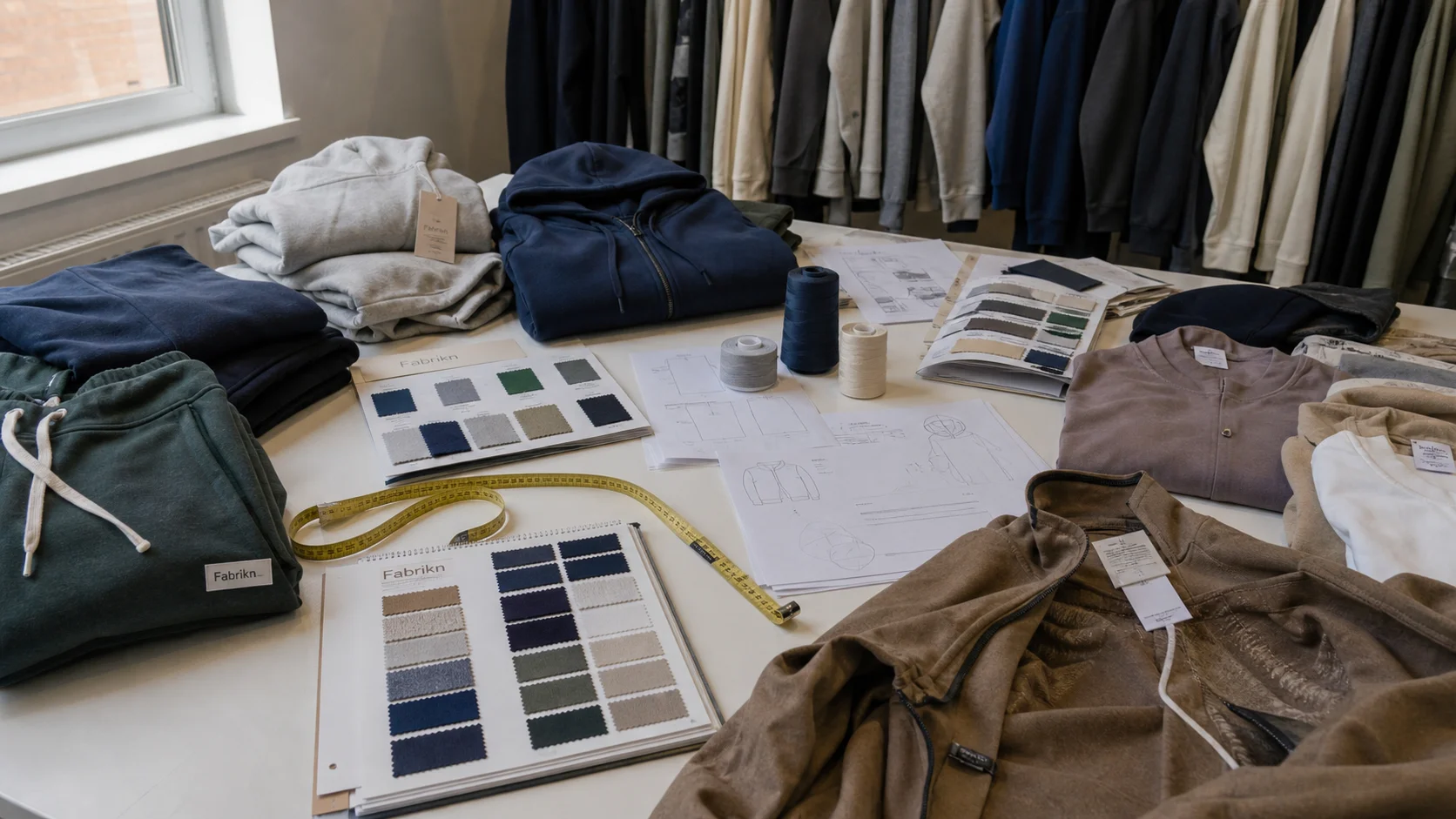
OEM T-Shirt Manufacturer for Streetwear Brands compared by sample evidence, fabric or trim specs, MOQ, AQL terms, cost lines, delivery timing, and rework...
Fast answer: OEM T-Shirt Manufacturer for Streetwear Brands: Sample Fit, Trim, AQL, and Delivery Risk should be judged by production evidence, not by a generic sourcing promise. The buyer needs sample proof, cost breakdowns, QC checkpoints, and delivery buffers in writing.
Ask for recent sample photos, measurement tolerances, fabric or print test assumptions, decoration test notes, packing examples, and a named inspection checkpoint. These details show whether the team can repeat an approved sample at bulk volume.
Separate garment cost, decoration, labels, packaging, sampling, testing, freight, and rush charges. Clear cost lines make it easier to reduce colorways, adjust size depth, or reserve more time for sampling.
I have watched a $3 tee collapse at retail more than once. The photos looked strong. The fit looked sharp on a size M. Then the first 40 washes told the real story: neck rib waviness, 5% shrinkage, and print cracking that turned a “premium” drop into discount inventory. Choosing an oem t shirt manufacturer for streetwear brands isn’t a sourcing chore. It’s a margin decision, and the right manufacturer can shape the whole production outcome.
Across factories in Asia, Turkey, and Portugal, tees that looked identical landed at very different cost points. A 220 GSM combed cotton shirt with 1.8 cm coverstitch spacing, reactive dyeing, and enzyme wash can sit near $4.20 to $5.80 FOB in Asia. Shift that spec to Portugal, add tighter stitching tolerance and garment wash control, and the price can jump to $8.50 to $11.00 before freight. In Turkey, I’ve seen a middle ground at $6.20 to $8.40 for similar quality, though lead times often run 3 to 5 weeks faster than smaller Asian mills when fabric is booked early.
Streetwear buyers love the mockup and underweight the blank. That gets expensive fast. A low-cost tee at $2.60 FOB may look fine on day one, but if 12% comes back as fit complaints, 8% is held for reorders, and another 6% sits unsold because the silhouette misses the brand story, the cheap unit price turns into costly dead stock. I have seen brands spend $18,000 on inventory and recover less than half after markdowns because the base garment was wrong.
What factory visits reveal is blunt. Blank quality shows up in the first 30 seconds on the floor. Check the fabric roll tension, the handfeel after wash, the collar recovery, and the consistency of side seam alignment across 20 pieces. One factory in Vietnam produced a cleaner 240 GSM tee than a higher-priced supplier in coastal China because its knitting density was more stable, not because it had a shinier sales deck. In Portugal, sample rooms tend to track fit more carefully; in Turkey, finish consistency often feels stronger at mid-tier volumes; in parts of South Asia, aggressive pricing can hide higher variability unless the QC system is disciplined.
The thesis is simple. The right OEM partner protects brand identity, not just unit price. That matters even more for streetwear, where the cut, the drape, and the wash are the product. A label can copy a graphic in 2 days. It cannot copy trust after 2 bad drops.
OEM means the factory makes to your specification. You control the design, fabric, labels, packaging, fit, and size grading. The factory executes production. That’s different from ODM, where the supplier owns a prebuilt style and you select from a menu, and different again from private label, where branding changes but the core product is already sitting on a rack. For brands that care about silhouette and repeatable quality, OEM is the cleaner path. It also aligns closely with private label clothing only when the product still carries your identity and not someone else’s template.
Streetwear labels usually customize heavyweight fabric, boxy proportions, a wider neck rib, sleeve length, body length, neck prints, woven labels, hangtags, and wash treatment. I have seen brands specify a 2x1 rib at 2.5 cm width, a dropped shoulder of 4 cm, and a slightly cropped body to land the right proportion on a unisex size run from XS to XXL. Those details matter more than a loud mood board.
The factory handles the long chain behind that brief: sourcing yarn, knitting, dyeing, cutting, sewing, finishing, packing, and compliance documentation. On paper, that sounds procedural. On the floor, each step can move quality by a visible margin. A knit mill that keeps GSM tolerance within +/- 5% produces steadier tees than one that swings wider. A sewing line with trained operators and 8 to 10 stitches per inch usually keeps neck seams cleaner than a line rushing 15,000 units in a week.
Errors usually begin with the tech pack. I have watched brands send one sketch and a Pantone code, then wonder why the sample misses the mark. Grading mistakes appear when the fit model was judged only on size M and not verified through size set testing. Placement errors happen when a chest graphic is measured from the wrong point, or when tolerances are not written clearly. If you’ve ever worked with cut and sew manufacturing, you know that clarity on seam allowance, shrinkage allowance, and measurement points saves weeks.
OEM isn’t only about control. It’s about accountability. A good factory can tell you where the risk sits before the first sample is cut. That’s worth more than a glossy catalog.
I use an 8-point filter before I even approve sampling. MOQ comes first. If a factory insists on 5,000 pieces per color, but your first drop needs 300 to test demand, that supplier isn’t built for your stage. Fabric library matters next. If they can’t show 180 GSM, 220 GSM, and 260 GSM options with lab records, they’re guessing. Lead times should be specific, not vague. A solid answer is “lab dips in 7 to 10 days, sample in 10 to 14 days, bulk in 25 to 35 days.” Communication speed matters because delayed replies during sampling usually become slower replies during production.
Lab test access is non-negotiable. Ask for shrinkage, pilling, and colorfastness reports. Audit history should not hide behind sales language. A factory that passes WRAP, OEKO-TEX, or ISO-aligned processes has paperwork to prove it; a factory that “works with many famous brands” and cannot share documentation is asking you to trust a slogan. Sample revision policy matters too. If they charge for every correction, your development budget can double before bulk even starts. I have seen $180 sampling quotes turn into $900 after four rounds.
On the floor, I look for organized cutting tables, labels on every shade band, and seam allowances that stay consistent from piece to piece. Inline QC should happen before the line finishes a whole batch. If operators are measuring only at final packing, problems are already expensive. In one Turkish plant, the QC team pulled 60 pieces per line hour and caught a collar twist trend before 900 units were affected. That saved the order.
Red flags are usually louder than buyers expect. Vague answers on shrinkage mean trouble. No documentation on colorfastness means a likely complaint after wash one. Weak sample approvals, especially when a supplier says “close enough,” are a warning. Pressure to skip testing is another. According to AATCC textile testing standards, standardized textile test methods exist because visual approval alone misses performance failures that show up only after wear and laundering.
Here’s what most people miss: a slightly more expensive sample room often saves real money later because it catches fit drift before bulk fabric is booked. I have seen that difference save 2 production weeks and avoid a 7% size ratio error.
Pricing depends on fabric weight, print method, and region. A 180 GSM basic tee with a single screen print can sit around $2.20 to $3.40 FOB in China or India. Move to 240 to 260 GSM with puff print, woven neck label, garment wash, and tighter neck rib, and the range shifts closer to $4.80 to $7.60 in China, $5.20 to $8.20 in Vietnam, and $6.50 to $9.50 in Turkey. Portugal often runs higher, roughly $8.50 to $13.00, but buyers get stronger proximity to European distribution and faster sampling. For compliance and sourcing context, I also keep Textile Exchange fiber and sustainability guidance open when discussing recycled cotton and preferred fiber claims.
Price is only one line item. A high-density embroidered chest mark can add $0.45 to $1.10 per piece. Garment dyeing may add $0.60 to $1.40. Enzyme wash usually adds less than stone wash, but the handling risk is lower and the finish more controlled. Shipping, customs, and testing can add another 8% to 18% depending on lane and destination.
MOQ varies by factory type. Smaller cut-and-sew plants may accept 100 to 300 pieces per color if they keep production flexible. Mid-size streetwear factories often want 500 to 1,000 pieces per style. Large export mills may push 2,000-plus per color to protect efficiency. Smaller runs can raise per-unit cost by 20% to 60% because fabric booking, marker making, and line setup are spread across fewer units. I have seen a 240 GSM boxy tee cost $3.90 at 1,000 units and $5.80 at 250 units from the same supplier.
Timelines are rarely as tidy as a spreadsheet suggests. First proto sample: 7 to 14 days. Fit sample and revisions: another 7 to 14 days. Lab dips and wash testing: 10 to 20 days, sometimes longer if color approval drags. Bulk fabric booking can take 2 to 4 weeks for special yarn counts. Production itself may run 20 to 35 days for a 500 to 3,000 piece order, then final inspection and packing add 3 to 7 days. I have seen a “30-day” promise become 58 days because the mill delayed fabric greige booking by 11 days and the wash house was already full.
Regional choice affects communication as much as price. China is still strong on scale and breadth of fabric options. Vietnam often performs well on consistency. Turkey is faster into Europe and strong on mid-tier quality. Portugal offers sharper small-batch control with higher cost. India can be competitive on cotton and color work, but buyers need tighter spec control and earlier testing. The smartest brands compare not just the quote, but the probability of a clean repeat order.
Fabric weight is the first signal of value. An 180 GSM tee feels like entry-level basics. A 240 to 300 GSM tee reads as streetwear before the customer even looks at the logo. I have handled 320 GSM French terry samples that looked substantial but still moved well because the yarn twist and knit density were right. That balance matters. Too heavy, and the shirt feels stiff. Too light, and it reads as a promotional blank.
Combed cotton usually gives a cleaner surface and better print sharpness than open-end cotton. Organic cotton can command a 10% to 25% premium depending on certification and volume. Recycled cotton often saves waste story points but can carry shorter fiber length, which changes handfeel and durability. Cotton-poly blends reduce shrinkage and can improve shape retention, though some brands dislike the slightly synthetic touch. If your customer expects repeated wears and clean screen prints, I have found a 95/5 cotton-elastane blend on certain fits can outperform pure cotton on collar recovery.
Fit details do the branding work that graphics alone cannot. A dropped shoulder of 3.5 to 5 cm, a wider neck rib, a sleeve that ends just above the elbow, and a body length that avoids banana-shape twisting all influence whether the tee feels premium. Unisex grading is where many labels slip. A good size run from XS to XXL should preserve proportion, not just scale width by the same number across all sizes.
Finishing changes the story. Enzyme wash removes fuzz and softens the face. Silicone softener creates a smoother hand but can reduce some print adhesion if overused. Pigment dye gives a washed, broken-in mood, while garment dye delivers a richer tone shift and deeper vintage character. Stone wash can create strong visual effects, but it raises abrasion risk and consistency problems. For a cleaner, more controlled result, I usually prefer enzyme wash paired with tight shrinkage targets and a pre-shrunk fabric base.
Some teams compare streetwear tees to activewear because both sell on feel and recovery. That’s fair. I have even borrowed construction logic from custom sportswear manufacturing when advising on stretch recovery and seam stability for oversized silhouettes. The best shirts sit somewhere between utility and attitude.
Quality starts before bulk. Pre-production approval should lock lab dips, strike-offs, fabric handfeel, size specs, and packaging. Inline inspection catches drift while the line still has time to correct it. Final AQL inspection confirms the shipment against an agreed threshold, often 2.5 for major defects and 4.0 for minor ones, though brands can tighten that based on risk.
The tests I ask for on tees are simple, and they’re measurable. Shrinkage should usually stay within 3% to 5% after 1 to 3 washes, depending on the fabric. Colorfastness should be tested for wash, rub, and perspiration. Seam slippage matters on dense knits and heavy prints. Pilling should be graded, not described vaguely. GSM tolerance should stay within a written band, often +/- 5% or better. Dimensional stability after wash is what tells you whether the shirt will still fit after the customer wears it three times.
Factories sometimes pass visual inspection and fail wear tests after 3 washes. I have seen a tee look flawless on hangers, then twist at the side seam and shrink 1.5 cm in body length after the third wash. That sort of failure doesn’t just trigger refunds. It damages the repeat order rate, which is harder to measure and harder to fix.
Put acceptance criteria directly into the purchase order. Define the size chart, tolerance limits, test methods, defect categories, overrun allowance, and who pays for rework if the factory misses the standard. If there is a dispute, numbers beat opinions. That is where technical references from standards bodies matter, and why sourcing teams often keep ISO measurement and quality standards close when aligning measurement and testing language.
Your first email should feel like a brief, not a mood board. Send artwork, a bill of materials, target GSM, fit references, size range, branding placement, packing specs, and delivery date. Include whether the tee is heavyweight, oversized, cropped, or standard fit. Add neck label type, care label position, and whether you want fold-and-polybag or bulk carton packing. A complete brief often cuts sampling rounds from 4 to 2 because the factory isn’t guessing at the missing details.
I ask brands to attach at least 2 reference garments, one from a premium competitor and one from a closer price point. That helps the factory understand what level of finish you actually expect, not what the render suggests. If your product is meant to sit beside a 260 GSM washed tee sold at $42 retail, say so. If it’s a $22 entry piece, say that too. Pricing without context leads to substitutions you may not notice until the goods arrive.
For sampling, request a proto sample, a fit sample, a size set, and a pre-production sample before bulk approval. These are not bureaucratic steps. They reveal problems in fit, grading, and labeling when the fix is still cheap. A strong tech pack also helps you compare quotes fairly, because you can spot when one factory is quietly substituting 180 GSM fabric for a quoted 220 GSM base. That difference can hide $0.70 to $1.20 per unit.
If your brand already works with apparel categories beyond tees, such as custom bra manufacturing, you already know the value of precise specs. Streetwear is less intricate in construction, but just as unforgiving on fit.
I would start with 5 factories, not 20. Shortlist by product type, not by sales pitch. Request quotes from each, then compare the fabric spec, construction details, MOQ, sampling fee, and timeline line by line. After that, approve 2 or 3 samples, run 1 fit round, and place a pilot order. For a first-time brand, 100 to 300 units per color is usually enough to test demand without drowning in inventory.
Negotiate more than price. Payment terms matter. A 30/70 split is common; 20/80 or net terms can help with cash flow if the supplier trusts your order volume. Carton labeling, overrun policy, sample fees, and lead-time guarantees are all worth discussing. I have seen a brand save nearly $1,400 by agreeing to a slightly higher unit price in exchange for free remakes on verified defects and a tighter overrun cap of 3%.
Here is my simple 30-day sourcing plan. Days 1 to 5: brief the factories and send a full tech pack. Days 6 to 12: review quotes and pick 2 sampling partners. Days 13 to 20: assess proto or fit samples and make revisions. Days 21 to 26: approve pre-production details and confirm fabric booking. Days 27 to 30: place the pilot order and lock inspection dates. If the factory misses any deadline by more than 5 days without a clear reason, that is a signal.
Once the first drop lands, build a supplier scorecard. Track defect rate, on-time delivery, color consistency, and repeatability by order. That is how you scale into seasonal capacity without guessing. The strongest brands treat their shirt manufacturer streetwear partners like long-term operators, not one-off vendors. I have seen that discipline turn a shaky first run into a reliable 4-drop-a-year program. When you work with an oem t shirt manufacturer for streetwear brands, that long-term relationship becomes part of the product.
For a 180 GSM basic tee, I usually see $2.20 to $3.40 FOB in Asia or India. Heavyweight streetwear tees at 240 to 300 GSM with special printing or wash treatments often run $4.80 to $9.50, while Portugal can sit above $8.50 for smaller runs.
Smaller cut-and-sew factories may accept 100 to 300 pieces per color, but many export-focused suppliers prefer 500 to 1,000 pieces. If you want custom fabric, pigment dye, or a special wash, expect the MOQ to rise because the setup cost is spread across fewer units.
A first order often takes 30 to 58 days from sample approval to shipment. Proto and fit sampling can take 2 to 4 weeks total, and bulk production usually needs another 20 to 35 days if fabric is already booked.
Ask for GSM range, shrinkage %, pilling grade, colorfastness test results, MOQ, lead time, and sample revision policy. You should also confirm fabric composition, seam construction, neck rib width, and whether the factory can provide a size set and pre-production sample.
Yes. A pilot order of 100 to 300 units per color is a practical way to test fit, demand, and defect rates before moving to 1,000-plus units. It also gives you real sales data, which is far better than relying on comments from a launch post.