
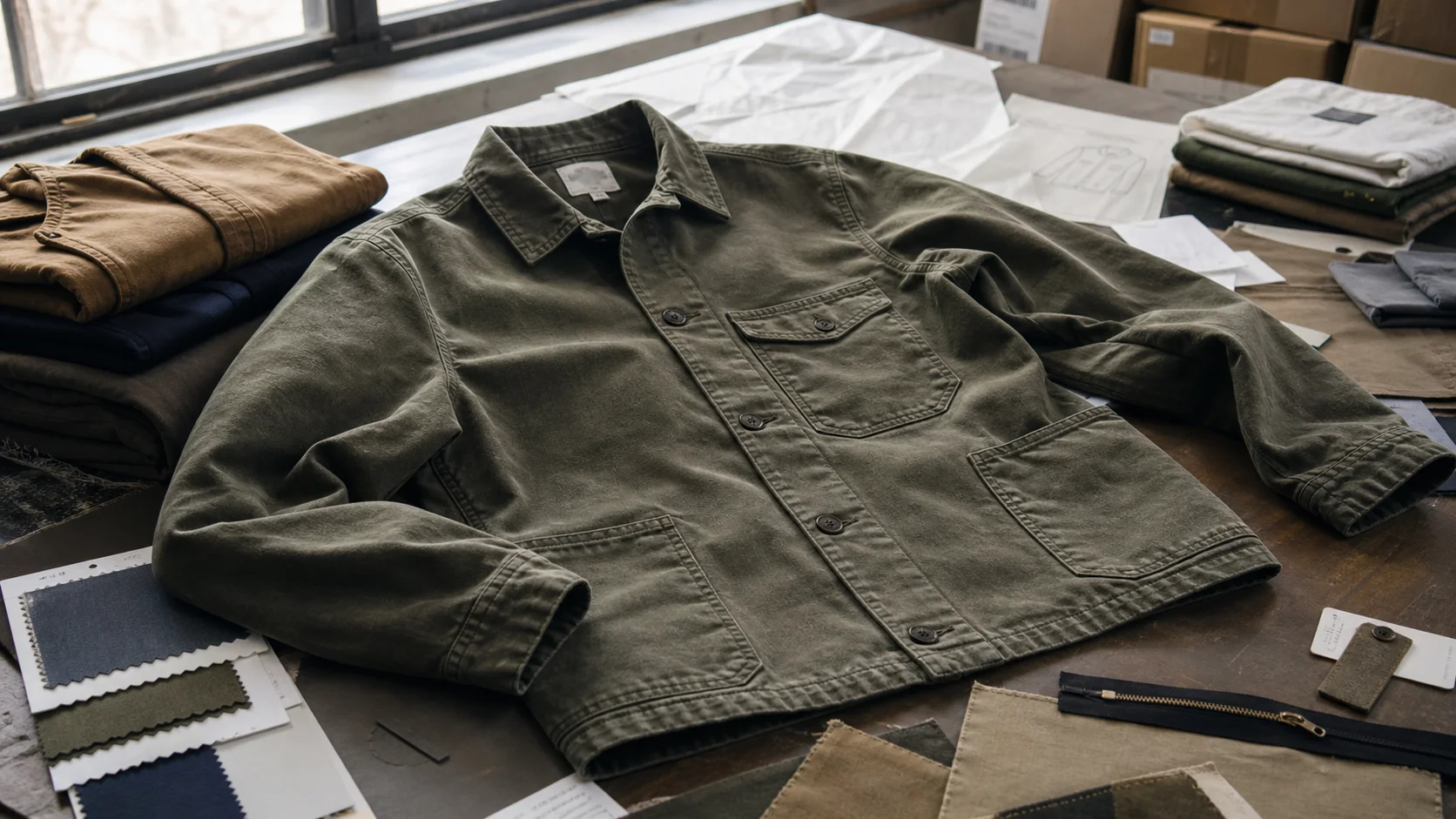
A focused pricing outline for sportswear startups sourcing OEM cut and sew track jackets, covering cost drivers, construction choices, trims, sampling, and...
OEM Track Jackets Cut and Sew Pricing - Fabrikn production reference
Track jacket pricing is rarely one number. For sportswear startups, OEM cut and sew cost depends on pattern complexity, fabric choice, trim quality, decoration method, and the factory’s willingness to run a small order cleanly. A basic polyester tricot jacket can land in a very different price band from a fully lined performance jacket with contrast panels, custom zipper pulls, rib cuffs, and reflective details.
This matters because early-stage buyers usually do not need the cheapest jacket on paper. They need a style that can be repeated, graded properly, and delivered without expensive surprises in sampling, defects, or rework. The right pricing conversation starts with the technical package, not the target selling price.
Cut and sew pricing reflects the full work content of the garment. A factory will usually quote based on fabric consumption, sewing minutes, trims, packaging, and overhead. If the jacket is technically simple, labor stays under control. As soon as you add paneling, lining, piping, concealed pockets, or special finishing, the price moves up quickly.
The biggest cost drivers are usually easy to see once the tech pack is complete:
For a startup, the main mistake is asking for a “track jacket price” before defining the garment. A factory can only price the garment that is actually described. Missing details usually lead to optimistic quotes followed by revisions once the sampling team starts counting operations and fabric usage.
Cut and sew production is not a commodity blank purchase. The factory is building your product from selected panels, sewn specifications, and branded components. That adds pattern work, marker efficiency risk, trim sourcing, and more quality control touchpoints. The price is higher than a stock garment, but the product is also easier to differentiate and scale into a real brand line.
For sportswear startups, the better comparison is not blank versus custom. It is whether the custom jacket creates enough margin and brand control to justify the added development work.
MOQ is one of the first pricing levers that changes the quote. Lower quantities usually raise unit cost because fabric and trim sourcing, cutting setup, and production line allocation are spread across fewer pieces. The structure below is typical, but every supplier will set its own floor depending on fabric availability and factory workload.
Order Type Typical MOQ Range Pricing Implication Simple polyester track jacket 100 to 300 pcs per color/style Lower sewing cost, but small runs often carry setup premiums Mid-complexity cut and sew jacket 300 to 500 pcs per color/style Better balance of unit cost and development effort Technical or embellished jacket 500 to 1000 pcs per color/style More stable pricing, better trim sourcing, lower risk of shortagesStartups sometimes push for a tiny MOQ to reduce inventory exposure. That is reasonable, but the tradeoff is real. A 100-piece order may be workable for market testing, yet the unit price can be noticeably higher than a 500-piece run. Small orders can also be harder to schedule if the factory is optimized for larger production lots.
A practical approach is to test one core colorway at a manageable MOQ, then expand once sales data justifies the second run. That usually gives cleaner pricing discipline than overcommitting to too many variants at the first order.
Sampling is not overhead to be avoided. It is the part of the process that protects the first production run from expensive mistakes. A jacket that looks simple at retail can still have pattern balance issues, zipper wave, collar twist, or poor cuff recovery once it is sewn in bulk.
A standard development path usually looks like this:
Each round of revision adds time. A simple jacket may move through development quickly if the pattern is straightforward and the fabric is in stock. A more technical style with contrast fabrics, custom rib, or special finishing can take several iterations before it is ready for bulk.
For startups, the cheapest sample is not always the cheapest project. A clear approval process usually costs less than correcting bulk mistakes after 500 or 1000 pieces are already in motion.
Factories may quote sampling separately, and that cost can be credited back only if the bulk order reaches a certain size. That policy varies. It is sensible to ask in advance whether pattern fees, proto samples, fit samples, and size set samples are separate line items.
Fabric choice is one of the strongest pricing signals in OEM track jackets. The difference between a basic woven polyester and a performance knit with brushed backing can be substantial. So can the difference between standard stock rib and custom-dyed rib that matches the body fabric exactly.
Common fabric options include:
Weight matters as much as fiber content. A jacket in 150 gsm fabric will not behave like one made in 220 gsm fabric. Heavier material often improves structure and opacity, but it increases fabric cost and can complicate sewing at seams, cuffs, and pocket areas.
Trim selection also has a direct price effect:
Some trim savings are worth pursuing. Others are false economy. A low-cost zipper can save pennies and create a warranty problem later. That is a poor trade for a sportswear startup that wants repeat customers. The same logic applies to rib recovery, stitch quality, and print durability.
Before asking for a firm quote, confirm the basic spec stack: fabric composition, weight, color standard, zipper grade, logo method, thread type, seam finish, and packing standard. Even a small revision to one of these items can change the factory’s quote and schedule.
If the product is performance-oriented, ask for pilling, colorfastness, and wash behavior expectations in writing. It is easier to align on test standards before production than to argue after shrinkage or color migration is discovered in bulk.
Lead time depends on more than sewing capacity. The factory may be ready to run, while fabric mills, dye houses, or trim suppliers are the actual bottleneck. A startup that wants a fast launch should treat material availability as the first schedule risk, not an afterthought.
Typical lead-time components include:
A basic stock-fabric jacket can move faster than a fully custom program. If all materials are already available, production lead time may be measured in weeks rather than months. Custom-dyed fabrics, special rib, or branded hardware can extend the timeline significantly.
For buyers planning a season launch, the safest assumption is that sample development, material sourcing, and bulk production will not happen in one neat block. Each approval step can stall the next one. Clear signoff discipline matters because one delayed fabric decision can push the whole schedule.
Price is only part of the real cost. Quality failures often show up as hidden losses: rework, delayed delivery, chargebacks, or returns. In track jackets, inspection risk usually concentrates in a few familiar areas.
Inspection standards should be discussed before bulk starts. A factory should know the critical measurements, allowable tolerances, and defect limits. Buyers often assume these are obvious. They are not. If a jacket includes multiple fabric types or color blocks, shade control becomes especially important.
A third-party inspection can be worthwhile even for a startup order, especially when the product has branding commitments tied to a launch date. It is easier to catch a line issue at the factory than to sort it out after cartons have shipped.
The lowest quote can hide missing work. Examples include unpriced sampling, weak packaging assumptions, vague fabric specs, or overlooked decoration costs. Some factories quote attractively at first and later adjust when the production file is finalized. That is why a quote comparison only works when all suppliers are pricing the same garment description.
Direct purchasing judgment matters here: the best quote is the one that is complete, technically aligned, and repeatable. A slightly higher price from a supplier with clearer specifications can be the better buy if it reduces churn later.
When reviewing OEM track jacket pricing, compare more than the unit price. A proper comparison should include sample costs, fabric basis, trim assumptions, packaging, labeling, and incoterms or freight responsibility. Otherwise, you are not comparing offers. You are comparing fragments.
Use these questions when reviewing a quote:
For sportswear startups, it is usually better to start with one validated silhouette and a clean grading system. That keeps pricing tighter and production more reliable. Multiple fits, too many colorways, and custom components all push the unit cost up. They also make inventory harder to manage.
When a supplier can explain cost drivers clearly, that is a positive sign. When a supplier only gives a single number without specifying materials or process assumptions, the price should be treated as provisional.
Not every factory is the right fit for cut and sew track jackets. The best partner is the one that can handle your complexity level without forcing you into a larger order structure than your business can support. That balance matters more than polished sales language.
Look for a supplier that can support development, confirm technical details in writing, and quote the same product consistently across revisions. For a startup, that kind of discipline is often more valuable than aggressive pricing alone.
Fabrikn’s broader OEM support is usually the starting point for teams that need help turning a rough concept into a manufacturable program. The relevant entry points are here: services, about us, and contact us.
A strong OEM partner should be able to discuss fabric sourcing, sampling logic, production constraints, and quality checkpoints without blurring the line between estimate and confirmed specification. That clarity saves time and usually saves money as well.
Exact pricing varies too much to generalize without a spec sheet, but startups can still use practical bands to frame expectations. Simple stock-fabric track jackets may sit at the lower end of the market. Custom paneling, premium zippers, lining, and branded trim push the number upward quickly.
What matters most is not chasing a universal price point. It is building a product spec that fits the intended retail price, margin target, and launch volume. If the product needs to sell at a sharp retail entry point, the garment must be simplified early enough to protect cost. If the brand position supports a higher ticket, then better trims and cleaner finishing can be justified.
That is the real economics of OEM sportswear. The cost structure should serve the commercial plan, not fight it.
Get a free quote from Fabrikn — your trusted B2B clothing manufacturer with 10+ years of experience. MOQ as low as 200 pieces.
Get a Free Quote →For startups, MOQ commonly ranges from 100 to 300 pieces for simple styles and 300 to 500 pieces or more for more technical designs. Custom fabrics, special trims, and multi-panel construction usually push MOQ higher.
Cut and sew jackets require pattern making, marker planning, fabric cutting, sewing operations, and trim integration. Blank jackets avoid most of that work, so they are cheaper, but they also offer less control over fit, branding, and product differentiation.
Most programs need at least a first sample and one revision. More complex designs may require fit samples, size sets, or a pre-production sample before bulk approval. The number depends on how complete the tech pack is and how technical the garment is.
Include fabric composition and weight, color standards, size range, seam and stitch details, zipper type, logo placement, labeling, packaging, and any wash or performance requirements. The more complete the spec, the more reliable the quote.
Custom fabric development, premium zippers, lining, reflective or embroidered branding, and complex panel construction are common cost drivers. Small order quantities also raise the unit price because setup costs are spread across fewer pieces.
Keep the first style simple, confirm all specs in writing, approve samples carefully, and ask for clear defect tolerances before bulk production. Third-party inspection can also reduce risk when the shipment is tied to a launch date.