
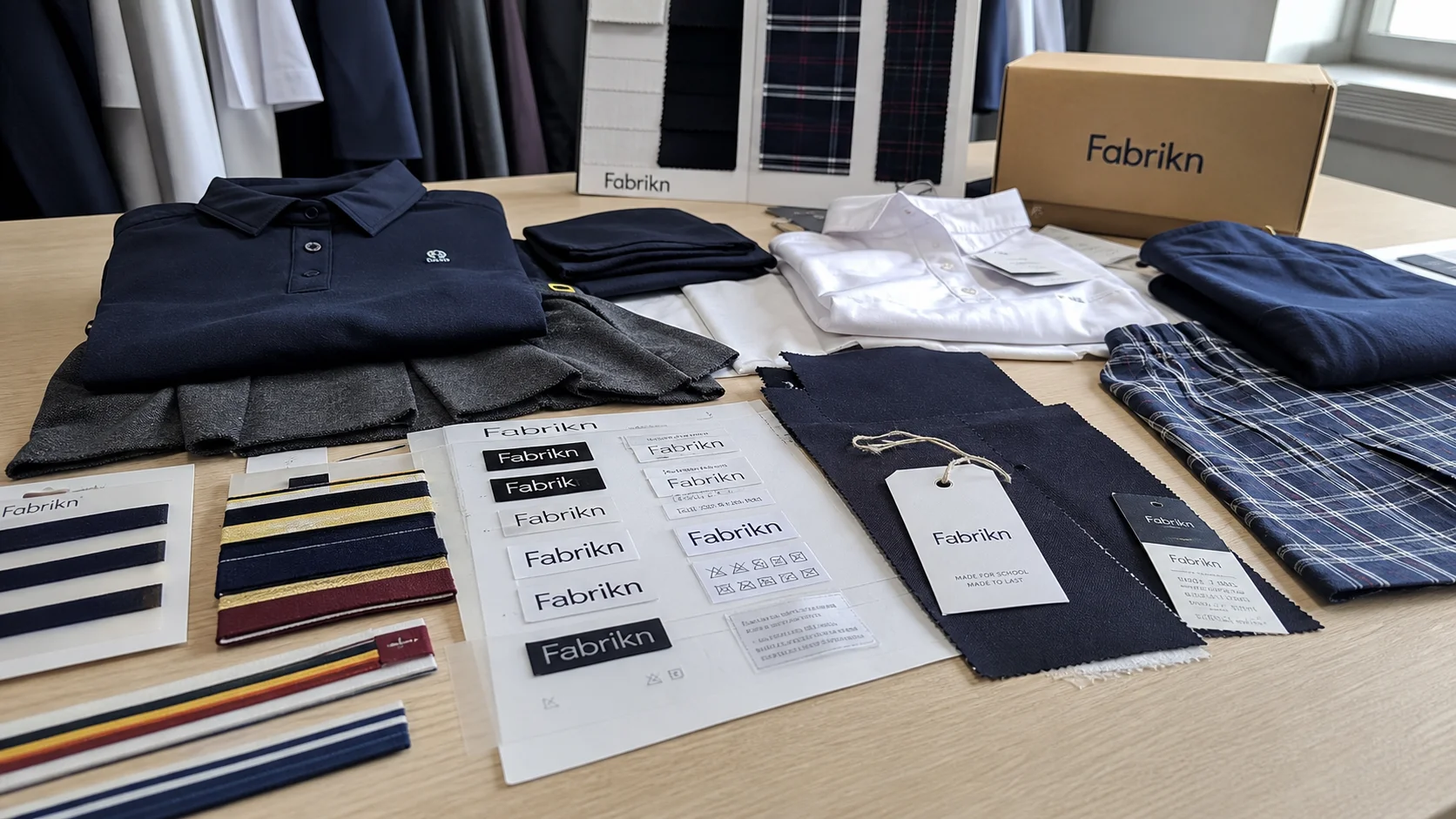
An SEO-focused outline for corporate security buyers evaluating OEM uniforms with compliance requirements, approval steps, documentation, and production...
OEM Uniforms Compliance Support for Security Buyers - Fabrikn production reference
Security uniforms are not a cosmetic purchase. They are part of identity control, duty performance, and legal defensibility. For corporate security buyers, OEM uniforms compliance support sits at the center of that job. The supplier must understand fabric safety, garment construction, logo control, size consistency, trim traceability, and the documentation that procurement teams often need before a PO is released.
In practice, the cheapest quote is rarely the lowest-risk option. Security uniforms usually carry stricter expectations than general corporate apparel because they are worn in public-facing, access-controlled, and sometimes safety-sensitive environments. That changes the sourcing brief. Buyers need clear spec discipline, predictable MOQ planning, and a supplier that can manage compliance without turning every revision into a new development cycle.
For buyers comparing OEM partners, Fabrikn’s manufacturing support pages can be useful starting points: services, about us, and contact us.
Compliance support in OEM uniforms is broader than a certificate file. It usually means the supplier can translate buyer requirements into production-ready garment specs and then prove the goods were made to that spec. For security buyers, that may include fiber content confirmation, color consistency, flame or high-visibility claims where relevant, closure and seam strength requirements, and logo placement control.
In a corporate security setting, compliance may also refer to internal policy alignment. A uniform can need to match brand standards, site-level access rules, role distinction, and visibility rules for guards, supervisors, and mobile patrol staff. The supplier is not writing the policy, but the supplier should be able to build to it without improvisation.
A practical OEM partner should support:
That scope matters because security uniforms are often reordered over time. If the first order is not tightly defined, later replenishment becomes unstable. Shade drift, trim substitutions, and label inconsistencies are common causes of complaints in repeat programs.
Corporate security uniforms carry reputational weight. The team is visible to employees, tenants, visitors, contractors, and sometimes regulators or customers. The garment needs to look controlled, durable, and standardized. A loose sourcing process shows up quickly in mismatched blacks, varying collars, poor badge placement, and fast wear at elbows, cuffs, and seat seams.
There is also a risk side to this purchase. If a uniform claim is made for a fabric feature that is not properly sourced or documented, the buyer can inherit operational exposure. That is especially true when uniforms are used in environments with weather exposure, low-light visibility, chemical splash concerns, or local safety requirements.
From a procurement standpoint, compliance support reduces avoidable friction. It shortens approval cycles, lowers rejection rates, and gives the buyer a defensible paper trail when leadership asks why a supplier was chosen or why a replacement program was scheduled.
Security uniform sourcing is usually won or lost on discipline. Buyers should value a supplier that can repeat the same shirt, trouser, jacket, or vest with stable fabric and trim control more than a supplier that simply quotes the lowest first-order price.
The biggest sourcing mistakes happen when the spec is too vague. “Black security shirt” is not a usable instruction. A competent OEM brief should define garment type, fit, fabric composition, construction method, branding placement, and performance expectations.
Most corporate security uniforms use woven poly-cotton, stretch twill, polyester blends, or performance knits depending on role and climate. Typical fabric weights often fall between 180 gsm and 260 gsm for shirts and trousers, with heavier ranges for jackets and outerwear. Those are not fixed rules. Heavier fabric can improve durability and appearance, but it can reduce comfort in warm environments and increase freight cost.
Buyers should specify at least the following:
Trims create a surprising share of quality issues. Zippers should be specified by type and brand grade if the buyer needs repeat consistency. Buttons, hook-and-loop closures, shoulder epaulets, badge holders, and reflective strips should all be approved before bulk purchase. Even a small trim substitution can change the look and service life of the uniform.
For security buyers, the placement of insignia is often as important as the material. Logo embroidery size, patch dimensions, pocket placement, and sleeve marking must be locked before production. If those details are left open, the factory may follow its own standard, which is rarely ideal for a corporate program.
Construction is where low-price suppliers usually save money. Buyers should look at seam type, stitch density, reinforcement points, and panel symmetry. Common wear points include armholes, pocket corners, crotch seams, waistband areas, and cuff edges. Tighter quality control is needed if the garment will be worn daily and laundered often.
A useful brief includes:
MOQ expectations vary by garment type, fabric availability, print or embroidery complexity, and whether the supplier is building from a standard block or a custom pattern. For OEM security uniforms, a practical MOQ can start around 200 to 500 pieces per style when the factory has compatible base materials and simple branding. More customized programs often land in the 500 to 1,000 piece range per style or more.
Buyers should treat MOQ as a cost lever, not just a gate. Lower MOQ is convenient for trial programs, but the unit price usually rises. A supplier may need to reserve fabric, cut smaller marker spreads, and absorb more handling per unit. On the other side, larger MOQ can reduce unit cost and improve consistency, but it increases exposure if the spec changes later or the company updates its branding.
Main cost drivers include:
Cost Driver Effect on Price Buyer Tradeoff Fabric weight and blend Higher quality or specialty performance fabrics raise cost Better durability versus higher spend Logo method Embroidery and multi-location branding increase labor Sharper presentation versus more setup cost Pattern complexity More panels, pockets, and reinforcement add sewing time Better function versus slower production MOQ size Lower volume usually increases unit cost Lower inventory risk versus weaker pricing Testing and documentation Compliance checks add pre-production cost More control versus less supplier riskBuyers should also watch hidden cost items. Sample courier charges, pattern revisions, additional logo placement, and urgent air freight can erase a nominal unit-price advantage. A quote that looks lean at first often becomes expensive once the full approval cycle is included.
Sample approval is not a formality. It is the main control point before bulk fabric is cut. A disciplined process usually moves through a fit sample, fabric or color approval, pre-production sample, and then bulk approval. Some programs can combine steps, but skipping them raises the risk of rejectable goods.
A sound sample workflow for security uniforms usually looks like this:
Pay close attention to fit across sizes. Security teams often include both regular and extended sizing, and the garment must look consistent across the range. A shirt that fits well in medium but collapses in 3XL will create a poor uniform standard and more exchange work later.
Sample approval is also the right stage to confirm care instructions. If the buyer needs industrial wash performance, that should be built into the spec, not negotiated after complaints begin. Shrinkage tolerance, pilling resistance, colorfastness, and seam recovery should be discussed before production starts.
Security uniform lead time is usually shaped by fabric availability more than sewing speed. If the fabric is in stock and the design is simple, a supplier may complete the order relatively quickly after approval. When fabric must be custom dyed, sourced from a new mill, or tested for performance, the schedule extends quickly.
Typical lead times often fall into the following bands:
Those ranges are directional only. The real schedule depends on the point where the program becomes fixed. The longer the buyer delays material approval, the more likely it is that the order slips into a new production window.
Common risks include:
Seasonality matters too. Outerwear and weatherproof items often face tighter lead times when demand spikes. Buyers planning winter jackets, rainwear, or layered patrol gear should place orders earlier than they would for basic shirts or trousers.
Inspection is where many compliance claims are tested. A supplier may talk confidently about quality, but the actual garment needs to pass visible and measurable checks. For corporate security uniforms, inspection should cover appearance, dimension accuracy, construction, branding, and packing accuracy.
Useful inspection checkpoints include:
Inspection risk rises when the order contains multiple size runs, mixed garments, or add-on accessories. The more SKUs in one shipment, the easier it is for carton mix-ups or labeling mistakes to happen. Buyers should ask for carton content checks and, where needed, photo records from the supplier before shipment.
Final inspection should not replace pre-production control. If the bulk run is wrong, catching it at the end only saves the buyer from receiving the defect. It does not save time. That is why the approval stage is so important.
For security buyers, the best supplier is not necessarily the largest. It is the one that can repeat product standards, manage documents, and handle revisions without losing the brief. A useful evaluation should focus on process maturity rather than sales language.
Ask these questions:
Buyers should be cautious with suppliers that are vague about fabric origin, reluctant to confirm trim details, or unwilling to define acceptance criteria. Those are not minor gaps. They are warning signs that the program may drift once the first order is placed.
A good OEM partner should also understand replenishment. Security uniforms often need reorders for new hires, replacement items, and seasonal additions. Stable patterns, retained fabric references, and clear revision logs matter more than one-time speed.
The strongest purchasing decisions in this category are usually conservative. Spend on repeatability, fabric control, and visible finish. Hold back on decorative complexity that does not improve duty performance. A uniform is judged first by how it wears, fits, and presents over time.
Worth paying for:
Usually worth limiting:
There is a practical balance to strike. A stripped-down uniform may be cheap, but if it fades quickly or loses shape after laundering, the program cost rises through replacements and complaints. A more controlled spec often saves money over the full life of the garment.
Buyers who want a more structured OEM conversation can start with Fabrikn’s production support information on services and use contact us to request a compliance-oriented quote brief.
Get a free quote from Fabrikn — your trusted B2B clothing manufacturer with 10+ years of experience. MOQ as low as 200 pieces.
Get a Free Quote →It is the supplier support needed to turn a security uniform brief into a repeatable production order. That usually includes fabric confirmation, trim approval, sample sign-off, measurement control, and inspection readiness.
Many OEM security uniform programs start around 200 to 500 pieces per style for simpler builds. Custom fabrics, complex branding, or multiple size runs can push the MOQ higher.
A typical process includes a fit sample, fabric or color approval, and a pre-production sample. Some programs need extra revisions if logo placement, sizing, or trim selection is not settled early.
Fabric sourcing, late sample approval, trim substitutions, and unclear size breakdowns are common delay points. Custom dyeing and special performance finishes can also extend lead time.
Buyers should verify measurements, shade consistency, logo placement, seam quality, label accuracy, and carton packing. Mixed-SKU orders need extra attention because errors are easier to miss.
No. In this category, the better value is usually the supplier that can hold fabric consistency, size accuracy, and reorder stability. A low unit price can become expensive if the garments fail inspection or need frequent replacement.
Security uniform sourcing rewards discipline. The buyer who defines the spec tightly, approves samples carefully, and insists on measurable compliance usually gets a better long-term result than the buyer chasing the lowest opening quote.