
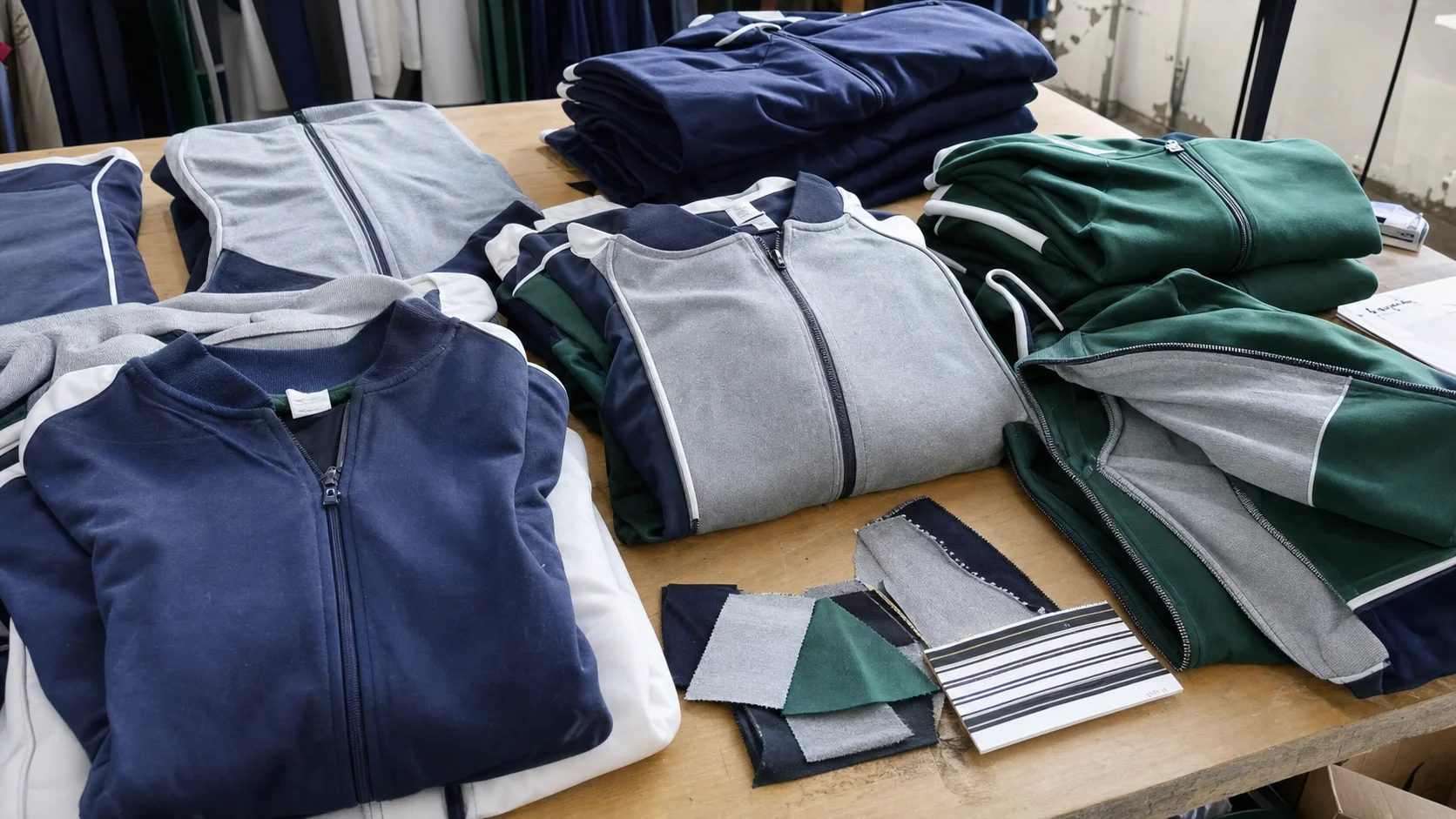
A focused outline for sourcing trims in OEM uniforms, with practical coverage of performance, durability, branding, compliance, and production control for...
OEM Uniforms Trim Sourcing for Premium Workwear - Fabrikn production reference
Premium corporate workwear lives or dies on the details. The base fabric gets attention first, but trims decide whether a uniform feels credible in daily use or merely looks acceptable on a sample rail. Buttons, zippers, elastic, labels, hangtags, piping, reflective tape, snaps, drawcords, seam tapes, and reinforcement components all affect durability, comfort, appearance, wash performance, and lead time. For OEM uniforms, trim sourcing is not a finishing task. It is part of the product strategy.
For buyers building premium corporate workwear lines, the trim package needs to support brand consistency across repeat orders, program continuity across sizes and seasons, and performance under industrial laundering or frequent wear. The wrong trim can create pilling at the cuff, shrinkage at the waistband, color migration onto fabric, snagging at stress points, or a mismatch between sample and bulk production. Those issues are expensive because they tend to surface late.
Uniform programs are judged on consistency. A shirt, trouser, jacket, polo, or softshell may look sound at first glance, yet the trim package often determines whether it stays premium after repeated wear. A low-grade zipper can jam. A cheap sew-in label can irritate the wearer. A weak elastic can lose recovery after laundering. A poor-quality heat transfer can crack or peel. Those defects damage the program faster than a fabric choice that was merely conservative.
Premium corporate workwear also faces a more demanding use case than casual activewear. Many programs require clean presentation, logo alignment, frequent washing, dimensional stability, and compliance with brand standards. That means trim sourcing has to balance aesthetics, durability, and repeatability. The best trim is not always the most expensive trim. It is the trim that performs consistently at scale and fits the production method.
Buyers should treat trims as a specification system, not a shopping list. Every trim item should be tied to the garment style, end use, wash cycle, and target price. A nylon coil zipper may suit lightweight outerwear. A molded plastic zipper may be fine on some teamwear pieces. A metal zipper can look more premium but may add weight, corrosion risk, and cost. The right decision depends on the garment, not the habit.
Zippers, buttons, snaps, hook-and-loop tape, and press studs are high-risk trim items because they are functional and visible. Their failure is obvious to the end user. For premium workwear, buyers usually specify the following carefully:
For corporate workwear, button appearance matters more than many buyers expect. Matte resin buttons can look more controlled than glossy versions. Metal buttons can elevate the garment, though they require careful corrosion and laundering checks. If the uniform is intended for industrial cleaning, the buyer should confirm fastener performance after repeated wash cycles rather than relying on appearance alone.
Woven labels, printed neck labels, heat transfer labels, size tabs, hangtags, and care labels carry the brand story and compliance information. They also affect comfort. A scratchy woven neck label can create a complaint even on a well-made shirt. Premium programs often shift toward tagless labels, soft-printed care details, or low-profile woven labels folded into side seams.
Branding trim needs pre-approval on artwork, Pantone references, placement, size, and substrate. The bulk risk is not just color mismatch. It is also distortion from heat application, label fraying, or adhesive failure in production. If a line includes multiple garment types, the buyer should standardize the branding logic across the range so that repeat orders stay consistent.
Elastic quality is a frequent weak point in premium workwear, especially in waistbands, cuffs, and inset panels. The buyer should check stretch ratio, recovery, thickness, and wash stability. Webbing and drawcords need the right hand feel and colorfastness. If they are visible, the trim should be considered part of the design language rather than a hidden supply item.
For corporate teamwear or active workwear hybrids, reflective drawcord tips, branded cord ends, or jacquard webbing may be used to elevate the garment. Those details improve perceived value, but they also create more MOQ pressure and more variation risk if the supplier is sourcing from multiple trim vendors.
Twill tape, seam tape, shoulder reinforcement, pocketing, waist stay, and reflective tape are easy to under-spec. That is a mistake. Premium workwear often depends on internal trims that are never seen by the end customer but influence shape retention and durability. Tapes should be checked for shrinkage, color migration, adhesive compatibility, and wash stability.
Reflective trims need more than visual approval. Buyers should request performance documentation for reflectivity and confirm whether the application method is heat transfer, sew-on, or segmented tape. The wrong combination of substrate and bonding method can produce poor wash durability or edge lifting.
Good trim sourcing starts before sampling. The buyer should build a trim map for each style that lists every component, its function, approval owner, and risk level. This keeps the program from drifting when garment development accelerates. A practical trim map usually includes the following:
Once the trim map is set, sampling should proceed in stages. First comes trim card or physical trim approval. Then prototype or development sample. Then fit sample, size set, or pre-production sample, depending on the program structure. Buyers should not skip straight from idea to bulk purchase, especially when the trims affect structure or branding.
For premium OEM uniforms, the trim approval process often needs more time than the garment body fabric approval. That is because trims come from different vendors, may require custom color matches, and can depend on mold tooling or weaving lead time. Clear signoff on the exact trim spec reduces later arguments about what was “close enough.”
Suppliers offering broader production support can simplify the process by coordinating trim sourcing, fabric development, and garment assembly under one program. Fabrikn’s service structure is a useful example of how buyers can organize production around a single point of control. See services for the production scope, or review about us for supplier background and operating approach. For direct project discussion, use the contact page.
There is no universal trim spec for premium uniforms, but several patterns show up repeatedly in successful programs.
Trim Item Typical Premium Spec Focus Common Risk Zipper Coil or molded construction, smooth slider, color match to shell fabric Jamming, tape twist, corrosion, uneven color lots Button Stable resin, matched hole spacing, low-gloss finish if required Cracking, shank pull-off, shade inconsistency Elastic Controlled width, good recovery, wash durability Loss of stretch, waistband twist, shrinkage Label Soft hand, clean print, durable heat application or secure stitching Itch, peeling, fraying, misplacement Reflective trim Certified performance, stable adhesion or stitching method Lifting, reduced reflectivity after wash Thread Compatible fiber and color, adequate tensile strength Seam breakage, puckering, visible mismatchThread is often ignored until a garment fails at stress points. For premium workwear, the thread specification should match the fabric and garment use case. Polyester core-spun thread is common because it balances strength and durability. Cotton thread may suit a specific aesthetic, but it is less common in hard-wearing uniforms because of lower performance under some laundering conditions.
Color matching should also be handled with discipline. Trims matched visually under one light source can still diverge under store lighting, daylight, or industrial workspace conditions. Buyers should ask suppliers how they evaluate shade bands and whether repeat orders will be held to a retained standard sample or production shade tolerance.
Trim MOQ is one of the most important sourcing constraints in OEM uniform work. Standard stock trims may be available at low quantities, but custom trims often carry higher thresholds. Typical ranges vary by item and supplier, yet buyers often see the following broad patterns:
These are not fixed rules. They are commercial realities that depend on tool setup, color yarn availability, and whether the trim is pulled from a stock line or produced to order. Buyers should ask whether MOQ applies per color, per size, per logo version, or per total order. That distinction changes the economics sharply.
Lead time is equally sensitive. Trims can arrive faster than bulk fabric in some cases, but custom trim development can become the critical path. A branded zipper pull may need mold approval. A woven label may need artwork correction and loom scheduling. A custom reflective transfer may require lab dip validation and adhesion testing. A uniform program can slip if the buyer assumes trims will behave like stock commodities.
Sample approval should include the trim in context, not only as loose components. A zipper that looks correct on a card may behave differently when sewn into a curved placket. Elastic that measures well in isolation may twist after attachment. Labels that pass visual review may create comfort issues at the neckline. The safest approval process includes trim cards, stitched sample garments, and wash testing where the end use demands it.
For premium OEM uniforms, the sample process should prove three things before bulk: the trim matches the spec, it survives the garment construction method, and it holds up to the wash and wear cycle expected in use.
Trim defects are often inconsistent, which makes them easy to miss in small sample sets. That is why inspection planning matters. A buyer should not rely only on visual approval. The trim package should be checked for lot consistency, packaging condition, labeling accuracy, and measured compliance against the approved spec sheet.
Typical risks include wrong color shade, incorrect size, inconsistent plating, weak adhesion, thread breakage, label misprints, and mixed lots in the same carton. Some issues are cosmetic. Others affect function directly. A misplaced label or mismatched button may seem minor on paper, yet it can trigger rejection in a premium program where brand consistency is non-negotiable.
There are also compliance questions. Uniform trims may need to meet customer brand rules, care labeling standards, restricted substance requirements, or industry-specific performance demands. Reflective components, flame-related applications, and industrial laundering programs require extra caution. Buyers should confirm who is responsible for trim compliance documentation before production begins.
Final inspection should include trim attachment quality. A good trim item can still fail in production if it is stitched poorly, bonded at the wrong temperature, or applied with the wrong machine setting. Bulk inspection should check stitch density, seam alignment, label placement, slider function, and overall appearance under practical lighting conditions.
Trim sourcing is a place where cost pressure can quietly damage margin and brand perception at the same time. Buyers often focus on unit price per garment and overlook the fact that a small trim upgrade may extend garment life or reduce complaint rates. The reverse is also true. A premium-looking trim can add cost without improving performance if it is over-specified for the end use.
The right tradeoff depends on where the wearer sees and touches the garment most. If the garment is a front-of-house corporate uniform, visible trims matter more. If the garment is a back-of-house work layer, function and wash durability should lead. A premium line can still stay commercially disciplined if the buyer concentrates spend on the trims that affect perception and failure risk.
There is also a sourcing tradeoff between custom and stock trims. Custom trims support brand identity, but they create MOQ pressure and longer lead times. Stock trims are flexible, but they can look generic and reduce control over the final product. Many successful programs use a hybrid approach: stock functional trims for hidden components, custom branding for visible details, and standardized dimensions to keep reorders manageable.
A serious OEM supplier should be able to support trim development with practical controls, not just promises. That means they can consolidate trim sourcing, flag lead-time risks early, propose compatible alternatives, and maintain continuity across repeat orders. Good suppliers also understand that trim substitutions need approval, not silent replacement.
Buyers should expect the supplier to confirm the exact trim code, material, finish, and country of origin where relevant. When trim sourcing is split across multiple vendors, the coordination burden rises. That is manageable, but only if the supplier keeps the program documentation clean and the approval chain disciplined.
When discussing an OEM uniform program, ask for a clear workflow: approved trim list, sample submission schedule, bulk booking timing, and inspection checkpoints. A supplier who can answer those questions directly is usually easier to manage than one who treats trims as a late-stage detail.
That list sounds basic, yet many production problems start with one missed trim detail. Buyers who manage uniforms at scale know the practical value of retaining control at the trim level. It is cheaper to reject a wrong label artwork or a mismatched zipper sample than to discover the issue after garment assembly.
OEM trim sourcing for premium corporate workwear is a sourcing discipline, not a decorative step. The trim package affects durability, brand consistency, wearer comfort, and production timing. Buyers who spec trims carefully, approve them in context, and control substitutions get better repeatability and fewer surprises in bulk production.
For premium activewear and teamwear uniforms, the strongest programs usually combine selective customization with disciplined material choices. That approach protects the look of the line without sacrificing lead time or repeat order stability. The result is a uniform program that feels considered from the first wear to the last wash.
Get a free quote from Fabrikn — your trusted B2B clothing manufacturer with 10+ years of experience. MOQ as low as 200 pieces.
Get a Free Quote →Zippers, buttons, labels, elastic, reflective tape, thread, and reinforcement tapes usually matter most. They are visible, functional, or both, so any defect shows up quickly in wear.
It varies by item. Stock trims may be available in low quantities, while custom woven labels, branded hardware, or specialty elastics often require several hundred to several thousand units or meters per design.
Yes. Loose trim approval is useful, but the real test is how the trim behaves in the garment after stitching, bonding, and washing. Bulk approval should follow a garment sample that includes the final trim method.
Custom artwork changes, shade matching, mold setup, poor spec clarity, and late substitutions are common delay drivers. Lead time usually stretches when buyers treat trims as an afterthought.
They keep a sealed approved sample, inspect trim lots against the same standard, confirm placement and attachment quality, and verify that any compliance or wash-performance requirement is documented before bulk starts.