
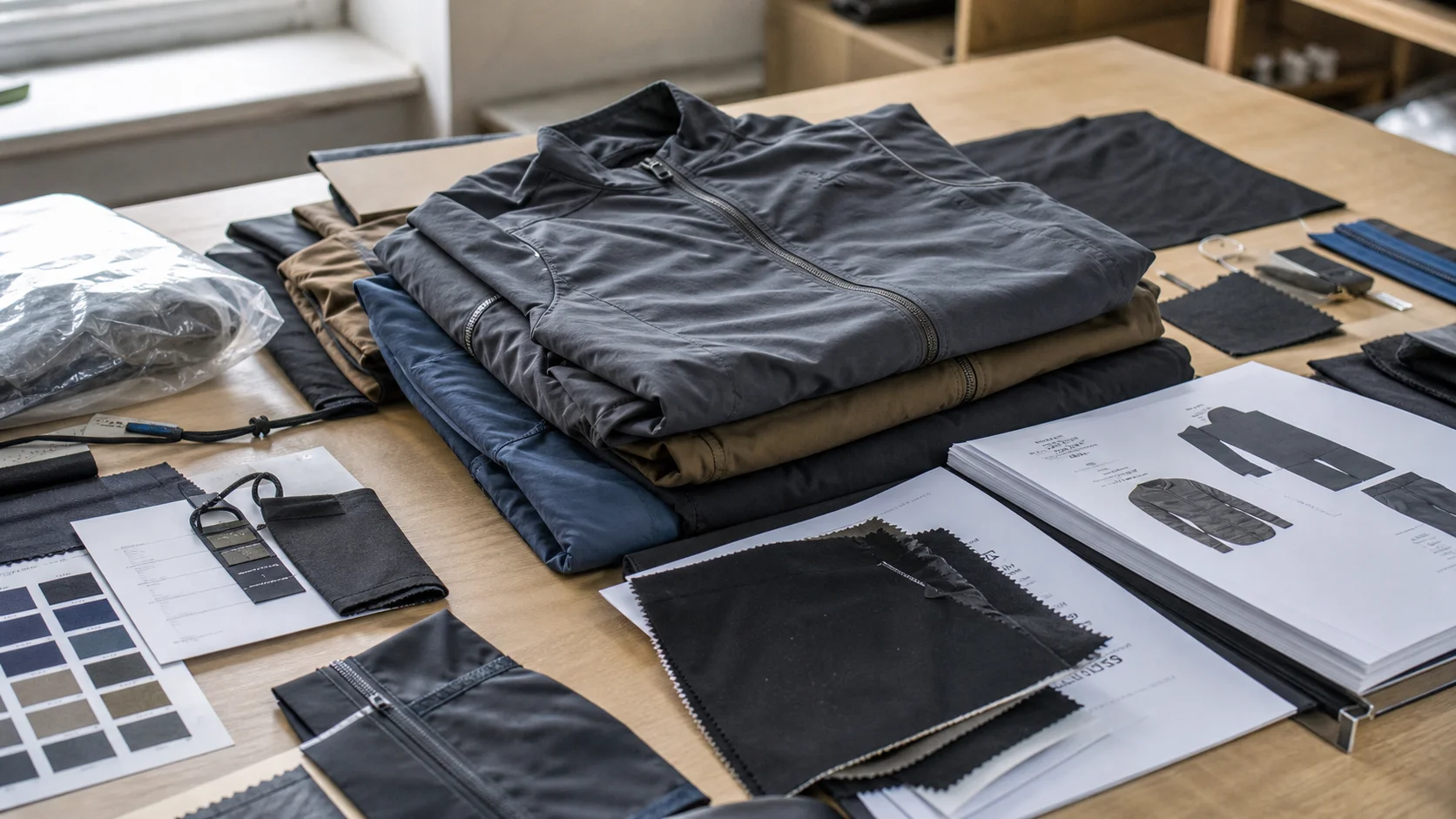
A buyer-focused outline for sportswear retailers evaluating OEM windbreaker jackets with a close look at colorfastness testing, pass-fail standards, and...
OEM Windbreaker Jackets Colorfastness Testing - Fabrikn production reference
For sportswear retailers, OEM windbreaker jackets live or die on consistency. The silhouette may be simple, but the performance expectations are not. Colorfastness is one of the fastest ways to expose weak materials, poor dye control, or trim mismatch before goods reach store shelves. A jacket that fades on the first wash, stains a lining, or transfers color onto a white tee creates a return risk that is hard to absorb at retail margin levels.
This article breaks down OEM windbreaker jackets colorfastness testing in practical terms for sourcing teams. It covers what to test, when to test, what results matter, and where mistakes usually happen. It also explains how to build colorfastness checks into the sampling and production workflow so you are not relying on final inspection to catch a preventable problem.
Windbreakers are usually made from polyester, nylon, recycled synthetics, or blended shells with coatings or laminations. These constructions can look clean on paper and still behave badly in testing if dyes, finishes, or heat settings are not controlled. Retail buyers should treat colorfastness as a commercial risk issue, not just a technical one.
Low colorfastness creates several problems:
For sportswear retailers, the judgment is straightforward: if the jacket is positioned as everyday performance outerwear, color retention must survive realistic wear. A low-priced jacket that bleeds or dulls after one cycle can cost more than a slightly higher-cost garment with better dye discipline.
Colorfastness is not one test. It is a cluster of checks that reveal how the shell fabric, lining, trims, and finishes behave under use, washing, sweat, light, and friction.
Retailers do not need to test every possible variable on every style, but they should know which checks matter most for OEM windbreaker jackets. The correct test package depends on fabric type, color depth, use case, and whether the jacket has print, coating, or contrast components.
This measures how well the fabric retains color after laundering and whether adjacent fabrics are stained. For jackets marketed as casual sportswear or commuter outerwear, this is one of the first tests to request. Dark navy, black, red, and bright fashion shades are common concern areas.
Dry and wet rubbing tests check whether color transfers when the fabric is abraded. This matters for high-contact areas such as sleeves, hems, cuffs, and folded packed garments. If the jacket has a coated surface or pigment-heavy finish, rubbing performance can be weaker than expected.
Sportswear retailers should not ignore this one. Sweat exposure can trigger staining or shade loss that does not appear in wash testing alone. Acidic and alkaline perspiration checks are often relevant where the product is marketed for active use.
Useful for jackets sold in window displays, outdoor retail racks, or seasonal promotions. Light exposure becomes more important for bright colors and for garments using certain dyes that are prone to fading.
Relevant where printed liners, heat-applied logos, packaging contact, or stacked storage can transfer color. It is also worth checking if the jacket uses heat transfer prints or labels on synthetic fabric.
If the shell has a polyurethane, acrylic, or water-resistant finish, test the finished fabric rather than the greige cloth alone. Some finishes alter dye stability, surface friction, or washing behavior.
Test Type Typical Retail Use Common Risk If Skipped Wash Everyday outerwear, washable sportswear Fade, staining, customer complaints Rubbing Dark colors, coated shells, high-friction areas Color transfer during wear or packing Perspiration Activewear and performance outerwear Sweat-related staining or shade loss Light Displayed goods, bright shades, seasonal drops Early fading on shelf or in transit Transfer resistance Printed or packed synthetic garments Shade marks on linings or adjacent productsGood testing is staged testing. Waiting until production is complete leaves too little room to correct a bad dye lot, weak finish, or unproven print process. For OEM windbreaker jackets, colorfastness should be built into the sourcing calendar at sample approval, lab dip confirmation, pre-production, and bulk production checks.
This is the first point where color direction should be controlled. Lab dips are used to confirm the target shade before bulk dyeing. Retailers should ask for lab dip approval against the intended Pantone or reference sample, and they should be wary of approving a shade that looks acceptable under one light source but too weak under another.
Before cutting bulk fabric, confirm that the approved lab dip sits on the intended base cloth. A shade that works on a smooth woven polyester shell may not behave the same on a textured ripstop or recycled yarn fabric. If there is a contrasting lining, test both sides or both materials where relevant.
Zippers, zipper tapes, drawcords, elastic, binding, and printed labels can all contribute to the final color issue. Matching color visually is not enough. Trims may have different dye systems, and some components will bleed at a lower threshold than the shell fabric.
The pre-production sample should be close enough to the final construction and finishing method that its test results are meaningful. If the sample uses substitute trims or a different finish, the data can mislead the buying team.
Colorfastness verification during bulk production is a control measure, not a rescue mission. If the bulk result drops below spec, the order may need rework, relabeling, or rejection. That is why the quality plan should define sample size, acceptance criteria, and hold points before production starts.
Colorfastness problems often begin before the garment factory sees the order. The fabric mill, dye house, and trim supplier all influence the final outcome. Retailers sourcing OEM windbreakers should pay close attention to construction details that change the way color behaves.
Polyester shell fabrics often give better wash stability than some other synthetics, but rubbing and heat-related transfer can still be weak if the dye process is not controlled. Nylon can take dye differently and may show more visible shade shift depending on finish and formulation.
Recycled polyester is increasingly common in sportswear programs. It is commercially useful, but shade consistency can be less predictable than virgin content. Buyers should allow time for a tighter lab dip review and should not assume a recycled fabric will match a standard reference without extra development.
Windbreakers often use DWR, PU coatings, or laminated layers. These can change the surface feel and affect how the fabric responds to rubbing and washing. Some finishes also limit how freely dye or print systems perform. Testing must be done on the final finished fabric, not just the base textile.
Contrast zips, cord ends, hook-and-loop patches, reflective details, and pocketing fabric are common failure points. A black shell with a lighter lining may still pass shell testing and fail the pack-out if the lining stains. The order spec should identify all component colors and test them as a set.
Heat transfers, screen prints, and vinyl marks can behave very differently from dyed fabric. A jacket can pass shell testing and still fail if the printed chest logo cracks, fades, or transfers under heat. Ask for print-specific performance data where decoration is part of the style.
Retailers sometimes overreact to a test report because the terminology looks more technical than it is. The better approach is to connect the result to the garment’s use, price point, and color depth. A fashion windbreaker and a performance shell do not carry the same tolerance for risk.
Read the report with these questions in mind:
Scores and grading systems vary by standard, so the exact acceptance level should be written into the purchase agreement. For practical buying, a test report is only useful if the supplier and retailer agree in advance on the pass/fail line and on what happens when a component misses the mark.
The strongest buying position is not to demand perfect test results on paper. It is to require a test package that matches the product’s real use, then hold the supplier to those agreed limits before bulk fabric is approved.
Colorfastness control affects commercial timing. More testing usually means more sample rounds, more fabric hold time, and more coordination across mills and sewing lines. Retailers should factor that into sourcing schedules instead of treating testing as a last-mile checkbox.
For OEM windbreaker jackets, MOQ can vary widely by supplier capability, fabric type, and decoration method. A common range for simple styles may sit around 300 to 1,000 pieces per color, while more complex programs with special fabrics or trims can push higher. Custom dyeing or special finishes often increase the minimum order because mills want a larger run to justify setup.
Lead time is usually driven by fabric availability, dye house capacity, test turnaround, trim sourcing, and the number of revision rounds. A straightforward basic shell can move faster than a style using recycled fabric, reflective trims, bonded details, or multiple contrast colors. Retailers planning a seasonal launch should leave room for one failed round of lab dips or one delayed test report.
For sourcing teams working with established OEM programs, the practical tradeoff is clear: a tighter test schedule reduces inventory risk only if the specification is stable. Rushing shade approval to meet a launch date often produces more expensive delays later.
Inspection should not replace laboratory testing, but it can verify that what was approved is what got packed. For sportswear retailers, the best practice is to combine factory QA, third-party testing, and final inspection so the same issue does not slip through multiple gates.
That distinction matters. If a supplier claims that visual inspection is enough, the buyer should treat that as a red flag. A jacket can look acceptable on the production line and still fail in customer use.
Buying decisions should balance cost, color depth, and end use. A low-cost fashion windbreaker sold for occasional wear may tolerate a lighter test package than a premium training jacket. The mistake is to apply the same procurement logic to every product tier.
Three tradeoffs come up repeatedly:
Retailers should also be realistic about the target customer. Sportswear shoppers notice performance failures quickly. If the product is likely to be washed often, worn in active settings, or sold in competition with technically better outerwear, test discipline needs to be stronger.
For buyers looking to build a dependable OEM program, a supplier page such as fabrikn.com/services/ is the right place to start reviewing production support. Company background on fabrikn.com/about-us/ can help with supplier evaluation, while fabrikn.com/contact-us/ is the direct route for quoting a style pack or requesting test coordination.
Before placing a windbreaker order, the buyer should ask questions that expose process control, not sales language. The answers should be specific enough to support a purchase decision.
These questions are not about paperwork for its own sake. They reveal whether the supplier understands the actual production path. A good OEM partner will be able to explain where risk sits and how they control it. A weak one will keep the discussion vague.
OEM windbreaker jackets colorfastness testing is not a technical luxury. It is a retail risk control measure that protects margin, brand trust, and seasonal sell-through. The best programs treat colorfastness as part of product development, not a final inspection surprise.
For sportswear retailers, the practical standard is simple: test the final fabric and trims, approve color in stages, budget time for sample revisions, and write the acceptance criteria into the order. That approach costs less than dealing with faded goods, stained linings, and avoidable claims after delivery.
If the brief is still flexible, the buying team should decide early whether the product is aimed at price-first fashion, active use, or a mixed retail position. That decision changes the testing package, the acceptable MOQ, and the level of supplier control worth paying for.
Get a free quote from Fabrikn — your trusted B2B clothing manufacturer with 10+ years of experience. MOQ as low as 200 pieces.
Get a Free Quote →Colorfastness is the ability of the jacket fabric, lining, prints, and trims to keep their color under washing, rubbing, perspiration, light exposure, and storage conditions. It shows whether the garment will still look acceptable after normal use.
Wash and rubbing tests are usually the first priorities, with perspiration testing added for performance-oriented products. Dark colors and coated fabrics often need extra attention on wet rubbing and transfer resistance.
It should begin at the lab dip stage, continue through pre-production sampling, and be confirmed again before bulk approval. Waiting until after production limits correction options and raises cost.
Many simple programs start around 300 to 1,000 pieces per color, though the real MOQ depends on fabric type, dyeing method, trim complexity, and whether the order uses special finishes or recycled materials.
Yes. Visual inspection only checks what can be seen at the moment of packing. Colorfastness failures often appear after washing, rubbing, sweat exposure, or heat and are not visible on the line.
Retailers should request lab dip approvals, final fabric test reports, confirmation of trim compatibility, and a clear pass/fail standard before production starts. This reduces dispute risk and keeps quality expectations aligned.