
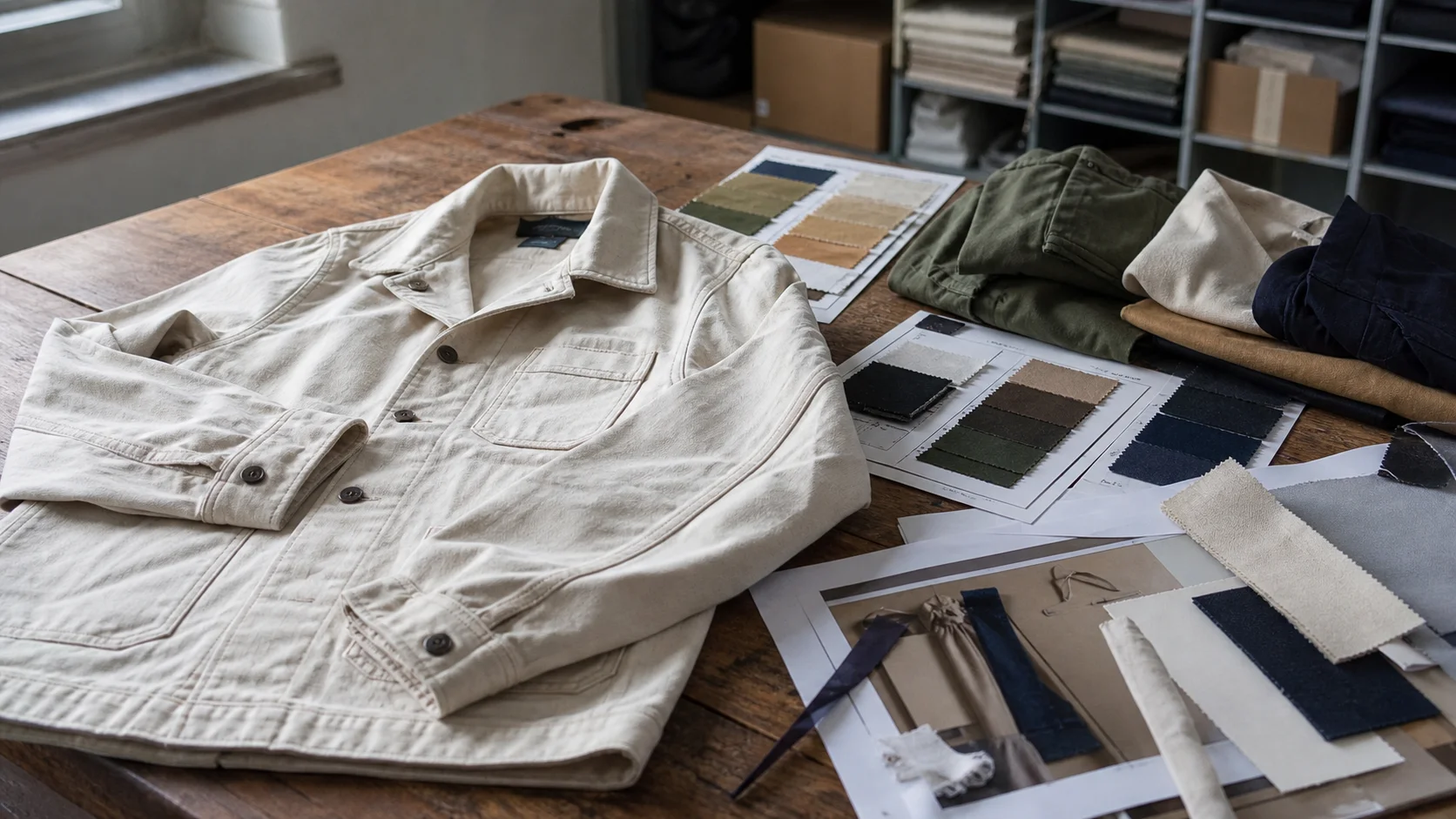
A practical compliance checklist for pharmacy operations teams evaluating organic cotton work jackets for safety, documentation, labeling, and sustainable...
For pharmacy operations teams, a work jacket is not just a uniform item. It sits at the intersection of brand presentation, staff comfort, cleaning standards, and procurement control. When the jacket is specified as organic cotton, the compliance conversation becomes wider. Buyers need to check fiber claims, finishing chemicals, labeling, durability, sizing consistency, laundering performance, and the supplier’s documentation trail.
This checklist is written for sourcing and operations teams that need a practical way to evaluate an organic cotton work jacket compliance checklist for pharmacy operations teams. It is especially useful when uniforms must look professional, tolerate repeated washing, and align with sustainability or corporate responsibility goals. The points below are meant to support procurement decisions, not replace legal or regulatory review.
If you are also building a supplier shortlist, you can review general production support on services, learn more about the company on about us, or contact the team directly through contact us.
Organic Cotton Work Jacket Compliance Checklist - Fabrikn production reference
Pharmacy operations teams often need garments that project cleanliness, consistency, and trust. A work jacket may be worn at the front counter, in stock areas, or during internal movement across controlled spaces. In these settings, compliance is not only about sustainability claims. It is also about whether the jacket can survive repeated laundering, keep its shape, maintain colorfastness, and meet internal dress-code expectations.
Organic cotton adds another layer. A garment can be marketed as “organic cotton” and still fall short if the claim is unsupported or if blended fibers and finish chemicals are not disclosed clearly. Procurement teams should treat every claim as something that needs documentary proof. That means asking for fiber certification, testing documents, trim details, and a written production specification before approval.
Pharmacy buyers generally get better outcomes when they treat uniform sourcing like a controlled procurement project rather than a simple apparel purchase. The key is not just finding a jacket that looks right in a sample room. The key is confirming that the jacket can be repeated reliably at scale.
The first compliance mistake is requesting pricing before the garment is fully specified. A work jacket for pharmacy operations should be defined in practical terms. Keep the brief narrow enough that suppliers can quote accurately, but detailed enough to avoid later disputes.
For pharmacy operations, the design should be simple, low risk, and easy to maintain. Loose decorative elements create more inspection and replacement issues. Buyers usually benefit from plain, structured garments with minimal embellishment and clear size grading.
An organic cotton claim should be backed by traceability documents. The exact document set will depend on the supplier’s supply chain, but buyers should not rely on verbal assurances alone. If a supplier cannot explain where the yarn and fabric were sourced from, the claim deserves closer scrutiny.
Ask whether the certification covers the finished garment, the fabric, or only the raw fiber. That distinction matters. A buyer may be presented with “organic cotton fabric” while the final jacket includes trims, linings, or thread that are not disclosed. In a strict compliance review, the whole garment bill of materials should be visible.
Pharmacy teams should also decide whether they need a fully certified chain or simply a verified organic content claim for internal sustainability reporting. The answer affects cost, lead time, and supplier selection.
Organic fiber alone does not guarantee a safe or compliant garment. Finishing chemicals, dyes, and printing inks can create issues even when the base cotton is organic. This is especially relevant where uniforms are worn for long shifts and washed repeatedly.
Buyers should be cautious with special finishes. A stain-resistant finish can be useful in a pharmacy environment, but it may increase chemical complexity and sometimes reduce the purity of the sustainability story. A practical sourcing judgment is to prioritize wash durability and stable appearance before asking for extra performance claims.
If antimicrobial treatment is requested, the operations team should confirm local regulatory expectations and document what the treatment actually does. There is a difference between a fabric treatment intended to limit odor and a medical-grade claim that implies infection control. Uniform procurement should not overstate protection features.
Uniform jackets fail in the real world for ordinary reasons: seams open, buttons loosen, collars twist, pocket edges fray, and color fades faster than expected. For a pharmacy environment, those failures matter because replacement cycles can become expensive and inconsistent across departments.
Function should stay secondary to compliance, but it cannot be ignored. Pharmacy teams typically need a jacket that looks orderly and presents well at the front of house, while still allowing movement in storage and back-of-house areas. A jacket that is too tailored may look sharp on day one and become impractical in daily use. A jacket that is too loose may look untidy and raise uniform consistency concerns.
For most operations teams, a moderate-weight woven fabric provides the best balance of appearance and durability. Very lightweight cotton can feel comfortable but may crease heavily and wear faster. Heavier fabric can hold structure better but may be too warm for continuous indoor wear.
Garment compliance includes fit consistency. In a multi-site pharmacy operation, even small sizing variations create issues: staff complaints, exchange requests, and uneven presentation across locations. Sizing should be tested with real users before full production.
Pharmacy jackets are often worn over base layers. That means the fit should allow movement without looking oversized. A common sourcing error is approving a sample on a hanger instead of on a person. Another is assuming men’s and women’s pattern blocks can be interchanged without fit issues. They usually cannot.
If your team is ordering for multiple branches, consider a size run that reflects actual staff demand rather than a standard fashion-size curve. Operations buyers should review prior uniform issue data before finalizing the run.
Sample approval is where many compliance problems can be caught early. A careful process saves money later. The goal is to verify both the technical spec and the commercial reality of the garment before bulk production begins.
Do not approve from photos alone unless the product is extremely simple and the supplier already has a proven track record with the same specification. Physical inspection remains important because cotton handle, shrinkage behavior, button security, and sewing quality are hard to judge on-screen.
When reviewing samples, test them in the same conditions they will face in use. Wash them, dry them, press them, and check appearance afterward. Look for seam distortion, shrinkage, and fabric pilling. If the jacket is intended for daily use, a one-time showroom approval is not enough.
Minimum order quantity is a practical compliance issue because it affects whether a supplier can actually make the jacket as specified. A highly customized organic cotton work jacket with a special weave, custom trim, and branded labels may require a larger MOQ than a basic stock-style garment.
Typical MOQ ranges vary widely by factory and complexity, but many buyers will see something in the range of 300 to 1,000 pieces per color or style for custom workwear. Lower quantities may be possible, though unit cost usually increases. If the supplier is offering unusually low MOQ on a custom organic garment, ask how fabric sourcing, labeling, and dye lot control will be managed.
For a straightforward order, a realistic lead time may sit somewhere around 30 to 90 days after approval, depending on material readiness and factory workload. More complex specifications can take longer. Buyers should avoid committing launch dates before sample approval is complete. That is especially important when uniforms need to arrive before a seasonal campaign, store opening, or rebranding event.
Labeling is a compliance point that is often overlooked. The garment should carry the correct fiber content, care instructions, country-of-origin statement if required, size marking, and any brand or compliance label agreed in the purchase order. If organic claims are being made on packaging or swing tags, they should match the supporting documentation.
Packaging should be simple and practical. If the organization wants lower waste, ask suppliers whether they can reduce plastic use or offer recycled packaging options. That said, packaging changes should not compromise garment protection in transit. Wet cartons and crushed uniforms create avoidable receiving problems.
Inspection should be built into the order, not added as an afterthought. The most common defects in work jackets are size variation, stitch defects, shade variation, mislabeling, and trim failures. These are manageable if the team defines the acceptable tolerance level in advance.
Quality risks increase when the jacket uses natural fiber fabric with multiple dye lots or when production is spread across different lines. Organic cotton can also show more visible shade variation than heavily processed synthetics, so the team should establish what level of variation is acceptable before bulk cut-and-sew begins.
For larger programs, a pre-shipment inspection is usually worth the cost. It helps catch issues before goods leave the factory. If the order is smaller, a detailed final audit of randomly selected cartons may still be justified, especially if the supplier is new or the specifications are precise.
Supplier screening should focus on consistency and transparency. A polished sales presentation does not prove production capability. The buyer needs enough evidence to judge whether the supplier can make the jacket repeatably, document the claim correctly, and handle corrective action if needed.
It is sensible to favor suppliers who answer clearly and in writing. Clear answers reduce disputes later. If a vendor avoids specifics on fabric weight, trim origin, or test standards, treat that as a warning sign. In uniform sourcing, vague answers usually become expensive answers.
If your team needs help building the supply brief, planning the production path, or comparing garment development options, fabrikn’s general production support pages are a useful starting point: services and about us. For direct project discussion, use contact us.
When selecting an organic cotton work jacket, pharmacy operations teams should favor simple, repeatable construction over decorative detail. The best option is usually the one that can be manufactured consistently, washed reliably, and documented cleanly. A low-cost jacket with weak traceability or unstable sizing can become more expensive than a well-specified item with a slightly higher unit price.
It is also worth balancing sustainability goals with operational reality. If staff wash uniforms frequently, a jacket that shrinks, wrinkles badly, or fades quickly will create dissatisfaction and reorders. If the garment is meant to communicate professionalism at the counter, shape retention and color consistency matter as much as the fiber story.
A disciplined checklist helps procurement teams avoid the most common errors: accepting unsupported organic claims, skipping sample rounds, ignoring trim details, and underestimating lead time. For a controlled environment like pharmacy operations, those misses are avoidable.
Get a free quote from Fabrikn — your trusted B2B clothing manufacturer with 10+ years of experience. MOQ as low as 200 pieces.
Get a Free Quote →At minimum, ask for organic cotton certification or traceability records, a composition statement, and supporting test documentation where needed. The exact documents depend on the claim you intend to make and the compliance standard your organization follows.
Many custom programs start around 300 to 1,000 pieces per style or color. Smaller orders may be possible, but unit cost can rise and sourcing flexibility may narrow.
For a straightforward order, 30 to 90 days after final approval is a common planning range. Lead time depends on fabric availability, sampling, trim sourcing, and factory workload.
Test fit, shrinkage, wash appearance, stitch quality, label accuracy, pocket placement, and button or zipper strength. A sample should be worn and washed before bulk approval.
Not always. Some teams request them for added performance, but the claim should be checked carefully. Do not assume a treatment equals infection control or medical-grade protection.
There is no single best number, but a light to midweight woven cotton fabric is often a practical choice. The final decision should reflect climate, laundering method, and how much structure the jacket needs to keep a professional look.
Certified fiber sourcing, traceability, color control, and careful finishing can raise cost. The price difference may be justified if the garment lasts longer, looks better after washing, and supports sustainability reporting.
For teams building a new uniform program or refining an existing one, the safest approach is to write the spec carefully, insist on sample approval, and verify every claim before bulk purchase. That is the most reliable path to a compliant organic cotton work jacket program in pharmacy operations.