
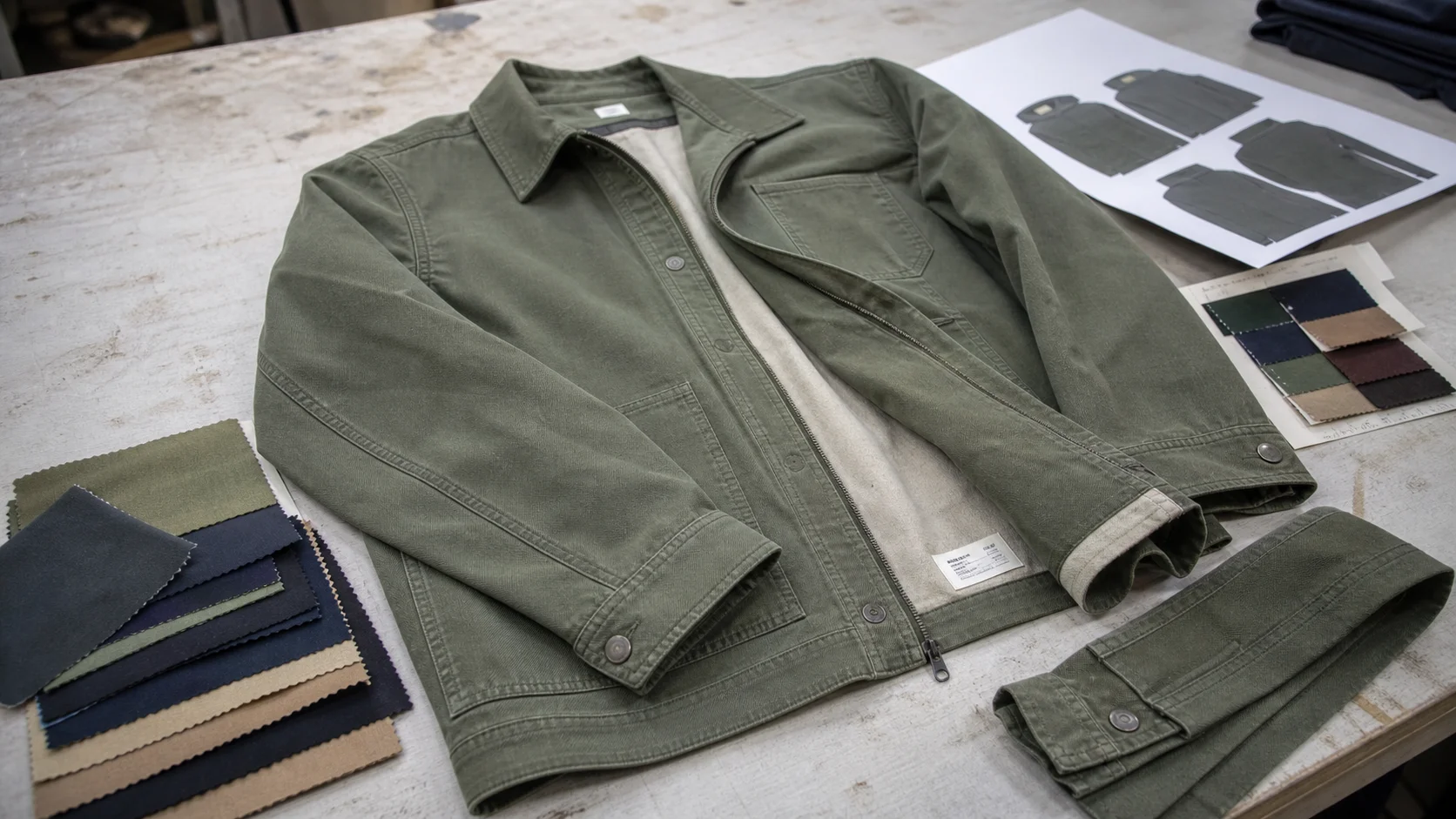
A practical outline for evaluating organic cotton work jacket suppliers on colorfastness, wash performance, and durability for cleaning crews that launder...
Organic Cotton Work Jacket Supplier Audit for Colorfastness - Fabrikn production reference
For cleaning crew uniforms, an organic cotton work jacket has to do more than look responsible on a sustainability report. It has to survive repeated laundering, detergent exposure, abrasion from tools and equipment, occasional disinfectant contact, and daily movement without bleeding dye onto other garments or fading into an uneven, worn-out shade after the first few cleaning cycles.
Colorfastness is often treated as a lab checkbox. That is a mistake. For B2B buyers sourcing organic cotton work jackets for janitorial teams, facility service providers, hospitality cleaning crews, healthcare support staff, and building maintenance contractors, colorfastness is a commercial risk. Poor dye performance leads to rejected bulk goods, inconsistent uniforms, complaints from crews, damaged brand perception, and replacement costs that can erase the margin saved by choosing a cheaper supplier.
This audit guide is written for sourcing teams, private-label uniform buyers, procurement managers, and sustainable fashion brands developing organic cotton work jackets for cleaning crews. It focuses on what to check before placing bulk orders, how to set realistic standards, which lab tests matter, and where supplier claims need verification.
Cleaning crew uniforms are exposed to harsher use than many casualwear jackets. A work jacket may be worn over a polo, T-shirt, sweatshirt, or base layer during early morning shifts, warehouse cleaning, hotel housekeeping, outdoor waste handling, or facility maintenance. The jacket may brush against carts, chemical containers, mop handles, industrial laundry bags, and damp surfaces.
Colorfastness affects both appearance and function. A navy organic cotton work jacket that fades unevenly after ten washes no longer looks like a controlled uniform program. A black jacket that crocking-tests poorly may leave dark marks on light-colored underlayers. A green jacket that bleeds during laundering can contaminate other uniform pieces in the same load.
The most relevant colorfastness risks for cleaning crews include:
For procurement teams, the issue is not only whether the jacket passes a test once. The better question is whether the supplier has controls that make repeatable color performance likely across bulk production and reorder cycles.
A supplier that can show one good lab report is useful. A supplier that can explain how shade, dyeing, washing, trims, and inspections are controlled from yarn to shipment is safer for uniform programs.
Organic cotton is attractive for sustainable fashion and responsible uniform sourcing because it reduces reliance on conventional cotton farming inputs. For work jackets, it can also offer comfort, breathability, and a natural hand feel that cleaning crews may prefer over stiff synthetic-heavy garments.
Still, organic cotton does not automatically mean better colorfastness. The fiber origin, yarn count, fabric construction, dye type, pretreatment, finishing process, and washing method all influence performance. Buyers should separate sustainability claims from technical performance.
Organic cotton may present a few practical sourcing considerations:
A common purchasing mistake is to approve the sustainability story before validating the uniform performance. A certified organic cotton jacket that fails after commercial laundering is still a failed workwear product. Sustainability must be built into a specification that includes durability, wash performance, and shade consistency.
Buyers comparing development options can review broader production capabilities through Fabrikn’s services to understand how sourcing, sampling, and manufacturing support can be structured for apparel programs that need both compliance and commercial reliability.
A colorfastness audit should not be limited to the dyehouse. The supplier may not own the dyeing facility, the fabric mill, the laundry plant, or the trim source. That makes supplier management more important, not less. The jacket vendor must be able to trace and control the full production chain.
The audit should cover six practical areas:
For cleaning crew jackets, the audit should also consider the intended care method. A jacket washed at home once per week faces different risks from a jacket processed through commercial laundry with stronger detergents, higher agitation, and hotter drying. Buyers need to define the care environment before they judge test results.
Before an on-site or remote supplier audit, request documents that prove the supplier understands both sustainability and color performance. Do not rely on sales presentations alone.
If the supplier cannot provide these records during development, bulk production is likely to require close supervision. Some smaller vendors can still make good products, but missing documentation increases buyer workload and risk.
A colorfastness audit works best when the work jacket specification is precise. Loose descriptions such as “organic cotton jacket, black, durable wash” leave too much room for interpretation. The buyer should define fabric, trims, dye performance, construction, and testing expectations in writing.
Common organic cotton work jacket fabrics include twill, canvas, drill, ripstop, and heavier jersey-backed constructions. For cleaning crews, a midweight woven fabric is often practical because it balances durability and comfort. Typical fabric weights may range from 220 gsm to 360 gsm, depending on climate, role, lining, and layering needs.
Canvas and twill fabrics usually offer better abrasion resistance than lightweight poplin. Dense twill can give a cleaner uniform appearance, while canvas can feel more rugged. A very heavy organic cotton canvas may look durable, but it can increase drying time and feel restrictive during active cleaning work. A lighter fabric may reduce cost and improve comfort, but it may fade faster at stress points if abrasion is high.
For cotton jackets, reactive dyes are commonly used because they bond with cellulose fibers and can provide good wash fastness when properly fixed and washed off. Pigment dyeing may create attractive casualwear effects, but it is generally riskier for uniform color consistency and crocking unless carefully engineered and tested. Sulfur dyes may be used for certain dark shades, but they require attention to oxidation, odor, shade stability, and fabric strength.
For cleaning crews, the safest purchasing judgment is simple: avoid fashion-driven dye effects unless the buyer intentionally wants a worn-in appearance and accepts shade variation. Uniform jackets should usually use stable, repeatable shades with documented lab performance.
Trims can create colorfastness problems even when the fabric passes testing. Rib cuffs may fade at a different rate from the body fabric. Zipper tape may bleed or look mismatched after washing. Snap coatings may discolor. Care labels and brand labels may transfer ink. Reflective tape can crack or peel if the garment wash process is too aggressive.
The audit should check whether trims are tested as part of the full garment, not only as isolated components. A trim that passes its own test can still fail when sewn into a garment and exposed to washing, heat, friction, and chemical residue.
Component Colorfastness Risk Buyer Check Organic cotton shell fabric Fading, bleeding, crocking, shade variation Review lab dips, bulk shade bands, wash tests, and crocking results Rib cuffs or collar Different fading rate from body fabric Request matched shade standard and wash-tested trim approval Zipper tape Dye migration or shade mismatch Test after laundering and compare against approved color standard Labels and prints Ink transfer, cracking, discoloration Run wash, rub, and heat exposure checks before bulk Reflective tape Peeling, cracking, adhesive failure Confirm compatibility with wash method and drying temperatureColorfastness requirements should be defined in the purchase specification before the supplier quotes bulk pricing. Testing after production is useful for verification, but it is too late to discover that the dye route was wrong.
The exact test standards depend on buyer market, customer requirements, and regulatory expectations. Commonly referenced methods may include ISO, AATCC, or equivalent standards for wash fastness, rubbing, perspiration, light exposure, and color change. Buyers should align with the destination market and the end customer’s quality manual.
For dark shades such as black, navy, charcoal, forest green, and burgundy, wet crocking and staining are common problem areas. For lighter shades such as stone, khaki, light grey, and cream, staining from darker trims or contrast panels may be a bigger risk.
Performance grades vary by test method, shade, and buyer tolerance. Many B2B apparel buyers target grade 4 or above for key wash and staining measures where feasible, with grade 3-4 sometimes accepted for difficult dark shades or wet rubbing depending on end use. A lower standard may be acceptable for promotional items, but cleaning crew work jackets are usually expected to last longer.
A cautious supplier will not promise perfect scores for every dark organic cotton fabric without testing. Buyers should treat unrealistic claims as a warning. The right approach is to approve target grades by test type, shade, and risk level, then confirm through lab dips, pre-production samples, and bulk verification.
Test Area Why It Matters Practical Purchasing Note Wash fastness Cleaning crew uniforms are washed frequently Test the approved shade and finish, not only a similar fabric Wet rubbing Damp jackets may rub against carts, tools, and underlayers Dark colors need special attention before bulk approval Perspiration Crews may work in warm, active environments Check both color change and staining on adjacent fabrics Light exposure Outdoor crews or daylight storage can fade jackets More important for security, maintenance, and exterior cleaning teams Repeated laundering Single-cycle tests may not show real wear Use multi-wash appearance checks for uniform programsSampling is where many colorfastness problems can be caught early. The buyer should not approve a work jacket sample only by fit and appearance. A good sample approval process tests the fabric, trims, shade, care label, and laundering outcome before bulk cutting.
Start with the fabric quality. Confirm organic cotton content, fabric weight, construction, hand feel, finish, and intended care method. If the fabric is too light, too stiff, or too unstable after washing, colorfastness improvements alone will not make it a good cleaning crew jacket.
At this stage, the supplier may submit lab dips or strike-offs. Buyers should compare them against a physical standard under controlled lighting. Digital color approval is convenient, but it is not reliable enough for final uniform shade decisions.
Lab dips should be reviewed for shade, depth, tone, and expected performance. For dark colors, ask whether the dye recipe has previous production history on the same organic cotton fabric. A lab dip that looks correct may still fail wet crocking or washing if fixation and soaping are weak.
Reject lab dips that are visually acceptable but unsupported by technical confidence. A better supplier can explain whether a shade is easy, moderate, or difficult on the selected fabric.
The proto sample checks construction, styling, basic fit, pocket placement, and initial trim choices. It may not use final bulk fabric or final dye. Buyers should avoid making final colorfastness conclusions from proto samples unless they are made with approved production-quality fabric.
The fit sample refines size, mobility, sleeve length, shoulder shape, pocket access, and comfort over cleaning crew base layers. A jacket that restricts reaching, bending, or lifting will not perform well in the field, even if the fabric color is stable.
If the jacket is intended for active cleaning crews, assess movement. Sleeve pitch, armhole depth, back ease, and cuff design all affect comfort. A low-cost jacket with poor mobility often creates hidden costs through wearer complaints and low adoption.
The pre-production sample should use approved bulk fabric, approved trims, final construction, final labels, and final wash or finish. This is the sample that matters most for colorfastness validation.
Before approving bulk production, buyers should wash the pre-production sample according to the intended care label and, where possible, according to the harsher real-use scenario. For example, if crews will use commercial laundry, a home laundry test alone is not enough.
After approval, seal a physical sample and shade standard. This gives the supplier, inspector, and buyer the same reference point during production and final inspection. Without a sealed sample, disputes over “acceptable shade” become subjective and difficult to resolve.
For programs with repeat orders, keep approved shade standards and update them only through a controlled approval process. Reorders are a frequent source of visible mismatch when jackets are issued to existing teams.
Colorfastness is not only a dyehouse issue. Poor production handling can make an acceptable fabric fail visually. A supplier audit should examine how bulk fabric lots are received, stored, cut, bundled, sewn, finished, and packed.
Fabric lots should be identified and separated. If multiple dye lots are used in one order, the supplier must manage shade grouping carefully. Mixing panels from different shade lots in the same jacket can cause visible mismatch between sleeves, body panels, collars, pockets, and plackets.
For uniform programs, buyers should ask whether the supplier uses shade bands. A shade band shows the acceptable range from light to dark or tone variation. The buyer should approve the band before cutting, especially for dark or saturated colors.
Cutting rooms can create shade problems when fabric rolls are mixed without control. The audit should check whether roll numbers, dye lots, and cut bundles are recorded. Panels from different rolls should not be casually mixed unless shade consistency has been verified.
For jackets with multiple panels, shade direction and nap are also important. Even without pile, twill direction and finishing effects can create apparent shade variation if panels are cut inconsistently.
During sewing, oil stains, chalk marks, heat marks, and excessive handling can affect appearance. Some marks become more visible after washing. A supplier making cleaning crew jackets should have controls for machine cleanliness, thread shade, replacement panels, and stain removal procedures.
Thread is often overlooked. Polyester thread may keep its shade differently from cotton fabric. Cotton thread may dye differently and can shrink or fade. The buyer should specify whether tonal matching, contrast stitching, or high-visibility stitching is required and confirm performance after laundering.
If the jacket is garment washed, the laundry process becomes a major colorfastness control point. Enzyme wash, stone wash, softener, rinse cycle, drying temperature, and batch size can all influence final shade. Garment washing can improve comfort, but it also increases shade variation risk.
For cleaning crew uniforms, a heavily washed fashion look is usually not the best choice. A mild softening process may be acceptable if it is controlled and repeatable. Buyers should request a written wash standard and compare bulk output against the sealed sample.
Final inspection should include more than workmanship and measurements. Colorfastness-related risks can be visible at shipment stage if inspectors know what to check.
Inspectors should compare garments against the sealed sample under appropriate lighting. They should check body-to-sleeve shade consistency, collar and cuff matching, pocket panels, zipper tape, rib trims, labels, and any contrast elements.
Common visual defects include:
Inspectors may conduct limited rubbing or damp cloth checks on-site as screening tools, depending on buyer protocol. These checks do not replace accredited lab testing, but they can flag obvious crocking or bleeding concerns before shipment.
If a damp white cloth shows visible dye transfer from a dark jacket, hold shipment and investigate. It may be a sign of poor dye fixation, inadequate rinsing, or a finishing process that left loose color on the surface.
For larger programs, bulk fabric or finished garments should be tested from actual production, not only from development samples. This is especially important when the order uses a new supplier, new fabric mill, new dyehouse, dark shade, garment wash, or commercial laundry claim.
Testing every order may not be necessary for a mature supplier with stable history, but first orders and high-risk shades deserve extra control. The cost of testing is usually small compared with the cost of replacing a failed uniform rollout.
Minimum order quantity and lead time are central to supplier selection. Organic cotton work jackets often require more planning than standard conventional cotton jackets because certified fabric, specific weights, and custom dyeing may not be available off the shelf.
MOQ depends on supplier type, fabric availability, dyeing method, trims, and certification requirements. As a practical sourcing range, buyers may see:
Very low MOQs can be useful for pilots, but they may come with compromises. The supplier may use available fabric rather than the ideal fabric. Lab testing costs may be spread across fewer units. Shade control may be harder if fabric is sourced from leftover lots. Buyers should not assume a 100-piece order will receive the same technical support as a 3,000-piece uniform program.
Lead times vary by season, supplier capacity, fabric availability, and approval speed. A realistic development and production timeline may include:
Approval delays are one of the most common causes of missed delivery dates. If the buyer takes two weeks to approve each lab dip round, the supplier cannot recover that time without adding risk. Rushing dyeing, skipping wash tests, or approving trims late often creates quality issues that become visible after shipment.
A stronger colorfastness program usually adds cost through better fabric preparation, controlled dyeing, lab testing, shade sorting, and inspection. These costs are not wasteful if the jacket is part of a recurring uniform program.
Buyers should be cautious with quotes that are far below the market. The savings may come from lower-grade fabric, weak dyeing controls, untested trims, limited documentation, or skipped inspections. Sustainable fashion sourcing should not reward the cheapest route if it creates early product failure and replacement waste.
If buyers need help structuring a development brief or comparing supplier readiness, contacting Fabrikn can be a practical next step for aligning product requirements, production expectations, and sourcing priorities.
A scorecard makes supplier comparison more objective. It also helps procurement teams avoid choosing a supplier based only on unit price or sustainability language. The scorecard should weigh documentation, testing, process control, communication, and corrective action capability.
Audit Area What to Check Risk Level if Weak Organic cotton documentation Certification scope, transaction records, material traceability High for sustainable fashion claims Fabric specification control Weight, construction, finish, shrinkage, dye lot records High for repeat orders Color development process Lab dips, shade standards, buyer approvals, dye recipe control High for uniform shade consistency Colorfastness testing Wash, crocking, perspiration, water, light, repeated laundering High for cleaning crew use Trim testing Rib, zipper tape, snaps, labels, reflective tape, thread Medium to high depending on design Bulk shade control Shade bands, roll records, lot separation, cutting discipline High for multi-size programs Final inspection Visual shade checks, packing review, lab report verification Medium to high Corrective action Root-cause analysis, reprocessing ability, replacement policy High when first order is largeA supplier does not need to own every process to be acceptable. Many capable apparel manufacturers work with nominated mills, dyehouses, and laundries. The key question is whether the supplier can control those partners and provide transparent records.
A supplier with strong documentation but weak sampling discipline is risky. A supplier with good sewing quality but poor dye lot management is also risky. A supplier with honest limitations and a clear testing plan may be safer than a supplier that promises everything quickly and cheaply.
For organic cotton work jackets used by cleaning crews, the best supplier is rarely the one with the lowest initial quote. The better choice is the supplier that can balance organic material sourcing, stable dyeing, practical jacket construction, predictable lead time, and clear quality control.
Buyers should make decisions based on the use case. A cleaning crew jacket for light indoor housekeeping may not need the same fabric weight or abrasion resistance as a jacket for exterior facility cleaning. A hotel group may prioritize consistent appearance and soft hand feel. A maintenance contractor may prioritize durability, dark shade retention, and pocket strength. A healthcare support provider may need stronger laundering performance and tighter contamination controls.
The color decision also matters. Black and navy are popular because they hide stains and fit many uniform programs, but they are more demanding for crocking and fading. Khaki and grey may show stains more easily but can be easier to manage for dye transfer. High-visibility colors or contrast panels add another layer of testing complexity.
There is no universal best specification. There is a better specification for the intended wearer, wash method, climate, brand standard, and budget.
The strongest procurement programs also build reorder planning into the first order. If the cleaning company expects to add staff or replace jackets every quarter, the supplier should know that early. Reorder shade continuity, fabric availability, and trim consistency are easier to manage when they are part of the sourcing plan.
Buyers evaluating sustainable apparel partners may also review Fabrikn’s about us page for context on how apparel sourcing support can connect product development, manufacturing coordination, and responsible production priorities.
The right questions reveal whether a supplier understands colorfastness risk or is simply repeating standard sales language. Ask specific questions and request evidence.
If the supplier answers these questions clearly, the project has a stronger base. If the answers are vague, the buyer should slow down and require sample proof before committing to bulk fabric.
Some warning signs are easy to miss during price negotiation. They become expensive later.
These issues do not always mean the supplier is unusable. They do mean the buyer should tighten controls, reduce initial order exposure, or choose a better-prepared supplier for high-visibility uniform programs.
An organic cotton work jacket for cleaning crews sits at the intersection of sustainable fashion and practical workwear. The garment must support responsible sourcing goals, but it also has to perform through real cleaning work and repeated washing. Colorfastness is one of the clearest tests of whether the supplier can deliver both.
A strong supplier audit checks the full chain: organic cotton documentation, fabric quality, dye route, lab testing, trim compatibility, sampling discipline, bulk shade control, and final inspection. It also recognizes tradeoffs. Lower MOQs can help pilot a program, but they may reduce fabric and dyeing flexibility. Dark colors may suit cleaning crews, but they need stricter crocking and wash validation. Garment washing can improve comfort, but it can create shade variation if poorly controlled.
The best purchasing decision is not the cheapest jacket with an organic label. It is the jacket that meets the wearer’s needs, survives the intended cleaning and laundry conditions, supports credible sustainability claims, and can be repeated in future orders without shade surprises.
Get a free quote from Fabrikn — your trusted B2B clothing manufacturer with 10+ years of experience. MOQ as low as 200 pieces.
Get a Free Quote →A colorfastness audit reviews whether a supplier can control dye performance, shade consistency, washing durability, rubbing resistance, trim compatibility, and bulk inspection for organic cotton work jackets. It checks documents, samples, test reports, production controls, and final inspection procedures.
Cleaning crew jackets are washed frequently and exposed to friction, moisture, detergents, and sometimes cleaning chemical residue. Poor colorfastness can cause fading, bleeding, dye transfer, and visible shade mismatch across the uniform program.
Buyers commonly request tests for washing, dry and wet rubbing, perspiration, water, light exposure, and repeated laundering appearance. The exact standards should match the destination market and the customer’s quality requirements.
Yes, dark shades such as black, navy, charcoal, and deep green often carry higher wet crocking and fading risk. They can still work well when the dyeing, fixation, rinsing, testing, and bulk shade controls are properly managed.
Typical MOQs may range from 300 to 500 pieces for limited runs with available fabric, 500 to 1,000 pieces for custom-dyed fabric, and 1,000 to 3,000 pieces or more for controlled uniform programs with custom trims and documentation requirements.
Yes. The pre-production sample should use final bulk fabric, approved trims, final construction, and final finishing. It should be washed and reviewed before bulk cutting or shipment approval.
Previous reports are useful for reference, but they should not replace testing on the actual fabric, shade, trims, and finish used for the order. Reports from a different fabric or dye lot may not predict bulk performance.
Rib cuffs, zipper tape, labels, thread, snaps, and reflective tape can fade, bleed, discolor, or mismatch after laundering. Buyers should test trims as part of the full garment, not only as separate components.
Buyers should keep sealed shade standards, approve shade bands, document fabric and dye lots, plan fabric continuity, and communicate reorder forecasts early. Reorders are easier to control when the supplier knows the program is ongoing.
Organic cotton can support sustainable sourcing goals and wearer comfort, but it must still meet workwear performance requirements. The right choice depends on fabric construction, dye quality, durability, wash method, certification needs, and total cost of ownership.