
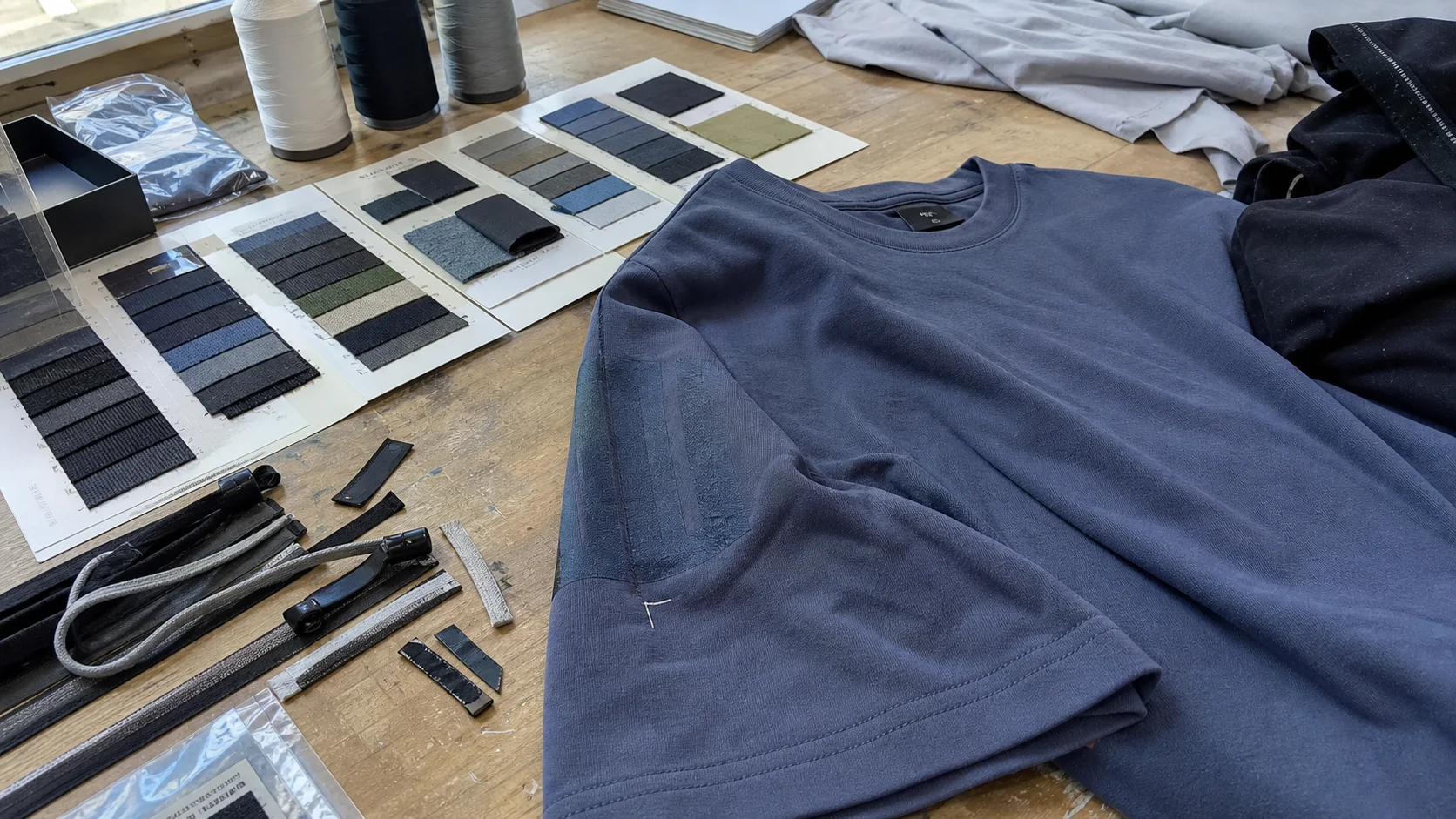
Practical breakdown of outdoor school buyers sleeve print map trim sourcing review, covering MOQ, cost, timeline, quality checks, and supplier tradeoffs.
Outdoor School Buyers Sleeve Print Map Trim Sourcing Review - Fabrikn production reference
Outdoor school buyers rarely need decoration that is merely attractive. They need apparel that can survive repeated wear, light weather exposure, frequent washing, and the rough handling that comes with school and camp use. That is why sleeve print, map graphics, and trim sourcing deserve a tighter review than they do on a standard fashion order. The details are not cosmetic. They affect cost, durability, lead time, and whether the finished piece will still look acceptable after a season of use.
This article looks at the sourcing side of outdoor school decoration and printing with a practical lens. The focus is on how to specify sleeve prints, how to think about map graphics, how trim choices influence performance, and where buyers typically run into avoidable mistakes. The aim is not to overcomplicate the order. It is to reduce the chances of rework, color drift, print cracking, trim failure, and missed delivery windows.
For buyers comparing vendors and service depth, it helps to start with a clear supplier scope. A capable partner should be able to support decoration planning, material coordination, and sampling discipline. For a broad overview of service categories, see Fabrikn services. For company background, about us can help frame the supplier’s operating model. When ready to discuss a project, use contact us.
“Sleeve print” can mean many things depending on the garment. For outdoor school programs, it often refers to a logo, school name, mascot, route marker, event graphic, or instructional symbol placed along the sleeve. Buyers usually want the mark to stay legible from a distance, not fade quickly, and not interfere with comfort when layered under outerwear.
“Map” is usually a graphic concept rather than a literal cartographic project. It may be a camp map, a route diagram, a campus layout, a district badge, or a simplified geographic motif used for program identity. In sourcing terms, the map art creates extra risk because it often contains fine lines, small labels, and multiple colors. Those elements demand better artwork cleanup and tighter print controls.
“Trim” covers the components that finish the garment and shape its performance. This can include rib cuffs, binding, zippers, snaps, drawcords, labels, woven patches, reflective tape, hem elastics, and cord tips. On outdoor school apparel, trim is not only decorative. It can influence safety, wash resistance, weather handling, and the perceived quality of the garment.
The practical point is simple: decoration and trim should be planned together. A sleeve print may need a flat panel and a stable seam placement. A map graphic may need a more controlled print zone. Reflective trim may force a different stitching sequence. Buyers who treat these as separate tasks often end up paying for sampling revisions.
A useful brief should tell the supplier what the garment must do, not just what it should look like. That means defining the garment type, target age group, intended season, wash expectations, and decoration priorities. It also means stating which elements are fixed and which can be optimized for production. A buyer who leaves those decisions open invites unnecessary interpretation.
The brief should cover placement in measurable terms. Sleeve print placement needs distance from cuff, shoulder seam, and side seam. Map graphics need location, maximum size, and whether the art can be scaled to suit the pattern. Trim requirements should include width, construction, finish, color standard, and whether the trim must match a specific fabric or Pantone target.
Artwork files also matter. Vector files are preferred for logos and clean line art. Maps may require redrawing to eliminate tiny text or unsupported detail. If the design depends on multiple colors, buyers should ask which colors are essential and which can be simplified. Each added color can raise printing cost and registration risk.
Good briefs also state the acceptable tolerance for variation. Some buyers care deeply about exact placement and color. Others care more about durability and price. The supplier needs to know where the tolerance sits so they can choose the right print method and trim construction. Leaving this unstated tends to produce disputes later.
Outdoor school garments usually perform better with stable base fabrics. Common choices include polyester, cotton-poly blends, brushed fleece, softshells, and water-resistant woven fabrics. Each has tradeoffs. Polyester often handles printing well and dries quickly. Cotton-rich fabrics may feel more comfortable but can show wash shrinkage and print distortion more readily. Blends can balance comfort and stability, but the exact composition needs checking before decoration is approved.
Print behavior changes with fabric surface. Smooth knits and tightly woven shells support cleaner detail than loose, textured, or heavily brushed surfaces. If a sleeve print must stay sharp, the buyer should avoid assuming that a design will transfer the same way across all materials. A map graphic with fine detail is usually safer on a flatter fabric surface than on a fuzzy fleece face.
Trim selection should match the garment’s use case. Rib cuffs should recover after stretching. Zippers need consistent pull quality and stable tape bonding. Drawcords should not fray easily. Labels should be soft enough for kids yet durable enough to survive repeated laundering. If reflective trim is required, buyers should confirm whether the reflective component is decorative or functional. That distinction affects quality expectations and compliance testing.
Color matching is another practical issue. Trim colors and print colors can drift if suppliers source components from different mills or vendors. A navy body fabric from one batch may not perfectly match a navy rib from another source. Buyers should request physical shade approvals where possible, especially when garment body, sleeve print, and trim all need to read as one coordinated set.
Not every print method suits outdoor school work. Screen printing is still a common choice for bold sleeve logos, simple map shapes, and repeatable school orders because it usually offers strong opacity and decent wash durability. It becomes less attractive when the art has many colors or very fine detail. In those cases, cost and registration risk can rise quickly.
Heat transfer and digital transfer methods can help with more detailed graphics, especially when a map includes multiple tones or small lettering. The tradeoff is that buyers need to check durability, stretch behavior, and wash performance carefully. Some transfers can crack, lift, or change hand feel over time if the substrate or application parameters are weak.
Embroidery and woven patches are good for logos and emblems, but they are less suitable for complex map content. Thick embroidery may distort small letters or dense line work. Woven patches improve detail, yet they still add a separate component that must be sewn or heat-applied correctly. For sleeve placement, extra thickness can also affect comfort under backpacks and outer layers.
Placement risks are often underestimated. A sleeve print can land too close to a seam and distort when the garment is worn. A map placed across a panel junction can lose definition after sewing. Trim can interrupt graphic flow if it is specified too late in the sample process. The safest approach is to lock decoration zones after pattern confirmation, not before.
Minimum order quantities vary by garment type, print complexity, trim sourcing, and supplier setup. For many custom school orders, a practical MOQ may start around 100 to 300 pieces per color or per design, though some factories can support lower quantities at a higher unit price. Complex trims, custom labels, or special print effects can push the minimum higher because the factory has to absorb setup costs.
Sampling should follow a disciplined path. A buyer usually starts with tech pack review, then artwork check, then lab dip or color confirmation if needed, followed by proto sample or size set, and then pre-production sample. If the order includes custom trim, that component may need its own approval. Skipping any of those steps can save time upfront but often costs more later through rework or schedule slip.
Buyers should expect print strike-offs or decoration references when the artwork is sensitive. A sleeve print with a small logo may only need one proof, while a map graphic may need two or more revision rounds before approval. Trim approvals are equally important. A zipper sample that feels acceptable in a photo may behave differently in hand. Physical review is the safer standard.
Sample approval should be tied to written criteria. That includes color tolerance, print size, placement, stitch quality, trim width, hand feel, and wash expectations. If those criteria are not documented, sample approval becomes subjective. That is where many school buyers lose leverage later in production.
Lead time is rarely controlled by decoration alone. It depends on fabric readiness, trim sourcing, artwork approval, sample iterations, and factory load. A straightforward decorated garment may move faster if the base fabric and standard trims are already available. A custom map graphic with matched trim and special labels can extend the schedule by several weeks.
Typical development timing might look like this: artwork and tech pack review, 3 to 7 days; sampling and revisions, 7 to 21 days depending on complexity; bulk material sourcing, 7 to 20 days; production, 15 to 35 days; and inspection plus packing, a few more days before shipment. These are broad ranges, not guarantees. Seasonal congestion, order size, and approvals can stretch the timeline.
Dependencies should be identified early. If a sleeve print requires a specific print screen or heat transfer film, that setup must be approved before bulk starts. If trim is imported or custom-made, it can become the critical path. If a buyer delays final color approval, the entire order can stall even when other components are ready. Good sourcing teams map the dependencies before they promise delivery dates.
Quality control on outdoor school apparel should go beyond a general size check. Decoration adds more potential failure points. Buyers need to inspect print clarity, color consistency, placement accuracy, seam alignment, trim attachment strength, and wash resistance. A garment can pass basic sewing checks and still fail because the sleeve print is crooked or the map lines blur.
Common inspection risks include print ghosting, ink bleed, poor opacity on dark fabrics, transfer peeling, misregistration, loose threads around trim, uneven stitch density, broken zipper stops, and trim shrinkage after wash. Buyers should also check for panel distortion. A print can appear correct on the table but look wrong when the garment is worn because the sleeve twists.
Pre-production checks help reduce those risks. Many buyers request a size set to verify grading, a decorated sample to check placement, and a top-of-production review to confirm the first bulk output. For larger orders, third-party inspection can be worthwhile, especially where school deadlines are fixed and replacement stock is hard to source later.
Wash testing deserves attention. Even a limited in-house wash check can reveal obvious problems before bulk shipment. Buyers should look at shrinkage, print cracking, edge lifting, color migration, and trim distortion. If a garment is meant for repeated outdoor use, one wash test is not enough to prove durability, but it is better than relying on visual approval alone.
Good sourcing judgment starts with use case. If the garments are for short-term event wear, the buyer may accept a simpler print method and standard trim to keep costs controlled. If the garments are for weekly outdoor school use, durability should outrank novelty. In that case, slightly higher unit cost is often better than a lower price that leads to replacement costs later.
Artwork complexity should be challenged early. If a map graphic contains too much fine detail, the buyer should ask whether the design can be simplified without losing meaning. If a sleeve print includes several colors but only one or two are essential, reduce the count. Every simplification improves the chances of clean production.
Trim should be chosen for function first. Decorative trim that cannot survive wear is false economy. A slightly heavier zipper tape, a more stable rib, or a better label substrate can improve end-user satisfaction more than an extra graphic effect. That does not mean overspecifying every component. It means spending where failure would be visible.
Suppliers should be judged on response quality as much as quotation. A factory that flags print risk, asks for missing measurements, and proposes a workable sampling sequence is often more useful than one that simply offers the lowest price. In decoration and printing, the cheapest quote can become expensive if the supplier has to guess.
A supplier review for outdoor school decoration should test three things: technical understanding, communication speed, and production realism. The supplier should be able to explain which print methods suit the garment, which trims need separate approval, and how they would manage the sample path. If the answers are vague, the order may still be possible, but the risk rises.
Buyers should ask for a full quotation breakdown where possible. That should cover garment base cost, print setup, decoration unit cost, trim charges, sampling fees if any, and packaging assumptions. This helps prevent misunderstanding when a map graphic needs extra color screens or a special woven label adds cost.
It also helps to align on quality references early. A buyer can supply a previous garment, a competitor benchmark, or a clear spec sheet. The supplier then has something concrete to work against. If the order is important, the buyer should not assume the factory will infer the standard from the artwork alone.
If you are comparing service scope and want a broader view of production support, the pages at Fabrikn services, about us, and contact us are the right starting points for supplier qualification and next-step discussion.
Get a free quote from Fabrikn — your trusted B2B clothing manufacturer with 10+ years of experience. MOQ as low as 200 pieces.
Get a Free Quote →For simple logos and solid graphics, screen printing is often the most practical choice because it balances cost and durability. For detailed map art, transfer methods may work better, but they need testing for wash and stretch performance.
Many suppliers quote somewhere around 100 to 300 pieces per design or color as a practical starting point. Smaller runs are sometimes possible, but setup-heavy decoration or custom trim can raise the minimum.
A common path includes tech pack review, artwork confirmation, a decorated sample or strike-off, and a pre-production sample. More complex map graphics or custom trims may require additional revision rounds.
Custom zippers, reflective tape, woven labels, and color-matched ribbing often need the most attention. These items can affect fit, appearance, lead time, and compliance more than buyers expect.
Check print placement, color match, trim quality, stitching, seam distortion, and wash behavior. A decorated garment that looks good on the sample table can still fail if the print cracks or the trim shrinks after laundering.