
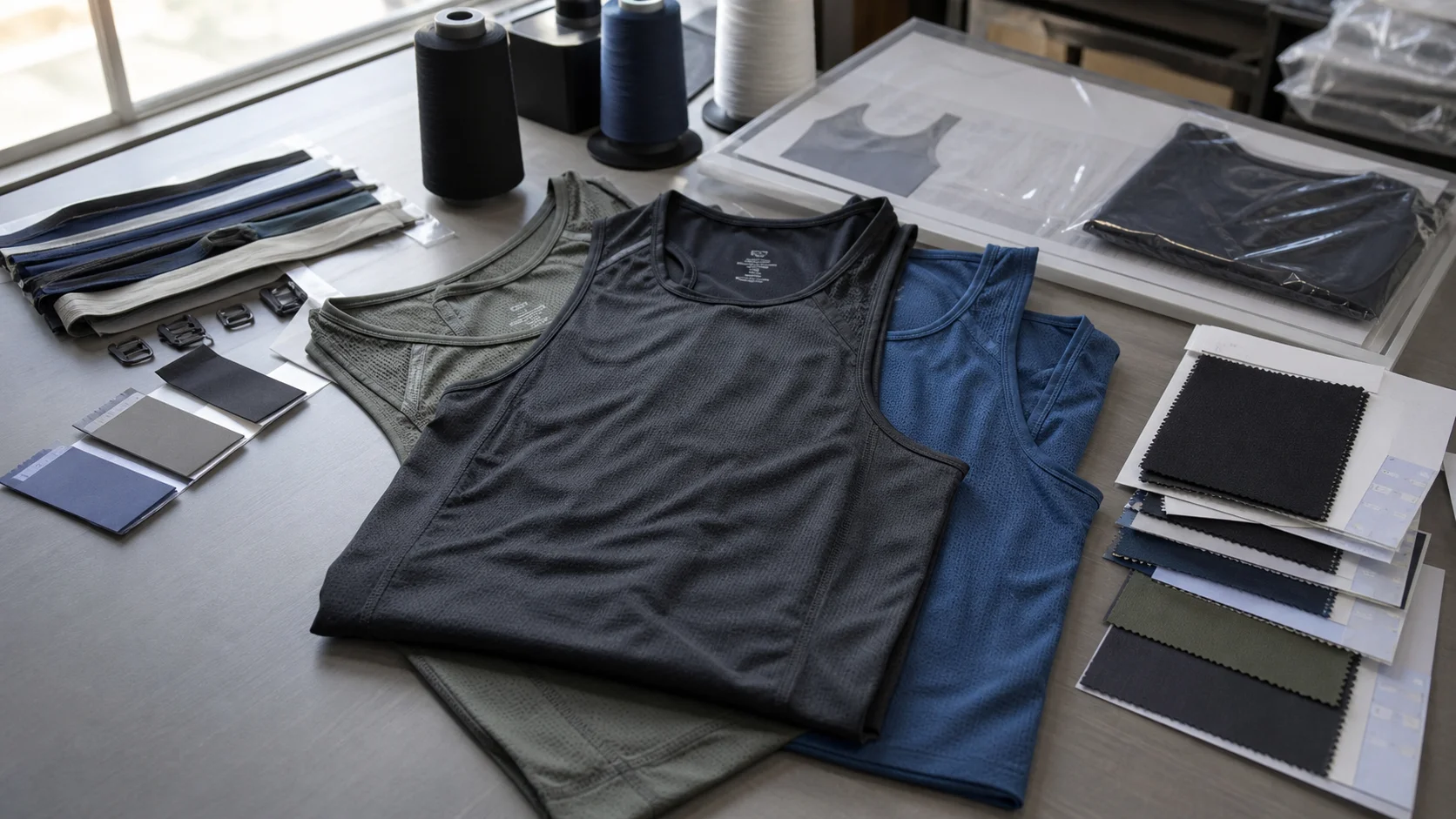
A 2500-word SEO outline for fitness club buyers reviewing reorder risks in performance vest factory programs, from fabric shade drift and fit continuity to...
Performance Vest Reorder Risk Review for Club Buyers - Activewear & Teamwear manufacturing guide
Performance vest reorders look simple on paper. A club has already approved the design, members are familiar with the product, and the buyer usually expects the next run to match the last one. In practice, repeat orders can carry more risk than the first production run because everyone assumes the details are already settled.
For fitness clubs, bootcamp operators, gym chains, running groups, CrossFit boxes, wellness studios, and team training programs, a performance vest is not just a casual top. It is part of the member experience. It may be used for staff uniforms, challenge events, class packs, retail merchandise, sponsored races, or branded teamwear. If the reorder arrives with a different hand feel, changed shade, tighter armhole, weaker print, or missing size balance, the club buyer carries the complaint load.
The key purchasing judgment is this: a reorder should never be treated as a copy-paste purchase order unless the factory, materials, trims, measurements, artwork, packaging, and quality standard are all still current. Performance fabric supply changes quickly. Dye lots shift. Elastic binding suppliers discontinue shades. Print films behave differently on new fabric batches. Even a small pattern adjustment can change how a vest sits across the chest or under the arm during training.
A disciplined performance vest factory reorder risk review helps club buyers catch these issues before money is committed and before the production calendar is locked. The review does not need to be bureaucratic. It needs to be specific. Buyers should confirm what must match exactly, what can vary within tolerance, and what tradeoffs are acceptable if cost, timing, or availability changes.
For buyers sourcing activewear and teamwear programs, the best results usually come from a structured supplier conversation. If you need support building a repeat-order sourcing process, you can review garment development and production support options at Fabrikn services.
Reorder risk is any change between the previous approved order and the new production run that can affect cost, delivery, performance, appearance, or member satisfaction. Some changes are visible immediately. Others only appear after washing, sweating, stretching, or retail handling.
For performance vests, the common risk areas are fabric composition, GSM, stretch recovery, moisture management finish, shade consistency, neck and armhole binding, seam construction, print durability, label placement, packaging, sizing, and production lead time. Club buyers should also consider demand risk. Ordering too few units may cause stockouts during a membership campaign. Ordering too many may tie up cash in slow-moving sizes or outdated branding.
The word “performance” creates expectations. A vest used in high-sweat training needs more than a lightweight body fabric. It must hold shape, dry reasonably fast, avoid excessive transparency, and remain comfortable around the neck and armholes. A cheap reorder that saves a small amount per unit can become expensive if members reject the fit or if staff stop wearing it.
Practical buying rule: if the vest is linked to club identity, staff presentation, or paid member merchandise, protect consistency before chasing the lowest reorder price.
A repeat production review should compare the previous approved sample, final bulk shipment, and new factory proposal. If the last order had quality issues, the reorder is the correct moment to tighten the specification. If the last order sold well, the reorder is the moment to protect the features that made it work.
A performance vest reorder should start with a written spec review. Many club buyers rely on old emails, screenshots, or vague descriptions such as “same as last time.” That creates room for factory interpretation. A practical reorder pack should identify the product clearly and remove assumptions.
Spec Area What to Confirm Why It Matters Style reference Previous PO number, style code, approved sample date, colorway, and version Prevents the factory from using the wrong pattern or artwork file Fabric Composition, GSM, knit type, stretch direction, finish, and color standard Controls feel, opacity, drying behavior, and garment stability Measurements Full size chart with tolerances and grading rules Protects fit consistency across sizes Trims Binding, labels, hangtags, drawcords if any, care labels, packaging Small trim substitutions can visibly change the product Decoration Logo size, placement, method, color references, and durability standard Branding errors are hard to repair after production Inspection level AQL target, measurement checks, carton audit, and wash or rub tests if required Creates a shared quality benchmark before shipmentFitness club buyers should ask whether the factory still has the same pattern, marker, print screens, digital artwork, fabric source, and trim source. A factory may say it can repeat the order, but the original fabric mill may have changed the yarn, the binding supplier may have replaced a color, or the artwork file may have been recreated by a different technician.
The buyer should also confirm whether the previous sample is still valid. If the club has a retained gold seal sample, that sample should be referenced. If no retained sample exists, the buyer should ask for a pre-production sample before bulk cutting. This is especially important when the vest will be sold to members, issued to staff, or used across multiple locations.
Fabric is usually the largest reorder risk in performance vests. A style described as “polyester mesh vest” or “quick-dry sleeveless top” is not specific enough for repeat manufacturing. Two fabrics can have the same composition and GSM but feel different, stretch differently, and print differently.
Common performance vest fabrics include polyester interlock, polyester bird-eye mesh, polyester-spandex jersey, nylon-spandex blends, and lightweight recycled polyester knits. Typical GSM ranges often sit between 120 and 180 GSM for training vests, with heavier or double-knit options running higher. A very light fabric may suit hot-weather training but can become transparent in pale colors. A heavier fabric may feel more premium but may dry slower and cost more to ship.
For club buyers, the important tradeoff is not simply light versus heavy. It is member use case versus garment expectation. A vest for staff uniform use may need better opacity and shape retention. A race giveaway may prioritize cost and quick production. A premium retail vest should justify a higher fabric standard, cleaner stitching, and stronger packaging.
Fabric checks should include:
Trim risk is often underestimated. Neck and armhole binding can change the garment more than buyers expect. A tighter binding may make the vest feel restrictive. A looser binding may wave or distort after washing. Contrast binding also creates shade-matching risk, especially with navy, black, red, and fluorescent colors.
Care labels, neck labels, woven badges, heat-transfer labels, and hangtags should also be reviewed. If the previous reorder used a soft heat-transfer neck label and the new production switches to a woven label, members may notice irritation. If care instructions are wrong for the print method, wash complaints may increase.
Performance vest fit is sensitive because there are fewer garment components to hide errors. A small change at the armhole, shoulder width, side seam, or back neck can change comfort during movement. For fitness use, the vest must allow shoulder rotation, avoid underarm rubbing, and maintain coverage during lifting, running, stretching, and class activity.
Club buyers should not rely only on a medium sample. A vest can look acceptable in one size and fail in the size range. The grading from XS to 3XL or 4XL must be checked. Large sizes often need more than simple width increases. Armhole depth, body length, shoulder width, and neckline shape may need balanced grading.
Typical measurement tolerances for knit activewear may range from plus or minus 1 cm on small points to plus or minus 2 cm on larger body measurements, depending on the factory standard and buyer requirement. The tolerance should be stated before production. If the factory applies its own tolerance after cutting, disputes become difficult.
Measurement Point Risk in Reorder Buyer Review Action Chest width Vest feels tighter or looser than previous run Compare to approved sample and last bulk measurement report Body length Members complain about short coverage during movement Confirm length by size, especially for tall users Armhole depth Rubbing, gaping, or exposed side coverage Check fit on at least base size and one larger size Shoulder width Changes vest silhouette and comfort Review pattern, not only finished garment photo Neck drop Affects modesty, branding placement, and wearer comfort Confirm front and back neck measurementsThe buyer should request a size set sample when the reorder is high volume, when the style is being expanded into new sizes, or when the last run produced fit complaints. For a small repeat order, a base-size pre-production sample may be enough if the pattern and grading are unchanged. That is a cost and timing decision, but skipping fit review is risky when the order supports club retail revenue.
Performance vest branding often includes screen print, heat transfer, silicone print, reflective transfer, embroidery, sublimation, or woven patch application. Each method has different reorder risks. The best method depends on fabric, quantity, budget, use case, and wash expectations.
Screen print can be cost-effective for larger quantities, but print hand feel and cracking risk depend on ink, curing, fabric stretch, and print size. Heat transfers can give sharp logos and flexible placement, but low-grade transfers may peel after repeated washing or heavy sweating. Sublimation works well for polyester and all-over designs, but it requires the right fabric and may not suit dark base colors unless handled through cut-and-sew sublimation. Embroidery can look premium but may distort lightweight performance fabrics or feel heavy on a thin vest.
For reorders, the club buyer should confirm the decoration method used previously. A factory may propose a substitution to save time or cost. That substitution can be acceptable if the buyer understands the tradeoff. It should not happen quietly.
Sponsor logos add another layer of risk. Club buyers managing event vests or teamwear should verify that sponsor artwork has not changed since the last production. A reorder using an old sponsor logo can create commercial friction, even if the garment quality is acceptable.
Branding placement should be reviewed on the garment size that matters most. A logo that looks balanced on size M may sit too high on size 2XL or too close to the armhole on size XS. If the vest is used for staff identification, legibility matters more than decoration novelty.
MOQ is one of the most practical sources of reorder pressure. A factory may offer a low unit price only if the buyer reaches a certain fabric or decoration threshold. Club buyers often need mixed sizes, multiple colors, and quick delivery, which can conflict with factory efficiency.
Typical MOQ ranges vary by factory, fabric availability, and customization level. As a cautious guide, plain or lightly branded performance vest reorders may start around 100 to 300 pieces per color if fabric is available. More customized fabric, dyed-to-match color, sublimation, or special trims may require 300 to 800 pieces or more per color. Very small runs under 100 pieces may be possible through sample-room or small-batch production, but unit cost usually rises and factory scheduling may be less stable.
Club buyers should ask what the MOQ is tied to. Sometimes the real constraint is fabric dyeing. Sometimes it is print setup. Sometimes it is the cutting room, label production, or packing method. Knowing the constraint helps the buyer negotiate intelligently.
Order Type Typical MOQ Range Buying Tradeoff Repeat style, stock fabric, simple logo 100-300 pieces per color Lower risk if fabric shade variation is acceptable and stock is confirmed Repeat style, custom-dyed fabric 300-800 pieces per color Better shade control, but longer lead time and higher inventory exposure Sublimated event vest 100-500 pieces depending on supplier setup Good for graphics, but color and panel matching need review Premium retail vest with special trims 300 pieces and above is common Improved finish, but trim lead time can delay delivery Small urgent reorder 50-150 pieces where available Fast response may mean higher cost and fewer fabric optionsSize ratio planning is just as important as total quantity. Fitness clubs often underbuy larger sizes and overbuy mid-sizes because they reuse a generic ratio. Member demographics, gender mix, garment fit, and regional preferences can all shift demand. A slim-fit vest may need more XL and 2XL than a relaxed-fit vest. A women’s cropped or racerback vest will need a different ratio from a unisex training vest.
The buyer should review previous sell-through, staff issue records, event registration sizes, and return feedback before placing the reorder. A low unit price does not help if the remaining stock sits in unpopular sizes.
A repeat order still needs sampling discipline. The level of sampling should match the risk. If every element is unchanged and the reorder is small, a pre-production sample may be enough. If fabric, trim, decoration, color, factory, or size range changes, the buyer should require more sample steps.
A practical approval workflow may include the following stages:
The strongest buying position is created before bulk fabric is cut. Once fabric is dyed, panels are cut, or branding is applied, the cost of correction rises sharply. Club buyers should set approval deadlines and avoid last-minute informal signoffs through photos only, unless the risk is low and timing is more important than precision.
Photo approvals can help with speed, but they are weak for fabric hand feel, stretch, opacity, and exact color. A physical sample is better for premium retail vest programs or any reorder where the last shipment produced complaints. If timing does not allow full physical approval, the buyer should at least require close-up photos, measurements, artwork placement confirmation, and factory written confirmation of materials.
For clubs developing more formal sourcing programs, it may help to involve a production partner early rather than after issues appear. Buyers can learn more about sourcing support and production management through Fabrikn’s company background.
Lead time for performance vest reorders depends on material availability, decoration method, sample approval speed, factory capacity, holiday calendars, inspection requirements, and shipping method. A factory may quote a short lead time based on sewing days, but the real timeline starts earlier and ends later.
For many repeat activewear orders, a cautious production timeline may include 5 to 14 days for sample or pre-production approval, 7 to 20 days for fabric and trim preparation if materials are available, 15 to 35 days for bulk production depending on quantity and complexity, and additional time for inspection, packing, export handling, and freight. Custom-dyed fabrics, sublimation, special labels, or multi-location packing can extend the schedule.
Club buyers should not ask only, “When can you ship?” The better questions are:
The purchasing tradeoff is clear. A fast reorder can work if the buyer accepts stock fabric, simple branding, standard packing, and limited sample steps. A consistent premium reorder needs more time for approvals and quality control. Urgency should not erase risk; it should clarify which risks the buyer is accepting.
Seasonal club campaigns create additional pressure. New-year fitness launches, summer challenges, marathon events, charity runs, and team competitions often have fixed dates. If vests arrive late, they lose value quickly. For date-critical orders, buyers should build a backward timeline from the event date and include buffer for inspection and freight disruption.
Inspection is not a formality for performance vest reorders. Repeat orders can fail because the factory assumes past approval covers current production. A final random inspection or in-line inspection should focus on the specific risks of the garment.
Common inspection defects include shade variation between panels, uneven binding, twisted side seams, skipped stitches, puckering, incorrect logo placement, print cracking, oil marks, fabric holes, poor trimming, inaccurate measurements, wrong care labels, incorrect size stickers, and carton assortment errors. For club buyers, carton and size errors can be especially painful because they disrupt distribution across branches, teams, or event packs.
Measurement inspection should include enough sizes to catch grading problems. Decoration inspection should check both appearance and placement. Packaging inspection should verify size ratio, barcode or SKU labels if used, polybag warnings where required, carton marks, and any branch or team allocation instructions.
Inspection Area Risk Recommended Check Fabric shade Panels or units do not match previous bulk Compare against approved swatch or retained sample under consistent lighting Stitching Open seams, skipped stitches, poor stretch seam performance Check side seams, shoulder seams, hems, neck, and armhole binding Measurements Fit changes from last order Measure selected units across sizes against agreed tolerance Print or transfer Peeling, cracking, misplacement, wrong color Check placement, adhesion, stretch response, and visual consistency Packing Wrong size ratio or branch allocation Audit carton labels, size stickers, packing list, and assortmentAQL levels vary by buyer and order type, but many apparel inspections use general inspection levels with major, minor, and critical defect categories. Club buyers do not need to become inspection technicians, but they should define what defects are unacceptable. A wrong logo, unsafe sharp object, severe stain, incorrect size label, or major measurement error should not be treated the same as a loose thread.
If the order is urgent, buyers may be tempted to ship without inspection. That can be reasonable for a very small trusted reorder with low brand exposure. It is risky for event vests, staff uniforms, or retail merchandise. The buyer should weigh the cost of inspection against the cost of complaints, replacement, and reputation damage.
A good reorder checklist is short enough to use and detailed enough to prevent expensive assumptions. Club buyers can adapt the following checklist before approving a performance vest reorder.
The most useful reorder conversations are direct. Ask the factory what has changed since the last order. Ask what materials are no longer identical. Ask what the shortest safe timeline is, not just the shortest possible timeline. A supplier that gives cautious answers may be more useful than a supplier that promises everything immediately.
For multi-location fitness clubs, reorder planning should be centralized enough to protect consistency but flexible enough to respond to branch-level demand. If one location needs staff vests and another needs member retail stock, the same garment may require different packing, labeling, and delivery instructions. Those instructions should be included before production packing begins.
Performance vest reorder buying is always a tradeoff between price, consistency, speed, and flexibility. The right choice depends on the club’s use case.
For a low-cost event giveaway, the buyer may accept a stock polyester mesh, standard print, and basic packing. The main risks are delivery date, logo accuracy, and size ratio. For staff uniforms, the buyer should prioritize fit consistency, wash durability, and repeat availability. For retail merchandise, the buyer should treat the vest more like a branded product line, with stronger fabric approval, cleaner finishing, and packaging that supports perceived value.
There is no single “best” specification. A 150 GSM polyester bird-eye vest may be suitable for a summer challenge but feel too basic for a premium gym retail shelf. A polyester-spandex jersey may feel better and fit closer to the body, but it can cost more and may require better print testing. A sublimated vest can deliver strong visual impact for teams, but it may not match the understated look some boutique clubs want.
Buyers should separate must-have requirements from negotiable details. Must-haves may include brand color, logo accuracy, delivery date, fit consistency, and wash performance. Negotiable details may include carton quantity, hangtag format, exact polybag type, or minor trim alternatives if approved before production.
If the club is comparing supplier options or needs a production discussion before placing a reorder, use a direct inquiry route such as Fabrikn contact with a clear technical brief, target quantity, delivery window, and previous sample references.
A clear reorder brief reduces back-and-forth and helps the factory price accurately. It should include commercial and technical details in one place. Club buyers do not need a complex corporate tech pack for every small reorder, but they do need enough detail to prevent substitution.
Brief Section Details to Include Buyer and club information Club name, contact person, delivery region, and invoice requirements Product reference Style name, previous order reference, sample photo, and intended use Quantity Total units, size ratio, color breakdown, and reorder forecast if known Fabric Composition, GSM, color reference, fabric swatch, and performance requirements Construction Seam type, hem finish, binding, neck shape, armhole finish, and fit notes Branding Artwork files, logo placement, print method, color references, and sponsor details Quality expectations Measurement tolerance, inspection standard, wash concerns, and defect priorities Timeline Sample deadline, production deadline, shipment date, and event date if applicableBuyers should attach photos of the previous garment, inside labels, packaging, and any defect feedback. Photos are not a replacement for specs, but they help factories identify details that might otherwise be missed. If the club has a physical retained sample, note whether it can be sent to the factory or used for comparison during inspection.
The reorder brief should also state whether substitutions require written approval. This protects the buyer if the factory wants to switch fabric, binding, print method, or labels. Approved substitutions can be sensible. Unapproved substitutions create risk.
A performance vest factory reorder risk review is not about slowing down every repeat order. It is about spending attention where mistakes are most expensive. For club buyers, the highest-risk areas are fabric consistency, fit grading, branding accuracy, delivery timing, and size allocation.
If the reorder is small, urgent, and low visibility, a lean approval process can be acceptable. Confirm the essentials, review a production photo set, and inspect cartons carefully. If the reorder supports staff uniforms, member retail, sponsored events, or multi-branch distribution, a more formal review is worth the time.
The strongest club buyers treat every reorder as a controlled repeat, not a casual repeat. They protect the approved sample, keep a living specification, track sell-through by size, and ask suppliers direct questions before production starts. That approach reduces surprises and gives the factory a clearer target.
In activewear and teamwear sourcing, the factory relationship matters, but documentation matters just as much. A reliable supplier can only repeat what is clearly specified, current, and approved. The buyer’s job is to make the repeat order easy to manufacture correctly.
Get a free quote from Fabrikn — your trusted B2B clothing manufacturer with 10+ years of experience. MOQ as low as 200 pieces.
Get a Free Quote →The biggest risk is assuming the new order will automatically match the last one. Fabric, trim, print method, pattern files, and factory capacity can change between orders. Buyers should confirm all key specifications before approving production.
Typical MOQs may range from 100 to 300 pieces per color for repeat orders using available fabric and simple branding. Custom-dyed fabric, special trims, or complex sublimation can push MOQ to 300 to 800 pieces or more per color. Small urgent runs may be possible, but unit cost is usually higher.
Yes, in most cases at least a pre-production sample is recommended. If the fabric, trim, size range, logo, or factory has changed, buyers should consider fabric swatches, lab dips, trim approvals, and possibly a size set sample before bulk production.
Buyers should use a complete size chart with tolerances, compare against the previous approved sample, check grading across sizes, and review any fit complaints from the last order. A size set sample is useful for larger or higher-risk orders.
Lead time depends on fabric availability, decoration method, sample approvals, factory capacity, inspection, and freight. A straightforward reorder may move quickly if materials are in stock, while custom fabric, sublimation, or special packaging can add several weeks.
Inspection is strongly recommended for retail, staff uniform, event, and multi-location orders. Checks should include measurements, stitching, fabric shade, logo placement, print quality, labels, size stickers, carton marks, and packing accuracy.
A reorder brief should include previous style reference, quantity, size ratio, fabric specification, trims, branding details, measurements, tolerances, sample requirements, inspection criteria, packing instructions, and target delivery date.
Substitution can be acceptable only if the buyer reviews and approves it before production. Unapproved substitutions can affect fit, color, comfort, durability, and brand consistency.