
A practical review of reorder risks for performance vest programs, focusing on event staffing teams that need consistent fit, decoration, and fast...
For event staffing teams, performance vests sit in a narrow but important category: they need to look consistent, wear comfortably for long shifts, and reorder without surprises. That sounds simple until a campaign scales, a uniform refresh lands mid-season, or the original supply run was approved too quickly. A performance vest factory reorder risk review is the practical way to reduce those problems before they show up on site.
This article looks at reorder risk from the buyer’s side, with a focus on event staffing teams sourcing activewear and teamwear. The goal is not to overcomplicate the garment. It is to identify where reorders go wrong, what a factory can and cannot control, and how to set up repeat orders so the next batch matches the first one closely enough for real-world use.
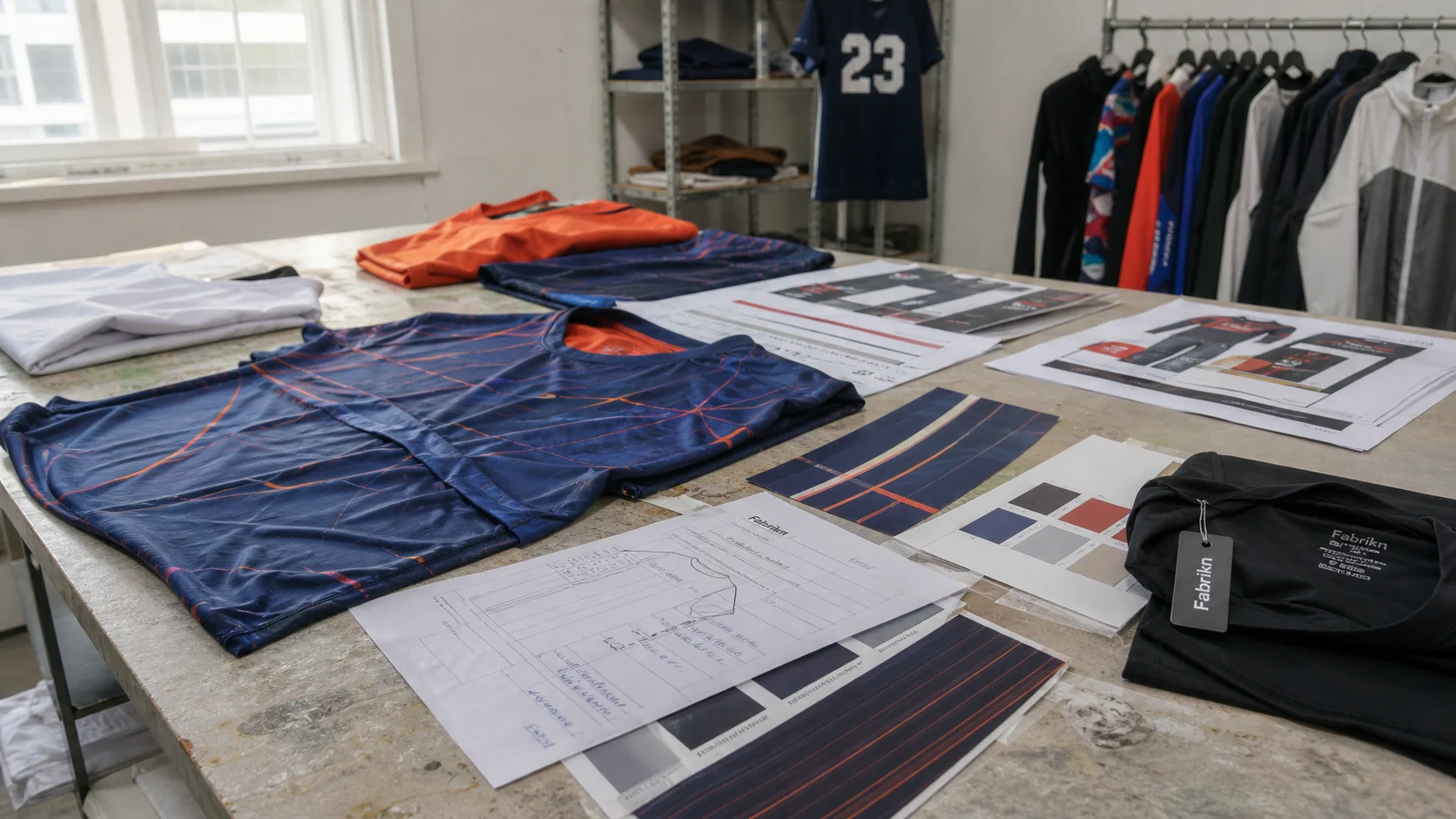
Performance Vest Reorder Risk Review for Event Teams - Fabrikn production reference
A reorder risk review is a structured check of whether the next production run can match the approved version without avoidable variation. For performance vests, that means more than checking the size range. It includes fabric consistency, color continuity, trim availability, logo placement, construction repeatability, packing method, and the factory’s ability to reproduce the same result after time has passed.
Event staffing teams tend to reorder under pressure. Staff counts change, event calendars move, and replacement units are needed quickly. A solid review asks a basic question: if the original order was acceptable, can the factory make the same vest again under current conditions? If not, where is the drift likely to appear?
Reorder risk is usually not about one dramatic failure. It is more often a collection of small shifts: shade variation, tighter or looser fit, slightly different zipper quality, or a logo that no longer sits exactly where the first approval showed it.
Repeat orders are often treated as a shortcut. That can be a mistake. The first order usually benefits from active sampling, close decision-making, and repeated clarifications. A reorder may receive less attention because the style already exists. That is exactly when errors slip in.
For event staffing teams, the uniform is part of operational branding. If one event crew wears vests that differ from another run, the inconsistency is visible. On-site staff may also need fast replacement stock after wear, damage, or size changes. A reorder that misses the original standard can create both appearance issues and distribution problems.
The tradeoff is straightforward. A reorder is faster only if the original specification package is complete and the factory still has matching materials. If either condition is weak, speed can cost consistency.
This is the most common risk. Performance vests often use polyester interlock, birdseye mesh, stretch jersey, or lightweight knit constructions. If the original fabric is no longer available, the factory may offer a close substitute. Close is not the same as identical. Weight, hand feel, stretch recovery, sheen, and moisture-wicking behavior can all change.
For event staffing teams, the practical issue is not just comfort. Fabric changes can alter how the vest drapes over layered clothing, how logos sit on the chest, and how the garment looks under event lighting.
Even if the fabric type stays the same, shade variation can appear between dye lots. Dark colors, bright corporate colors, and heathered looks are especially sensitive. A reorder completed months later may not match the original shipment unless the factory retains shade standards, lab dips, and reference swatches.
Buyers should expect slight variation in bulk dyeing unless the supplier commits to the same mill, same dye recipe, and a controlled shade band. For uniforms, that matters more than it does for general promotional apparel.
Zippers, drawcords, labels, binding tape, and reflective details may be sourced separately. If one trim item is discontinued or delayed, the factory may offer a replacement that changes the look or feel of the vest. A zipper pull that seems minor on paper can be obvious in a teamwear program when repeated across hundreds of pieces.
Factories sometimes improve an existing pattern, especially if they believe the original fit was inefficient or too loose. That may be helpful in a fashion program. It is risky in teamwear. Event staff often need predictable sizing across multiple batches, not a revised fit that shifts the size profile.
If a vest was approved with a relaxed fit for layering over polos or base layers, the exact tolerance should remain locked. Size grading should be checked before production starts again.
Logos on performance vests may use heat transfer, screen print, embroidery, woven patches, or reflective branding. Each method carries repeatability risks. Heat transfer can change with film batch or press settings. Embroidery may shift if backing or stitch density changes. Screen print can vary if ink mix or cure conditions are different.
Event teams should keep artwork files, placement measurements, Pantone references, and sample photos. Without those, the second run may look “close enough” to the factory but wrong to the buyer.
A reorder is only as stable as the original spec sheet. If the first order was approved loosely, the second order inherits that weakness. The most useful specs are measurable, not descriptive.
Spec Area What to Record Why It Matters on Reorder Fabric composition Example: 100% polyester, polyester/spandex blend, mesh knit structure Protects against silent substitution Fabric weight GSM or oz/yd² range Controls drape, opacity, and perceived quality Finish Moisture-wicking, anti-pilling, brushed, matte, or shiny surface Prevents “same style, different feel” problems Color standard Pantone reference or approved lab dip code Reduces shade drift between production lots Trim details Zipper type, tape width, label type, drawcord spec, reflective strip width Locks the visual identity of the vest Fit measurements Chest, body length, armhole, hem, tolerance bands Controls consistency across size runs Decoration placement Logo size, position from seam, print method, stitch count if embroidered Protects branding alignmentIn practice, buyers should avoid vague notes like “good fit” or “same as last time.” Those phrases are not enough when the factory changes staff, machine settings, or sourcing channels. A useful reorder file includes the approved sample, grading spec, approved artwork, and the packing standard.
For event staffing, lightweight polyester meshes and smooth performance knits are usually safer than novelty fabrics. They are easier to repeat, generally simpler to wash, and better suited to large uniform programs. Stretch blends can improve comfort, but they can also introduce tighter tolerance issues in cutting and sewing. If the vest must layer over other garments, a slightly more generous fit may be more operationally useful than a close athletic cut.
Minimum order quantities vary by factory, fabric type, and decoration method. For performance vests, a common range for custom production may fall around 300 to 1,000 pieces per color or style, though some factories can go lower on simplified programs and higher on complex builds. Reorders may be easier if the original material was stocked or already reserved.
Lead time depends on whether the factory can use existing fabric, whether trims are in stock, and whether decoration needs new setup. A simple reorder with unchanged materials may move faster than a first-time order, but that is not guaranteed. A reorder can slow down if one fabric roll is short, a color match must be reapproved, or printing plates need to be recreated.
Event teams should build in more time than they think they need. This is especially true when the reorder is tied to a campaign, seasonal staffing cycle, or recurring conference calendar. Production is only one part of the timeline. Sample sign-off, fabric booking, cutting, sewing, finishing, inspection, and shipping all add time.
A reorder promised as “faster” is only worth trusting if the factory confirms fabric availability, trim availability, and the exact delivery date in writing.
A clean approval process is the best protection against reorder disputes. Buyers should treat the approved sample as the control point for the next run. If possible, keep one sealed reference sample for each colorway and size category, along with digital photos taken in neutral lighting.
A practical sample process for performance vest reorders usually includes the following steps:
When the reorder is a true repeat, some factories may skip a full sample and proceed with reference to the past approval. That can work if the style is simple and the supply chain is unchanged. It becomes risky if the order includes new sizes, new staff branding, or a different decoration method. In those cases, a refreshed sample is worth the time.
Inspection is where reorder issues often become visible. The key point is that defects on teamwear are not always catastrophic individually. A slight misalignment or one inconsistent seam may still be acceptable in fashion production, but when the item is a uniform, the threshold is lower.
Common inspection risks include:
For event staffing teams, size ratio errors can be a serious issue because replacement inventory is often allocated quickly. If a reorder arrives with too many small or medium units and not enough larger sizes, the stock may not support actual field use.
Final inspection should test both appearance and functionality. A vest that looks right but catches at the zipper or twists after washing creates recurring complaints. If the program is meant to support long-term staffing, a short wash test on sample units is worth considering before bulk approval.
Good sourcing is mostly about asking the right questions early. The following list is practical and useful in supplier conversations.
The best time to ask is before the reorder is formally placed. Once production starts, changes are more expensive and more likely to delay delivery. A factory that answers clearly and documents the responses is usually a better fit than one that promises speed without detail.
Not every repeat order should be a blind rerun. Buyers should decide whether the best move is a direct reorder, a controlled revision, or a new sourcing round.
This works when the style is stable, sales or distribution patterns are predictable, and the factory confirms the same materials and trims are available. This is the lowest-friction option and often the cheapest operationally.
This is appropriate when the original vest performed well, but one or two details need improvement. Examples include a better zipper, a stronger pocket opening, or a fit adjustment for layering. The risk is higher than a direct reorder, so the buyer should insist on a new sample and updated spec sheet.
If the original supplier cannot match the fabric, has changed construction quality, or cannot support the event calendar, it may be better to move the program. Re-sourcing has setup cost and time cost, but it can save repeated issues later. For teamwear buyers, consistency is more valuable than short-term convenience.
A practical sourcing judgment: if more than one core element changes at once, such as fabric, trim, and decoration method, the order is no longer a simple reorder. It is a redevelopment project and should be managed that way.
If your team is comparing sourcing support, supplier development, or custom activewear handling, fabrikn.com is a useful place to start. Review the service scope on /services/ to understand how a manufacturing partner may support development, production, and repeat-order management. If you need a direct conversation about requirements, spec control, or reorder planning, use the /contact-us/ page. For a broader view of the company background and positioning, the /about-us/ page is also worth reviewing.
In reorder work, the strongest suppliers are not necessarily the ones that promise the fastest turnaround. They are the ones that keep records clean, flag material risk early, and protect the approved sample. That is especially important for event staffing teams, where missed delivery windows or visible uniform drift can affect the entire program.
Performance vest reorder risk is manageable, but only if the buyer treats the second order with the same discipline as the first. Event staffing teams need consistency, repeatability, and reliable timing. That means locking the spec, checking material availability, confirming trim continuity, and reviewing the sample process before approval.
The lowest-cost reorder is not always the cheapest outcome. A slightly slower, better-documented repeat order usually protects the program more effectively than a rushed production run that arrives with shade differences, fit drift, or branding variation. For activewear and teamwear sourcing, that is the tradeoff that matters.
Get a free quote from Fabrikn — your trusted B2B clothing manufacturer with 10+ years of experience. MOQ as low as 200 pieces.
Get a Free Quote →The biggest risk is usually material substitution. If the original fabric is unavailable, the replacement may look close but feel or perform differently.
MOQ varies by factory and decoration method, but many custom programs start around 300 to 1,000 pieces per style or color. Simpler repeat orders may be lower if materials are already available.
Not always. A new sample is most useful when fabric, trim, logo method, sizing, or factory conditions have changed. If the order is a true repeat and the supply chain is unchanged, a documented reference approval may be enough.
Use Pantone references or approved lab dips, keep sealed reference samples, and ask the factory to confirm the same dye source or a documented equivalent before production starts.
Check seam quality, logo placement, zipper function, shade consistency, measurement tolerance, packing accuracy, and size ratio distribution. These points affect both appearance and field usability.
No. Faster only helps if the factory can prove material availability, maintain the same spec, and meet the delivery date without cutting corners. Speed without control usually creates another problem later.