
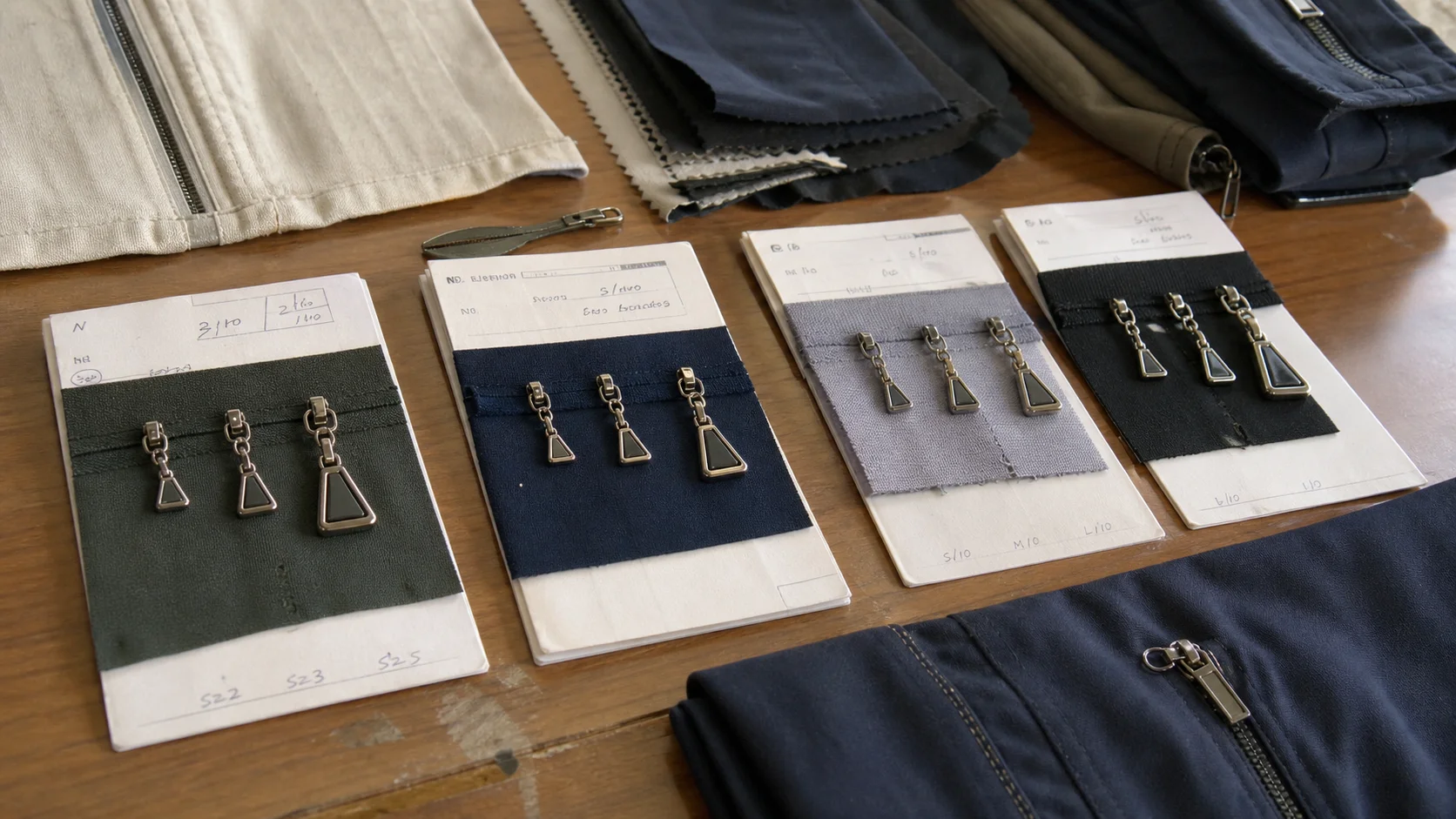
A focused sourcing review for pharmacy operations teams evaluating zip puller charm trim for branded uniforms, technician jackets, scrubs, and...
Zip Puller Charm Trim Sourcing Review for Pharmacies - Fabrikn production reference
Zip puller charm trim is a small component, but pharmacy operations teams should not treat it as an afterthought. In pharmacy uniforms, medication transport pouches, staff jackets, insulated delivery bags, organizer cases, and promotional health kits, the zip puller is handled repeatedly throughout the day. If the trim is sharp, weak, poorly coated, hard to grip, or inconsistent in branding, it can create practical problems far beyond its unit cost.
For pharmacy operations teams, zip puller charm trim sourcing usually sits between apparel manufacturing, decoration, packaging, and branded merchandise. The buyer may need a component that looks professional, supports a pharmacy brand, withstands repeated use, and does not interfere with hygiene procedures or staff workflow. A decorative charm can also help distinguish staff roles, identify department-specific kits, or reinforce brand recognition on patient-facing accessories.
The sourcing decision is not only about choosing a nice-looking charm. It involves substrate material, attachment method, logo execution, hand feel, safety, colorfastness, plating durability, MOQ, production lead time, and inspection standards. A low-cost charm can become expensive if it scratches uniform fabric, breaks during daily use, delays garment production, or fails a client’s restricted substance requirement.
Practical buying view: pharmacy teams should source zip puller charm trim as a functional branding component, not as a simple novelty accessory. The trim must survive handling, cleaning routines, storage, and distribution without creating safety or operational issues.
This review focuses on pharmacy operations teams zip puller charm trim sourcing review requirements within the Decoration & Printing category. It is written for B2B buyers coordinating with apparel factories, trim suppliers, promotional product vendors, and brand teams. For buyers comparing full garment programs rather than trim alone, fabrikn.com’s services page can provide a useful starting point for broader apparel production discussions.
Zip puller charm trim appears in several pharmacy-related product categories. Each use case has different performance expectations, and those expectations should drive the specification.
Pharmacy staff jackets, fleece layers, softshells, and scrub jackets often use branded zip pullers to make standard garments feel more customized. The charm may show a pharmacy logo, department color, campaign symbol, or simple medical icon. For uniforms, durability and comfort matter more than oversized decorative impact. A bulky metal charm may look premium on a sample but become annoying during a full shift.
Medication transport bags, emergency kits, cold-chain pouches, and organizer cases need pullers that are easy to grip, even with gloves. Pharmacy operations teams should prioritize pull strength, tactile surface, secure attachment, and resistance to repeated opening. Silicone or rubber pullers often perform well here because they are quieter and less likely to scratch surrounding surfaces.
For pharmacy marketing programs, a charm trim can make a pouch or bag feel more giftable. Logo clarity and color matching may be more important than heavy-duty strength, depending on the intended lifespan. Buyers should still avoid flimsy hardware, because a broken puller reflects poorly on the brand even if the item is promotional.
Some operations teams use different charm colors or icons to identify departments, dosage categories, kit types, or staff roles. This can be useful, but it introduces SKU complexity. A program with five colors, two logo options, and three bag styles can quickly become difficult to control unless the supplier manages packing and labeling carefully.
The best material depends on how the product will be used, cleaned, stored, and branded. Pharmacy buyers should ask suppliers for actual material composition, not just broad descriptions such as “rubber,” “metal,” or “plastic.”
Soft PVC is common for molded logo charms. It allows raised or recessed artwork, multiple colors, and flexible shapes. It is usually cost-effective for promotional and medium-duty use. The concern is compliance: buyers should request phthalate information, restricted substance declarations, and any applicable test reports if the program has strict chemical requirements.
Silicone is a strong option for pharmacy environments where hand feel, flexibility, and perceived cleanliness matter. It can be molded, embossed, debossed, or color-filled. It is often more heat resistant than soft PVC and can feel more premium. The tradeoff is that fine logo detail may not appear as sharply as printed metal or woven label inserts, especially on very small charms.
TPU and TPE are useful where flexibility, abrasion resistance, and a smooth finish are needed. TPU can give a more technical appearance. TPE can provide a softer grip. Buyers should confirm whether the material is suitable for the expected temperature range, especially for cold-chain pouches or transport bags exposed to changing conditions.
Zinc alloy, brass, stainless steel, or aluminum charms can create a premium look. Metal can support enamel fill, laser engraving, debossing, or plating finishes. It is suitable for higher-end uniform programs or branded accessories. The drawbacks are weight, noise, possible plating wear, and the risk of sharp edges if finishing is poor. Metal pullers also need careful evaluation for nickel release or other metal contact restrictions, depending on market requirements.
Fabric tabs are lightweight and comfortable. They can be printed or woven with logos, color codes, or text. They are practical for uniforms and soft pouches where noise reduction matters. The limitations are fraying risk, lower perceived novelty value, and possible colorfastness issues during washing or cleaning.
Acrylic or rigid plastic charms can offer clear printing and low weight. They are better for promotional use than heavy daily-use pharmacy tools. Brittle materials may crack under stress, especially around the hole or connector point. Buyers should request drop or flex testing for any rigid charm used on operational products.
Material Best Fit Main Advantage Main Risk Soft PVC Promotional pouches, branded kits Low tooling cost and flexible shapes Chemical compliance concerns if not verified Silicone Uniforms, pharmacy bags, glove-friendly pullers Soft grip and clean appearance Fine logo detail may be limited TPU/TPE Technical bags and daily-use accessories Good flexibility and abrasion resistance Material grade must match use conditions Metal Alloy Premium uniforms and branded cases High perceived value Weight, plating wear, edge finishing risk Fabric Tab Staff apparel and soft pouches Lightweight and quiet Fraying and colorfastness riskZip puller charm trim sits inside the Decoration & Printing category because the decoration method directly affects the final quality. A pharmacy logo may include fine text, a cross symbol, a mortar-and-pestle icon, or brand colors that need accurate reproduction. Buyers should evaluate logo complexity before locking the material.
Embossing raises the logo above the charm surface, while debossing presses it into the surface. These methods work well for silicone, PVC, TPU, leather-look PU, and some metal trims. They are durable because the logo is formed into the material rather than simply printed on top. Small lettering can become muddy, so artwork should be simplified for charms under roughly 25 mm.
Color fill is common for soft PVC, silicone, and metal charms. Enamel on metal gives a polished look, especially for premium programs. Color separation matters: narrow gaps between colors may bleed or lose definition. Buyers should request a physical sample or at least a close-up production proof for logos with fine outlines.
Printing can reproduce flat logos and multiple colors, often at lower tooling cost. The concern is abrasion. A printed logo on a puller will be touched frequently, rubbed against fabric, and packed in bulk. Pharmacy operations teams should request rub testing and review whether a protective coating is available.
Laser engraving works well on metal and some coated surfaces. It is durable and clean but may not support full-color branding. It suits professional pharmacy programs where subtle branding is acceptable. The contrast depends heavily on the base material and finish.
Fabric zipper tabs can be heat transferred or sublimated for clear graphics. This works for text labels, color-coded systems, and campaign names. Washing and abrasion tests are important, especially if the puller is attached to staff garments.
Many sourcing problems come from vague trim requests. “Custom logo zipper puller” is not enough for accurate pricing or production. Pharmacy buyers should send a concise technical specification with the inquiry.
The attachment method deserves special attention. A charm may look correct but fail if the connector is too weak. For operational pharmacy bags, a cord loop or reinforced tab can be more practical than a decorative jump ring. For staff jackets, a lightweight puller often feels better during movement and laundering.
Typical MOQ ranges vary by material, decoration method, tooling requirement, and supplier. These ranges are not fixed rules, but they help pharmacy operations teams plan realistic purchasing volumes.
Trim Type Typical MOQ Range Tooling Requirement Best Buying Scenario Printed fabric zipper tab 500 to 2,000 pieces Low or none Uniform programs with simple branding Soft PVC molded charm 1,000 to 3,000 pieces Mold usually required Branded pouches and promotional kits Silicone molded puller 1,000 to 5,000 pieces Mold usually required Daily-use pharmacy bags and jackets Metal enamel charm 500 to 2,000 pieces Mold or die may be required Premium accessories and executive programs Standard blank puller with printed logo 300 to 1,000 pieces Usually low Short campaigns or pilot ordersPricing is influenced by size, number of colors, mold complexity, plating, special finishes, testing requirements, and packing method. A charm with six molded colors, custom shape, individual polybags, and third-party testing will not price like a standard black silicone tab with one debossed logo.
For pharmacy operations teams, the bigger cost question is often not the unit price of the puller. It is the cost of disruption. If custom trim arrives late, the garment factory may hold finished goods. If the charm fails inspection, the buyer may need urgent replacements. If the MOQ is too high, the pharmacy may carry unused obsolete branding after a logo update or campaign change.
A practical approach is to forecast trim demand across multiple products. If the same puller can be used on staff jackets, medication pouches, and onboarding kits, the buyer can reach a healthier MOQ and reduce SKU complexity. That said, one universal trim may not suit every product. A heavy metal puller may work for a gift pouch but not for daily staff apparel.
Sampling is where many trim problems become visible. Pharmacy buyers should not approve zip puller charm trim based only on a digital mockup, especially for custom molded or plated items. The physical sample confirms weight, grip, surface finish, logo clarity, attachment strength, and color.
For urgent programs, some suppliers may offer a substitute sample using similar material before tooling is completed. This can help with size and hand-feel decisions, but it should not replace approval of the actual production sample. Tooling changes after approval can be costly and may add days or weeks.
The approval sample should be retained by both buyer and supplier. If the trim is being shipped to an apparel factory for attachment, the factory should also receive an approved sample or clear photo reference. This reduces disputes when bulk goods arrive.
Lead time depends on whether the charm is standard or custom, whether tooling is needed, how many colors are used, and whether testing is required. Pharmacy operations teams often work against launch dates, uniform rollouts, flu season campaigns, or store opening schedules, so trim lead time should be built into the larger production calendar.
Stage Typical Time Range Key Dependency Artwork and proofing 2 to 5 business days Clean vector files and fast buyer feedback Tooling or mold setup 5 to 12 business days Shape complexity and supplier capacity Pre-production sample 5 to 10 business days after tooling Material, color count, and decoration method Bulk production 10 to 25 business days Order quantity and finish requirements Testing and inspection 3 to 10 business days Lab availability and test scope Shipping to garment factory or buyer Varies by mode Air, sea, courier, customs, and destinationCustom zip puller charm trim can often be completed faster than full garment production, but it can still become the bottleneck if the buyer starts late. Metal plating, enamel fill, special molds, multi-color PVC, and compliance testing add time. Public holidays, peak production seasons, and late artwork changes can also extend timelines.
If the trim is part of a larger uniform or bag program, build the schedule backward from final delivery. The trim must arrive before final assembly if it is attached during production. Loose charms can be packed later, but that creates another handling step and another chance for mismatching.
For buyers coordinating trim with apparel production, it may help to discuss the full process with a production partner. Fabrikn’s about us page gives context on its manufacturing focus, and the contact us page is the appropriate route for direct sourcing inquiries.
Zip puller charm trim inspection should cover both appearance and function. A charm may pass a visual check but fail under actual use. Pharmacy operations teams should define inspection points before bulk production, particularly when the trim is attached to finished goods.
Inspection should include random pull testing, dimensional measurement, color comparison against the approved sample, logo position review, and packing count verification. If the trim will be attached to garments, the inspector should check whether the puller damages the zipper slider during operation. A strong charm attached to a weak slider can still cause field failure.
Pharmacy-related products may also require cleanliness expectations. Loose dust, oily residue, strong odor, or surface contamination can create rejection risk. Odor is especially relevant for soft PVC, rubber-like materials, adhesives, coatings, and plated metal packed too soon after finishing.
Compliance requirements depend on the sales market, product category, user group, and brand policy. Pharmacy operations teams should avoid making assumptions. A zip puller used on an adult staff jacket is not regulated the same way as a charm attached to a child-facing promotional pouch.
Common areas to consider include restricted substances, heavy metals, phthalates, nickel release, lead content, cadmium, azo dyes, formaldehyde, and packaging requirements. If the item is distributed in healthcare settings, buyers may also need internal safety review for cleanability, sharp edges, choking hazard risk, and suitability around medications.
For staff uniforms, laundering and cleaning compatibility matter. A charm may survive normal handling but crack or discolor after repeated washing, exposure to disinfectant wipes, or high-temperature drying. Suppliers should not promise universal chemical resistance unless they can support the claim with material data or test results.
Medical branding can create another concern. A cross icon, pharmacy symbol, or medication-related graphic should be reviewed for brand and jurisdictional appropriateness. Some symbols may be protected, restricted, or culturally sensitive in certain markets. This is a brand governance issue as much as a production issue.
Buyer caution: request only the compliance documents that match the product and destination market. Over-specifying tests can add cost and time, while under-specifying can create rejection risk after production.
Supplier selection should focus on whether the vendor can control small-component quality at scale. A supplier that makes attractive samples may still struggle with repeatability in bulk. Pharmacy operations teams should ask direct questions before awarding an order.
Buyers should be cautious with suppliers that avoid material questions, push approval based only on mockups, or offer unusually low prices without explaining tooling, finish, or testing limitations. In custom trim, the cheapest quote often removes something: lower-grade material, thinner thickness, weaker rings, less inspection, or less accurate coloring.
The right trim choice depends on the pharmacy program’s actual use. A premium metal enamel charm can be a poor choice for a high-volume staff jacket if it is noisy, heavy, or prone to plating wear. A simple silicone puller may be less visually impressive in a presentation, but it can be the better operational choice for daily handling.
Choose silicone or TPU when grip, comfort, flexibility, and operational durability are priorities. These materials suit medication bags, staff outerwear, and products handled by gloved users. The tradeoff is that very fine logo detail may need simplification. A debossed logo with one brand color is often more reliable than a tiny multi-color artwork.
Choose soft PVC when custom shape, playful branding, and cost control are important. It is suitable for pharmacy campaigns, patient kits, and promotional pouches. The tradeoff is compliance scrutiny and potential odor if production and curing are rushed. Buyers should require proper material declarations for regulated markets.
Choose metal when brand presentation is more important than weight reduction. Metal trims suit premium kits, executive gifts, or limited-edition accessories. The tradeoff is higher inspection attention. Edge smoothness, plating durability, nickel concerns, and ring strength must be checked carefully.
Choose fabric tabs for uniforms where comfort, washability, and quiet operation matter. They are also useful for department color coding. The tradeoff is lower sculptural branding impact and the need to control fraying, stitch quality, and print durability.
Pharmacy operations teams should also decide whether the zip puller charm is permanent branding or campaign branding. Permanent branding can justify mold cost and higher MOQ. Campaign branding should stay flexible unless the forecast is firm. If a flu vaccination campaign changes artwork every season, a low-tooling printed tab may be safer than a molded charm with a large leftover inventory risk.
A good sourcing brief will separate mandatory requirements from preferences. For example, glove-friendly grip, no sharp edges, and 1,000-cycle pull durability may be mandatory. Metallic finish and individual polybagging may be optional. This makes supplier negotiation clearer and prevents decorative features from weakening the operational product.
Pharmacy buyers can use the following structure when requesting quotes from trim suppliers or apparel manufacturing partners.
Brief Section Information to Provide Product application Staff jacket, medication pouch, cold-chain bag, patient kit, or promotional case Quantity Estimated first order and annual forecast if available Material preference Silicone, TPU, soft PVC, metal, fabric, or open to supplier recommendation Dimensions Length, width, thickness, hole size, and connector length Artwork Vector logo, Pantone colors, text size, and brand rules Attachment Ring, cord, clip, direct slider, woven loop, or other connection method Performance need Pull strength, wash resistance, abrasion resistance, glove usability, or disinfectant exposure Compliance Destination market and required restricted substance standards Packing Loose bulk, SKU-separated bags, attached to garment, or individually packedThis level of detail helps suppliers quote accurately. It also exposes tradeoffs early. If a buyer requests a 15 mm charm with five-color logo detail, the supplier should explain the risk before tooling begins. If a charm must be pulled repeatedly with gloves, the supplier should recommend a larger grip area or textured surface.
For pharmacy operations teams, the safest default is usually a mid-size silicone, TPU, or fabric-based zip puller with simplified branding, smooth edges, secure attachment, and documented material compliance. This combination balances function, brand visibility, comfort, and quality control. Soft PVC is a strong option for campaign merchandise, while metal should be reserved for programs where presentation value outweighs weight and plating concerns.
Buyers should avoid approving charm trim from artwork alone. Physical samples, connector testing, color review, and fit checks on the actual zipper are necessary. The trim should be reviewed as part of the finished product, not only as a loose component. A puller that looks good on a desk may not work well on a pharmacy jacket pocket or insulated medication bag.
The best sourcing outcome comes from early coordination between the pharmacy operations team, brand manager, trim supplier, and garment or bag factory. When material, artwork, MOQ, lead time, compliance, and inspection criteria are confirmed before production, zip puller charm trim can add useful branding without creating operational friction.
Get a free quote from Fabrikn — your trusted B2B clothing manufacturer with 10+ years of experience. MOQ as low as 200 pieces.
Get a Free Quote →Zip puller charm trim is a decorative or functional attachment added to a zipper slider. In pharmacy sourcing, it may be used on staff uniforms, medication transport pouches, organizer bags, patient kits, or promotional health accessories.
Silicone, TPU, and fabric tabs are usually practical for daily pharmacy use because they are lightweight, comfortable, and easy to grip. Soft PVC is useful for promotional programs. Metal is better for premium accessories but requires more attention to weight, plating, and edge safety.
Typical MOQs range from about 300 pieces for some standard printed pullers to 5,000 pieces for custom molded silicone or TPU trims. Many custom PVC or silicone charms start around 1,000 to 3,000 pieces, depending on supplier and design complexity.
A custom program often takes several weeks when artwork proofing, tooling, sampling, bulk production, inspection, and shipping are included. Simple standard pullers can move faster, while metal plating, multi-color molding, testing, and late artwork changes add time.
Yes. A physical sample should be checked for size, logo clarity, color, edge smoothness, grip comfort, connector strength, and fit on the actual zipper. Digital mockups are not enough for final approval.
Common problems include wrong color, rough edges, weak connectors, logo distortion, plating scratches, odor, color migration, poor pull strength, and pullers that are too bulky or too small for practical use.
Compliance needs depend on the product, user, and destination market. Buyers may need restricted substance declarations, heavy metal testing, phthalate information, nickel release data, or other documents if required by the brand or market regulations.
Yes, and it can reduce cost and SKU complexity. The tradeoff is that one design may not suit every product. A puller suitable for a promotional pouch may be too heavy or decorative for staff uniforms or medication bags.
Buyers should provide quantity, application, material preference, dimensions, logo artwork, Pantone colors, attachment method, packing method, performance expectations, compliance requirements, and delivery schedule.
The main mistake is treating the zip puller charm as a low-risk decoration only. It is a handled component. Poor material, weak attachment, sharp edges, or delayed production can affect the performance and delivery of the finished pharmacy product.