
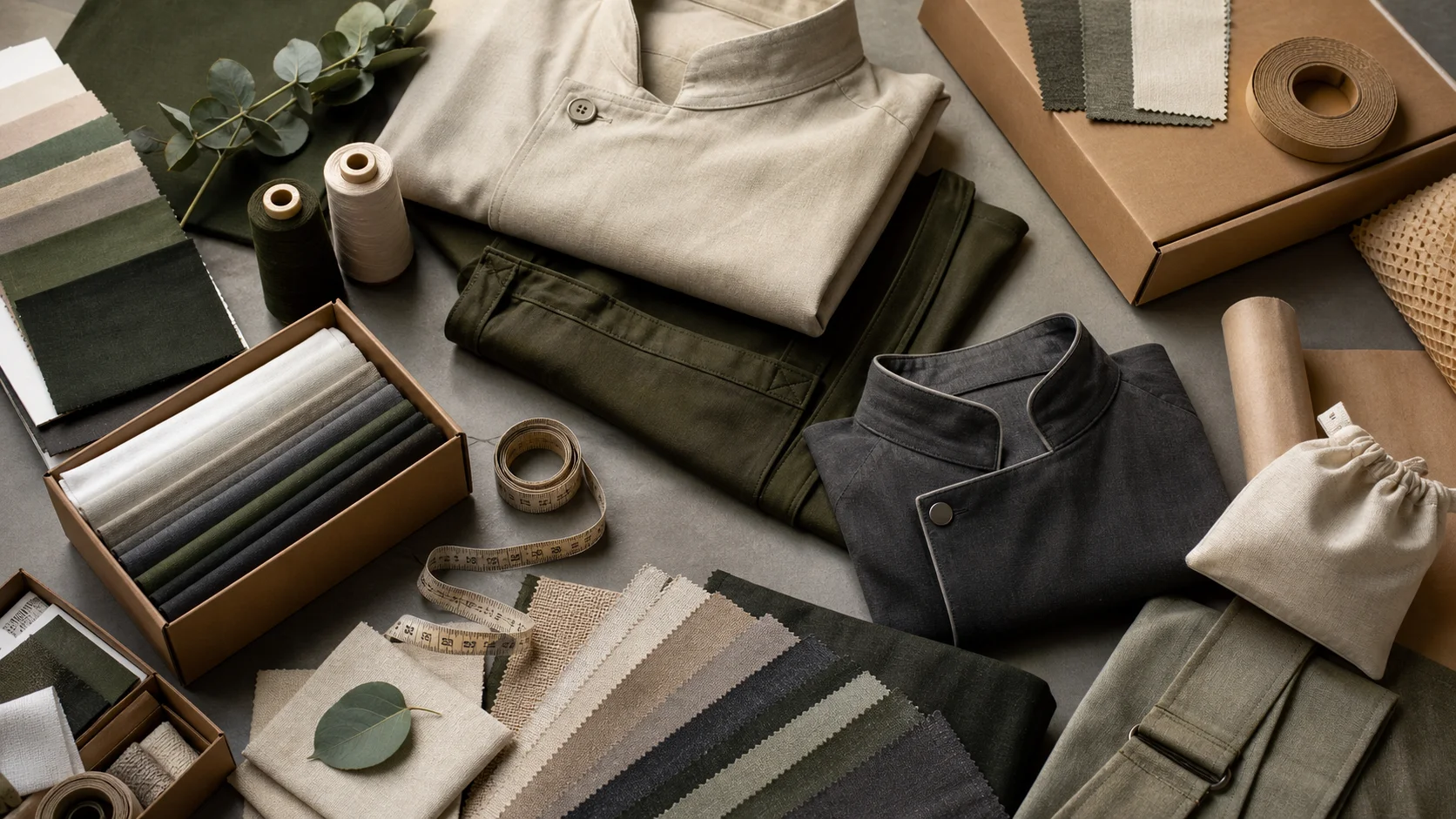
Plastic-Free Apparel Packaging with checks for samples, fit, MOQ, QC evidence, pricing terms, and delivery risk.
Fast answer: Plastic-Free Apparel Packaging: Material Claims, Fit, Cost, and Waste should be judged by production evidence, not by a generic sourcing promise. The buyer needs sample proof, cost breakdowns, QC checkpoints, and delivery buffers in writing.
Ask for recent sample photos, measurement tolerances, fabric or print test assumptions, decoration test notes, packing examples, and a named inspection checkpoint. These details show whether the team can repeat an approved sample at bulk volume.
Separate garment cost, decoration, labels, packaging, sampling, testing, freight, and rush charges. When every cost line is visible, it becomes easier to reduce colorways, adjust size depth, or reserve more time for sampling.
One shirt can leave a factory wrapped in a 12-gram polybag, slipped into a second plastic sleeve, then packed inside a branded box that spends 20 seconds in a customer’s hands before heading to landfill. I’ve watched that sequence in Vietnam, Bangladesh, and Portugal. The waste is not abstract. It shows up in tonnes, not feelings. That is why plastic free apparel packaging ideas are no longer a branding exercise. They are an operations decision with visible cost.
In factory audits, basic tees often ship with 18 to 24 grams of plastic packaging per unit in premium programs, while budget basics sit closer to 8 to 12 grams, still made from virgin film. Multiply that by 50,000 units and you get 400 to 1,200 kilograms of waste before a customer even touches the garment. In one Turkey-based knitwear facility, the box-and-polybag combination added $0.11 per piece; in a Pakistan basics plant, the simpler setup cost $0.05. Different price tiers. Same landfill outcome.
Premium brands overpackage because presentation is tied to perceived value. Budget brands underpackage because every cent is scrutinized. Both can miss the point. A well-specified paper mailer or corrugated carton protects a folded shirt, a hoodie, or a scarf without raising damage rates, provided the caliper, crush resistance, and closure method match the product. I’ve seen fewer collar-crush claims from paper-based packs than from cheap thin-film bags that tear at the seam during long-haul transit.
The odd part is who decides. In many factories, packaging specifications come from procurement, not merchandising. That means the buyer chasing $0.02 savings often overrules the team thinking about brand presentation or customer returns. Boxes too large. Inserts that do nothing. Polybags chosen because a supplier already stocks them by the million. When packaging sits apart from SKU planning, waste climbs fast.
The strongest plastic free apparel packaging ideas are not theoretical. They are already in mills, print shops, and fulfillment centers. The real test is not whether a material is plastic-free on paper, but whether it survives folded seams, moisture, abrasion, and a 3,000-kilometer truck ride without giving the customer a crushed or damp garment.
Kraft mailers are the workhorse. A 120 to 150 gsm kraft mailer handles tees, socks, and small accessories well, and print quality is solid for one- or two-color branding. They resist folding better than many recycled paper options, though they can soften in humid ports if stored for 10 to 14 days. FSC paper bags work for lightweight basics and intimates, especially when paired with a paper seal. Less rigid than mailers, they’re not ideal for sharp hardware or structured jackets.
Glassine sleeves are useful for luxury shirting and delicate knitwear. Smooth. Translucent. Good at reducing scuffing on embroidered trims. The weakness is moisture tolerance. In a monsoon-season shipment through South Asia, I’ve seen glassine lose integrity after 48 to 72 hours of high humidity. Molded pulp inserts are excellent for collars, shoulder support, and accessories, though they add bulk and need precise die lines. For shoes, belts, and jewelry boxes, they can replace plastic forms cleanly.
Paper tape is underrated. A good water-activated tape lowers tamper risk and holds corrugated cartons better than weak pressure-sensitive paper tape. Corrugated boxes remain the safest presentation option for premium apparel, especially outerwear and return-prone items. The catch is weight. A well-made mailer can save 35 to 90 grams per shipment, which matters when freight is billed by dimensional weight.
Recycled paper is not always the greener answer. If the fibers are too short, the pack tears sooner. If the coating is overbuilt, it may block recyclability. If the ink coverage is heavy, the sheet becomes harder to repulp. According to ISO guidance on material performance and testing discipline, specs need to be validated against actual use, not just supplier claims. For athleisure, I prefer reinforced kraft mailers. For luxury, glassine plus rigid paper board often works. For basics, a slim paper bag and one protective layer is enough.
Packaging should follow the garment, not the other way around. Tees, intimates, denim, outerwear, and formalwear have different failure points, and a one-pack-fits-all setup usually wastes material. In the factories I visit, the strongest packaging decisions start with SKU behavior: how much the item wrinkles, whether it has hardware, and how often it comes back.
Fast fashion basics can be packed lean. A tee at $6 to $12 retail does not need a rigid presentation box. A 100 to 120 gsm paper mailer, a single paper insert, and a fold protector are usually enough. Intimates do better in FSC paper bags with a simple label. The cost can stay around $0.04 to $0.08 per unit if print is limited to one color and dimensions are standardized. That matters on 200,000-unit runs.
Mid-market denim and knitwear need more structure. Jeans with metal hardware scuff easily, and heavy knits can distort if folded too tightly. I have seen 320 GSM French terry hoodies arrive crisp in corrugated cartons with molded pulp shoulder supports, while a cheaper paper bag setup led to 6% more return complaints about creasing. For this category, packaging often sits in the $0.10 to $0.22 range, depending on insert count and print finish.
Premium and luxury apparel can remove plastic without losing ceremony. The trick is not excess. It is material quality. A textured carton, embossed logo, tissue wrap, and one paper sleeve can feel more expensive than a glossy plastic-wrapped presentation pack. Last year I worked with a brand that cut three layers down to one and saw customer satisfaction hold steady while packaging cost fell 14% on a 15,000-unit season order.
The thing nobody tells you: some low-cost suppliers switch faster than high-end vendors. I’ve watched small factories in India change over to paper-based systems in 7 to 10 days because their line setup was flexible. Some luxury suppliers, tied to rigid legacy specs and long approval chains, needed 6 to 8 weeks just to approve a new sleeve. If you need help aligning packaging with production, clothing packaging solutions can be matched to each SKU instead of forcing one standard across the range. For brands sourcing from a manufacturer, factory, or supplier in China, this kind of custom planning often improves quality control and keeps MOQ decisions realistic for wholesale and bulk orders.
Packaging cost should be measured as landed cost, not unit cost alone. A 2-cent difference sounds tiny until you multiply it by 100,000 units, where it becomes $2,000 before freight, returns, or disposal fees. I’ve seen brands fixate on pack purchase price while ignoring the 40 to 80 grams of shipping weight that drive air-freight or parcel charges up.
Here is a practical comparison I use in buyer reviews:
Damage rates shift with route, not just material. A thin box that performs fine on domestic truck routes can fail on port-to-port shipments where humidity hits 75% to 90% and cartons sit for 5 to 12 days. I’ve seen crushed collars, scuffed trims, and damp carton corners create return spikes of 2% to 4% on cross-border e-commerce programs. That return cost often dwarfs the packaging savings.
Regional logistics change the answer. Long-haul trucking in North America rewards compression resistance. Sea freight from South Asia to Europe punishes weak paper and poor storage. Cross-border fulfillment in the Middle East can mean warehouse temperatures above 40°C, which affects adhesive performance on seals. Data from trade.gov and shipping practices observed across multiple routes show why the cheapest pack at source can become the most expensive pack at destination.
My rule is simple. If a 12-gram polybag saves $0.02 but increases claims by even 1% on a 50,000-unit order, it is not saving money. It is hiding cost in returns, replacements, and customer service time. That is why plastic free apparel packaging ideas need a finance lens as much as a sustainability lens. The pack is part of the product promise.
Supplier conversations should be specific from the first call. I ask four questions before I review samples: What is the paper source, what coating is used, what adhesive holds the closure, and what inks touch the surface? If the answer is vague, the risk is usually in the coating or the glue, not the paper itself. Hidden plastic lamination is common in glossy packs that still market themselves as paper-based.
Documents matter. Ask for FSC or PEFC certificates, recycled-content declarations, and compostability tests only if the material is genuinely designed for composting. For many apparel packs, compostable is not the goal. Recyclable and durable may be better. Verify claims against the original certificate number, not a screenshot. Packaging claims without paperwork are marketing, not compliance. Standards from Global Organic Textile Standard and related certification frameworks show how strict evidence should be in supply chains.
At factory level, I check die-cut precision, fold tolerance, moisture testing, and carton compression testing. A box that looks perfect in a sample room can buckle after 10 to 15 minutes of over-stacking on a line. I also look for print rub resistance, because weak inks smear on contact with dark denim or coated paper.
Use one spec sheet for three suppliers. Same dimensions. Same board grade. Same closure. Same print count. Then request samples from each within the same 7-day window. That gives you a fair comparison on price, quality, and lead time. If a supplier claims paper tape or water-based adhesive, ask for a line photo and batch record. Procurement teams make faster decisions when the test is standardized.
If your brand needs a packaging partner that understands garment specs, cut and sew manufacturing teams often coordinate better with pack development than standalone vendors, because they know seam thickness, fold behavior, and return handling from the production floor up.
Minimal packaging can still feel premium. I have seen a plain kraft carton outshine a foil-printed box because the paper had a tactile finish, the typography was restrained, and the garment arrived flat and clean. Texture does more work than decoration. Embossing, blind deboss, and a sharp one-color stamp often create a stronger memory than another layer of plastic wrap.
Waste creeps in through design habits. Oversized boxes increase freight charges and void fill. Duplicate wraps add no value. Loose inserts, ribbon, and oversized tissue sheets can turn a clean unboxing into a material pile. If one primary material, one label, and one protective layer are enough, that is the stronger system. The customer notices when a shirt arrives crease-free. They notice less when the pack contains less.
Store-to-home and e-commerce need different choices. A one-time presentation box can work for boutique retail, where the bag is carried a short distance and then opened at home. Returns-friendly packaging is different. It must be recloseable, scuff-resistant, and easy to refold. In my visits to fulfillment centers, the best-performing packs used one corrugated shell and one paper inner sleeve, not three decorative layers.
Consumers are more forgiving than many brands think. In surveys I’ve seen at packing desks and through post-purchase feedback, people often prefer less packaging if the garment feels protected and the presentation is intentional. That is especially true for basics under $25 and premium items above $150, where the clothing itself carries the value. Brands that want more tailored apparel packaging can pair design restraint with private label clothing services so the identity sits in the garment and the label, not the waste stream.
Start with a 90-day pilot, not a full conversion. Weeks 1 to 2 should cover sample approval and spec lock. Weeks 3 to 5 should run transit tests, including drop tests, compression checks, and humidity exposure. Weeks 6 to 8 should capture customer feedback and compare return data. Weeks 9 to 12 should review cost, supplier capacity, and approval from operations and finance.
Test 2 to 3 hero SKUs first. A tee, a hoodie, and one accessory are enough to reveal most pack issues. If those items hold up, rollout becomes easier. Internal alignment matters here. Sustainability can set the target, operations can check line speed, finance can validate the landed cost, and creative can protect brand feel. When those teams agree on one spec, the switch happens faster.
Typical turnaround looks like this: 5 to 7 days for sample development, 7 to 10 days for testing, 10 to 14 days for revisions, and 2 to 4 weeks for supplier onboarding if print plates or die lines need updating. Small changes move quickly. New structures take longer. If you need to pressure-test volumes, get a free quote and compare the numbers against your current pack bill. That is often the simplest way to compare wholesale, bulk, and custom options before scaling production.
Keep plastic only where testing proves it is necessary. Remove it everywhere else. That is the cleanest decision framework I’ve seen hold up across factories in Asia, Europe, and North Africa. It saves money, lowers waste, and avoids the trap of performative sustainability. If you’re building plastic free apparel packaging ideas into production planning now, your next step is simple: pilot one SKU, measure the real numbers, then scale what works.
If you are still refining your rollout, keep the plastic free apparel packaging ideas aligned with your shipping profile, seasonality, and customer expectations. A simple corrugated mailer may be enough for a direct-to-consumer tee, while a folded luxury shirt may need a rigid board sleeve and tissue wrap. The best programs usually combine a lightweight structure with disciplined production controls so the final pack performs consistently from sample to shipment.
Brands comparing suppliers in China or elsewhere should ask for live samples, line photos, and documented quality checks before approving a new pack. That is especially important when MOQ thresholds are high and a small spec mistake can affect every unit in bulk. A strong manufacturer will explain tradeoffs clearly, while a strong factory will show how the pack moves through its actual custom workflow.
For sourcing teams, one practical way to evaluate plastic free apparel packaging ideas is to compare landed cost, visual appeal, and return performance side by side. That makes it easier to choose between a lightweight mailer and a more structured premium pack without guessing. It also helps align the brief across the supplier, design team, and operations team before committing to wholesale volumes.
For additional context on sustainable textile and packaging standards, see Textile Exchange and OEKO-TEX. Their guidance can help brands refine material choices, chemical safety, and supplier expectations alongside packaging planning. If your next step is a pilot, keep the test small, document every result, and expand only after the pack survives real-world handling.
For basic tees, the best options are kraft mailers, FSC paper bags, and paper tape. A setup using 100 to 120 gsm paper and one label usually protects the garment at $0.04 to $0.08 per unit, depending on print and size. For 50,000 units, that difference is material.
Polybags often cost $0.01 to $0.03 each, while paper-based packs usually range from $0.04 to $0.16 depending on structure. The higher unit price can be offset by lower returns, better freight efficiency, and stronger customer perception. On 100,000 units, a $0.02 change equals $2,000.
A focused switch usually takes 30 to 90 days. Sampling can take 5 to 7 days, testing another 7 to 10 days, and supplier onboarding 2 to 4 weeks if artwork or die lines change. Complex luxury packs can take longer.
Yes. Luxury packs often perform well with textured corrugated boxes, glassine sleeves, molded pulp inserts, and embossed branding. In many cases, premium brands remove plastic without raising packaging cost much because they already spend on print, structure, and finish. The key is matching protection to the garment.
Start with 2 to 3 hero SKUs that represent different product types, such as a tee, hoodie, and accessory. Use the same spec sheet across three suppliers, then test humidity, compression, and drop performance. That approach keeps the pilot controlled and makes cost comparison fair.