
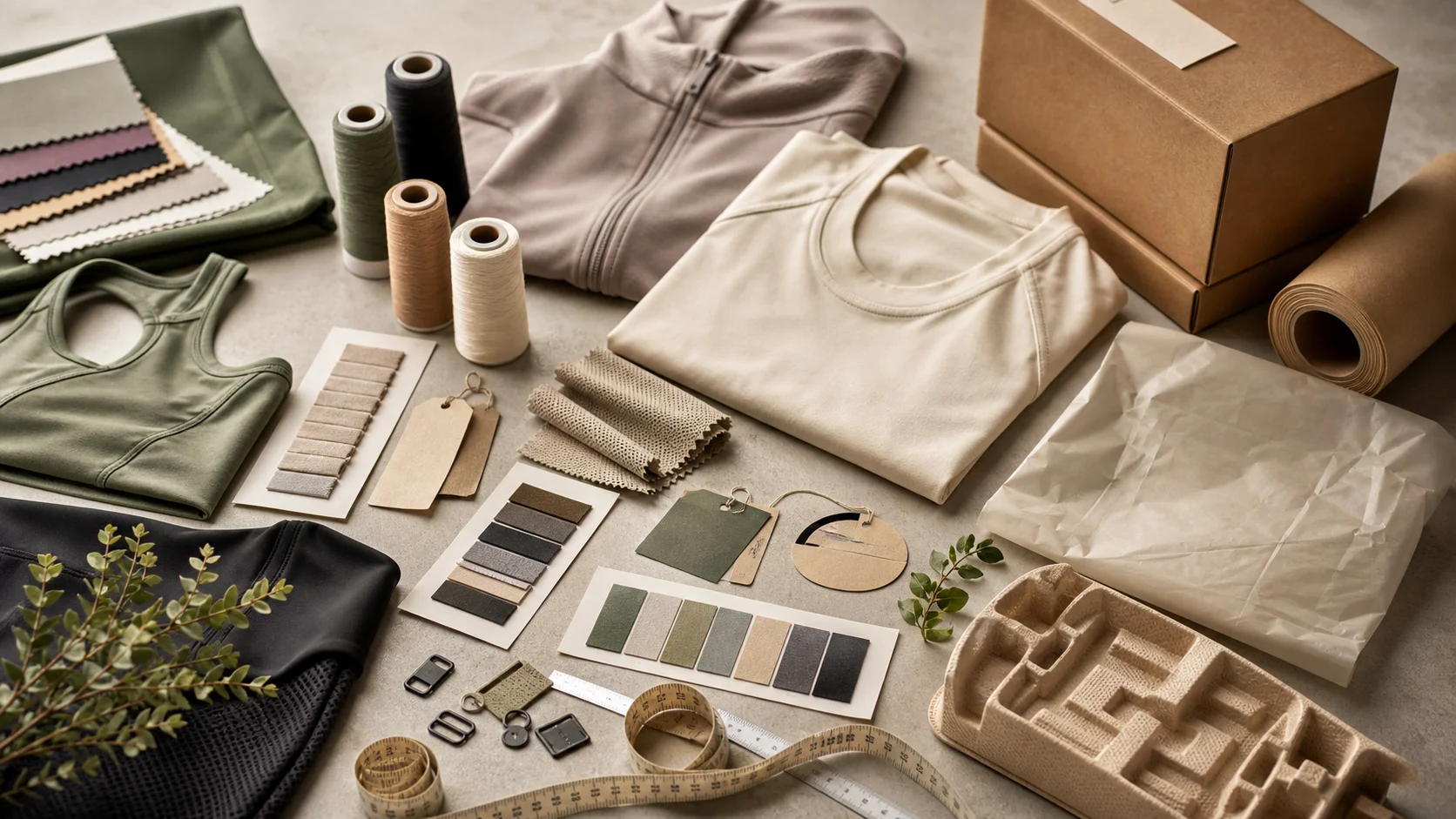
Luxury Apparel Packaging Ideas with checks for samples, fit, MOQ, QC evidence, pricing terms, and delivery risk.
Fast answer: Luxury Apparel Packaging Ideas: Finish, Inserts, Cost, and Perceived Value should be judged by production evidence, not by a generic sourcing promise. The buyer needs sample proof, cost breakdowns, QC checkpoints, and delivery buffers in writing.
Ask for recent sample photos, measurement tolerances, fabric or print test assumptions, decoration test notes, packing examples, and a named inspection checkpoint. These details show whether the team can repeat an approved sample at bulk volume.
Separate garment cost, decoration, labels, packaging, sampling, testing, freight, and rush charges. When every cost line is visible, it becomes easier to reduce colorways, adjust size depth, or reserve more time for sampling.
A forgettable box can make a polished shirt feel ordinary; the right one can make the same shirt feel like a statement. That is why luxury apparel packaging ideas matter before anyone touches the fabric. In three seconds, the package frames the garment: special, disciplined, worth the markup — or not.
For brands evaluating luxury apparel packaging ideas, the first decision is rarely aesthetic. It is operational. A manufacturer, factory, or supplier that understands garment risk can prevent creasing, scuffing, and transit damage before the box is ever printed.
Across more than 200 factory visits in 8 countries, the same pattern kept showing up. Heavy paper stock, sharp folds, and tight closure tolerances send a message long before the product appears. In Vietnam, a supplier once rejected a box run because the lid sat 1.5 mm high on one side. In Italy, a millimeter of drift on a drawer box counted as a quality failure, not a small cosmetic miss. Buyers notice that sort of discipline.
Price tier shifts the story fast. A folding carton may cost $0.80 to $1.40 at 3,000 units, a rigid presentation box might land at $3.80 to $6.50, and a magnetic set can jump to $8.00 to $14.00 before inserts or freight. The garment inside may still be the same $18 knit or $42 woven shirt. Luxury buyers read packaging as a proxy for brand control, sustainability, even resale value. A box that dents in transit suggests weak operations. A package that opens cleanly and closes square suggests precision.
Premium packaging is not about the most expensive format. It is about fit, finish, and consistency. I’ve seen a $2.20 rigid sleeve outperform a $9.00 gift box because the sleeve protected the collar, held its shape, and arrived with zero corner crush. That is the standard worth chasing. Pair packaging decisions with clothing packaging solutions that match the product’s real risk profile, not just the mood board.
One-size-fits-all packaging fails in premium fashion because garments fail in different ways. Shirts wrinkle. Knitwear stretches. Tailoring loses structure. Accessories disappear into a bad insert. The smartest luxury apparel packaging ideas start with the physical threat, not the brand story. A crisp poplin shirt needs crease control and stable folding. A 320 GSM French terry hoodie needs breathability so trapped moisture does not create odor or board warping. A blazer needs shoulder protection, not decorative excess.
For shirts, I prefer a fold-flat carton or sleeve pack with a tissue barrier and a collar support. At scale, a properly sized sleeve can run $0.40 to $1.20, while a rigid drawer box may sit at $4.50 to $7.50. Knitwear is different. Breathable paper wraps and soft inserts often beat glossy boxes because they reduce humidity buildup and compression marks during 3- to 5-day transit. Tailoring is the hardest category. Jackets and trousers reward structure retention, so garment bags, reinforced hangers, and shaped inserts matter more than surface decoration. Accessories need security. Belts, scarves, and small leather goods should not rattle around in oversized cavities that invite scuffing.
Some of the most expensive boxes are overbuilt for lightweight items. I’ve opened $11.00 cases holding a $28 tee shirt, and the whole setup felt theatrical rather than premium. Tailored apparel often benefits from simpler structures with better-finished edges, cleaner glue lines, and tighter closures. A plain white board with a 1.8 mm wrap and a 0.3 mm tolerance can look more expensive than a flashy laminated box that bows after one shipment.
Regional sourcing changes the equation. Asia often gives faster sampling on complex rigid packs, sometimes in 7 to 10 days, while Europe tends to do finer finishing and smaller runs with stronger attention to edge alignment and print registration. If your line includes both tailored product and accessories, split the brief. Last year I worked with a brand that used private label clothing services for the garments and a separate packaging spec for gift sets. Not cheaper on paper. Returns still fell by 14% because the packaging finally matched the product category.
Material is where premium perception starts to feel physical. A rigid board box with 1.5 to 2.0 mm caliper says something different from a coated folding carton at 350 gsm, even before print or foil enters the picture. Soft-touch lamination can feel luxurious, but it also shows scuffs quickly if the outer shipper is weak. Embossing creates depth. Ribbon pulls add ceremony. Magnetic closures add weight and a quiet click. All of that matters, but only if the construction holds.
Recycled board can feel richer than virgin stock when the caliper is right, the print density is controlled, and the closure aligns within 0.5 mm. Premium does not always mean new material. It means disciplined material use. According to Textile Exchange, brands are under sharper pressure to document recycled inputs and preferred fibers, and packaging teams now face the same expectation from retailers and regulators. A recycled board claim without test data is just marketing copy.
The tactile cues buyers associate with quality are strangely specific. Spine stiffness. No fiber shedding on the edges. Clean die-cuts. A lid that opens without scraping. A paper wrap may cost $0.12 to $0.30, a rigid set-up box $3.50 to $6.50, a drawer box $4.00 to $7.20, a magnetic closure $8.00 to $14.50, and a reusable garment bag $2.50 to $9.00 depending on fabric and trim. Cotton twill bags feel elevated, but a poor zipper can ruin the effect. Recycled polyester pouches are practical, yet print quality must be tight or they look generic fast.
Factories taught me to respect boring strengths. A slightly thicker board with crisp die-cuts often outperforms a flashy finish that scuffs in transit. Odor in adhesives can be a real issue too, especially in closed presentation boxes. I’ve rejected samples that smelled chemical after 48 hours in a warm warehouse. Color drift is another trap. A cream box that prints warm in sample stage can shift gray under production lighting, and that tiny change makes the whole set feel less expensive.
Packaging budgets move quickly once you move past the first quote. A mailer may cost $0.55 to $1.10 at 5,000 units. A folding carton can sit around $0.80 to $1.60. A rigid box often lands between $3.20 and $6.80. Magnetic boxes can reach $8.50 to $15.00. Dust bags typically run $0.70 to $2.40. Tissue paper is cheap at $0.06 to $0.20 per sheet, but branded prints and custom sizing raise that. Inserts can add $0.15 to $1.25, and the outer shipper may add another $0.45 to $1.30 depending on board grade.
MOQ changes everything. At 500 units, the unit price can be nearly double the 5,000-unit price because tooling, labor setup, and waste are spread across a smaller run. A foil plate might add $180 to $450. New cutting dies can cost $120 to $300. Sample rounds often run 2 to 4 cycles, and each round can burn 5 to 10 days if the factory is busy. Freight is another blind spot. I’ve seen buyers save $1.20 per box in production and lose $1.80 per unit in air freight because the box was too bulky for sea consolidation.
Data from the WTO shows how trade-sensitive categories absorb shipping and duty swings quickly, and packaging is no exception. A quote from one region can look 20% lower, then arrive with longer lead times or weaker finishing consistency. Europe often charges more for labor and smaller runs, but finishing can be tighter. Asia can be faster and cheaper on the first sample, yet some suppliers struggle with repeatability across 10,000 units. That matters more than a pretty sample board.
The cheapest quote often becomes the most expensive once damage rates, rework, and returns are counted. I worked with a label that chose a $2.90 box over a $4.40 box, then paid for 6% rework because the lids crushed in warehouse stacking. Their savings vanished inside one season. If margins matter, treat packaging as a cost-of-failure issue, not a decorative line item. That mindset separates serious premium brands from brands that just look premium in a pitch deck.
Luxury and sustainability no longer sit in separate rooms. Premium brands can use recycled paper, mono-material structures, soy-based inks, and plastic-free closures without losing authority. In fact, understated packaging often reads as more expensive than heavy foil and shiny lamination because it signals restraint. Excess can feel insecure. Calm feels controlled.
Brands often overspend on visual drama and underinvest in performance. A compostable wrap that tears in transit creates more waste than a sturdier recyclable board. A low-ink kraft box can be elegant, but only if the print density is even and the closure lands square. One factory in Portugal showed me an “eco” drawer box that warped after humidity exposure of 72 hours at 65% RH. Another in Bangladesh had a recycled board line that delivered clean edges but poor color consistency across three batches. The claim was good. The execution was weak.
For verification, ask for supplier declarations, recycled content certificates, and test reports. OEKO-TEX is useful for checking chemical safety in textiles and related components, while board and print teams should still provide material specs, adhesive data, and drop-test results. A packaging supplier that cannot show batch-level traceability is asking you to trust a story instead of a system. I never accept “eco” language without numbers: fiber content, gram weight, finish type, and failure rate.
Sustainable premium works best when the brand voice is disciplined. A 100% recycled box with one-color embossing can feel more exclusive than a seven-color metallic setup. A cotton dust bag may be reusable, but if the drawcord frays after 10 pulls, it fails. And there is a practical upside. Cleaner material systems usually make packing lines simpler, reduce SKU clutter, and lower the chance of mixed-material disposal problems in the warehouse. Good design, not moral theater.
Factories do better work when the brief is specific enough to leave little room for guesswork. I always send garment dimensions, folding method, shipping route, branding rules, retail presentation goals, and the maximum acceptable outer carton size. If the product ships folded in a 24 cm x 30 cm stack, say so. If the box must survive 30 days in ocean freight, say so. If the unboxing should reveal a tissue wrap before the product, say so. Ambiguity costs money.
Sampling should happen in stages. The first round proves structure. The second proves print accuracy and closure strength. The third should test transit resistance. A rigid box that looks perfect on a table may fail after 200 grams of compression from stacked cartons. Ask for board thickness at 1.5 mm or 2.0 mm, depending on format, and insist on color reference approval under daylight and warehouse light. If the closure is magnetic, test it 20 to 30 times. If there is a ribbon, check fray resistance and knot security.
Inspection points are not glamorous, but they save accounts. Look at alignment, seam finish, glue smell, color consistency, compression tolerance, and edge wrap quality. I also check whether lids close flush within 0.5 to 1.0 mm, because a sloppy lid immediately reads cheap. Some suppliers can sample in 5 days but lose control in production. Others take 12 to 18 days on the sample and deliver cleaner repeatability. I usually trust the slower specialist when the brand is charging premium pricing.
Ask for production photos, pre-shipment samples, and drop-test results before volume orders. If your collection sits alongside apparel made through cut and sew manufacturing, coordinate packaging timing with the garment calendar so no one is rushing a finish at the end. Too many brands approve packaging after the clothing ships, then discover the pack cannot hold the folded set. Avoidable. It just requires discipline.
When comparing a China factory versus a regional supplier, evaluate not only unit price but also quality control, MOQ flexibility, and how clearly the production team documents defects. The best partner will show packaging production samples, explain bulk lead times, and confirm custom finishing options without hiding behind vague promises. That is especially important for wholesale programs where repeatability matters more than a single perfect proof. If the supplier cannot explain the inspection plan in plain language, keep looking.
My 30-day rollout plan is simple. Day 1 to 3, define the price point, product category, and shipping method. Day 4 to 7, choose the format: mailer, fold-flat carton, rigid box, drawer box, dust bag, or garment bag. Day 8 to 12, request samples from 2 to 3 suppliers. Day 13 to 18, test shipping, compression, and unboxing. Day 19 to 24, review cost, freight, and tooling. Day 25 to 30, finalize artwork and approve production.
Prioritize risk before decoration. Crease control comes first for shirts. Scuff resistance comes first for darker boxes. Unboxing impact comes after those basics, not before them. I have seen brands pour $6,000 into foil and embossing while ignoring a lid that opens unevenly. Waste of money. Invitation to returns.
Use pilot runs for new SKUs or new regions. A 300-piece test can reveal whether a pack survives a 2-week domestic route or a 28-day export route. DTC needs compact, damage-resistant packaging. Wholesale needs stackability and easy case packing. Gift-led collections can justify more ceremony, but only if the unit math still works. If the box adds $4.00 and the product margin is only $18.00, you need to know why. That is where disciplined luxury apparel packaging ideas earn their keep.
My view is blunt: packaging should protect margins, reduce damage, and make the product feel worth the price. It should not exist to impress a boardroom once and annoy a warehouse for six months. If you want a tighter brief, use the right packaging partner early and get a free quote before you lock the collection. Good packaging is measured in fewer claims, cleaner shelf presence, and stronger repeat orders. Start with the product, then price the pack to perform.
The best options are fold-flat cartons, sleeve packs, and rigid presentation boxes with collar support. For shirts, a structure around 300 to 350 gsm for cartons or 1.5 mm board for rigid sets usually balances protection and perception well. Add tissue, a clean closure, and a consistent fold to keep the shirt sharp in transit.
At 5,000 units, a folding carton may cost $0.80 to $1.60, a rigid box $3.20 to $6.80, and a magnetic box $8.50 to $15.00. Small runs of 500 pieces can cost 30% to 90% more per unit. Tooling, freight, and sample rounds can add another $200 to $1,000 or more.
Typical sampling takes 7 to 18 days, depending on complexity and revision count. Production can take 15 to 35 days after approval, then freight adds 7 to 30 days depending on air or sea shipping. Complex rigid packs with embossing or special closures usually sit on the longer end of that range.
Yes. Recycled board, mono-material designs, soy-based inks, and plastic-free closures can still feel premium if the finish is controlled. The key is performance: a sustainable pack that warps, scuffs, or smells bad creates more waste. Request recycled content certificates, adhesive data, and transit test reports before approving it.
Test crease control, closure strength, and transit resistance first. If the garment is a shirt, check the fold and collar shape. If it is knitwear, check moisture control and compression. A pilot of 300 to 500 units is usually enough to reveal whether the pack works before you scale to 3,000 or 10,000 pieces.