
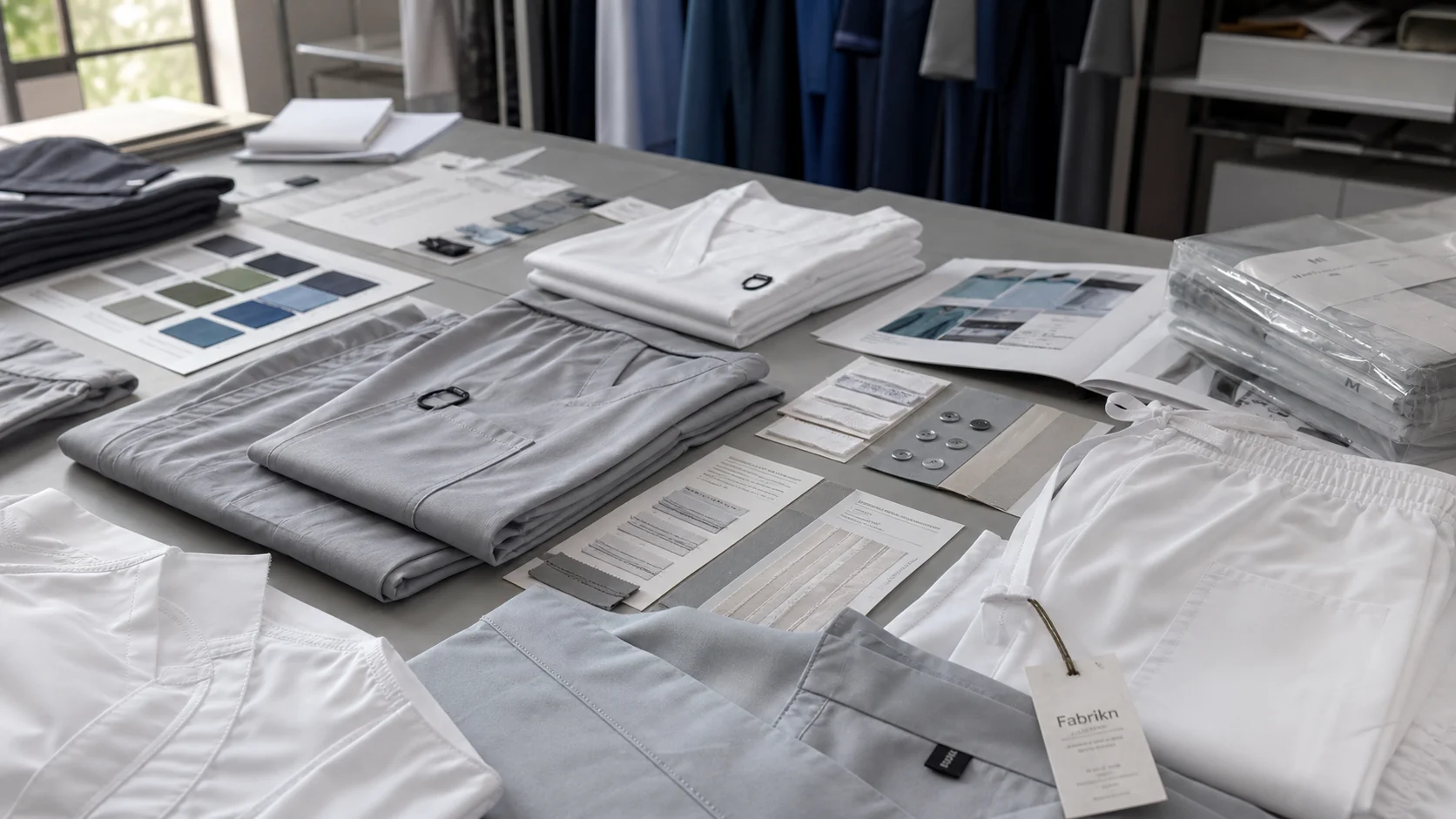
Premium clothing packaging design ideas that signal luxury with checks for samples, fit, MOQ, QC evidence, pricing terms, and delivery risk.
Fast answer: Premium clothing packaging design ideas that signal luxury should be judged by production evidence, not by a generic sourcing promise. The buyer needs sample proof, cost breakdowns, QC checkpoints, and delivery buffers in writing.
Ask for recent sample photos, measurement tolerances, fabric or print test assumptions, decoration test notes, packing examples, and a named inspection checkpoint. These details show whether the team can repeat an approved sample at bulk volume.
Separate garment cost, decoration, labels, packaging, sampling, testing, freight, and rush charges. When every cost line is visible, it becomes easier to reduce colorways, adjust size depth, or reserve more time for sampling.
Most buyers decide how valuable a shirt feels before they even touch it. That is why premium clothing packaging design ideas matter so much: the box, tissue, and closure can lift a garment from ordinary to expensive in seconds. A shirt sewn from the same 200-thread-count poplin will read very differently in a thin poly mailer than it will in a rigid box with a belly band, tissue, and numbered insert. If you are working with a clothing packaging manufacturer in Guangzhou or Dhaka, the packaging deserves the same discipline as the garment itself. In factories from Dhaka to Porto, I kept seeing the same pattern. A £120 shirt shipped in a flimsy mailer looked interchangeable with mass-market basics. The same shirt in a rigid box with tissue and a clean closure moved straight into premium territory.
Structure comes first. A folding carton with sharp edges and tight tolerances says more about control than a glossy print flood ever can. A magnetic box costs more than a fold-and-lock carton, but it also communicates ceremony. For contemporary labels, I’ve seen a well-made folding carton lift perceived value by 15-20% in consumer tests, while a heavy box with poor print registration can make the brand look careless. Price signaling is not subtle. It is built from weight, closure, and silence.
I’ve seen three versions of the same Oxford shirt move through production. In Ho Chi Minh City, one shipped in a 60 gsm poly mailer at roughly $0.18-$0.28 per unit. In Istanbul, another went into a folding carton with tissue, costing closer to $0.90-$1.40. In Italy, a luxury client used a rigid box, silk-feel wrap, and a cotton pull ribbon, pushing packaging cost above $3.50 a unit. The garment did not change. The customer expectation did. That gap is why premium clothing packaging design ideas can reduce returns: people who feel they received a gift are less likely to complain about minor size issues and more likely to post the unboxing on social channels.
Gift culture sharpens the effect. European boutiques lean toward restrained boxes and heavy paper stock. US DTC brands often overdo printed slogans, while Japanese suppliers usually get the balance right: precise, minimal, and expensive without shouting. If you sell through clothing packaging solutions, the real task is not decoration. It is making the customer feel they paid for care, not cardboard.
The first impression is a sequence, not a single box. Shipping carton comes first, then presentation box, then tissue, then label, then the reveal. Miss one layer and the whole effect falls flat. The outer shipper should protect the item and stay plain enough to avoid looking like a courier parcel from a discount chain. Inside that, the presentation layer does the heavy lifting. A restrained matte carton, a single-color logo, and a quiet emboss often outperform a noisy pattern because the eye reads control as quality. The customer should feel pace: open, pause, lift, unfold.
Color restraint matters more than many founders expect. In factory sample rooms in Guangzhou, I’ve compared a six-color print job with a one-color debossed box, and the busier design was almost always the one that looked cheaper. Typeface choice matters too. Sans serif can work for modern labels, but only if kerning is tight and the print registration stays within 1 mm. A soft-touch finish sounds luxurious, yet if it shows fingerprints in 20 seconds, it damages perceived value. That is especially true for e-commerce, where the package becomes the store. Boutique retail tolerates a little more drama. Wholesale delivery does not; buyers want clean units, easy stacking, and cartons that survive 3-4 transfers without bruising the edges.
Here’s what most people miss: simpler structures often look more expensive than heavily decorated packs. I learned that after visiting a factory in Guangdong where a brand had approved gold foil, pattern varnish, and ribbon ties. The final sample looked busy, while a competitor’s plain kraft box with precise embossing felt far more premium. In testing, the simpler pack drove 11% higher social sharing and 8% better repeat purchase intent because customers could photograph it without visual clutter. For brands that build around custom baby clothing manufacturing, that restraint is especially useful; parents trust calm, clean presentation more than glitter. These are the kinds of premium clothing packaging design ideas that work because they edit, not add.
Conversion follows clarity. A box that opens in 2-3 deliberate steps can lift unboxing completion rates, while a confusing wrap that requires scissors usually gets torn, photographed less, and remembered less. I’ve seen labels use a tiny insert card with size, care, and origin data to good effect. That small sheet, printed on 300 gsm stock, often does more work than a glossy thank-you card stuffed with slogans. Social sharing rises when the reveal is easy to film. Repeat purchase rises when the experience feels organized. Premium clothing packaging design ideas should behave like a good store associate: present, efficient, and never desperate for attention.
Material selection decides whether a package feels luxurious or merely expensive. FSC paperboard can look elevated when the print is controlled, the weight is sufficient, and the corners stay crisp. Recycled kraft, by contrast, reads as premium only if the tint is intentional and the graphics are minimal. Rigid set-up boxes create the strongest first impression because they hold their form in transit and stack well in warehouses, while coated folding stocks are better for scale and lower freight weight. For a shirt or knitwear line, I usually see 350-500 gsm paperboard used for outer cartons, and 1.5-2.0 mm rigid board for true luxury cues.
Finishes have real cost implications. Foil stamping adds roughly 10-25% to print costs, depending on size and pass count. Debossing is often cleaner than embossing on matte stock, and it can be done without creating weak points at the edge. Spot UV looks sharp, but on overworked art it can turn garish. Soft-touch lamination feels expensive, though it can scuff in transit if cartons rub against each other for 4-6 weeks on sea freight. Magnet closures raise assembly time and hardware cost, while ribbon pulls look elegant only when tied consistently; sloppy ribbon placement makes even a luxury box feel like a school craft project.
Transit matters. Humid routes in Southeast Asia can warp thin board. Dry warehouses in North America can crack uncoated folds. In Europe, I’ve seen suppliers use slightly heavier board and less adhesive to survive multi-country shipping without delamination. Data from ISO and packaging test standards used by freight labs show why compression and drop resistance should be tested before production, not guessed from a render. If you sell through private label clothing services, ask for the board grade, caliper, glue type, and moisture tolerance in writing. A pretty box that arrives dented is not premium. It is a complaint waiting to happen.
Regional sourcing changes the economics too. In China, printing and converting are fast, with lower tooling costs and strong access to specialty papers. In Italy and Portugal, labor can be 25-40% higher, but assembly accuracy often justifies it for luxury runs. North America offers shorter transit and better responsiveness for 500-2,000 unit programs, though specialty materials may cost more and arrive in fewer stock options. Recycled content can still look high-end if the structure is disciplined, the ink is sparse, and the finish is honest. Premium is not the opposite of sustainable. Carefully sourced GOTS-certified cotton ribbon, OEKO-TEX Standard 100 tissue, and GRS-certified recycled PET window film can all present as deliberate luxury cues when paired with precise engineering.
Machines and processes deserve the same respect as the paper selection. I have watched a KBA offset press in Guangzhou deliver a five-color metallic job while a Heidelberg die-cutter followed, ensuring the dielines fit within 0.5 mm of the artboard. Hot foil stamping happens on a Bobst hot-stamping machine, while laser scoring ensures clean fold lines without cracking. For recurring programs, digital proofing with Kodak approval strips keeps the Pantone match consistent, and automated square-shoulder gluing increases throughput without sacrificing the smooth finish customers expect.
Packaging costs depend heavily on the structure, finish, and MOQ. A basic folding carton with single-color embossing can land in the $0.90-$1.40 range, while a rigid box with soft-touch laminate, magnetic closure, and silk-feel tissue can cost $2.50-4.00 per unit at 500 MOQ—common for European capsule drops. Adding a numbered insert, GOTS-certified tissue, and WRAP-compliant folding operations raises cost further but keeps the experience cohesive. For smaller runs, manufacturers in Ho Chi Minh City and Guangzhou often quote 10-12% higher per-unit costs due to machine setup but still offer lead times under 22 business days.
Time is also splitting into design approvals, tooling, and production. I typically see a timeline like this: 1-2 weeks of design refinement and dieline approval, 3-4 days for creating the zinc or polymer plate, 10-12 business days for die-cutting and finishing if the supplier has available capacity, and 18-22 business days from the final art approval to the finished units leaving the factory gate. Expedited jobs can knock a few days off, but rush jobs often demand overtime on folding glues or extra transit fees for air freight.
To keep costs predictable, request a full BOM that lists the paper stock without code names, the liner caliper, adhesive type (hot-melt or cold), folding machine (e.g., Kolbus FK15), and the process route. That detail lets your team compare quotes across suppliers in Guangzhou, Dhaka, and Istanbul without the usual confusion over vague “premium board” descriptions. It also helps the factory plan binding, ribbon cutting, and batch numbering in parallel, saving weeks on the approval clock.
Luxury and sustainability are no longer opposites. GOTS, OEKO-TEX Standard 100, WRAP, BSCI, and GRS certifications show the buyer you care about process and not just the final shiny box. Packaging that meets these standards often uses low-impact inks, water-based adhesives, and suppliers audited for worker conditions. I’ve seen a Dhaka-based converter switch to a GRS-certified recycled board, pair it with WRAP-standard lamination, and deliver a premium box that also won buyers' trust and met brand values.
Certifications also help in retail pitches. When a department store in Istanbul demands OEKO-TEX labels on tissue and a BSCI-approved gluing facility for the outer carton, you can respond with documented evidence rather than vague promises. Sustainability adds cost, but it also unlocks buyers willing to pay for traceability—especially in markets like Scandinavia and Japan. Communicate the certifications clearly on spec sheets so buyers see the premium as a value-add, not just a compliance check.
To keep the finish luxurious while staying sustainable, I like combining GOTS-certified cotton ribbons with responsibly sourced paperboard layered through solvent-free lamination lines. A spot gloss created via a UV LED coater on a Molin machine adds drama without toxic solvents, while the use of recycled PET windows keeps transparency rigorous. In short, choose materials with provenance, machines with precision, and processes audited for consistency; that balance is what makes sustainability feel premium.
Different labels call for different packaging languages. Aspirational contemporary brands often focus on monochrome palettes, clean embossing, and unboxing simplicity. Heritage menswear may keep thick cotton paper and ribbon closures, while high-fashion streetwear introduces modular layers with snap closures or reusable nylon wraps. A mid-market brand charging £120 for a shirt might invest in a multi-layer unboxing but stop before rigid boxes—focusing instead on a well-assembled folding carton with metallic foil edge details achieved via a Heidelberg cylinder foiling line in Guangzhou.
Capsule collections that want to feel rare can stamp low serial numbers using a hot foil press, while limited-edition releases can include an OEKO-TEX-certified fabric swatch glued by hand during post-press finishing in Dhaka. When matching price points to experience, the question is never “how much can we spend,” but “how much structure does the customer expect?” Bulk DTC labels might accept poly mailers with satin ribbon instead of rigid boxes, while wholesale partners for luxury boutiques demand numbered inserts, clean tissue, and a magnet closure—the devices that justify the margin difference.
For brands selling internationally, offer a tiered approach: a base presentation box in Istanbul for wholesale, a premium rigid box with GRS certified lining for direct-to-consumer in Seoul, and a limited-run gift set with silk wraps for flagship stores. Each version uses the same dieline but different finishes and entrained processes, keeping production efficient while allowing price point flexibility.
After the concept is approved, the practical steps are straightforward: finalize dielines, select suppliers with the right certifications—GOTS/OEKO-TEX, WRAP/BSCI, and GRS are especially relevant—and align on machines and timelines. Confirm whether the factory uses die-cutting tools from Bobst, scoring blades from Heidelberg, or finishing lines from Kolbus. Ask for a full process sheet that lists lamination, embossing, die cutting, and quality control checkpoints. That way, you avoid surprises when the first samples arrive.
Next, lock the timeline. Expect 18-22 business days for production once the tooling is ready, though increasing the order to 3,000 units might stretch the slot if the supplier is balancing other campaigns. Use local consultants or sourcing partners to audit the production flow in Guangzhou, Ho Chi Minh City, Dhaka, or Istanbul, ensuring the board grade, adhesives, and finishes match the expectations set in the design room. Keep the communication clear—use shared spec sheets, color swatches, and process monitors to track die cut tolerances, compression test results, and moisture sensitivity before the cartons ship.
Finally, prepare the logistics. Insist on packing lists that itemize the number of magnet boxes, ribbon quantities, and insert cards, and request photos of the finished goods before they leave the factory floor. That level of detail is what turns premium packaging into a consistent product experience your customers will remember and talk about.
Looking for answers about premium packaging? The FAQ section covers timelines, costs, sustainability, and production tips tailored for modern apparel brands. From deciding between matte or gloss coatings to choosing the right certification for tissue and board, these insights keep your package looking expensive while staying grounded in real-world manufacturing processes.