
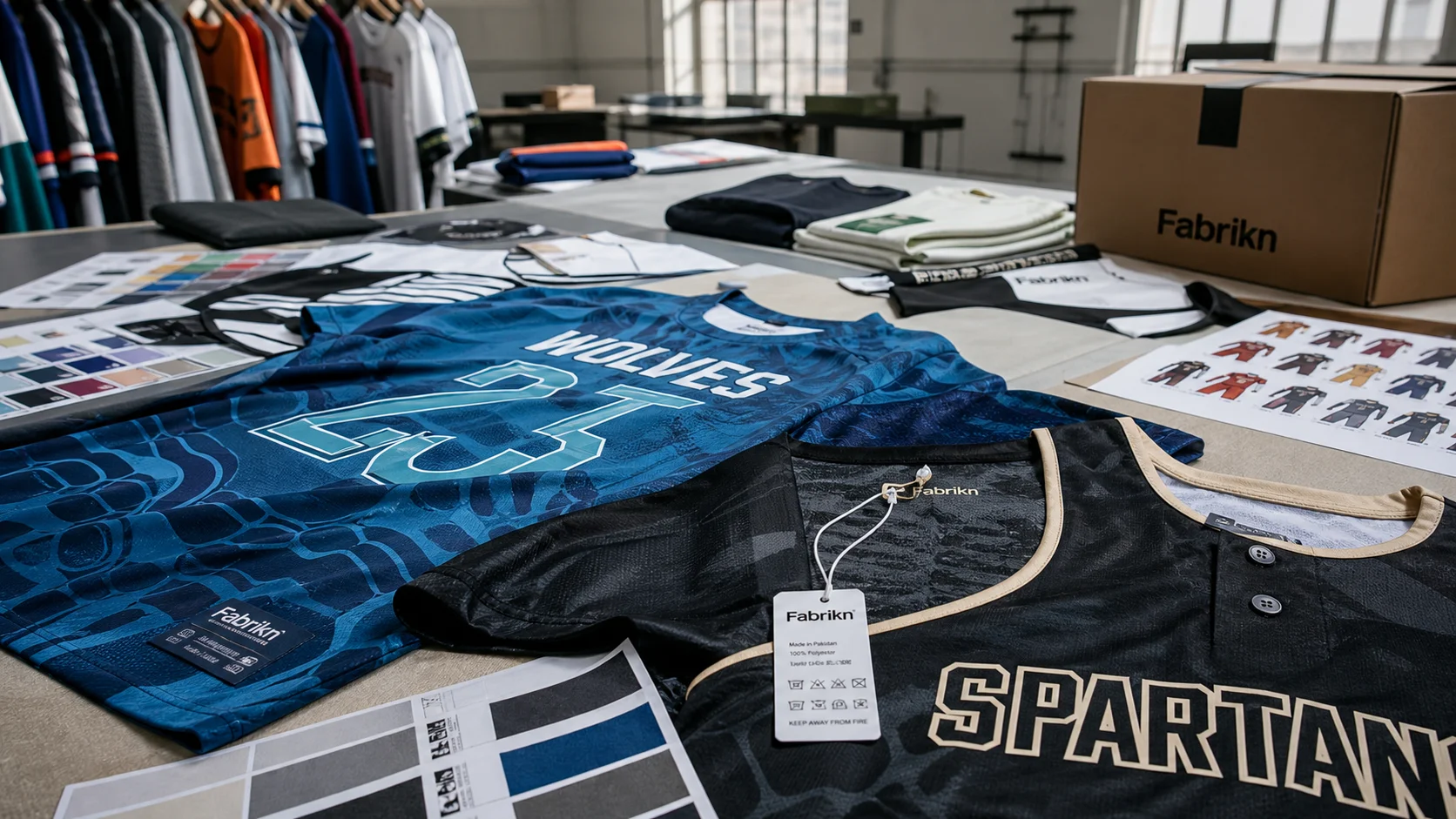
Private-Label Apparel Boxes with checks for samples, fit, MOQ, QC evidence, pricing terms, and delivery risk.
Fast answer: Private-Label Apparel Boxes: Board, Print, Inserts, and China Lead Time should be judged by production evidence, not by a generic sourcing promise. The buyer needs sample proof, cost breakdowns, QC checkpoints, and delivery buffers in writing.
Ask for recent sample photos, measurement tolerances, fabric or print test assumptions, decoration test notes, packing examples, and a named inspection checkpoint. These details show whether the team can repeat an approved sample at bulk volume.
Separate garment cost, decoration, labels, packaging, sampling, testing, freight, and rush charges. When every cost line is visible, it becomes easier to reduce colorways, adjust size depth, or reserve more time for sampling.
The cheapest box is the one that never turns into a headache. I have watched packaging eat 4% to 12% of landed cost on fashion orders, and on small runs with rigid packaging, printed inserts, and custom tissue, that number can creep past 15%. So private label apparel box packaging supplier china sourcing starts with waste, not graphics. In Dongguan and Ningbo, the real savings were never hiding in a fancier print pass. They came from lighter board, smaller blanks, and less rework.
In Guangzhou’s packaging corridor near Baiyun International, plants running Bobst Mastercut 1060 die cutters, Heidelberg Speedmaster 102 presses, and automatic folder-gluers pair hot-melt adhesives with water-based glue lines so 350-450 GSM SBS board behaves the same on 1,000-unit tests as it does on 20,000-unit pallet runs.
Packaging changes how a customer reads the garment. A $28 T-shirt in a flimsy mailer feels cheap. Put that same shirt in a tight sleeve pack with a clean insert and it suddenly reads like a $38 item. That matters in DTC and gifting. Returns move too. In my factory audits, brands using proper corrugate mailers and fitted inserts reported damage rates around 0.5% to 1.2%, while loosely packed folded cartons pushed that to 2% or more on longer transits. Once you count reshipment, refunds, and support time, the bill gets ugly. If your broader product strategy includes private label clothing, packaging belongs in the garment cost, not off to the side.
I have compared Chinese, Vietnamese, and domestic packaging quotes on identical specs: a 350 GSM folding carton with one-color print, matte aqueous coating, and a paper insert. China came back at $0.32-$0.58 per unit at 5,000 pieces. Vietnam landed at $0.45-$0.72, usually with MOQ 3,000 to 5,000 pieces. U.S. suppliers quoted $0.95-$1.60, though they could sometimes turn orders in 7-10 days instead of 25-35. Cost is only half the story. Cash tied up in inventory matters too, along with the headache of sitting on 20,000 branded cartons that no longer match next season’s colors.
Spend an extra $0.10-$0.18 on stronger board, better glue control, or a tighter insert, and total cost can still drop if damage falls by even 1%. On a 10,000-piece run, that has saved $600 to $1,400 once replacements and freight were counted. Cheap packaging looks efficient on a quote sheet. In the warehouse, it often behaves like a tax. For brand owners comparing suppliers, the right private label apparel box packaging supplier china will also explain how packaging decisions affect wholesale, bulk replenishment, and production stability. Even adhesives, whether hot-melt or water-based, add to the math but drop replacements when the carton keeps its corners.
A capable private label apparel box packaging supplier china does not just print pretty cartons. Rigid boxes, folding cartons, corrugated mailers, sleeve packs, and hybrid structures with inserts, windows, or magnetic closures should all be on the table. Format follows product. T-shirts usually travel best in folding cartons or mailers made from CCNB or kraft. Intimates want a slimmer sleeve pack with a clean face and anti-scuff finish. Heavier knitwear, especially French terry 320 GSM hoodies, does better in a sturdier corrugate mailer or rigid gift box that holds shape through 3-4 handling points. Outerwear needs larger footprints, stronger board, and better compression resistance.
Material choice matters more than most buyers expect. SBS gives a bright print surface for premium branding. CCNB is common for mid-market retail. Kraft signals a natural look and is often cheaper, though it can show scuffs faster. Corrugate brings shipping strength. Rigid board is for moments when the box itself has to carry part of the product story. On one project, a 400 GSM folding carton looked fine in the sample room, then collapsed at the corner after 6-hour humidity exposure. The fix was not a fancier design. It was a better board grade and a 1.5 mm insert.
Decoration options are plentiful, but they should serve the product, not inflate the bill. Embossing and debossing add texture. Foil stamping works well for logo marks, though too much foil can crack at the fold. Spot UV makes small logos pop on matte board. Magnetic closures show up in luxury sets, but they add cost and weight fast. Recycled inks, water-based coatings, and low-adhesive structures make more sense when the box has to travel far. For a brand selling in boutiques and wholesale, the sweet spot is often one clean folding carton with one premium detail, not five.
For DTC, I like mailers and sleeve packs because they ship compactly and fit 1,000 to 5,000 unit replenishment cycles. Retail wants cleaner faces, barcode space, and hangtag alignment. Wholesale needs sturdier stacks and less embossing, because cartons sit on pallets and in back rooms. If your garment program includes sewing, fit revisions, and packaging alignment in one calendar, work with cut and sew manufacturing partners that understand how the final fold, trim, and carton size interact.
On high-volume lines I have seen at least two Bobst die-cutters, a Heidelberg Speedmaster 102, and a Mitsubishi UV coater, plus servo-controlled folder gluers where operators check print color bars before the flexo plates hit the board; these machines can handle 8-up mailers or rigid trays with magnets, PLA-laminated surfaces, and GRS-certified recycled fiber inserts without missing the 3-4 mm tolerance, and the gluing robots lay down hot-melt adhesives in precise 0.2 mm beads so inserts stay locked in transport.
A real factory audit begins with paperwork, not promises. Ask for ISO 9001 if they claim process control, FSC if they sell paper as responsibly sourced, BSCI if social compliance matters to your retail partners, and GRS only where recycled-content traceability is documented. Data from ISO explains why process standards matter: a controlled line is easier to repeat across 5,000 or 50,000 units. If they handle recycled claims, request chain-of-custody records. A logo on a sales deck is not proof. For any textile-lipped packaging, I also want to see GOTS or OEKO-TEX Standard 100 certificates, and I confirm WRAP and BSCI reporting when the supplier touts ethical labor.
Then walk the line. I look for die-cutting accuracy, lamination consistency, color bars at print, and a QC flow that actually stops defects before packing. Good factories can show sampling in 2-5 days for simple mailers and 7-12 days for rigid work. They should also explain how they manage board weight, from 250 GSM to 450 GSM, and how they prevent curl, bowing, or delamination. If the salesperson cannot tell you whether the plant uses automatic folder-gluers or manual assembly for the final glue tab, that is a warning sign. Usually it means the factory is smaller than the presentation suggests.
Sample approval should happen in stages. First comes a dieline or flat proof. Then a white dummy. Then a pre-production sample with final art, final board, final coating, and final insert. A proper pre-production sample includes Pantone references, barcode placement, glue positions, fold direction, and carton compression notes. I want to see 3 to 5 units, not one. One sample can hide a defect. Five tell the truth.
Red flags show up fast on the floor: inconsistent board weight across stacks, print colors shifting from sample to sample, vague MOQ answers like “depends,” and traceability that ends at the sales office rather than the production line. If a supplier says 1,000 is fine but later admits the true run minimum is 3,000, your launch calendar is already at risk. A trustworthy factory says no early, then saves you money by being honest. For sourcing teams comparing options, a true private label apparel box packaging supplier china factory should be able to discuss manufacturer capacity, factory layout, and quality control without hiding behind vague claims.
Pricing changes sharply with order size, and the jumps are not linear. On a basic folding carton in 350 GSM board with one-color print, I have seen Chinese quotes land around $0.28-$0.45 at 1,000 units, $0.16-$0.30 at 5,000 units, and $0.10-$0.22 at 20,000 units. Add embossing, foil, or a custom insert and the numbers rise by $0.05-$0.35 depending on the decoration. A rigid box with magnetic closure can start near $1.20 at 5,000 units, but a 500-unit trial for a velvet-lined, linen-embossed case with spot UV, foil stamping, and a magnetic tab runs $2.50-4.00 per unit because the shared makeready for the Heidelberg press, foil dies, and hand-glued insert all amortize over fewer pieces. Hot-melt adhesives that lock in the magnet and water-based adhesives that laminate the velvet shell add another $0.05 per unit yet prevent the kind of edge lift that ruins premium sets.
Even with those premiums, the delta between $0.18 and $0.60 is mostly about board grade, finishes, and how many workers are on the line. When I calculate landed cost, I treat the $0.05 to $0.12 in board waste, glue, and trim as part of the per-unit price because they rarely scale linearly; that way the quote reflects the full process, from Bobst die cutting to the final hand-folded insert. Chinese converters, and the few partners I visit in Istanbul when we need a localized touch for European retail, all understand that constant shortages in kraft or SBS drive the per-unit math faster than new artwork does.
Once the dieline, art, and board are locked, a dependable private label apparel box packaging supplier china will quote 18-22 business days for production on a typical 5,000-piece run out of Guangzhou or Ho Chi Minh City when the plant is running two shifts. That window includes printing (often flexo for the art and sometimes UV or aqueous coating), die cutting, lamination, gluing, and a final QC pack. Time is booked by plate, so you still need 3-4 days for proofing and an additional 2-3 days if a color shift requires a new plate.
Samples come faster: expect 2-5 days for a mailer and 7-12 days for rigid work, even from the same production line. The key is to lock the ink set, adhesives, and coating process before the die-cutter starts. If a supplier needs to switch from hot-melt adhesives to water-based glue because of humidity in the warehouse, that change will ripple into lead time, so keep an eye on seasonal shifts.
When international freight is added, plan for another 8-10 days to reach the West Coast and 12-16 days for Europe unless you use air freight. Consolidating finished cartons near the south China ports in Guangzhou and loading them with textiles made in Ho Chi Minh City can shave a day or two on drayage, but it’s still smart to schedule buffer weeks on your calendar for customs or container hiccups.
Start by matching the claim to the certification. GOTS and OEKO-TEX Standard 100 prove fabric linings or ribbon details meet chemical limits, WRAP and BSCI show social compliance on the factory floor, and GRS tracks recycled fibers or board. If a supplier brands itself “eco” but can’t produce the audit for any of these programs, treat that as a red flag. Certifications should go beyond the sales deck and tie to the specific line you are buying.
Material choices matter too. Opt for GRS-certified recycled board when your outer carton has a high recycled-content requirement, and specify water-based adhesives and inks to reduce VOCs. Some converters even stock PLA-coated overlays or FSC-certified kraft for the showcase boxes that land in boutiques. Ask for data sheets that list the exact boards (for example, 350 GSM SBS with 30% post-consumer recycled pulp) and the compliant adhesives they use.
Trace the chain: the finish you sampled in the lab needs to match what leaves the plant. A supplier can print a GOTS label, but without the mill certificate, the claim is meaningless. I demand photos of the board roll with the lot number, the foil plate with the serial, and the WRAP certificates that line up with the shift that runs the job.
Finally, pick partners who operate in multiple jurisdictions, so you have visibility. A facility with a WRAP certification in Guangzhou and a BSCI partnership near Ho Chi Minh City means you can compare the two lines and keep sustainability data in sync with quality control.
Once you have a shortlist, circle back with manufacturers in Guangzhou, ask for their factory layout, and request a short video of the die-cut to glue line so you see the machines and operators. If your program also touches woven trims or labels from Dhaka, align packaging and trim deliveries so you are not chasing two docks. Decide whether you want the packaging to come from a shared facility or from a separate finishing house near Istanbul for European launches that need customs clearance on the same truck.
Set up at least one joint pre-production meeting, either virtually or on-site, where you cover adhesives (hot melt or water-based), folding tab orientation, barcode placement, and pallet configuration. Ask the suppliers to send you inspection reports that include a checklist of processes—flexographic printing, lamination, die cutting, gluing—and the responsible machine (Bobst, Heidelberg, Mitsubishi). Only then sign off on the final purchase order.
Plan for 18-22 business days for most production runs once art and board are approved, with 7-12 days for rigid samples. Factor in 8-16 additional days for ocean freight depending on destination.
Ask for GOTS or OEKO-TEX Standard 100 for textile linings, WRAP or BSCI for labor compliance, and GRS for recycled-content claims, plus ISO 9001 for process control. Don’t rely on logos; request the underlying certificates tied to the actual production line.
Guangzhou is strong on automation and fast turnarounds, but you might keep woven accessories from Dhaka on the same schedule and finalize European runs near Istanbul for quicker customs. The key is shared timelines and consistent adhesives/finishing specifications across both.