
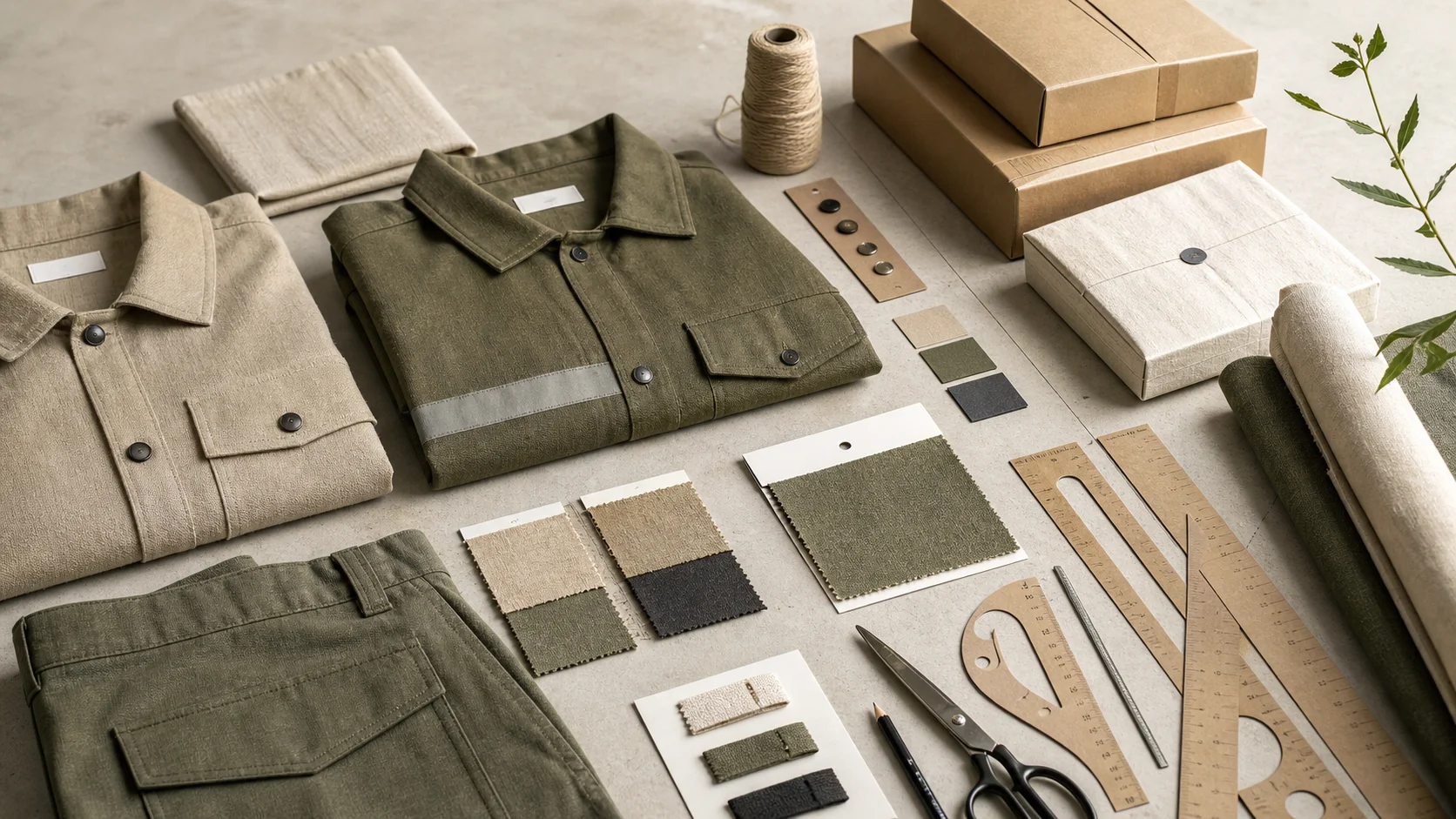
Private Label Brand Positioning for Clothing compared by sample evidence, fabric or trim specs, MOQ, AQL terms, cost lines, delivery timing, and rework...
Fast answer: Private Label Brand Positioning for Clothing: Material, Print, MOQ, and QC Terms should be judged by production evidence, not by a generic sourcing promise. The buyer needs sample proof, cost breakdowns, QC checkpoints, and delivery buffers in writing.
Ask for recent sample photos, measurement tolerances, fabric or print test assumptions, decoration test notes, packing examples, and a named inspection checkpoint. These details show whether the team can repeat an approved sample at bulk volume.
Separate garment cost, decoration, labels, packaging, sampling, testing, freight, and rush charges. Clear cost lines make it easier to reduce colorways, adjust size depth, or reserve more time for sampling.
Private label clothing brands face one of the most competitive landscapes in commerce. Today, customers can choose from countless apparel labels, fast-fashion giants, niche direct-to-consumer startups, and established heritage brands. In this crowded market, success rarely comes from simply putting a logo on a product. It comes from positioning.
Private label brand positioning for clothing is the strategic process of defining how your brand should be perceived by your target audience and then making sure every product, message, and customer touchpoint reinforces that perception. Whether you are launching a women’s activewear line, premium basics, workwear, streetwear, or children’s apparel, your positioning determines why customers should choose you instead of the next brand on the shelf.
For private label businesses, positioning is especially important because you are often starting with similar product categories, shared fabrics, and competitive price points. That means your difference must be communicated through brand identity, product quality, niche focus, and customer experience. In this guide, we will explain how to build a strong private label clothing position that helps your brand stand out, attract the right buyers, and grow with clarity.
Brand positioning is the place your clothing brand occupies in the mind of the customer. It answers questions like: What does the brand stand for? Who is it for? Why is it better or more relevant than alternatives?
In private label clothing, positioning is the combination of product attributes, brand story, price point, design direction, and audience promise that defines your brand’s identity. It is not just your logo or your tag. It is the entire experience of how customers understand and value your brand.
A strong positioning strategy can help a private label brand become known as:
The key is specificity. Broad statements like “high-quality clothing for everyone” do not create a memorable market position. A brand becomes stronger when it clearly owns a niche, a benefit, or a customer identity.
Clothing is a highly visual and emotionally driven category. Customers often buy based on identity, lifestyle, comfort, status, and trust. Because of that, product differentiation alone is not enough. Many apparel items may use similar fabrics, cuts, or silhouettes, so positioning becomes the main way to influence perception.
Here is why positioning matters so much for private label brands:
In short, positioning helps you compete on meaning rather than just on price. That is critical in apparel, where margins can be tight and customer attention is limited.
Successful clothing brands usually build positioning from several connected elements. When these elements align, the brand feels clear and credible. When they conflict, customers become uncertain and sales suffer.
Your audience is the foundation of positioning. A private label brand should know exactly who it serves. Consider demographics, lifestyle, income level, shopping habits, and style preferences. For example, “women aged 25–35” is broad, but “urban professionals looking for versatile work-to-weekend outfits” is more actionable.
What need does your brand solve? Some clothing brands solve practical issues such as fit, durability, or comfort. Others serve emotional needs such as confidence, self-expression, or belonging. The stronger the problem-solution match, the stronger the positioning.
Even in private label manufacturing, product choices matter. Fabric quality, fit, construction, sizing consistency, packaging, and finishing can all differentiate your brand. You may not invent a new garment category, but you can create a better experience within an existing one.
Your brand should feel like a person. Is it modern and sleek? Bold and energetic? Relaxed and natural? Premium and refined? Brand personality helps customers connect emotionally and makes your content and design more coherent.
Your value proposition explains why customers should buy from you. It may be based on quality, sustainability, style, affordability, convenience, or specialization. A strong value proposition is simple, relevant, and believable.
In clothing, visual identity matters enormously. Color palettes, typography, photography style, garment labeling, hang tags, and packaging all communicate positioning. A luxury brand will look very different from a playful youth-focused label.
Customers should experience the same brand promise on your website, product pages, social media, packaging, and customer service. Consistency builds trust and makes your positioning easier to remember.
If you are building a private label brand from scratch, positioning should be one of the first strategic exercises you complete. Here is a practical process to help define it.
Study your competitors and identify what they are doing well, where they are weak, and how they position themselves. Look at price points, product assortments, messaging, visuals, and customer reviews. Pay attention to gaps in the market. Those gaps often reveal opportunities for your brand.
Create a detailed customer profile. Think beyond age and gender. Consider lifestyle, purchase motivation, fashion preferences, pain points, and spending behavior. The more precise your audience, the easier it becomes to position your brand effectively.
Ask what your brand can own. It might be an elegant fit, sustainable materials, flattering sizing, minimalist design, travel-friendly pieces, or strong B2B supply reliability. Your unique angle should be realistic and sustainable, not just trendy.
A positioning statement is an internal guide that helps align the brand. A simple formula is:
For [target customer], [brand name] is the [category] that delivers [key benefit] because [reason to believe].
Example: For modern professionals, our brand is the premium private label basics line that delivers everyday versatility because of its elevated fabrics, reliable fit, and clean design.
Once your position is clear, every product decision should support it. If your brand is premium, your fabrics, trims, packaging, and photography should reflect quality. If your brand is value-driven, your product assortment should emphasize practicality and accessibility. Good positioning is visible in the product itself.
Launch small, test customer response, and refine based on what resonates. Positioning is not static. As your audience grows and the market shifts, you may adjust your message or refine your niche, but the brand should remain recognizable.
Many private label clothing brands struggle because their positioning is too vague, too broad, or inconsistent. Avoid these common mistakes:
The goal is not to say more. It is to say the right thing clearly and back it up with a product experience customers can trust.
There are many ways to position a private label clothing brand. The best strategy depends on your audience and business model. Here are a few examples:
This positioning focuses on better fabrics, refined fit, and minimal design. It appeals to customers who want versatile wardrobe staples that feel elevated and last longer than fast-fashion alternatives.
This strategy targets buyers who care about environmental impact, responsible sourcing, and transparency. It works best when sustainability is backed by real materials, certifications, or manufacturing practices.
This position is ideal for brands that move quickly with seasonal trends and offer affordable style options. Success depends on agile sourcing, fast product development, and strong visual merchandising.
Brands in athleticwear, outdoor apparel, or workwear can position around performance, durability, technical materials, and comfort. This is especially effective when the product is designed to solve practical problems.
A luxury position requires exceptional attention to materials, finishing, packaging, and storytelling. Customers expect exclusivity, superior details, and a polished brand experience.
For a private label brand, manufacturing is not just a production step. It is a strategic partner in delivering your brand promise. The right manufacturer helps you translate positioning into actual garments.
At Fabrikn, we understand that brand positioning starts with product execution. If your strategy calls for premium quality, consistent sizing, or specialized construction, your supplier must be able to deliver with precision. If you are building a niche collection, flexibility in sampling, fabric selection, and custom development is essential.
Manufacturing support can influence your positioning in several ways:
If you are still defining your production strategy, you can explore our services to see how we support private label clothing development from concept to finished product. You can also learn more about our team and approach on our about us page.
Great positioning is not just a brand exercise. It should guide your everyday decisions. When you are clear about what your brand stands for, product development becomes easier and marketing becomes more focused.
Your positioning should influence fabric choice, silhouette, color palette, packaging, price point, and assortment depth. For example, a minimalist premium brand may focus on neutral tones, timeless fits, and high-quality cotton. A youthful trend brand may prioritize bold colors, fast refresh cycles, and statement pieces.
Your homepage, product descriptions, and category pages should immediately communicate who the brand is for and what makes it distinct. Avoid generic language. Use specific benefits that match your positioning.
Images should match the lifestyle of your target customer. A performance brand may use action shots and technical close-ups. A luxury brand may use clean studio settings and elevated styling. Content should reinforce the same identity.
Use social channels to show proof of your brand promise. Share product details, behind-the-scenes manufacturing insights, customer stories, and styling ideas that support your core message. Social media should strengthen perception, not dilute it.
Your positioning also affects where and how you sell. A premium brand may work best through boutique retailers, a direct-to-consumer website, or selective partnerships. A value-driven label may benefit from broader distribution. Your channels should fit your image.
Search visibility can make a major difference for new and growing private label brands. SEO helps your ideal customers discover you when they are actively searching for apparel solutions.
To improve SEO while supporting brand positioning, focus on these principles:
SEO should not sound robotic. It should make your brand easier to understand. In apparel, the brands that rank well often do so because they answer real customer questions clearly and consistently.
Private label brand positioning for clothing is one of the most important strategic tools you have. In a market filled with similar products, positioning gives your brand meaning, direction, and market relevance. It helps you define who you serve, what you stand for, why customers should trust you, and how your clothing line should feel in the marketplace.
The strongest private label brands do not try to be everything to everyone. They choose a clear audience, build a believable promise, and support that promise with product quality, visual identity, and consistent messaging. When your positioning is strong, every part of the business becomes easier: design, sourcing, marketing, and sales all start moving in the same direction.
If you are ready to build a private label clothing brand with a clearer identity and stronger market presence, the right manufacturing partner can help turn that vision into reality. At Fabrikn, we support brands with thoughtful development, reliable production, and a focus on quality that aligns with your positioning goals. Start the conversation through our contact us page.
Get a free quote from Fabrikn — your trusted B2B clothing manufacturer with 10+ years of experience. MOQ as low as 200 pieces.
Get a Free Quote →It is the strategic process of defining how your clothing brand should be perceived by customers. It includes your target audience, value proposition, product quality, brand personality, and visual identity.
Because many apparel products are similar, positioning helps your brand stand out, attract the right customers, support pricing, and build trust in a crowded market.
Start by researching competitors, identifying your ideal customer, and defining a unique angle that your brand can own. Then align your products and messaging with that strategy.
Yes. A private label brand can position itself as premium through better materials, refined fit, elevated packaging, strong branding, and a consistent customer experience.
One of the biggest mistakes is trying to appeal to everyone. Brands become stronger when they focus on a specific audience and a clear value proposition.
Manufacturing affects fabric quality, fit, finishing, consistency, and customization. These factors directly influence how customers perceive your brand.