
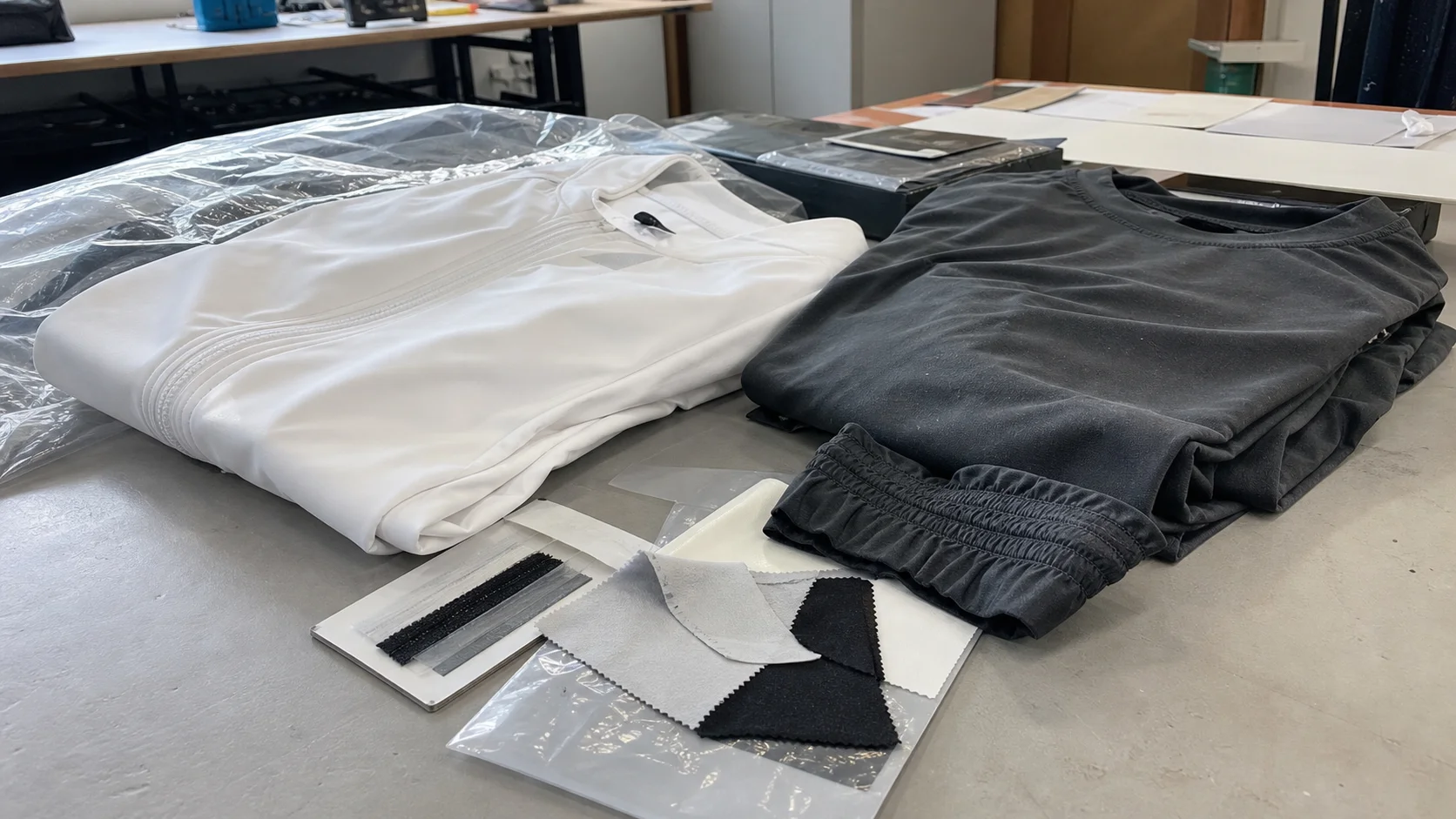
A premium hospitality-focused outline for private label chef coats with embroidery, covering fit, fabrics, logo placement, production details, and brand presentation.
Private Label Chef Coats with Embroidery - Fabrikn production reference
Private label chef coats with embroidery are no longer a niche uniform purchase. For premium hospitality brands, they sit at the intersection of image, staff comfort, brand consistency, and daily operational durability. A chef coat is one of the most visible garments in a restaurant, hotel kitchen, resort dining operation, culinary school, or catering group. When the garment is branded properly, it reinforces quality before a plate even leaves the pass.
In practical sourcing terms, premium hospitality buyers are not just ordering white jackets with a logo. They are specifying garment identity. That can include custom fabric weight, silhouette, closure style, cuff finish, vent placement, apron loop details, embroidery thread colors, name personalization, and packaging standards for multi-location rollouts.
The category also overlaps with teamwear and performance workwear. Kitchens are hot, fast, and physically demanding. A chef coat that looks refined in brand photography but fails after repeated industrial laundering will create replacement costs and staff frustration. On the other hand, a purely utilitarian coat with poor fit or crude embroidery can weaken the premium impression a hospitality brand has invested heavily to build.
That is why private label development matters. It gives hospitality groups control over the details that standard stock uniforms often miss. Buyers can align the garment with service level, cuisine concept, front-of-house visibility, and local laundering requirements. For sourcing teams evaluating manufacturers, the real question is not whether private label chef coats are worth doing. It is whether the supplier can execute embroidery, fit consistency, and production discipline at a level suitable for a premium brand.
Brands exploring custom teamwear programs often begin by reviewing a supplier’s broader capabilities in pattern development, sourcing, and production management. A useful starting point is a general manufacturing overview such as https://fabrikn.com/services/, especially when comparing stock uniform vendors against true private label partners.
Private label chef coats with embroidery typically mean the garment is produced under the buyer’s brand identity rather than sold as a blank or catalog item. That distinction affects nearly every stage of development. The buyer usually controls labels, care tags, artwork, fit direction, materials, and packaging presentation. In some cases, the base pattern may start from an existing block. In other programs, the garment is built from a fully custom tech pack.
Embroidery adds another layer of complexity. Hospitality brands often request left chest logos, sleeve insignia, back neck branding, name titles, or rank identification such as Executive Chef, Sous Chef, Pastry Chef, or Culinary Director. Each position must be tested against seam lines, plackets, facing construction, pocket placement, and fabric stability.
There is also a commercial distinction between small-batch personalization and scalable production. A one-location restaurant may want mixed names on 50 coats. A hotel group may want standard embroidered logos during bulk production, then local name additions in regional batches. A manufacturer should clarify early whether embroidery will be done inline during garment production or as a post-production value-added service. That decision affects lead time, cost, replacement flexibility, and error risk.
For premium buyers, private label also means consistency over time. If the first order performs well, repeatability becomes the next challenge. Fabric lot continuity, logo thread matching, shrinkage control, white shade consistency, and trim availability all matter more than they do in a one-off promotional uniform order.
Embroidery on chef coats is not just decoration. It is one of the clearest ways to turn a functional garment into a branded asset. In premium hospitality, embroidered identity signals permanence and investment. Printed logos can work on some teamwear categories, but chef coats usually benefit from the structure and polish of embroidery, especially in open-kitchen restaurants, luxury hotels, chef’s table concepts, and culinary event operations.
Buyers should still make careful choices. Dense embroidery can look upscale, but overbuilt logos may create stiffness on the chest panel or puckering on lightweight fabric. Metallic thread may suit ceremonial or executive garments, but it can reduce wash durability and create unwanted abrasion. Tone-on-tone embroidery often gives a refined effect for luxury concepts, while contrast embroidery is better for visibility and logo recognition.
Common branding placements include:
For premium hospitality brands, the best result is usually disciplined restraint. One strong logo placement and one optional personalization area often outperform coats overloaded with emblems. In procurement terms, fewer placements also reduce embroidery cost, reject risk, and approval delays.
The fabric decision is where many chef coat programs are won or lost. Premium appearance must coexist with heat management, stain exposure, frequent washing, and long shifts. Most private label chef coats are developed in cotton-rich or poly-cotton woven constructions, though stretch blends are gaining traction for modern hospitality operations that want more mobility.
Typical fabric options include:
Common weight ranges fall around 160 to 240 GSM depending on silhouette, market level, and climate. Lighter fabrics can improve comfort in hot kitchens but may become too transparent in white garments or show embroidery backing through the shell. Heavier fabrics present a more formal drape and hide construction better, though they can feel restrictive in high-heat environments.
Construction details deserve the same scrutiny as fabric. Double-breasted fronts remain common for classic chef styling and practical stain cover-up. Hidden snap closures are favored when buyers want faster dressing and a clean appearance. Knot buttons support a traditional luxury image but may not be ideal for all wash programs. French cuffs, turn-back cuffs, thermometer pockets, underarm eyelets, side slits, and back yokes all affect comfort and use.
Buyers sourcing for premium hospitality should ask for clear trim specifications:
If the garment is intended for industrial laundry, that requirement must be communicated from the beginning. A chef coat built for gentle home laundering is not automatically suitable for high-temperature, high-chemistry wash systems. White retention, seam torque, collar edge wear, and puckering around embroidery become much more visible under heavy laundry conditions.
Embroidery quality often separates premium-looking chef coats from average uniform programs. Buyers should expect the supplier to review artwork for stitch feasibility rather than simply accepting a logo file and proceeding. Small lettering, fine outlines, gradients, and very dense fills can all produce disappointing results on woven chef coat fabrics.
Key embroidery variables include stitch count, backing type, thread sheen, needle penetration, and placement stability. Left chest logos are usually straightforward, but areas near princess seams, front facings, pockets, or mesh inserts can distort the design. A good development process includes strike-offs or embroidery swatches before final sample approval.
Typical embroidery considerations for chef coats include:
There are tradeoffs. High-density embroidery gives a richer look but can add stiffness and trap heat. Fine minimalist logos can look elegant but may lose legibility if scaled too small. Sleeve embroidery adds visual interest yet increases sewing handling and alignment risk. For white chef coats, dark backing show-through can also become an issue if not tested properly.
Purchasing judgment: for premium hospitality programs, prioritize embroidery clarity and wash durability over excessive stitch complexity. A logo that remains crisp after 50 wash cycles is usually more valuable than a highly detailed design that looks impressive only at first delivery.
Fit is one of the most underestimated parts of chef coat sourcing. Premium brands often focus on logo execution and fabric hand feel, yet staff acceptance depends heavily on comfort and movement. Kitchen teams bend, reach, lift, and work in heat. A coat that pulls across the upper back or tightens at the bicep will quickly be rejected by wearers, even if the garment looks polished on a hanger.
Private label programs usually work best when the buyer defines role-based fit needs. Executive chefs in guest-visible spaces may prefer a tailored silhouette with cleaner waist shaping. Line cooks may need more ease through the shoulder and sleeve. Pastry teams often work in cooler sections and may tolerate heavier or more structured fabrics. Female-specific fits or inclusive unisex blocks should be decided early rather than retrofitted after sample stage.
Core sizing decisions include:
For larger hospitality groups, size-set sampling is worth the time and cost. A single pre-production sample in medium size does not reveal grading problems. Sleeve length jumps, chest ease balance, collar comfort, and hem shape can all break down across extended size runs if not tested in advance.
A disciplined sample process reduces expensive mistakes later. Private label chef coats with embroidery usually move through several approval stages, though the exact naming differs by supplier.
A typical sequence looks like this:
Buyers should avoid compressing approvals when embroidery is involved. Artwork that looks acceptable in digital renderings can fail once stitched on actual shell fabric. White garments are especially unforgiving. Needle marks, hooping impressions, puckering, or misalignment can become obvious under hospitality lighting and photography.
Clear documentation helps. Approved logo dimensions, exact placement from HPS or center front, thread color references, backing instructions, and allowable tolerances should all be written into the production file. Verbal approvals create unnecessary risk, especially on repeat orders handled by different production teams.
MOQ for private label chef coats with embroidery varies widely depending on customization level, fabric sourcing, and the number of SKUs. As a general market guide, simple programs based on available fabrics may start around 100 to 200 pieces per style-color. Fully custom developments with special fabrics, broad size splits, or multiple embroidery placements often land closer to 300 to 500 pieces per style. Personalized name embroidery can complicate MOQ logic because the total order may be sufficient while individual name counts are extremely low.
Buyers should ask whether MOQ applies by:
Lead times are equally dependent on the development route. A repeat order using approved fabric and standard logo placement may move much faster than a first-time custom program. Typical planning ranges often look like this:
Stage Typical Range Main Dependencies Development sampling 2 to 6 weeks Tech pack clarity, fabric availability, embroidery strike-offs Fabric and trim booking 1 to 4 weeks Stock vs custom materials, color approvals Bulk production 4 to 8 weeks Order size, factory capacity, complexity of construction Embroidery and finishing 1 to 3 weeks Placement count, personalization, QC rework Shipping Varies Mode of transport, customs, destination timingThese are planning ranges, not guarantees. Peak season congestion, imported trim delays, holiday shutdowns, and approval lag can extend timelines. Premium hospitality buyers opening new properties or launching seasonal concepts should build buffer time into the calendar rather than scheduling uniforms to arrive days before opening.
Chef coats may look simple, but production defects are common when quality control is loose. Embroidered garments introduce extra handling steps, and white or light-colored fabrics make flaws easier to spot. Inspection should focus on both garment construction and embellishment execution.
Frequent risk points include:
Inspection is not only about final random checks. Inline inspection during cutting, sewing, and embroidery can catch systematic faults earlier. For premium teamwear programs, it is sensible to confirm acceptable quality limits in advance and identify which defects are critical. Wrong logo thread color, incorrect title embroidery, or visible oil stains on white coats should usually be treated as major issues, not cosmetic minor faults.
Purchasing judgment: if the supplier cannot explain how embroidery quality is controlled before final packing, the program carries avoidable replacement risk. Reworking branded chef coats after delivery is usually slow and expensive.
Hospitality procurement teams often balance brand expectations with operational realities. A strong buying brief helps keep the project focused and comparable across suppliers.
Before requesting quotations, confirm the following:
A sourcing brief this specific reduces quotation noise. It also reveals which suppliers are truly equipped for private label development versus those mainly reselling standard uniforms with light decoration.
For premium hospitality brands, the right supplier should be evaluated on execution discipline more than broad marketing claims. The key questions are practical. Can the partner handle fabric sourcing that fits your care environment? Can they manage repeat embroidery quality? Can they support size consistency and replenishment planning? Can they communicate clearly during approvals and production?
Useful signs of capability include structured development processes, transparent specification handling, realistic MOQ guidance, and willingness to discuss risk points before sampling. Buyers looking into a partner’s background may also review company information pages such as https://fabrikn.com/about-us/ and then move to direct project discussion through https://fabrikn.com/contact-us/ when the brief is ready.
There is no single best chef coat specification for every hospitality brand. Luxury resorts, urban fine dining groups, and modern bakery concepts all have different operational needs. The best manufacturing partner is the one that can translate those needs into clear, repeatable product standards without overselling what the factory can realistically deliver.
That is the central tradeoff in private label sourcing. Customization adds value, but every extra fabric feature, trim variation, and embroidery placement increases complexity. Premium results come from selective customization, controlled approvals, and manufacturing discipline. For hospitality brands that want chef uniforms to function as a true extension of the guest experience, private label chef coats with embroidery remain one of the strongest categories to invest in.
Get a free quote from Fabrikn — your trusted B2B clothing manufacturer with 10+ years of experience. MOQ as low as 200 pieces.
Get a Free Quote →Typical MOQ often starts around 100 to 200 pieces for relatively simple programs using available fabrics. More customized developments commonly require 300 to 500 pieces per style, especially when custom fabric, multiple logo placements, or broad size ranges are involved.
There is no single best option. Cotton-rich fabrics usually offer better hand feel and breathability, while polyester-cotton blends often improve wrinkle resistance and durability. The right choice depends on the kitchen environment, laundering method, and brand positioning.
For most premium hospitality programs, embroidery is usually the stronger choice because it looks more refined and tends to hold up better visually over time. The logo still needs to be engineered carefully to avoid puckering, stiffness, or poor readability.
First-time custom orders often require several weeks for development and approvals, followed by 4 to 8 weeks for production depending on volume and complexity. Repeat orders can be faster if fabric, trims, and artwork are already approved.
Yes, but personalization adds handling steps and should be planned early. Buyers should confirm file format, text style, placement, spelling approval process, and whether names will be embroidered during bulk production or added later in smaller batches.
The most common issues include logo puckering, placement inconsistency, white fabric staining, thread trimming problems, and size variation. Industrial laundry compatibility is another risk if the garment was not developed for that care environment from the start.
Stock uniforms can work for basic needs or urgent launches. Private label is usually the better route when the brand wants stronger identity, better fit control, specific fabric performance, and more consistent presentation across locations.