
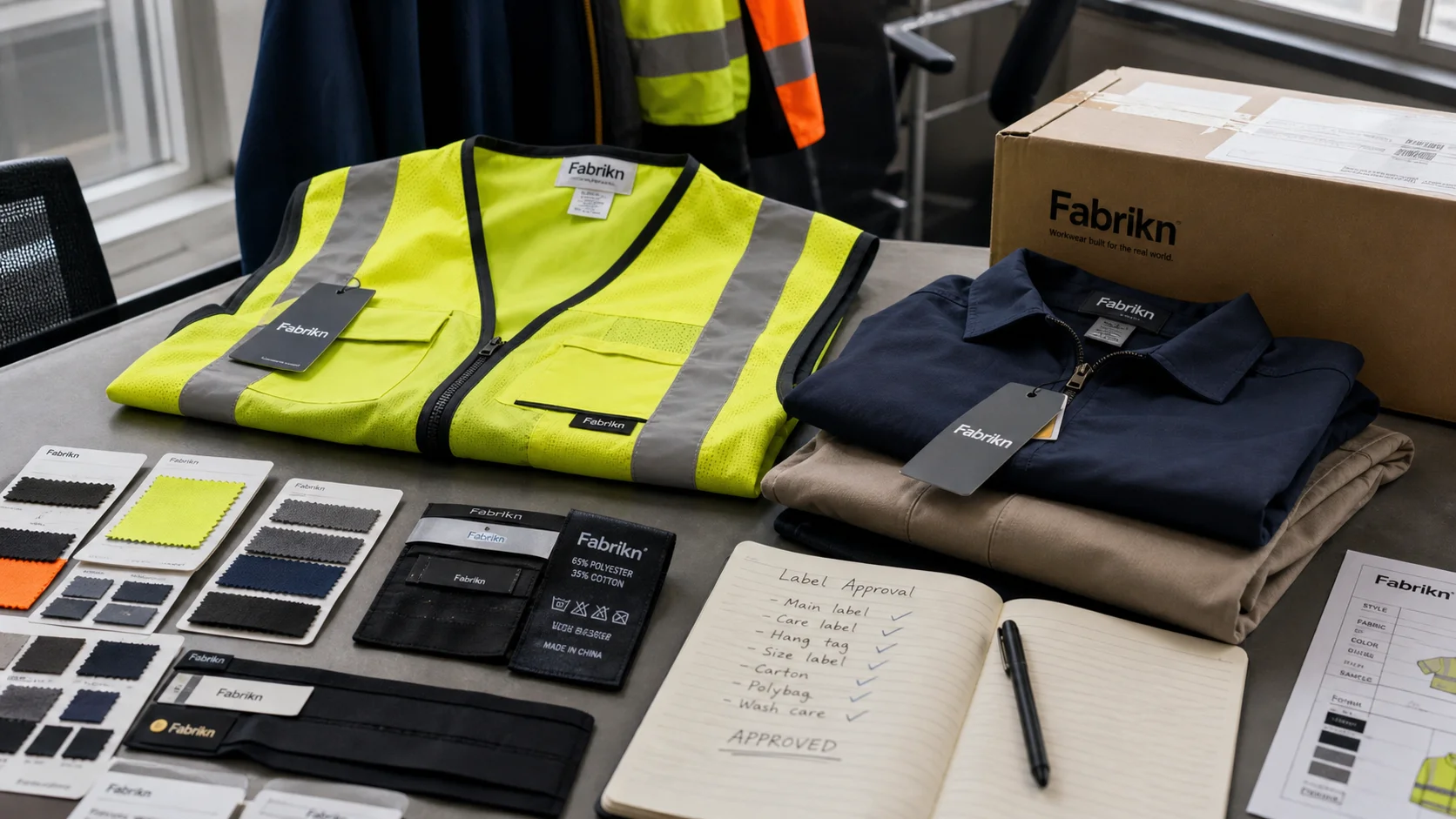
Private Label Clothing Brand Differentiation Strategy with checks for samples, fit, MOQ, QC evidence, pricing terms, and delivery risk.
Fast answer: Private Label Clothing Brand Differentiation Strategy: How should be judged by production evidence, not by a generic sourcing promise. The buyer needs sample proof, cost breakdowns, QC checkpoints, and delivery buffers in writing.
Ask for recent sample photos, measurement tolerances, fabric or print test assumptions, decoration test notes, packing examples, and a named inspection checkpoint. These details show whether the team can repeat an approved sample at bulk volume.
Separate garment cost, decoration, labels, packaging, sampling, testing, freight, and rush charges. When every cost line is visible, it becomes easier to reduce colorways, adjust size depth, or reserve more time for sampling.
The private label clothing market is more competitive than ever. With lower barriers to entry, faster product development, and access to global manufacturing, more brands are launching every year. That creates a major opportunity, but it also creates a serious challenge: if your products look like everyone else’s, your brand becomes interchangeable.
A strong private label clothing brand differentiation strategy is what turns a basic apparel line into a memorable, desirable business. Differentiation is not just about having a logo on a T-shirt. It is about building a distinct identity, offering a clear reason to buy, and creating an experience that your target customer cannot easily find elsewhere.
In practice, that can mean choosing 220-250 GSM combed ring-spun cotton for tees, brushed fleece hoodies with flatlock stitching, or recycled polyester performance fabrics with a GRS-certified supply chain. It can also mean tighter development cycles, such as 18-22 business days for sampling and 30-45 days for repeat production, depending on fabric availability and approvals.
In this article, we will explore practical ways to differentiate a private label clothing brand, from product design and audience targeting to packaging, sustainability, and marketing. Whether you are launching a new clothing brand or trying to grow an existing one, these strategies will help you compete more effectively and build long-term value.
Private label clothing is built on a simple model: you create a brand, source products from a manufacturer, and sell those products under your own label. Because the production model is accessible, many brands often start with similar styles, fabrics, and price points. The result is market saturation.
When consumers see too many similar options, they make decisions based on the strongest brand identity, the best perceived value, or the most trust. That means your success depends on more than product availability. You need a reason for customers to remember your brand, prefer it, and come back.
Differentiation helps you:
In short, differentiation allows your private label brand to compete on identity and value instead of only competing on cost. For example, a basic 180 GSM cotton tee might land around $2.50-$4.00 per unit at 500 MOQ from a factory in Guangzhou or Dhaka, while a more refined style with enzyme wash, custom neck tape, and woven hem label may cost more but command a better retail margin.
There is no single way to stand out. The best differentiation strategy usually combines several elements. In most successful apparel brands, differentiation happens across product, audience, brand story, operations, and marketing.
Here are the core pillars of differentiation for private label clothing brands:
Brands that combine these areas create a more cohesive and memorable identity. In real production terms, that often means working with cut-and-sew lines in Guangzhou for faster knit development, denim and woven programs in Ho Chi Minh City, or higher-trim fashion programs in Istanbul, while maintaining compliance with certifications such as OEKO-TEX Standard 100, WRAP, BSCI, GOTS, and GRS where relevant.
If you want support with product development or manufacturing strategy, you can learn more about our capabilities on the services page.
The most obvious place to differentiate is the product itself. If your clothing looks and feels better than the competition, customers notice immediately. Product differentiation in private label does not always require highly complex design. Often, it comes from doing the basics exceptionally well.
Examples of product differentiation include:
Quality is especially important because clothing is a tactile product. Customers may forgive simple branding, but they will not return if the garment shrinks, pills, fades, or fits poorly. A strong private label clothing brand differentiation strategy should start with reliable materials and well-executed construction.
For example, premium basics may use compact ring-spun cotton, combed cotton jersey, French terry, brushed fleece, or 95/5 cotton-elastane rib for improved recovery. Production details like double-needle coverstitching, overlock seams, bartacks at stress points, and pre-shrinking can make a visible difference in durability and fit consistency. On the equipment side, factories often rely on Juki industrial sewing machines, Brother lockstitch machines, Kansai special machines for flat seams, and automated cutting tables for repeatable accuracy.
If your brand serves a premium market, quality must be part of your core promise. If your brand serves a value market, consistency and durability can still become powerful differentiators. Either way, the goal is to deliver a product that feels intentional, not generic.
One of the fastest ways to blend in is to try to appeal to everyone. Broad brands often end up sounding vague because they do not speak clearly to any one group. Niche brands, on the other hand, create relevance by solving specific needs for specific customers.
To differentiate effectively, define your audience as clearly as possible. Consider demographics, lifestyle, values, and buying motivation. For example:
The more clearly you understand your customer, the easier it is to make decisions about design, fit, color, messaging, and pricing. A differentiated brand should feel like it was made for a particular person, not everyone.
When customers feel understood, they are more likely to trust your brand. That trust creates a stronger emotional connection, which is often more powerful than technical features alone. A brand targeting urban commuters in Istanbul may prioritize wrinkle-resistant tailoring and neutral colorways, while a yoga-focused brand in Ho Chi Minh City might emphasize 4-way stretch nylon-spandex and moisture-wicking finishes.
A private label brand becomes more memorable when it has a story. Brand story is not just about origin. It is about why the brand exists, what it stands for, and why customers should care.
Strong positioning answers questions such as:
Your brand story should be simple, believable, and repeatable across your website, product pages, packaging, and social media. It should also align with the actual product experience. If your brand claims to be premium, the materials, fit, visuals, and customer service must support that promise.
Brands that position themselves clearly are easier to remember and easier to recommend. In apparel, that often means pairing a clear message with concrete proof points, such as GOTS-certified organic cotton for core tees, OEKO-TEX Standard 100 testing for harmful substances, or WRAP and BSCI-audited factories for social compliance. For more background on our company and how we support apparel brands, visit our about us page.
Manufacturing can also be a source of differentiation. In a fast-moving market, brands that can respond quickly to trends, replenish bestsellers, or launch small test runs have a competitive edge.
Private label brands can stand out by offering:
These operational strengths are not always visible to the customer at first, but they strongly influence brand performance. A brand that runs out of stock too often or misses seasonal windows loses momentum. A brand with a dependable supply chain can build trust and scale more efficiently.
In practical terms, a private label T-shirt program might move from tech pack approval to pre-production sample in 18-22 business days, then ship bulk in 30-35 days for stocked fabrics. For more complex programs, such as garment-dyed hoodies or structured outerwear, you may need 45-60 days depending on lab dips, shrinkage testing, and trim sourcing. Factories in Guangzhou often excel at quick knit and jersey replenishment, Dhaka offers strong sweater and basic apparel capacity, and Ho Chi Minh City is often used for flexible woven and sportswear programs.
This is especially important for private label clothing brands that sell seasonal fashion, trend-based collections, or ecommerce products that depend on rapid demand response. If you want a manufacturing partner that understands this balance, explore our contact us page to start the conversation.
Brand differentiation does not stop at the garment. The way your product arrives matters just as much as the product itself, especially in ecommerce. Packaging creates the first physical brand impression and can make a basic item feel premium.
Packaging elements that help differentiate include:
Even small improvements can raise the perceived value of your product. For example, a $3.50 tee packed in a standard polybag looks completely different from the same tee presented in a custom mailer with folded tissue, woven neck label, and a QR code linking to fit guidance and brand story.
If your customer is buying a gift, unboxing matters even more. Presentation can help justify a higher price point and make the brand feel more thoughtful and complete.
Sustainability is only a differentiator when it is real, specific, and measurable. Today’s customers are increasingly skeptical of vague claims like “eco-friendly” or “green.” To stand out, brands need proof.
Meaningful sustainability strategies can include:
For example, a sustainable basics brand might source 180-200 GSM GOTS-certified organic cotton from a mill program, use recycled polyester blended with elastane for performance wear, and work with a factory that holds WRAP and BSCI certifications. That combination gives customers tangible reasons to trust the brand beyond marketing language.
Keep in mind that sustainability should fit your category and price point. A premium essentials line in Istanbul may use organic cotton and recycled trims, while a high-volume basics program in Dhaka may focus on efficiency, reduced waste, and certified chemical safety through OEKO-TEX Standard 100.
Pricing is another way to differentiate. Some brands win by offering accessible pricing with reliable quality. Others win by commanding premium pricing through design, branding, and exclusivity. The key is to align price with value.
A smart pricing strategy considers:
For example, if your unit cost is $4.00-$6.50 and your packaging adds another $0.60-$1.25, your pricing structure must support marketing, freight, duties, returns, and profit. A product that costs $2.50-$4.00 per unit at 500 MOQ may be positioned very differently depending on whether it is sold as a budget essential, a premium blank, or a branded capsule item.
Brands can also use pricing to signal identity. Limited drops, bundle offers, and tiered collections all help customers understand what the brand stands for. The right price is not always the lowest price. It is the price that matches your value proposition and reinforces your market position.
Marketing is where your brand story becomes visible. Even a great product can look generic if the marketing is weak. Differentiation through content means showing customers why your brand matters in a way that feels specific and authentic.
Useful marketing tactics include:
The best apparel content makes the product feel tangible. Showing stitch density, seam finish, fabric drape, and wash performance can be more convincing than generic brand images. A factory-backed clip of a cut-and-sew line in Guangzhou, a finishing room in Dhaka, or quality inspection in Ho Chi Minh City can also build trust by showing real production capability.
To stand out, your marketing must reflect your actual product. If you sell premium basics, your images, website, and ad copy should feel refined. If you sell bold streetwear, your content should feel energetic, limited, and culturally relevant.
Many private label brands fail to differentiate because they make a few common mistakes. Avoiding these pitfalls can immediately improve your positioning.
Generic brands often rely on standard jersey tees, basic hoodies, and stock packaging without any meaningful point of view. In contrast, differentiated brands make intentional choices about cotton type, knit structure, factory location, trim quality, and customer experience.
If you are building a private label clothing brand from scratch, start with a simple framework:
A strong launch plan is not about doing everything at once. It is about making a few smart choices that reinforce each other. For example, a brand could launch with GOTS organic cotton basics, OEKO-TEX Standard 100-tested trims, custom woven labels, and a 500 MOQ production run from a factory in Guangzhou, then use customer feedback to expand into recycled fleece or performance wear later.
At Fabrikn, we help private label clothing brands turn ideas into commercial products with clear positioning and dependable execution. That includes material sourcing, sample development, fit refinement, compliance support, and production planning across categories such as T-shirts, hoodies, activewear, woven garments, and fashion basics.
We work with manufacturers and production partners in key sourcing locations including Guangzhou, Dhaka, Ho Chi Minh City, and Istanbul, depending on the product category, target cost, and desired quality level. We also help brands evaluate whether their project needs certifications such as GOTS, OEKO-TEX Standard 100, WRAP, BSCI, or GRS based on their market and sustainability goals.
If you are trying to differentiate with better fabric, stronger construction, faster development, or more credible sustainability claims, we can help you build a practical plan that fits your business. Start with our contact us page or explore our services page.
What is the best way to differentiate a private label clothing brand?The best approach is usually a combination of product quality, niche targeting, brand story, and a clear value proposition. In many cases, small details like fabric selection, fit consistency, and packaging create a bigger impact than a logo alone.
Do I need custom manufacturing to stand out?Not always. You can differentiate with better materials, better fit, better branding, and better customer experience even if you start with a simpler production setup. However, custom development gives you more control over silhouette, trims, and performance.
Which certifications matter most for private label clothing?Common certifications include GOTS for organic textiles, OEKO-TEX Standard 100 for harmful substance testing, GRS for recycled content, and WRAP or BSCI for social compliance. The right certification depends on your product and market.
How fast can private label apparel be produced?Simple programs can move quickly, with sample development often taking 18-22 business days and bulk production ranging from 30-60 days depending on fabric, trims, and order complexity. Faster timelines are more common when materials are in stock and approvals are efficient.
Can a lower MOQ still support brand differentiation?Yes. A 500 MOQ or similar test run can be enough to validate a concept, refine fit, and build market feedback before scaling. Differentiation comes from the decision-making behind the product, not only from large order volume.