
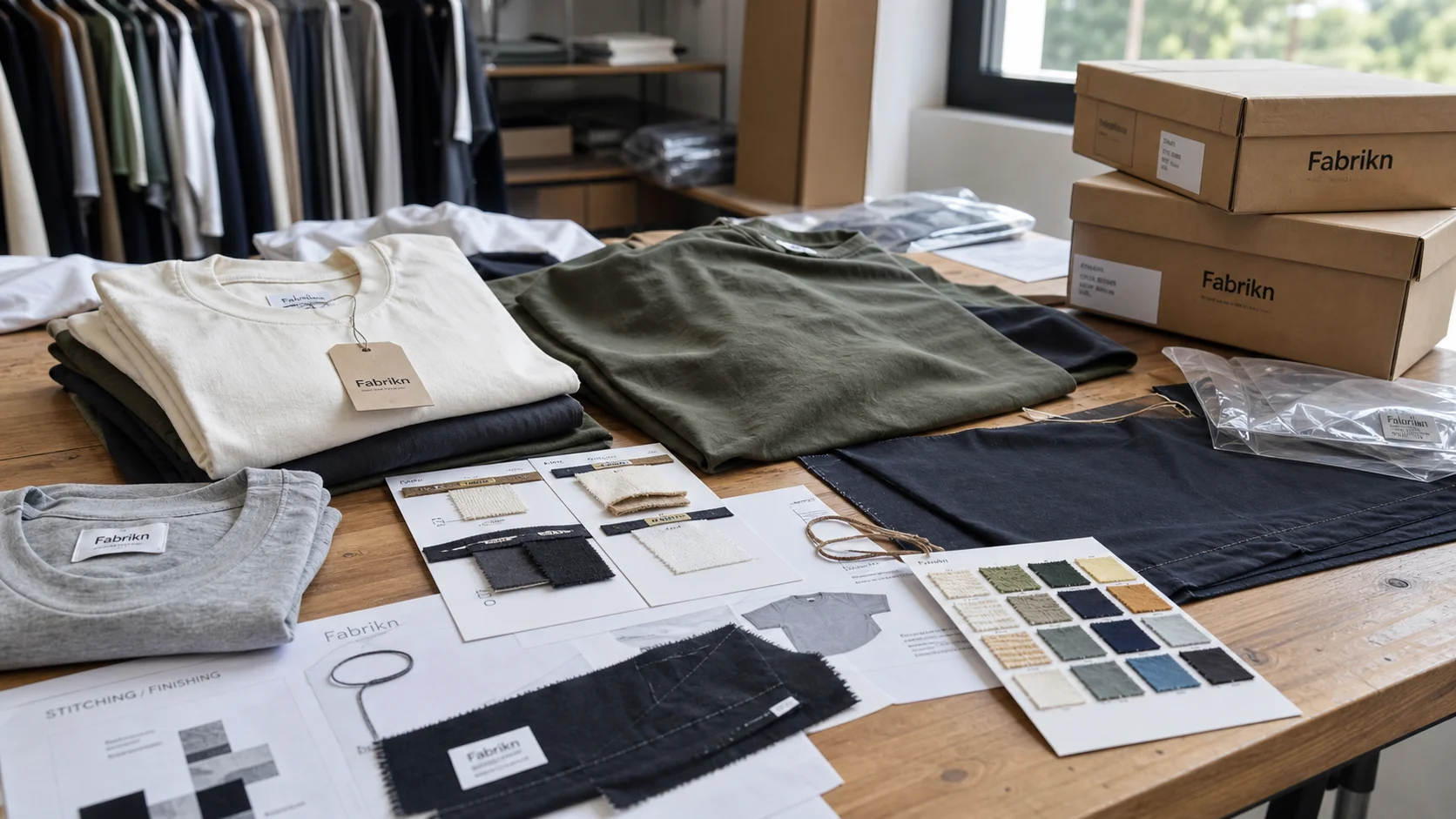
Private Label Clothing Business Model compared by sample evidence, fabric or trim specs, MOQ, AQL terms, cost lines, delivery timing, and rework responsibility.
Fast answer: Private Label Clothing Business Model: Spec Files, Packing Method, and Landed Cost should be judged by production evidence, not by a generic sourcing promise. The buyer needs sample proof, cost breakdowns, QC checkpoints, and delivery buffers in writing.
Ask for recent sample photos, measurement tolerances, fabric or print test assumptions, decoration test notes, packing examples, and a named inspection checkpoint. These details show whether the team can repeat an approved sample at bulk volume.
Separate garment cost, decoration, labels, packaging, sampling, testing, freight, and rush charges. Clear cost lines make it easier to reduce colorways, adjust size depth, or reserve more time for sampling.
The private label clothing business model is one of the most effective ways to launch a fashion brand without building a factory, managing production equipment, or designing every technical detail from scratch. In this model, a brand works with a manufacturer to create apparel that is produced by a third party but sold under the brand’s own name. This allows entrepreneurs, retailers, influencers, and established companies to enter the market faster while still building a unique identity.
For many new fashion founders, private label clothing offers a practical balance between customization, speed, and scalability. Instead of taking on the full burden of manufacturing, businesses can focus on product direction, branding, marketing, and customer experience. That makes it a popular choice in categories such as t-shirts, hoodies, activewear, loungewear, uniforms, kidswear, and premium basics.
Unlike white label products, which are typically generic and sold with minimal customization, private label apparel gives you more control over fabric selection, fit, trims, labels, packaging, and product presentation. That added control can help your brand stand out in a crowded market and create stronger customer loyalty over time.
The private label clothing model follows a straightforward process, but each stage matters if you want to build a profitable brand. At a high level, the business owner identifies a target audience, selects products, works with a manufacturer, approves samples, places production orders, and sells the finished garments through retail, ecommerce, or wholesale channels.
Every successful private label clothing brand starts with a clear audience. Are you targeting fitness consumers, streetwear buyers, corporate clients, boutique shoppers, or parents looking for children’s apparel? The more specific your niche, the easier it is to create products that resonate and to market them effectively.
For example, a brand focused on premium heavyweight hoodies for men will have different design, pricing, and marketing needs than a brand selling sustainable women’s lounge sets. Your niche also influences minimum order quantities, fabric choices, size ranges, and branding style.
Once your niche is clear, choose the product categories you want to launch. Many brands start small with one or two hero products, such as t-shirts or sweatshirts, before expanding. Starting with a focused collection reduces risk and allows you to test the market before committing to a larger inventory investment.
This is where your idea becomes a physical product. A reliable manufacturer can help you develop garments to your specifications, source materials, produce samples, and manufacture at scale. If you are looking for a partner to support production, Fabrikn offers apparel manufacturing services designed for growing brands. Learn more about our capabilities at fabrikn.com/services/.
Customization is a major advantage of private label clothing. Depending on the manufacturer, you may be able to customize fabric composition, GSM, fit, stitching, color palette, neck labels, care labels, hangtags, packaging, embroidery, screen printing, and woven branding details. These choices help create a distinct brand identity that customers can recognize and trust.
Before production begins, request and review samples. This step is essential because it allows you to assess fit, comfort, fabric quality, color accuracy, and construction. Sample revisions may be needed before final approval. Brands that rush this stage often face quality issues later.
After production, your products can be sold through ecommerce stores, marketplace channels, boutique retail, pop-up events, B2B sales, or your own physical stores. Strong branding and compelling product storytelling are essential because fashion buyers often make decisions based on perception, presentation, and lifestyle fit.
Private label clothing can be highly profitable because it gives brands the ability to control product positioning, margins, and customer relationships. Rather than selling someone else’s product, you are building equity in your own brand and creating assets that can grow over time.
When you own the brand, you own the story. That means you can differentiate through quality, design, packaging, and customer experience rather than competing only on price. Strong brands are more resilient in the long term and can command better margins.
Compared with standard wholesale or dropshipping models, private label clothing often offers healthier gross margins. Because you buy at production cost and sell at retail, there is room to build profit into your pricing strategy. The exact margin depends on product type, order volume, material costs, and channel fees, but the model is usually more scalable than buying finished goods from third-party sellers.
Once you establish a production relationship, it becomes easier to expand your catalog. You can introduce new colors, add seasonal drops, or extend into adjacent categories while keeping the same brand structure. That repeatable workflow is valuable for growth.
Customers are more likely to return to a brand they recognize and trust. Private label clothing supports loyalty because the products can be consistent, branded, and aligned with a specific lifestyle. Over time, this can reduce dependence on paid advertising and improve customer lifetime value.
Private label brands are not limited to generic product offerings. You can build a premium story around fabric quality, fit, ethics, craftsmanship, and design details. That can justify higher price points and create a more durable business model.
Building a profitable fashion brand requires more than just putting a logo on apparel. You need a strategy that aligns product development, brand identity, sourcing, and sales. Here is a practical roadmap.
Start by studying existing brands in your target category. Look at price points, styling, color trends, customer reviews, and product gaps. Your goal is not to copy competitors but to identify opportunities. You might discover that buyers want softer fabrics, improved sizing, more sustainable materials, or more inclusive fits.
Your brand identity should include your name, visual style, voice, packaging approach, and brand promise. In fashion, identity is often the reason customers choose one product over another. Even simple categories like basics can feel premium if the branding is consistent and thoughtfully executed.
Create a clear product brief for each item. Include fabric type, fit, size range, colorways, trims, label needs, decoration methods, and target retail price. This helps your manufacturer understand your expectations and reduces development delays.
Sampling is one of the most important stages in private label clothing. Use prototypes to validate quality, durability, and comfort. If your product is meant for activewear, make sure it performs under movement. If it is a luxury basic, make sure stitching and finishing support the price point.
Before investing heavily in inventory, consider testing with a small launch, pre-order campaign, or limited drop. This helps you gather feedback and determine which products have the strongest demand. Testing can also reveal sizing or style issues before larger production runs.
Your clothing won’t sell itself. Build a launch plan that includes product photography, social media content, email marketing, influencer outreach, SEO content, and paid campaigns if needed. Make sure your messaging speaks to the benefits that matter most to your customer, such as fit, comfort, style, performance, or sustainability.
A profitable fashion business depends on more than acquisition. Customers expect accurate shipping, quality packaging, responsive support, and easy returns. A smooth post-purchase experience can increase repeat orders and positive reviews.
Your manufacturer can make or break your private label brand. The right partner should be able to translate your concept into a commercial product while maintaining consistent quality, timelines, and communication.
Choose a manufacturer with experience in your product category. A factory that specializes in knitwear may not be ideal for technical outerwear. Industry-specific knowledge helps ensure better construction, more accurate sampling, and more realistic production planning.
Ask what can be customized. Some suppliers only offer basic logo placement, while others support full development from fabric sourcing to packaging. The more flexible the manufacturer, the more likely you are to create a distinctive brand.
Minimum order quantities, or MOQs, vary by product and manufacturer. For startups, lower MOQs can reduce risk and improve cash flow. However, too low an MOQ may increase unit costs. The right balance depends on your budget and sales strategy.
Always judge the manufacturer by sample quality, not promises. Inspect seams, trims, measurements, shrinkage, print quality, and overall finishing. If the sample is weak, mass production will likely amplify those issues.
Reliable communication is critical. Delays often happen when specifications are unclear or feedback is slow. A professional manufacturing partner should provide realistic timelines and keep you informed throughout development and production.
The best manufacturer is not just a vendor but a long-term growth partner. As your brand grows, you may need new product development, larger quantities, or expanded services. Working with a team that understands your goals can save time and improve consistency.
If you want to discuss your clothing project with a manufacturing partner, you can reach the Fabrikn team through our contact page.
Understanding the financial side of the private label clothing business model is essential for profitability. Many brands fail not because the product is bad, but because they underestimate costs or price too aggressively.
Profitability comes from managing both cost and perceived value. If your product costs more to make, it should usually also deliver a stronger brand experience or product advantage. Consider the full economics of each unit, including shipping and payment processing fees, before setting retail prices.
A common approach is to target a wholesale margin if you plan to sell to retailers and a higher direct-to-consumer margin if you sell through your own website. Direct-to-consumer brands often have more pricing flexibility, but they also shoulder more marketing costs.
Remember that the cheapest product is not always the most profitable. In fashion, quality, fit, and brand perception often drive repeat purchases more effectively than discounting.
Many new brands make avoidable mistakes that reduce profitability or damage customer trust. Knowing these in advance can save significant time and money.
It is tempting to launch a large collection, but too many products create complexity and increase inventory risk. Start with a focused assortment and expand based on proven demand.
Fashion returns often happen because of poor fit. Invest in accurate size specs and testing so customers feel confident buying from you.
Low prices can be misleading if the factory cannot meet quality or delivery expectations. Always assess the full relationship, not just unit cost.
Even great products need visibility. Many private label brands fail because they assume the product alone will create demand. Allocate budget for branding, content, and acquisition.
Inventory ties up capital. Plan production carefully so you do not overbuy before proving demand. Good cash flow management is essential for sustainable growth.
Today’s consumers want more than basic apparel. They want to understand what your brand stands for. A clear story can improve conversion and help you stand out in a competitive market.
Choosing the right manufacturing partner is one of the most important decisions in the private label clothing business model. At Fabrikn, we support brands that want to turn apparel ideas into production-ready products with a focus on quality, consistency, and long-term growth. To learn more about our company and approach, visit our about us page.
Whether you are building a startup fashion brand or expanding an existing apparel line, the right manufacturing support can help you move faster and reduce costly mistakes. Fabrikn works with businesses that need dependable clothing production and a clear development process from concept to finished goods.
Get a free quote from Fabrikn — your trusted B2B clothing manufacturer with 10+ years of experience. MOQ as low as 200 pieces.
Get a Free Quote →The private label clothing business model involves working with a manufacturer to create apparel sold under your own brand name. You control the branding and product direction while the manufacturer handles production.
Yes, private label clothing can be profitable because it allows for brand control, better margins than basic reselling, and the ability to build long-term customer loyalty. Profitability depends on product quality, pricing, and marketing execution.
Popular private label products include t-shirts, hoodies, sweatshirts, joggers, leggings, activewear, loungewear, uniforms, and kidswear. The best product depends on your target market and brand positioning.
Startup costs vary widely depending on product type, order quantities, and branding needs. Costs may include sampling, production, packaging, shipping, marketing, and website setup. Starting small with a focused product line can reduce initial investment.
White label products are usually generic and offered to multiple sellers with minimal changes. Private label clothing gives you more customization and brand control, allowing you to create a more distinctive product line.
Look for manufacturers with experience in your category, strong sample quality, clear communication, reasonable MOQs, and the ability to support your customization needs. You can start by contacting a partner like Fabrikn through our contact page.
Yes. Many founders start with one or two hero products, lower MOQs, and a lean marketing strategy. The key is to test demand before expanding too quickly.
Focus on a clear niche, strong product quality, distinctive branding, and a compelling customer experience. Small details like fit, fabric, packaging, and storytelling can make a major difference.