
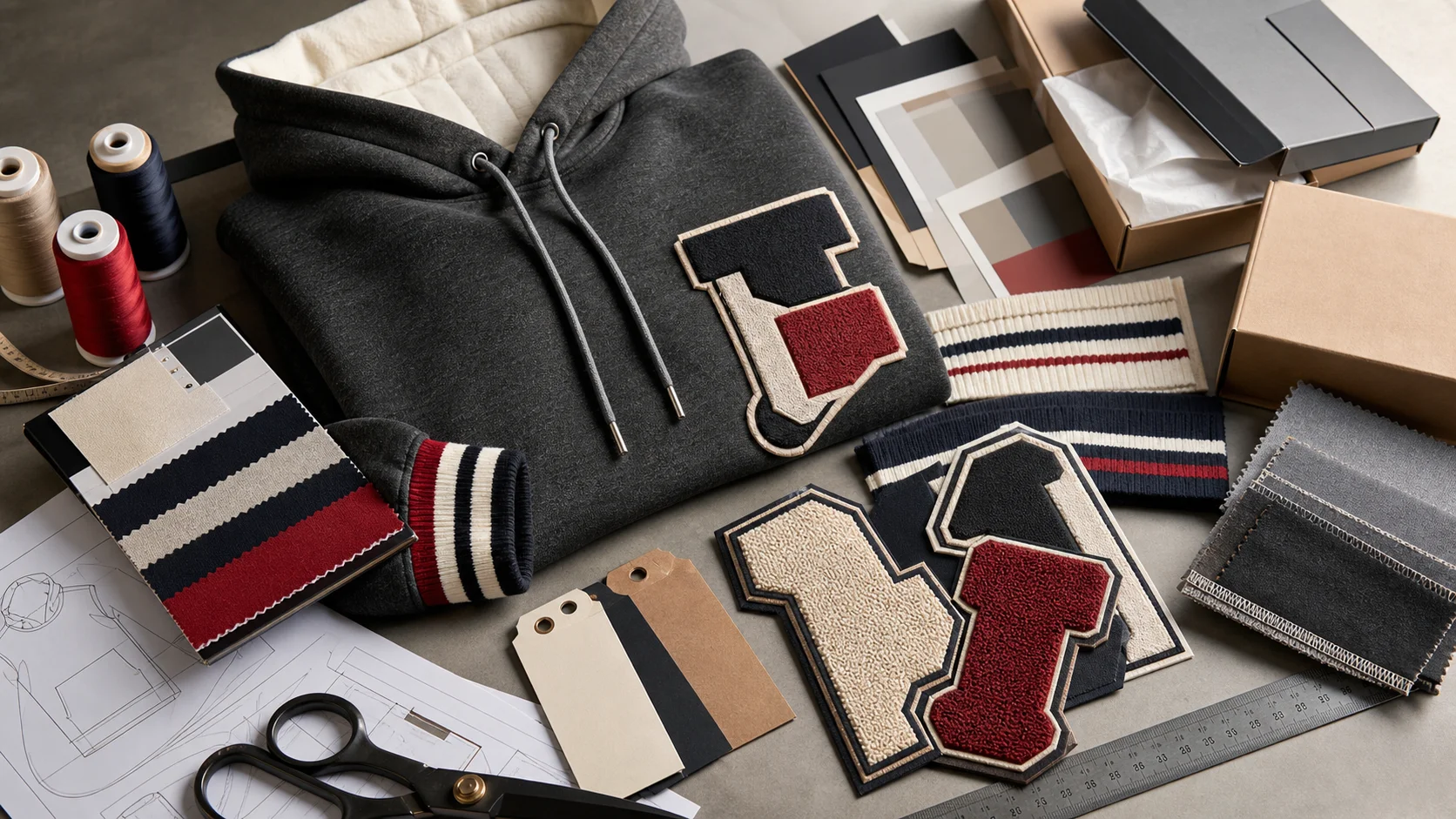
Private Label Clothing Business Model Pros and Cons with checks for samples, fit, MOQ, QC evidence, pricing terms, and delivery risk.
Fast answer: Private Label Clothing Business Model Pros and Cons should be judged by production evidence, not by a generic sourcing promise. The buyer needs sample proof, cost breakdowns, QC checkpoints, and delivery buffers in writing.
Ask for recent sample photos, measurement tolerances, fabric or print test assumptions, decoration test notes, packing examples, and a named inspection checkpoint. These details show whether the team can repeat an approved sample at bulk volume.
Separate garment cost, decoration, labels, packaging, sampling, testing, freight, and rush charges. When every cost line is visible, it becomes easier to reduce colorways, adjust size depth, or reserve more time for sampling.
Private label clothing has evolved from a niche strategy for boutique retailers into a recognized growth pathway for ambitious fashion entrepreneurs and established enterprises alike. Whether a B2B clothing manufacturer such as Fabrikn is collaborating with a startup to develop its first signature collection, or a mid-sized retailer is expanding into lifestyle categories, the question remains the same: what are the true pros and cons of the private label clothing business model? This comprehensive article delves into every facet, providing a holistic view that helps decision-makers weigh investments, operational commitments, marketing requirements, and long-term brand implications. We will cover how private label clothing functions, why the market has surged, and the painstaking trade-offs that accompany assumed control over product development and branding.
Here, the goal is not to simplify complex decisions into binary yes-or-no answers, but rather to present actionable insights that contextualize opportunities within the realities that every emerging brand or retailer must confront. By the time you reach the FAQ, you will have a clear understanding of how the private label model aligns with your organization’s scale, resources, and customer promise.
To grasp the pros and cons of private label apparel, one must first recognize the dramatic shifts reshaping both consumer expectations and supply chains. A decade ago, private label was predominantly synonymous with low-cost store brands that mimicked known labels. Today, private label apparel spans every segment: luxury resort wear, technical athleisure, inclusive sizing, sustainable basics, and bespoke corporate apparel. This diversification stems from three converging factors.
First, globalization of design and manufacturing has unlocked previously inaccessible expertise. Manufacturers like Fabrikn can partner with clients across continents, transforming sketches into production-ready collections without forcing entrepreneurs to invest in expensive infrastructure. Second, digital commerce accelerates go-to-market cycles, enabling brands to reach niche audiences quickly. Third, data-driven assortment planning has evolved, where retailers leverage analytics to create differentiated offerings based on real-time trends and customer feedback. These shifts have turned private label into a strategic tool rather than a reactive tactic.
As the category matures, competition intensifies, not only from pure-play fashion brands but also from marketplaces and direct-to-consumer disruptors. This fluid environment underscores the importance of approaching the private label business model with structured planning, realistic budgeting, and crystal-clear brand positioning. Without all three, aspiring brands risk being lost in the noise.
The journey typically begins with a vision—what problem will this clothing line solve, and for whom? Private label partners prefer clients who can articulate a distinct brand narrative because it informs everything from fabric selection to packaging. Ideation cycles may include mood boards, trend mapping, and benchmarking exercises to ensure the product positioning is coherent.
Next, design teams translate concepts into sketches and technical packs. This stage is more than aesthetics; it involves specifying materials, colorways, trims, measurements, labeling requirements, and sustainability certifications where relevant. Experienced manufacturers like Fabrikn often assign product development managers to oversee sampling, fit revisions, and compliance checks.
Once designs are approved, procurement teams secure fabrics and accessories that match the desired quality and price targets. Production lines are scheduled, quality assurance processes are defined, and lead times confirmed. Depending on the factory network, clients may choose between domestic and offshore manufacturing, each offering different cost structures and logistical implications.
Private label apparel is only successful if the brand identity is seamlessly integrated throughout trims, hangtags, packaging, and unboxing experiences. Custom labeling, eco-friendly packaging, and insert cards all reinforce the perceived value. This is where private label diverges from white-label, because the brand touchpoints are curated, not generic.
Finally, finished goods are shipped to warehouses or direct to retailers, where inventory is managed across channels. Post-launch feedback loops are essential for refining future collections. Data from returns, customer reviews, and sell-through analysis inform design and production adjustments, ensuring the private label brand remains responsive to evolving market demands.
One of the primary advantages is total ownership of your brand’s market positioning and creative direction. This autonomy empowers businesses to differentiate themselves from competitors who sell the same open-line products. When you own your label, every stitch and color choice communicates your ethos, building long-term customer loyalty.
Private label apparel typically yields higher profit margins than reselling third-party brands. By eliminating multiple middle layers and negotiating directly with manufacturers, brands can control cost structures while pricing products in alignment with perceived value. This pricing flexibility becomes a powerful lever for reinvesting in marketing or expanding collections.
Working closely with a manufacturing partner grants better visibility over supply chain milestones. Brands can adapt quickly if trends shift or if demand forecasts change. For example, a private label partner might adjust production runs or prioritize certain SKUs when merchants detect a surge in sales for specific categories. This agility is increasingly critical in fast-moving fashion segments.
Exclusive products create a reason for customers to return. Private label collections may feature unique fabrics, custom fits, or seasonal capsules, assuring shoppers they can only find those items through the originating brand or retailer. Such exclusivity strengthens brand stickiness, especially when combined with loyalty programs and personalized marketing.
Private label clothing is inherently strategic; it forces organizations to clarify their core values, customer profiles, sustainability goals, and pricing architecture. When executed well, private label lines can evolve into flagship offerings that define the company’s identity and attract partnerships that align with the long-term vision.
Developing private label apparel demands significant upfront investment in design, sampling, quality assurance, and inventory. These costs must be absorbed before revenue is realized, placing pressure on cash flow management. For smaller brands, a single miscalculation in demand forecasting can result in overstock or stockouts, both of which erode profitability.
Running a private label line is more complex than buying from wholesalers. Teams must handle tech packs, vendor coordination, compliance documentation, logistics, and post-launch analytics. Without experienced partners like Fabrikn, the learning curve can strain operational bandwidth and lead to launch delays.
Since private label products are unique to the brand, any quality issue is solely attributed to the brand itself. Maintaining consistent quality requires rigorous oversight of production processes, adherence to testing protocols, and proactive communication with manufacturing partners. Failure to do so can damage customer trust and brand reputation.
Private label apparel is produced in predetermined quantities, so misaligned demand forecasts can result in excess inventory, requiring markdowns or liquidation. Conversely, underestimating demand leads to stockouts and lost sales. Both scenarios highlight the importance of sophisticated inventory planning tools and responsive supply chain partners.
Unlike reselling established brands, private label businesses must shoulder the entire marketing burden. This includes storytelling, visual identity, influencer partnerships, and targeted digital campaigns. While the upside is greater brand equity, the downside is that marketing missteps directly impact private label success.
Aligning with a seasoned manufacturing partner is the most effective way to reduce technical errors, ensure quality, and maintain realistic timelines. Fabrikn, for example, offers end-to-end support—from design consultation to production oversight—ensuring the brand’s expectations are met. For an overview of these capabilities, explore Fabrikn’s services page.
Data-driven forecasting can minimize overstock risk. Use insights from sales history, web analytics, and social listening to plan inventory levels and collection cadence. Combining qualitative feedback with quantitative data ensures private label decisions are grounded in market realities.
Consider phased production runs or on-demand manufacturing for certain SKUs to avoid tying up capital in large orders. Agile strategies allow brands to test new styles quickly and scale winners without excess inventory. This approach requires transparent communication with manufacturing partners to coordinate smaller, more frequent runs.
Standardize QA procedures, including pre-production sampling, inline inspections, and final audits. Ensure that every product delivers on the brand promise. Quality control is not a one-time effort—it should be an ongoing dialogue between merchandising teams and manufacturing partners.
Since marketing responsibility rests entirely on the brand, integrate cohesive storytelling across websites, social media, packaging, and brick-and-mortar experiences. Harness the flexibility of private label to experiment with limited editions, influencer-designed capsules, or sustainable materials—initiatives that capture attention while reinforcing the brand ethos.
A boutique retailer serving urban professionals decides to launch a private label athleisure line. The pros lie in controlling the aesthetic and price points to align with their curated in-store experience. However, the retailer must invest in fabric development, determine the optimal size range, and secure pre-orders. By partnering with a manufacturer offering sample development and small-batch production, the retailer can test market response before scaling, mitigating inventory risks.
A corporate apparel supplier sees demand for eco-conscious uniforms. Launching a private label line allows them to specify recycled textiles and ethical production standards. The upside is strong differentiation and meeting corporate social responsibility goals. The challenge lies in higher material costs and stringent certification processes. Aligning with a partner experienced in sustainable manufacturing ensures these initiatives don’t derail timelines or budgets.
A DTC start-up wants to launch a capsule collection of minimalist wardrobe essentials. Private label offers creative freedom and the ability to grow customer loyalty. Yet the brand must navigate capital constraints, marketing execution, and inventory management. Early collaboration with an end-to-end manufacturer helps streamline sampling and production, while phased inventory releases balance risk.
The private label clothing model shows no signs of slowing down. As customers demand authenticity, inclusivity, and sustainability, retailers and entrepreneurs alike view private label as a vehicle for expressing values rather than merely chasing price advantages. Technology will continue to accelerate this shift: 3D design tools reduce sampling time, AI-powered trend predictions inform design briefs, and digital showrooms streamline B2B selling.
Also, manufacturing partners are evolving beyond production roles to become strategic collaborators. Companies like Fabrikn help clients conceptualize collections, source materials responsibly, and implement agile production models. These integrated partnerships are key to overcoming the cons discussed earlier, ensuring private label brands remain competitive in an increasingly crowded market.
For organizations considering the private label route, the question should not be whether the model is inherently good or bad. Instead, analyze how it aligns with your capabilities, team structure, and brand aspirations. If you require help evaluating feasibility, the Fabrikn About Us page explains our approach to client partnerships, and the contact page offers direct access to our expert advisors.
Get a free quote from Fabrikn — your trusted B2B clothing manufacturer with 10+ years of experience. MOQ as low as 200 pieces.
Get a Free Quote →Private label apparel is exclusive to a specific brand or retailer, with custom design, branding, and packaging. White label products are generic items that multiple sellers can rebrand. Private label requires more effort but offers greater differentiation.
Timelines vary based on product complexity, but a typical cycle ranges from three to six months, encompassing design, sampling, production, and logistics. Having a streamlined partner can shorten this window.
Minimums depend on product type and fabric requirements. Some manufacturers accommodate small runs for emerging brands, while others may require higher volumes. Discussing goals with the manufacturing partner is the best way to align expectations.
Successful private label brands invest in storytelling, influencer collaborations, email marketing, and content strategies that highlight the brand’s unique value proposition. Consistency across channels reinforces trust.
Yes. Private label offers full control over material sourcing, production methods, and certifications. Brands can prioritize organic fibers, recycled materials, and ethical labor practices to align with sustainability goals.
Evaluate manufacturing partners based on experience, communication, quality control, and flexibility. Review case studies, request references, and ensure they offer the level of support your brand requires.