
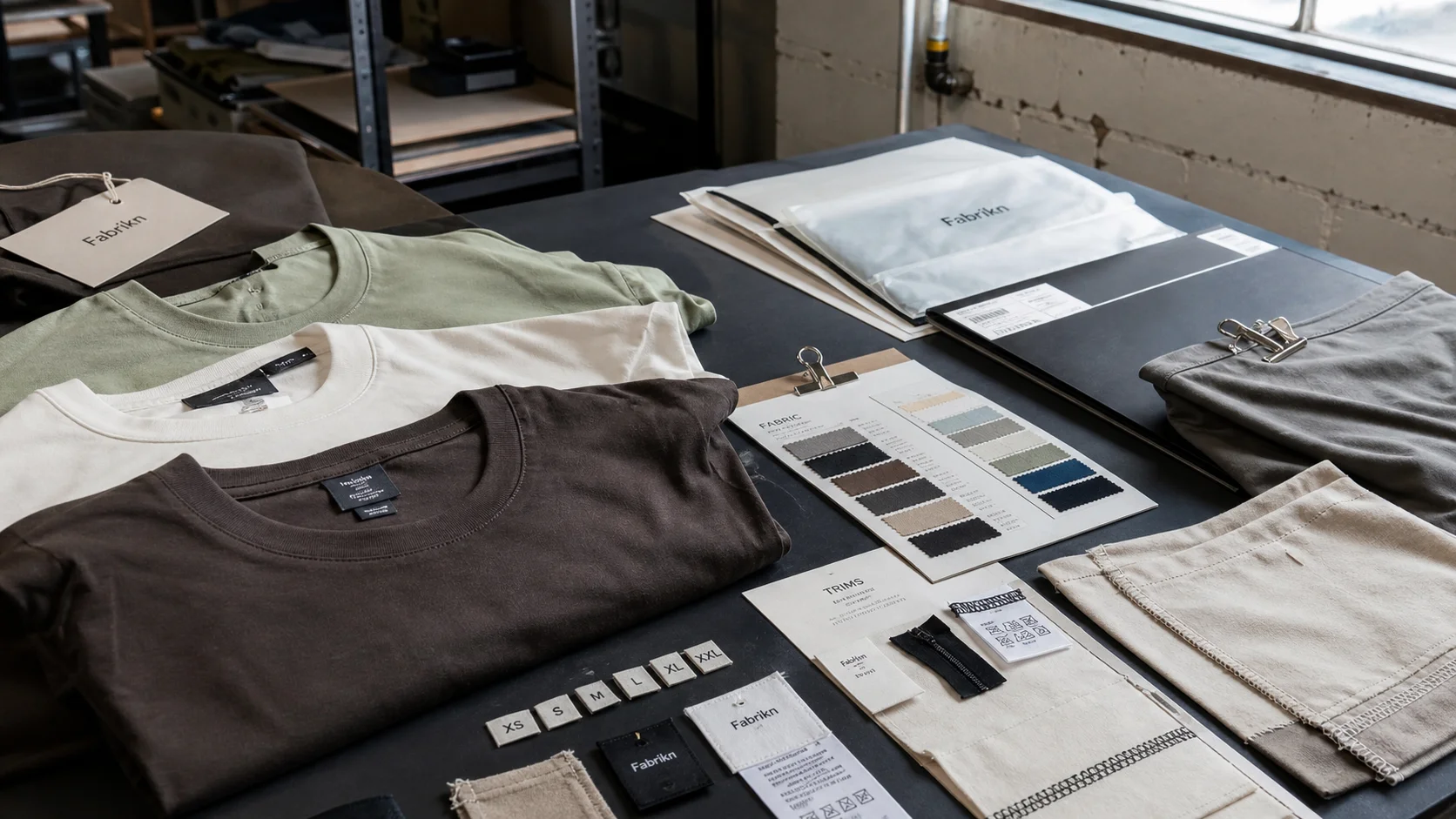
Private Label Clothing Payment Terms with checks for samples, fit, MOQ, QC evidence, pricing terms, and delivery risk.
Fast answer: Private Label Clothing Payment Terms: Deposits, Cost Lines, QC, and Rework Risk should be judged by production evidence, not by a generic sourcing promise. The buyer needs sample proof, cost breakdowns, QC checkpoints, and delivery buffers in writing.
Ask for recent sample photos, measurement tolerances, fabric or print test assumptions, decoration test notes, packing examples, and a named inspection checkpoint. These details show whether the team can repeat an approved sample at bulk volume.
Separate garment cost, decoration, labels, packaging, sampling, testing, freight, and rush charges. When every cost line is visible, it becomes easier to reduce colorways, adjust size depth, or reserve more time for sampling.
Private label clothing payment terms are one of the most important parts of any manufacturing agreement. Whether you are launching a new fashion brand, scaling an eCommerce label, or sourcing a custom apparel line, the way you structure payments can affect cash flow, production timelines, supplier trust, and overall business risk.
In the private label industry, payment terms are not just financial details. They are a reflection of the relationship between the brand and the supplier. A clear agreement helps both sides avoid misunderstandings, reduce delays, and build a long-term partnership. For brands, strong payment terms can improve inventory planning and preserve working capital. For suppliers, they help ensure raw materials, labor, and production costs are covered before or during manufacturing.
This guide explains the most common private label clothing payment terms, how they work, what influences them, and how both brands and suppliers can negotiate fair and sustainable agreements. If you are exploring private label clothing manufacturing, you can also learn more about our capabilities on our services page or reach out through our contact page.
Private label clothing payment terms define when, how, and under what conditions a buyer pays a manufacturer or supplier for apparel production. These terms usually include the deposit amount, milestone payments, final balance timing, accepted payment methods, and any penalties or protections related to late payment.
Because clothing production involves multiple stages such as fabric sourcing, sampling, cutting, sewing, quality control, packaging, and shipping, payment schedules are often tied to production milestones rather than a single end date. This is especially true in private label manufacturing, where custom designs, branding, and product specifications may require upfront investment from the supplier.
In simple terms, payment terms answer questions like:
For brands, understanding these terms before placing an order helps prevent confusion and supports better budgeting. For suppliers, clear terms reduce the risk of non-payment and help maintain efficient operations.
Payment terms have a direct impact on cash flow, production reliability, and supplier relationships. In private label clothing, manufacturers often need to purchase materials and schedule labor before they receive the full payment. That means the structure of the payment agreement can influence how quickly a supplier can begin production and how much risk they are willing to take on.
For brands, favorable terms can make it easier to launch products, manage seasonal inventory, and scale efficiently. For example, a brand that sells through pre-orders or retail channels may prefer a payment schedule that does not require full payment until goods are ready to ship. On the other hand, suppliers may require deposits to cover material costs and reserve factory capacity.
Payment terms also influence trust. A transparent agreement demonstrates professionalism and reduces the chance of disputes. In a global manufacturing environment, where time zones, currencies, and logistics can complicate transactions, this clarity is essential.
In short, the right payment terms support:
There is no single standard payment model in private label apparel. However, several common structures are widely used across the industry. The specific terms often depend on order size, customization level, production complexity, and the buyer-supplier relationship.
One of the most common arrangements is a 30% deposit before production and 70% balance before shipment or upon completion. The deposit helps the supplier cover initial costs such as fabric procurement, trims, labor allocation, and sampling adjustments.
This structure is popular because it balances risk between both parties. The brand does not pay the full amount upfront, and the supplier receives enough capital to begin work.
Under a 50/50 arrangement, the buyer pays half at the start and half after production is completed or before shipment. This model is often used for larger orders, custom garments, or new business relationships where the supplier wants stronger payment security.
While this option requires a larger upfront investment from the brand, it may be easier for the manufacturer to accept if the order involves expensive materials or a tight production schedule.
Some suppliers request 100% payment before production begins, especially for smaller orders, high-risk clients, or one-time projects. This approach eliminates supplier payment risk, but it is less favorable for brands because it places the full financial burden upfront.
Brands should approach full upfront payment carefully and only work with trustworthy suppliers that have proven credibility, a strong track record, and clear contractual terms.
Net payment terms, such as Net 15, Net 30, or Net 60, are more common in wholesale or established business relationships than in early-stage private label manufacturing. These terms allow the buyer to pay within a set number of days after invoice issuance or delivery.
In apparel production, net terms may be available only after a buyer has built a reliable history with the supplier. They are less common for new brands because manufacturers usually prefer partial prepayment to cover production costs.
Some private label clothing manufacturers structure payments around production milestones. For example, a brand may pay a deposit when the order is confirmed, a second installment when materials are sourced, and the final balance before shipping.
This model is useful for large or complex orders because it aligns payments with actual work completed. It also provides transparency and helps brands feel more confident that progress is being made.
For international orders, some brands use a letter of credit or third-party trade assurance service. These tools provide additional protection by ensuring that payment is released only when the agreed conditions are met.
Although these options can reduce risk, they may also involve additional banking fees, administrative complexity, or stricter compliance requirements.
Payment terms are rarely fixed across all orders. Instead, they are shaped by several business and operational factors. Understanding these variables can help brands negotiate better terms and help suppliers decide what level of risk they can accept.
Larger orders often justify more structured payment schedules, while smaller orders may require faster or more complete payment. A high-volume order can give the supplier confidence in future business, but it also increases their material and labor exposure.
The more customized the clothing line, the more financial risk the supplier takes on. Unique patterns, special fabrics, custom dyeing, embroidery, or private label packaging may require more upfront investment, which can lead to stricter payment terms.
Brands with a proven payment history may qualify for more favorable terms over time. New buyers usually start with more conservative structures, while repeat clients can sometimes negotiate lower deposits or extended balance dates.
If production takes longer, the supplier may require a larger deposit to secure materials and labor. Short lead times can also increase pressure on the factory, which may affect payment expectations.
International manufacturers may ask for different terms depending on currency exchange risk, local business norms, and banking logistics. Cross-border transactions can also influence the need for wire transfers, USD payments, or payment gateways.
If raw material prices are volatile, the supplier may want more payment protection upfront. This is especially relevant for high-quality cotton, technical fabrics, or limited-source materials.
When demand is high or factory capacity is limited, suppliers may become less flexible with terms. In slower seasons, they may offer better terms to secure business.
Negotiating payment terms is not just about pushing for the lowest deposit. The goal is to create a structure that supports your business while still respecting the supplier’s need to manage costs and risk. A good negotiation creates trust and long-term value.
Brands should clearly explain their product plans, target timeline, forecasted volume, and growth strategy. When suppliers understand that a brand is serious and organized, they are more likely to offer flexible terms.
If a supplier is unwilling to reduce the deposit, ask whether the payment can be split into milestones. This can make the arrangement more manageable without increasing risk for either party.
For new supplier relationships, it is often wise to begin with a smaller test order. A successful first order can create the trust needed to negotiate better terms for future production runs.
Before finalizing payment terms, make sure the sample approval process is clear. Misunderstandings about materials, fit, labels, or packaging can lead to disputes later. A well-defined sample stage improves confidence for both sides.
Never rely solely on verbal agreements. All payment schedules, due dates, and conditions should be documented in the purchase order, invoice, or manufacturing agreement. Written terms protect both the brand and the supplier.
Sometimes a supplier cannot lower the deposit, but they may be able to offer better terms in other ways, such as faster turnaround, improved quality control, lower freight handling fees, or more responsive communication.
From the supplier’s perspective, payment terms are about stability and risk management. A clothing manufacturer needs confidence that they will recover the cost of fabric, labor, and production time. This is particularly important in private label apparel, where customized work cannot easily be resold if a buyer fails to pay.
Suppliers typically evaluate several things before agreeing to flexible terms:
For this reason, suppliers often prefer deposits and milestone-based payments. These structures protect working capital and help ensure the buyer is committed to the order. If you want to understand more about who you are working with, visiting a manufacturer’s about us page can be a helpful first step.
Even with a solid agreement, payment risk remains part of private label clothing manufacturing. Brands and suppliers can reduce exposure by using practical safeguards and disciplined communication.
A purchase order should include quantities, product specs, fabric details, labeling requirements, packaging instructions, payment milestones, delivery expectations, and consequences for delays or changes. The more precise the document, the lower the chance of confusion.
Before sending funds, confirm the manufacturer’s business information, production capabilities, and communication quality. Look for references, company history, and a physical factory presence when possible.
Maintain invoices, bank transfer receipts, emails, and approval documents. These records can resolve issues if a disagreement arises later.
Some brands prefer to release the final balance after pre-shipment inspection or quality approval. This adds a layer of protection and encourages suppliers to maintain standards.
International payments may involve exchange rate fluctuations, wire fees, and delays. Brands should account for these costs in their sourcing budget to avoid last-minute surprises.
All changes to payment terms should be confirmed in writing through official channels. Avoid making decisions through informal messages alone, especially when order values are high.
Successful private label clothing partnerships are built on mutual respect, clarity, and consistency. The best payment agreements are not necessarily the cheapest or the fastest. They are the ones that allow both sides to operate confidently.
Here are a few best practices to keep in mind:
As the relationship strengthens, payment terms may become more favorable. Repeat orders, larger volumes, and consistent communication can all support more flexible structures over time.
At Fabrikn, we understand that payment terms are a critical part of the sourcing process. Our approach is built around clear communication, dependable production planning, and long-term partnership. We work with brands to create practical payment structures that support both launch-stage and scaling-stage apparel businesses.
Whether you are producing basics, premium fashion, activewear, or custom branded garments, our team helps you navigate the process from sampling to final delivery. We believe that strong manufacturing relationships begin with transparency and a clear understanding of expectations.
If you are evaluating private label manufacturing options, our services page provides an overview of what we offer, and our contact us page is the best place to start a conversation about your next collection.
Get a free quote from Fabrikn — your trusted B2B clothing manufacturer with 10+ years of experience. MOQ as low as 200 pieces.
Get a Free Quote →Standard terms often include a 30% deposit and 70% balance before shipment, but this can vary depending on order size, customization, and supplier policy.
Yes, but new brands usually need to build trust first. Smaller trial orders, clear communication, and a professional process can help improve terms over time.
Deposits help manufacturers cover upfront costs such as materials, labor allocation, sampling, and production scheduling. They also reduce non-payment risk.
Net terms are less common for first-time private label orders but may be available for established buyers or wholesale relationships with a strong payment history.
A payment agreement should include deposit amount, balance due date, payment method, production milestones, delivery terms, and any conditions for changes or delays.
Brands can protect themselves by using written contracts, verifying supplier credentials, requesting milestone payments, keeping records, and using quality inspections before final payment.
Yes. Suppliers often begin production only after the deposit is received. Clear and timely payments can help keep the production schedule on track.
Understanding private label clothing payment terms is essential for building a successful brand and a reliable supply chain. With the right agreement, both brands and suppliers can reduce risk, improve communication, and create a partnership that supports growth.