
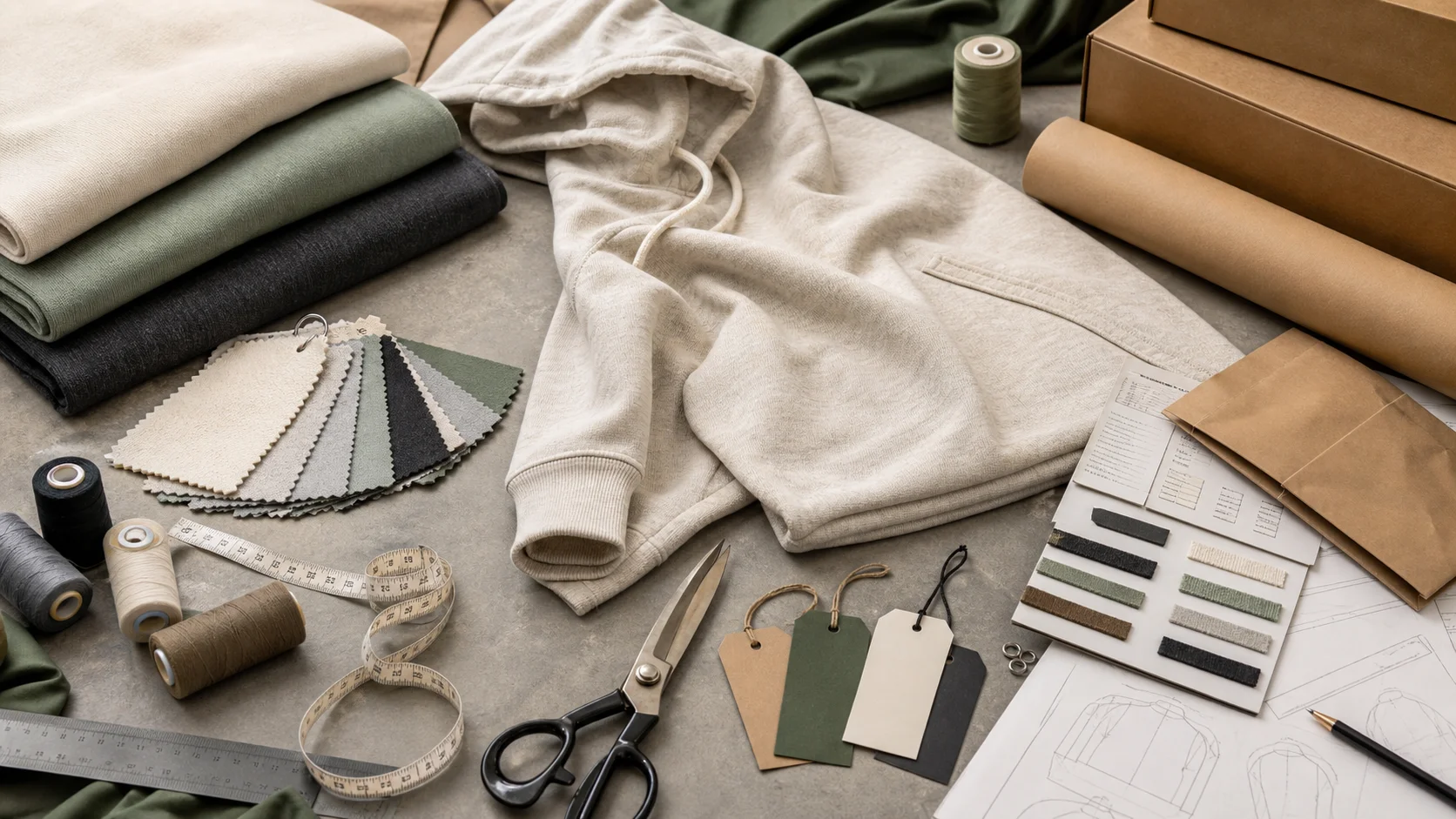
Private Label Vendor Audit Checklist with checks for samples, fit, MOQ, QC evidence, pricing terms, and delivery risk.
Fast answer: Private Label Vendor Audit Checklist: Capacity, Samples, and QC Evidence should be judged by production evidence, not by a generic sourcing promise. The buyer needs sample proof, cost breakdowns, QC checkpoints, and delivery buffers in writing.
Ask for recent sample photos, measurement tolerances, fabric or print test assumptions, decoration test notes, packing examples, and a named inspection checkpoint. These details show whether the team can repeat an approved sample at bulk volume.
Separate garment cost, decoration, labels, packaging, sampling, testing, freight, and rush charges. When every cost line is visible, it becomes easier to reduce colorways, adjust size depth, or reserve more time for sampling.
Choosing a private label clothing supplier is one of the most important decisions a brand can make. The right manufacturer helps you launch faster, maintain quality, protect your margins, and build a product line customers trust. The wrong one can cause delays, inconsistent sizing, poor workmanship, compliance issues, and costly rework that damages your reputation before your brand even has a chance to grow.
That is why a structured private label clothing supplier audit checklist is essential. Instead of relying on a polished sales pitch, you need a practical process for evaluating whether a manufacturer can actually deliver on your requirements. This article walks you through exactly what to inspect, what questions to ask, which red flags to avoid, and how to compare suppliers objectively before you commit.
If you are in the early stages of sourcing, it can also help to review a manufacturer’s capabilities in detail on pages like our services page, learn more about the team on about us, or reach out directly through contact us to discuss your requirements.
A private label supplier is more than a vendor. They become an extension of your business. They influence your product quality, lead times, pricing, inventory planning, and customer satisfaction. In private label apparel, even small mistakes in fabric selection, stitching, labeling, packaging, or size grading can create a chain reaction of operational problems.
An audit helps you answer the most important question: can this supplier consistently produce the product you need at the quality level your brand requires?
Without a formal vetting process, many brands make decisions based on price alone. That approach often leads to hidden costs later, including:
A supplier audit reduces those risks and gives you a clearer view of the manufacturer’s actual strengths, limitations, and long-term fit with your brand.
A good audit should examine both operational capability and business reliability. In other words, you are not only checking whether the factory can sew garments. You are checking whether they can do so consistently, ethically, on time, and at the quality level your market expects.
At minimum, your audit should review the following areas:
Depending on your product category, you may also need to verify technical capabilities such as cut-and-sew expertise, embroidery, printing, wash treatments, sustainable material sourcing, or custom labeling.
Use the checklist below to compare manufacturers consistently. The goal is not just to find a supplier that can say yes to everything. The goal is to find one with a verifiable process, transparent communication, and enough operational strength to support your business as it grows.
Start by confirming that the supplier is a legitimate business. Ask for the company registration number, business license, tax identification details, and factory address. Cross-check this information where possible. A reliable supplier should have no issue sharing basic business credentials.
Why this matters: A professional private label partner should be easy to identify, trace, and verify. If the company is vague about its legal structure or location, that is a warning sign.
Not all clothing manufacturers are equally strong across all product types. Some are best at basics like T-shirts and hoodies. Others specialize in activewear, knitwear, outerwear, denim, lingerie, kidswear, or premium fashion. Make sure the factory has direct experience with your category.
Ask for examples of similar products they have produced. Review photos, specifications, and, if possible, physical samples. If your product requires special construction or performance features, confirm that the supplier has handled those before.
A supplier may be able to produce your first order but struggle to scale when demand grows. Ask about monthly output, peak season capacity, available production lines, and the number of active clients they serve.
Find out whether the factory can accommodate growth without sacrificing quality or extending lead times. Capacity constraints are a common reason brands miss retail windows or run out of stock.
Samples reveal far more than a sales presentation. Inspect sample quality closely for stitching accuracy, material feel, fit, finish, labeling, color consistency, and overall workmanship. Compare multiple samples if possible.
Pay attention to whether the sample actually reflects the final production standard or whether it appears better than what the factory can deliver at scale. A strong supplier will explain how samples are developed and how production consistency is maintained.
Quality control is a major indicator of manufacturer reliability. Ask how the factory checks fabric before cutting, monitors garments during production, and performs final inspection before shipment. Determine whether they follow a documented quality control process.
Some key questions include:
Private label clothing often depends on the supplier’s ability to source the right materials efficiently. Ask where fabrics and trims come from, how they are tested, and whether the factory can work with your preferred materials or source alternatives if needed.
Also check for consistency. If a supplier cannot maintain the same fabric hand feel, color, or weight across reorder cycles, your product line may vary from batch to batch.
Depending on your market and product type, compliance can be non-negotiable. Ask for relevant certifications and documentation, which may include labor compliance, OEKO-TEX, GOTS, ISO, social audit reports, or other standards relevant to your category.
Even if certifications are not legally required for your product, they can be strong indicators of process maturity and quality discipline. Always verify certificates rather than accepting claims at face value.
Good communication is one of the most underrated signs of a reliable supplier. Pay attention to how quickly they respond, whether they answer questions directly, and whether they provide clear technical information without confusion.
Strong communication reduces errors in tech packs, sampling, approvals, and production. If a supplier is slow, vague, or inconsistent during the sales stage, those problems often become worse after you place an order.
Every private label clothing supplier has a pricing model. Make sure you understand MOQ requirements, sample costs, production pricing tiers, decoration fees, labeling costs, packaging charges, and shipping terms.
Ask for a detailed quotation so you can compare suppliers on an apples-to-apples basis. The cheapest quote is not always the best value if it comes with hidden charges or weak quality control.
Production lead times should be realistic and specific. Ask how long it takes to develop samples, approve materials, begin production, and complete final shipment. Confirm whether timelines change during busy seasons or for complex products.
Reliable suppliers should be transparent about timing and honest about what can affect delivery. If a manufacturer promises unusually fast turnaround without explaining how they achieve it, be cautious.
Private label clothing requires branding details such as woven labels, printed neck labels, hangtags, poly bags, care labels, barcodes, and custom packaging. Confirm that the supplier can handle your branding requirements correctly and consistently.
Labeling mistakes can create compliance issues or make your brand look unprofessional. Review mockups or packaging samples before production begins.
A good supplier should understand the basics of export packaging, carton labeling, customs documentation, and shipping coordination. Ask whether they can arrange freight, work with your forwarder, or assist with international shipment requirements.
This is especially important if you are sourcing across borders and need predictable delivery timelines.
Some suppliers sound excellent until you ask detailed questions. During your audit, pay close attention to red flags that may indicate deeper issues.
One red flag may not be a deal-breaker, but multiple warning signs usually mean you should keep looking.
Use these questions to dig deeper during supplier evaluation. Their answers will tell you a great deal about how they operate.
If a supplier answers these questions clearly and confidently, that is a strong sign they understand the needs of private label brands. If they answer defensively or avoid specifics, proceed carefully.
If possible, visiting the factory in person is the best way to validate what a supplier claims. You can observe workflow, cleanliness, equipment condition, staff organization, and production discipline firsthand. If an in-person visit is not possible, a well-run virtual audit can still provide useful insights.
During a factory visit, look for:
Ask to see real production in progress, not just a showroom or sample room. A polished office does not guarantee a strong production system.
For virtual audits, request live video walkthroughs, close-up footage of equipment, quality inspection records, sample work, and documentation. Good suppliers will be prepared to demonstrate their process openly.
Once you have found a supplier that looks promising, your next step is to protect the relationship with the right documentation. A handshake deal is not enough in apparel manufacturing.
Make sure your agreements cover:
It is also smart to confirm who is responsible for final approvals. If you approve a sample, but production differs materially from that sample, you need a clear process for resolving the issue. Detailed documentation reduces the chance of disputes and keeps expectations aligned.
After you complete your private label clothing supplier audit checklist, compare suppliers side by side using a simple scoring system. Rate each candidate on quality, communication, experience, pricing transparency, capacity, compliance, and flexibility.
Do not choose based on price alone. Instead, weigh the total value of the partnership. A supplier that costs slightly more but delivers consistently, communicates clearly, and scales reliably may save you significant time and money over the life of your brand.
Also think beyond the first order. The best private label manufacturers support long-term growth. They help you refine products, improve margins, and build a stable supply chain as your business expands.
If you are still comparing options, it can help to speak with a manufacturer directly about your product roadmap and sourcing goals. You can start that conversation through our contact page or learn more about the company’s capabilities on our services page.
A private label clothing supplier audit checklist is not just a sourcing tool. It is a risk management system for your brand. By reviewing business legitimacy, production capability, sample quality, quality control, compliance, pricing, and communication, you can make a more informed and confident decision before placing your first order.
The strongest supplier relationships are built on transparency, consistency, and shared expectations. When you audit carefully at the beginning, you greatly increase the chances of successful production, better product quality, and smoother growth later.
At Fabrikn, we understand how important it is to work with a manufacturer that can support your brand with reliability and expertise. If you are evaluating your next private label partner, take the time to ask the right questions, review the right documents, and choose a supplier that aligns with your standards and goals.
Get a free quote from Fabrikn — your trusted B2B clothing manufacturer with 10+ years of experience. MOQ as low as 200 pieces.
Get a Free Quote →It is a structured evaluation tool used to assess whether a clothing manufacturer is capable of producing your private label products reliably, ethically, and at the quality level your brand requires.
Auditing helps reduce risks such as poor quality, delays, hidden costs, compliance issues, and communication problems. It allows you to verify the supplier’s claims before committing.
Prioritize product experience, quality control, communication, production capacity, compliance, and transparency. Price matters, but it should not be the only factor.
A trustworthy manufacturer is transparent about business credentials, provides clear quotations, shares samples and references, explains quality procedures, and communicates promptly and professionally.
If possible, yes. A factory visit gives you the best view of the supplier’s operations. If that is not possible, request a virtual audit with live video walkthroughs and supporting documentation.
Major red flags include vague answers, lack of documentation, refusal to share samples or certifications, unrealistic promises, and inconsistent communication.
Most brands should compare at least three suppliers so they can evaluate differences in pricing, capability, and professionalism more objectively.