
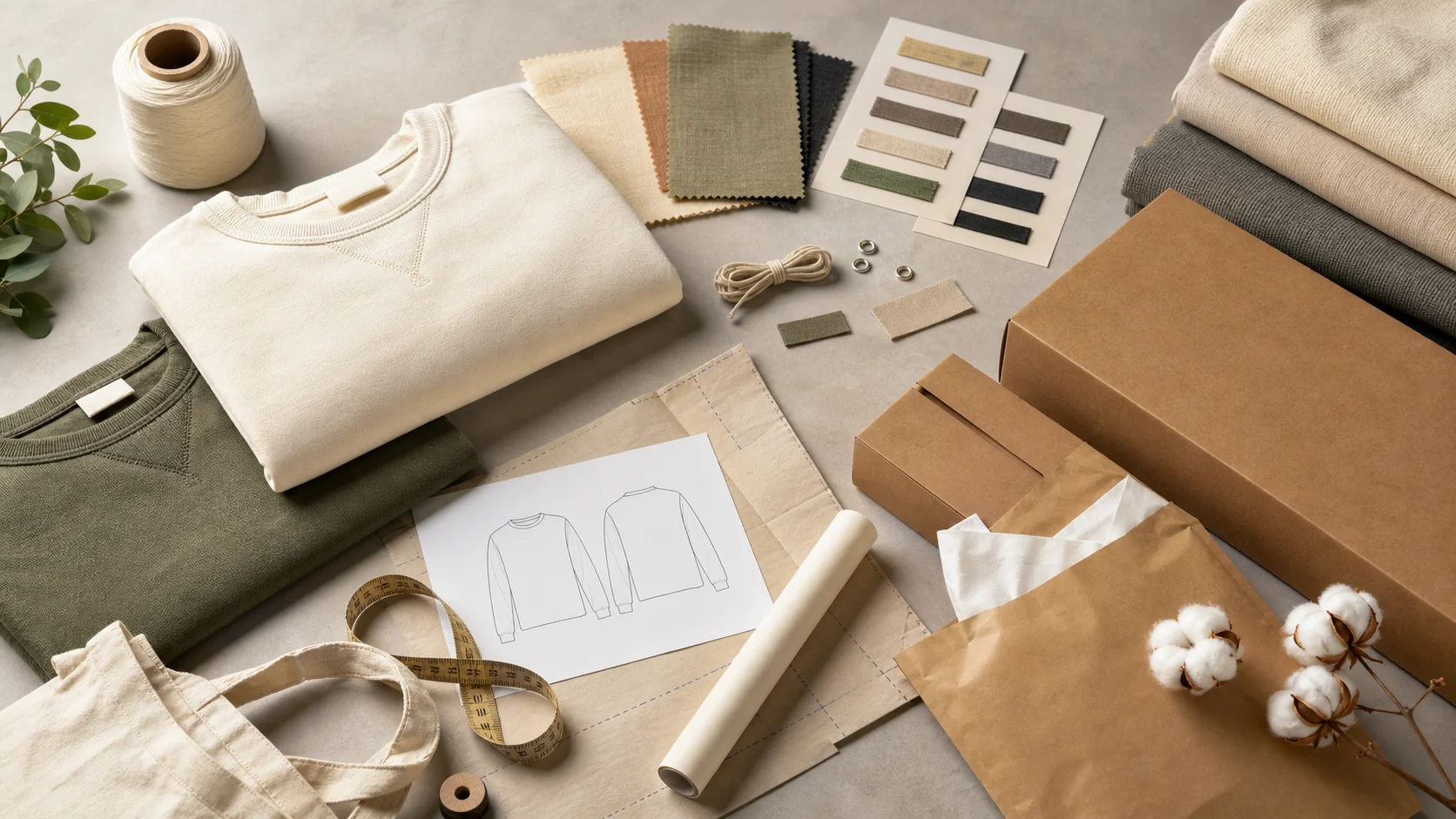
Private Label Clothing Wholesale to Retail Transition with checks for samples, fit, MOQ, QC evidence, pricing terms, and delivery risk.
Fast answer: Private Label Clothing Wholesale to Retail Transition: How should be judged by production evidence, not by a generic sourcing promise. The buyer needs sample proof, cost breakdowns, QC checkpoints, and delivery buffers in writing.
Ask for recent sample photos, measurement tolerances, fabric or print test assumptions, decoration test notes, packing examples, and a named inspection checkpoint. These details show whether the team can repeat an approved sample at bulk volume.
Separate garment cost, decoration, labels, packaging, sampling, testing, freight, and rush charges. When every cost line is visible, it becomes easier to reduce colorways, adjust size depth, or reserve more time for sampling.
The move from private label clothing wholesale to retail is one of the biggest strategic shifts a apparel business can make. In wholesale, your company typically produces garments in bulk and sells them to other businesses, such as boutiques, distributors, marketplaces, or chain stores. In retail, you sell directly to end customers through your own store, e-commerce website, pop-up locations, or hybrid sales channels.
This transition is more than just changing who buys your clothing. It requires a different approach to branding, product development, pricing, inventory, marketing, packaging, and customer service. A successful wholesale-to-retail transition transforms your business from a supplier into a consumer-facing brand with stronger control over pricing, messaging, and long-term growth.
For many private label clothing companies, this move is attractive because retail offers the chance to build brand equity instead of depending solely on bulk orders from third-party buyers. It can also create higher profit margins over time, especially when supported by strong brand positioning and efficient operations.
There are several reasons a private label clothing manufacturer or wholesaler decides to shift into retail. One of the most common is the desire for higher margins. Wholesale usually involves lower per-unit profit because buyers expect volume discounts. Retail allows you to capture the full consumer price, which can substantially increase revenue per item.
Another major reason is control. In wholesale, your brand may be invisible to the final customer. Retail gives you direct access to your audience, better customer data, and more control over how your products are presented and sold.
Brand building is another powerful motivation. When you sell directly to consumers, every product, package, ad, and customer interaction contributes to your brand identity. Over time, this can create loyalty, repeat purchases, and a more defensible business model.
Companies also move toward retail to diversify revenue. Wholesale can be cyclical and dependent on large accounts. Retail, especially e-commerce, can provide a more flexible sales engine with multiple channels and broader market reach.
Understanding the differences between wholesale and retail is essential before making the transition. The two models look similar on the surface because both involve selling apparel, but they operate very differently.
Wholesale customers are businesses. They care about buy-in price, margins, reorder potential, and sell-through performance. Retail customers are individuals. They care about style, fit, quality, brand story, convenience, and emotional appeal.
Wholesale focuses on larger orders with fewer buyers. Retail focuses on smaller orders spread across many customers. This changes your forecasting, inventory allocation, and fulfillment requirements.
Wholesale brands may rely on relationships and product performance. Retail brands must communicate a clear identity, visual style, and value proposition across every touchpoint.
Wholesale pricing is built around discounts and volume. Retail pricing includes higher markups to cover marketing, customer acquisition, shipping, packaging, returns, and overhead.
Wholesale operations often center on production schedules and B2B logistics. Retail operations require customer service, order management systems, returns handling, and omnichannel fulfillment.
Wholesale demand usually comes from sales teams, relationships, or buyer outreach. Retail demand comes from marketing, SEO, paid ads, social media, email, and brand awareness.
A successful transition should be handled in stages. Moving too quickly can cause inventory problems, cash flow pressure, and weak brand positioning. A structured plan gives your business the best chance of success.
Start by evaluating which products are most suitable for retail. Not every wholesale item will work in a consumer marketplace. Look for styles with strong visual appeal, broad customer demand, clear differentiation, and manageable sizing or return risk.
Ask which products already receive strong buyer interest, which ones have stable production quality, and which ones can support a higher retail price. Your existing wholesale line may become the foundation of your retail assortment, but it should likely be refined rather than copied exactly.
Retail brands must know exactly who they are selling to. Develop a clear customer profile based on lifestyle, budget, preferred style, shopping behavior, and pain points. This should guide product selection, messaging, photography, packaging, and marketing channels.
For example, a wholesale supplier of basics might reposition into a direct-to-consumer brand focused on premium essentials for young professionals. A streetwear private label company might target fashion-forward shoppers looking for limited drops and exclusivity.
Retail success depends on more than product quality. You need a cohesive brand identity that makes your clothing memorable. This includes your name, logo, color palette, tone of voice, packaging, and overall visual style.
Your brand should communicate a clear promise. Are you affordable and practical? Premium and elevated? Trend-driven and bold? Sustainable and ethical? The stronger your positioning, the easier it will be to attract the right customer.
Retail customers often prefer curated collections over broad catalogs. Instead of offering everything, focus on a tight product line that tells a story and makes buying easier. A smaller assortment can also help you manage inventory and cash flow more effectively during the early stages of the transition.
Consider launching with hero products, seasonal bestsellers, and complementary items that encourage cross-selling. Keep your assortment focused enough to be manageable, but flexible enough to adapt based on demand.
In wholesale, product specs and samples may be enough. In retail, presentation matters a great deal. You need professional product photography, fit images, lifestyle content, size guidance, and compelling descriptions. Consumers cannot touch the garment before buying, so your visuals must do the selling.
Packaging also becomes part of the customer experience. Branded labels, hang tags, inserts, and shipping presentation all affect how buyers perceive your value.
Retail requires systems for order processing, inventory management, returns, customer service, and analytics. Choose tools that can scale with your business. If you plan to sell online, your e-commerce platform should integrate with your production and fulfillment workflows.
For many brands, this is the point where support from an experienced manufacturing partner becomes especially valuable. If you are building a retail-ready apparel line, explore Fabrikn’s capabilities at /services/.
Your product strategy should align with your brand story and the needs of your target customer. In retail, every SKU must earn its place. Because carrying inventory is expensive, each garment should serve a specific role in your assortment.
One effective strategy is to build around a core collection. These are your staple items that remain available throughout the year. Then add seasonal or limited-edition pieces to create excitement and encourage repeat visits. This balance helps stabilize revenue while keeping the brand fresh.
Fit and quality are critical. Retail customers are less forgiving than wholesale buyers because they make personal purchasing decisions and expect a polished experience. Before launch, test products thoroughly for fabric performance, stitching quality, sizing consistency, and wearability.
Brand storytelling should also be built into your product strategy. Rather than simply listing garments, explain why the collection exists, what inspired it, and what makes it unique. This emotional connection can make the difference between a one-time purchase and a loyal customer.
One of the most challenging parts of the private label clothing wholesale to retail transition is managing operations. Wholesale businesses often produce large batches for a small number of clients, while retail requires a more complex distribution model with higher order frequency and more touchpoints.
Inventory planning becomes much more important. If you overproduce, you risk tying up capital in unsold goods. If you underproduce, you risk missed sales and disappointed customers. Forecasting should be informed by historical wholesale performance, market testing, preorders, and early digital demand signals.
Fulfillment also changes. Retail customers expect fast shipping, accurate orders, and convenient returns. Your warehouse or third-party logistics partner should be ready to handle individual parcels, branded packaging, and customer service issues. Even small mistakes can hurt reviews and repeat purchase rates.
Returns are especially important in apparel retail because fit issues are common. To reduce return rates, provide detailed sizing charts, garment measurements, fit notes, and customer support. Clear product pages and consistent sizing can significantly improve conversion and lower operational costs.
Pricing is one of the biggest differences between wholesale and retail. Wholesale pricing is designed for buyer margins, while retail pricing must cover all the costs of acquiring and serving the end customer. That means your pricing model has to be more comprehensive.
When determining retail prices, account for production cost, freight, duties, packaging, payment processing fees, marketing spend, returns, warehousing, and overhead. Many brands underestimate these costs and set prices too low, which can create thin margins even when revenue looks strong.
A good rule is to work backward from your target gross margin. Decide how much profit you need after all direct costs and then set prices accordingly. If your wholesale product was previously priced for bulk buyers, the retail version may need adjustments in construction, materials, packaging, or perceived value to justify the higher price point.
You may also need different pricing tiers. Some brands launch with accessible entry-level items to attract new customers, then offer premium items that increase average order value. Bundles, sets, and add-ons can also improve profitability.
When you move into retail, marketing becomes a central growth engine. Wholesale sales depend on buyers, but retail sales depend on demand generation. Your ability to attract traffic and convert shoppers will determine how fast your brand grows.
SEO helps your products and content appear in search results when customers are actively looking for apparel. Build category pages, product pages, and blog content around keywords that match your niche and products. Over time, organic traffic can become a powerful acquisition channel.
Social platforms are essential for visual categories like clothing. Use them to showcase styling ideas, behind-the-scenes content, product launches, and customer testimonials. Social content should do more than entertain; it should drive trust and sales.
Email is one of the most effective retail channels because it lets you build direct relationships with customers. Use welcome flows, product launch announcements, abandoned cart emails, and post-purchase follow-ups to increase repeat purchases.
Paid ads can accelerate growth, especially at launch. However, they work best when supported by strong creative, clear positioning, and a high-converting website. If your product pages or branding are weak, ads will be expensive and inefficient.
Some brands use retail partnerships or temporary pop-up shops to test customer response before expanding. This approach can be especially useful for businesses coming from wholesale because it provides real consumer feedback without requiring a full retail infrastructure immediately.
For brands that want to reposition or build a retail-first line, it can help to learn more about the company behind the manufacturing process. Visit /about-us/ to see how Fabrikn approaches apparel production and brand support.
Many brands struggle with the wholesale-to-retail transition because they try to apply a wholesale mindset to a retail business. Avoiding these common mistakes can save time, money, and frustration.
Another common issue is poor timing. A business may rush into retail before production, operations, and branding are ready. It is better to launch with fewer products and stronger execution than to launch broadly and create a weak first impression.
Transitioning from private label wholesale to retail requires a manufacturing partner that understands both production efficiency and brand-building needs. Fabrikn works with businesses that want to move from bulk sales into a more profitable consumer-facing model by creating clothing lines that are retail-ready from day one.
That means more than just making garments. It means helping brands think through product development, materials, fit, labeling, consistency, and scalability. It also means supporting apparel companies that need flexible production, reliable quality control, and a manufacturing process aligned with retail growth.
If you are planning a transition and want a partner to help you develop your next phase, explore our full range of capabilities at /services/ or get in touch through /contact-us/.
The private label clothing wholesale to retail transition can unlock stronger margins, deeper brand value, and greater long-term control over your business. But success depends on more than simply selling direct to consumers. It requires a new mindset, a refined product strategy, tighter operations, and a marketing system built for retail demand.
By auditing your product line, defining your audience, creating a memorable brand, and preparing your inventory and fulfillment systems, you can make the shift with confidence. The brands that succeed in this transition are the ones that treat retail as a full business model, not just a new sales channel.
If your goal is to move from bulk sales to a profitable retail brand, now is the time to build the right foundation.
Get a free quote from Fabrikn — your trusted B2B clothing manufacturer with 10+ years of experience. MOQ as low as 200 pieces.
Get a Free Quote →It is the process of moving from selling apparel in bulk to other businesses to selling directly to consumers under your own brand through retail channels such as e-commerce or physical stores.
Retail can be more profitable because it allows you to capture the full consumer price, but it also comes with higher costs for marketing, fulfillment, returns, and customer service. Profitability depends on execution.
Products with strong visual appeal, consistent quality, clear fit, and broad customer demand usually work best. Start with items that are easy to market and support a strong brand story.
Many brands start with a focused assortment of core products rather than a large catalog. A smaller, well-curated launch can reduce risk and make inventory management easier.
In many cases, yes. Even if your product stays the same, retail usually requires a stronger customer-facing brand identity, improved packaging, better imagery, and clearer messaging.
Yes, many clothing companies use a hybrid model. However, you should manage pricing, channel conflict, and brand positioning carefully so the two channels support each other rather than compete.
Fabrikn supports apparel brands with manufacturing services that can help turn a bulk-focused product line into a retail-ready collection. You can learn more at /services/ or reach out at /contact-us/.