
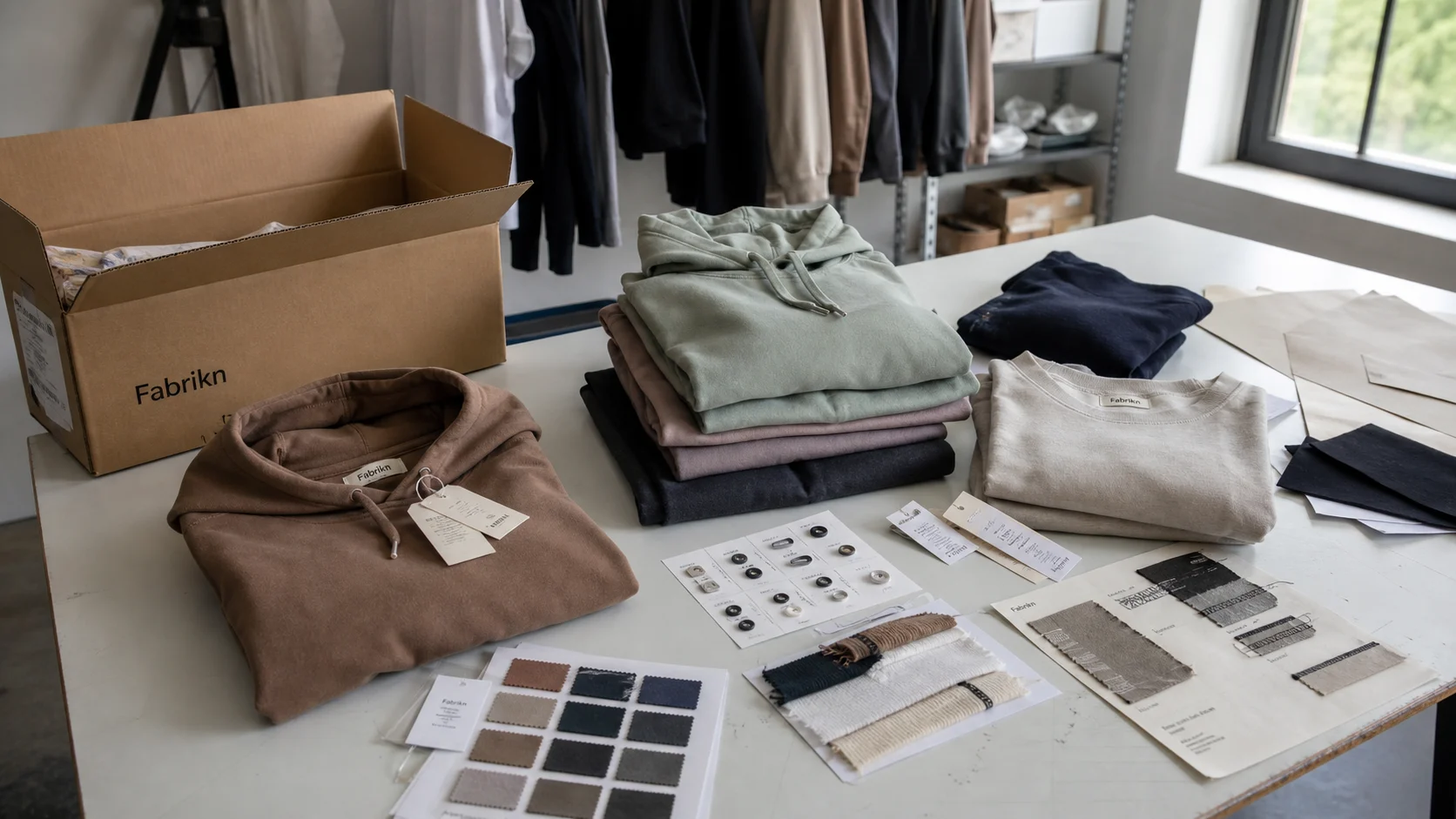
Private Label Clothing Wholesaler vs Direct to Consumer with checks for samples, fit, MOQ, QC evidence, pricing terms, and delivery risk.
Fast answer: Private Label Clothing Wholesaler vs Direct to Consumer: should be judged by production evidence, not by a generic sourcing promise. The buyer needs sample proof, cost breakdowns, QC checkpoints, and delivery buffers in writing.
Ask for recent sample photos, measurement tolerances, fabric or print test assumptions, decoration test notes, packing examples, and a named inspection checkpoint. These details show whether the team can repeat an approved sample at bulk volume.
Separate garment cost, decoration, labels, packaging, sampling, testing, freight, and rush charges. When every cost line is visible, it becomes easier to reduce colorways, adjust size depth, or reserve more time for sampling.
If you are building a fashion brand, one of the most important decisions you will make is how you want to sell. The two most common paths are working with a private label clothing wholesaler or launching a direct to consumer brand. Each model can work well, but they serve different goals, budgets, and growth stages.
The debate around private label clothing wholesaler vs direct to consumer is not just about where products are sold. It is about how your brand is built, how inventory is managed, how much control you have over pricing and customer experience, and how quickly you can scale. For many fashion founders, the best choice depends on whether the priority is speed, margins, brand ownership, or operational simplicity.
In this article, we will break down both business models, compare their strengths and weaknesses, and help you decide which one fits your fashion brand best. We will also look at how a manufacturing partner like Fabrikn can help you create a stronger private label strategy with custom clothing services, production support, and brand-building guidance.
A private label clothing wholesaler manufactures apparel that is sold under your brand name. Instead of creating every garment from scratch, you typically choose from existing styles, fabrics, and base patterns that can be customized with your logo, labels, trims, packaging, and sometimes color or fit modifications.
This model is especially popular for fashion startups, boutiques, and brands that want to enter the market quickly without investing heavily in product development. The wholesaler handles production at scale, and you purchase inventory in bulk to resell through your chosen channels, such as retail stores, marketplaces, or your own website.
Private label wholesaling is often attractive because it reduces the time needed to launch a collection. It also gives brands access to established production systems, which can lower the risk of technical errors and improve consistency across repeat orders.
For founders who want a practical route into fashion, this model can be a strong starting point. If you want to explore how product development and manufacturing can support your brand identity, you can also learn more on our about us page.
Direct to consumer, often called DTC or D2C, means a brand sells directly to the end customer without relying on traditional wholesale intermediaries. This is usually done through an e-commerce store, social media storefronts, brand pop-ups, or owned retail locations.
In a DTC model, the brand controls the full customer journey. That includes product presentation, pricing, marketing, customer service, and post-purchase engagement. Fashion brands often choose DTC because it allows them to build a stronger relationship with buyers and collect first-party customer data.
However, DTC is not only about online selling. It is a complete business model that requires strong branding, digital marketing, inventory planning, fulfillment, and customer acquisition. While the reward can be high, the operational demands are also significant.
Although both models can involve branded apparel, the difference between private label clothing wholesaler vs direct to consumer is significant. One focuses more on sourcing and distribution, while the other emphasizes customer ownership and marketing control.
In a private label wholesale model, the customer relationship may be shared with retailers or distributors if you sell through third parties. If you sell through your own site, you retain more control, but the model still often relies on bulk inventory and broader distribution strategies.
In DTC, you own the customer relationship from the start. You can track buyer behavior, build email and SMS lists, personalize offers, and create loyalty programs based on direct interaction.
Wholesale brands usually price products at a margin that leaves room for retailers to resell profitably. That means your own per-unit profit may be lower than in DTC, but you can move larger volumes through established channels.
DTC brands usually have much more control over retail pricing. This can lead to higher gross margins, but the increased marketing and fulfillment costs can reduce net profit if demand is not managed well.
Private label wholesale often requires larger production runs, which can create inventory risk if products do not sell as expected. At the same time, larger orders may reduce the unit cost and improve production efficiency.
DTC brands also carry inventory risk, but many start with smaller drops or test-and-learn methods to reduce exposure. The challenge in DTC is that unsold stock can be expensive to store, discount, or liquidate if customer demand is misjudged.
Wholesale brands can sometimes rely more on buyer relationships, retail accounts, and distribution partnerships. This does not eliminate the need for marketing, but it can reduce dependence on paid digital acquisition.
DTC brands must invest heavily in marketing, including social media, paid ads, influencer campaigns, SEO, content, and email automation. Without strong traffic generation, even a great product can struggle to sell.
Private label wholesaling often allows faster market entry because you are adapting existing products rather than developing entirely new ones. This makes it easier to launch a collection quickly and validate demand.
DTC can also be fast if you use a simplified assortment, but building a brand that converts online usually takes more time due to the need for branding, website optimization, and audience building.
This model is often a smart choice for fashion brands that want to move quickly and avoid the cost of building products from the ground up. A reputable production partner can help you develop a cleaner supply chain and maintain quality across every order.
One of the biggest risks with wholesaling is becoming too dependent on commodity products. If the clothing looks too generic, your brand may struggle to stand out. That is why customization, fabric selection, packaging, and fit development matter so much in private label clothing.
DTC is attractive because it puts the brand in control. You can create a polished online shopping experience, test new products quickly, and use customer insights to refine your collections. For fashion brands with a clear niche or strong aesthetic, DTC can be a powerful engine for growth.
Many brands underestimate how hard it is to generate traffic profitably online. Even with a strong product, DTC success depends on how well your brand can attract attention, convert visitors, and keep customers coming back. This is why product quality, brand positioning, and supply chain reliability are just as important as website design.
Choosing between private label clothing wholesaler vs direct to consumer depends on your goals, resources, and market positioning. There is no universal winner. The right model is the one that best supports your stage of growth and your long-term business plan.
If you are early in your journey, a private label wholesale approach can help you validate your concept without overcomplicating operations. If your brand already has a clear story, audience, and marketing capability, DTC may give you more strategic control and higher potential margins.
The answers will usually make your decision clearer. Many founders discover that the best model is not the one with the most hype, but the one that matches their operational strengths and growth goals.
Yes. In fact, many successful fashion brands use a hybrid approach. They may begin with private label wholesale to test products and build cash flow, then expand into DTC once they have a stronger brand foundation. Others start DTC to validate demand and later approach wholesale accounts to increase volume.
A hybrid strategy can include selling through your own website while also placing products in select retailers. This can improve reach and reduce dependence on a single sales channel. However, it must be managed carefully so pricing, inventory, and brand positioning stay consistent across all channels.
The key to hybrid success is operational discipline. You need clear inventory planning, channel-specific pricing rules, and a production partner that can support your growth without sacrificing quality. If you are planning a flexible manufacturing strategy, our services page outlines how we help fashion brands move from concept to production with more confidence.
At Fabrikn, we work with fashion brands that need reliable manufacturing, private label customization, and a practical route to market. Whether your strategy leans toward wholesale, direct to consumer, or a combination of both, the quality of your product foundation matters.
We help brands turn ideas into garments that are ready for market. That includes support with fabric selection, fit development, branding details, production planning, and scalable manufacturing. The goal is to help you launch with less friction and build a clothing line that reflects your vision.
If you are exploring a new collection or comparing sourcing options, the best next step is often a direct conversation. Reach out through our contact us page to discuss your product goals, timelines, and brand direction.
Get a free quote from Fabrikn — your trusted B2B clothing manufacturer with 10+ years of experience. MOQ as low as 200 pieces.
Get a Free Quote →A private label clothing wholesaler manufactures branded apparel for resale, often in bulk and sometimes through multiple channels. Direct to consumer means the brand sells directly to the end customer, usually through its own website or owned sales channels.
DTC can offer higher gross margins because you sell at full retail pricing, but it also comes with higher marketing and fulfillment costs. Private label wholesale may offer lower margins per unit, but it can support larger order volumes and lower customer acquisition costs in some cases.
Private label can be a strong option for startups because it allows faster launch and lower product development complexity. It is especially useful for brands that want to validate demand before investing in fully custom collections.
Usually, yes. DTC brands need ongoing investment in content, paid media, social media, and brand-building to attract customers. Organic growth is possible, but it often takes time and consistency.
Yes. Many brands start with private label wholesale to generate revenue and learn the market, then launch DTC once they have stronger branding and more capital. Others do the reverse.
Fabrikn supports fashion brands with private label manufacturing and production services that help bring clothing ideas to market efficiently. If you are ready to discuss your project, visit our contact us page or learn more about our company background.