
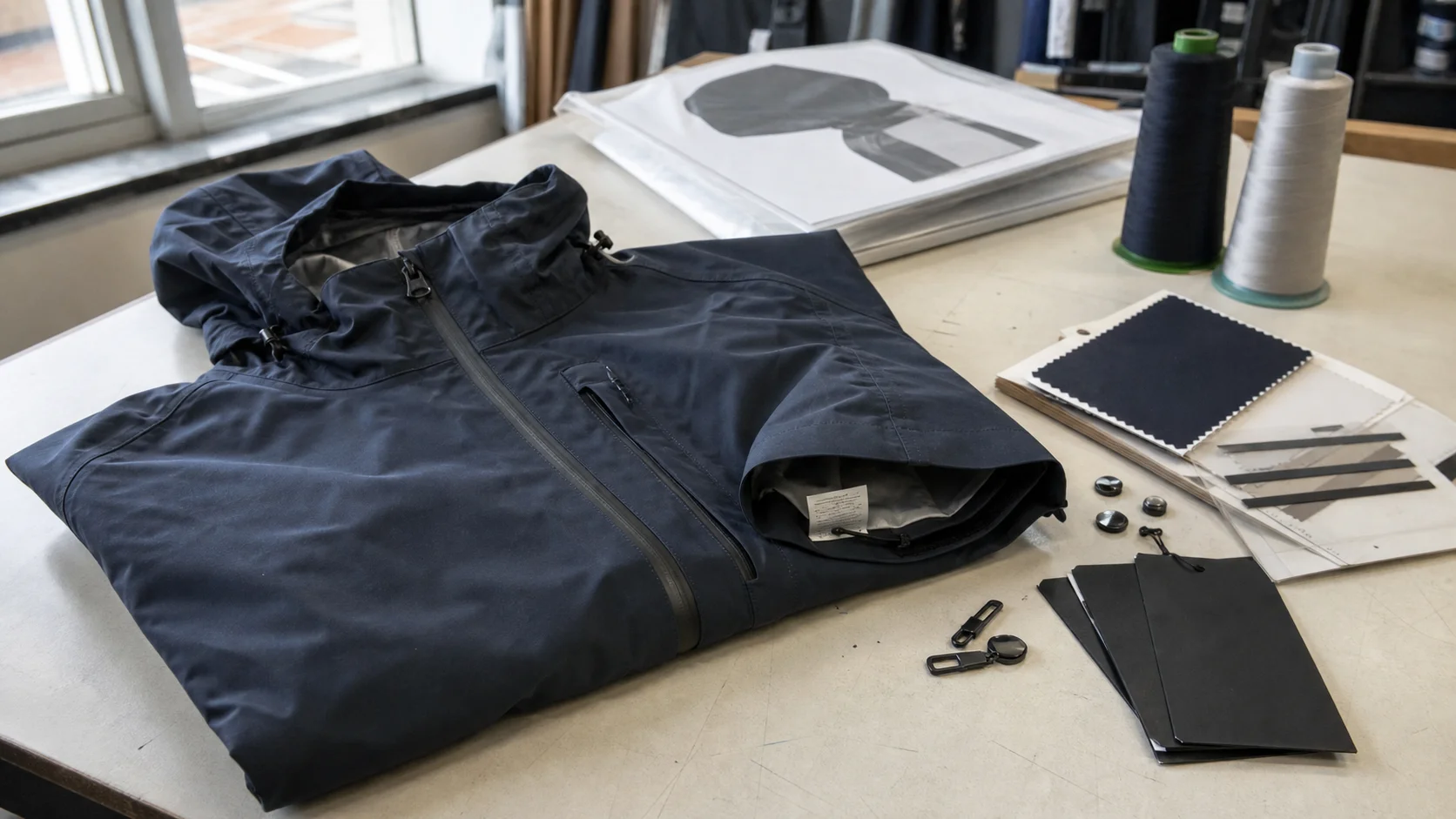
A product-focused outline for outdoor retailers sourcing private label jackets, covering shell fabrics, insulation, weather performance, decoration, fit,...
Private Label Jackets Wholesale for Outdoor Retailers - Fabrikn production reference
Private label jackets wholesale for outdoor retailers sits at the point where merchandising, weather performance, and margin discipline meet. For outdoor brands and retailers, jackets are not just seasonal filler. They carry the weight of customer expectations on fit, durability, and visible value. A jacket that looks good on a rack but fails in wet weather or looks cheap after two weeks of wear creates returns, weak repeat business, and inventory strain. A well-executed private label program, by contrast, gives a retailer more control over fabric choice, trim details, brand identity, and price architecture.
The appeal is straightforward. Private label lets a retailer own the product story without building a factory network from scratch. Wholesale buying keeps cost structures predictable enough to support planned margin targets. For outdoor categories, the real challenge is less about finding a supplier and more about specifying the jacket correctly. Shell fabric, lining, insulation, seam construction, waterproof ratings, and trim decisions all influence how the product performs in the field and how it is perceived on the sales floor.
Outdoor retail is a category where the customer notices performance quickly. If a jacket leaks, pills, snags, or loses loft, the problem shows up immediately in reviews and returns. Private label gives the retailer room to tune the product to its actual customer base instead of relying on a broad-market style that may not fit local weather or price expectations.
There is also a margin reason to take the category seriously. Jackets carry enough material value that small improvements in sourcing can make a real difference in gross margin. A better fabric booking, a cleaner trim package, or a more efficient fill specification can change unit economics without making the garment feel stripped down. That said, cost cutting has a ceiling. If the shell fabric is too light, the zipper is weak, or the waterproofing is only cosmetic, the savings are false.
For outdoor retailers, private label works best when the assortment is built around use cases rather than vague style names. A rain shell, an insulated commuter jacket, a softshell layer, and a heavy winter parka each serve a different need. Buyers who define the function first usually end up with clearer pricing and fewer specification mistakes.
The best private label jacket assortment usually starts with a few core categories. Each has a different cost profile and different operational risks.
Rain shells are often the cleanest entry point for an outdoor retailer because they are lightweight, versatile, and easier to warehouse than insulated pieces. They usually use woven polyester or nylon shells with a waterproof or water-resistant coating or membrane. Taped seams matter here. A shell without proper seam sealing may look acceptable in photo samples and still fail in real rain.
Softshell jackets blend comfort, stretch, and moderate weather protection. They are popular for hiking, travel, and workwear-adjacent outdoor use. Buyers should pay attention to face fabric weight, stretch recovery, brushed backing quality, and abrasion resistance. A softshell that feels great in hand but pills quickly will underperform in stores.
Insulated jackets include synthetic fill and down alternatives, and sometimes true down. Synthetic fill is often easier for private label programs because it is less sensitive to supply swings and easier to position on price. Loft consistency, fill weight, and baffle design matter. A jacket can look warm on paper and still feel flat if the fill distribution is weak.
Hardshell jackets are closer to technical gear than everyday apparel. They need stronger construction control, more exact testing, and tighter tolerance on membrane performance. Retailers can still private label this category, but the product development process should be stricter. It is not the place for vague spec sheets.
Fleece jackets and hybrid layers are often easier to source at lower MOQs. They are useful for retailers that want a lower-risk starting point before moving into more complex waterproof styles. The main issues are fabric handfeel, pilling, stitch quality, and zipper reliability.
Private label jackets are won or lost in the specification sheet. A buyer who signs off on style alone is taking unnecessary risk. The following items should be defined before sampling progresses too far.
Fabric testing matters more than many first-time buyers expect. A jacket can pass a basic visual check and still fail on colorfastness, shrinkage, seam slippage, or waterproof performance. For outdoor retailers, asking for test data is not excessive. It is a normal part of responsible buying.
Buyers should treat fabric and trim decisions as commercial decisions, not decoration. A better zipper or a sturdier membrane may cost more up front, but it often pays for itself in fewer defects and fewer customer complaints.
Spec clarity also helps with merchandising. If the jacket is meant for light hiking and city wear, the construction can be lighter and the design cleaner. If it is meant for winter retail, the shell weight, fill level, hood structure, cuff finish, and pocket depth need to support cold-weather use. One jacket cannot do every job well.
MOQ is one of the first commercial issues buyers run into. For private label jackets wholesale, typical MOQ ranges vary widely by construction and supplier capability. Simple fleece or softshell styles may start around 300 to 500 pieces per color, while more technical waterproof jackets often land closer to 500 to 1,000 pieces or more per style. Complex programs with custom fabric, special trims, or multiple colorways may require higher commitments.
Sampling should not be rushed. A practical approval path usually includes these steps:
Lead time depends on several moving parts. Stock fabric and standard trims shorten schedules. Custom-dyed shells, specialty zippers, waterproof tapes, and branded hardware add time. Weatherproof jackets usually require more coordination than basic fleece, so a buyer should not assume a standard apparel calendar will hold. A realistic total timeline often runs from 8 to 16 weeks after sample approval, with technical outerwear taking longer.
Seasonality matters too. Outdoor retailers should work backward from delivery windows, not factory availability. If the product must land before the first cold spell, sample approval, lab testing, and production booking need to be finalized early. Delays on trim sourcing or test corrections can move the entire calendar.
Jackets present a mix of appearance risk and function risk. A buyer can catch some issues visually, but others need closer inspection. The biggest problem areas are usually repeatable and easy to miss in a rushed handoff.
Inspection should include measurement checks, workmanship review, carton counts, label accuracy, and a functional review of closures and trims. For technical jackets, buyers should also ask whether sample testing covered water resistance, seam strength, and zipper performance. Third-party inspection can be worth the cost when order values are high or when the style is new to the supplier.
There is a tradeoff here. Tight inspection standards protect the retailer, but they also expose supplier weakness earlier in the process. That is useful. A weak supplier can be filtered out before production volume becomes a problem. A strong supplier will usually accept clear standards and respond with corrections, not excuses.
Private label jackets need to fit the retailer’s shelf strategy, not just a product brief. Buyers should decide early where each style sits in the assortment ladder. A value fleece, a mid-tier insulated jacket, and a premium waterproof shell need different price points and different storylines. Without that structure, the line can become crowded with close substitutes.
Pricing should reflect more than cost plus markup. Outdoor consumers respond to performance signals. They compare fabric handfeel, zipper quality, lining comfort, and visible details like hood adjusters and storm flaps. A jacket can justify a stronger retail price if the product tells a coherent story. The opposite is also true. A weak-looking product at a high price invites resistance, even if the spec sheet is acceptable.
Color choice also matters. Outdoor retailers usually benefit from a disciplined color palette with one or two core neutrals and a small number of seasonal or accent colors. Too many colorways complicate forecasting and increase the chance of leftover stock. Simpler assortments often produce better sell-through, especially for first-run private label programs.
The commercial judgment is simple: do not overbuild the first order. It is better to launch a focused jacket program with controlled risk than to chase every feature at once. Smart private label buying usually starts with one or two proven silhouettes, then expands after demand is measured.
Supplier evaluation should focus on process maturity, not marketing language. A supplier that claims to do everything may still struggle with the exact spec you need. Ask direct questions about fabric sourcing, pattern development, testing, sample turnaround, and production control.
Useful checks include the following:
Retailers should be careful about samples that look polished but do not reflect production reality. Sample room behavior and mass production behavior are not always the same. A good supplier can explain where samples may differ from bulk and why. That transparency is worth more than a perfect display sample with no practical path to scale.
For a broader overview of product support and sourcing capability, it helps to review the supplier’s process pages and contact channels early in the conversation. See Fabrikn’s services page for an overview of manufacturing support, and use the contact page to start a sourcing discussion. The about page can help buyers understand the company’s approach before sending a tech pack.
For outdoor retailers looking at private label jackets wholesale, the most practical supplier relationship is one built around specification discipline and clear handoffs. That means starting with a defined target price, target use case, and a tech pack that leaves less room for assumption. Fabrikn’s site structure suggests a service-led approach, which is useful when the product needs to move from concept to sample to bulk without losing control of trims or build details.
A buyer should use the first discussion to narrow the field. Is the jacket intended for rain protection, insulation, active movement, or casual outdoor wear? Is the priority a lower entry cost, stronger performance, or a premium retail presentation? Those answers affect fabric selection, MOQ expectations, and the amount of sampling work that needs to happen before production.
Retailers that want a reliable private label run should request written confirmation on material specs, sample revision policy, production timeline, and quality checkpoints. Clear process notes reduce friction later. Vague promises do not.
Private label jackets are one of the better categories for outdoor retailers that want stronger brand control and more predictable margins. The category rewards buyers who specify carefully and penalizes buyers who rush. The right supplier relationship gives you room to develop a jacket line that fits your customer, your weather conditions, and your price bands. The wrong one usually shows up as a warehouse full of product that looked acceptable on paper but never belonged on the floor.
Get a free quote from Fabrikn — your trusted B2B clothing manufacturer with 10+ years of experience. MOQ as low as 200 pieces.
Get a Free Quote →MOQ depends on construction complexity. Basic fleece or softshell jackets may start around 300 to 500 pieces per style or color, while insulated or waterproof technical jackets often require 500 to 1,000 pieces or more. Custom fabric, special trims, and multiple colorways can push that higher.
Lead times usually range from 8 to 16 weeks after sample approval, though technical outerwear can take longer. Fabric availability, trim sourcing, lab testing, and approval rounds all affect the calendar.
A useful tech pack should include measurements, size grading, construction details, fabric composition, GSM or denier, lining type, zipper specs, branding placement, color references, and packing instructions. The more specific the brief, the fewer surprises in sampling.
Yes. Waterproof jackets usually require tighter control over seams, tapes, membranes, and zipper selection. They also carry more inspection risk because a small construction flaw can affect performance in the field.
Most retailers are better off starting with simpler styles such as fleece, softshell, or basic rain shells before moving into more technical waterproof products. That approach reduces risk and makes it easier to learn the supplier’s production behavior.
The main issues are seam leakage, zipper failure, fill inconsistency, poor stitching, shade variation, and branding errors. Inspection should cover measurements, workmanship, labeling, packaging, and function testing where relevant.