
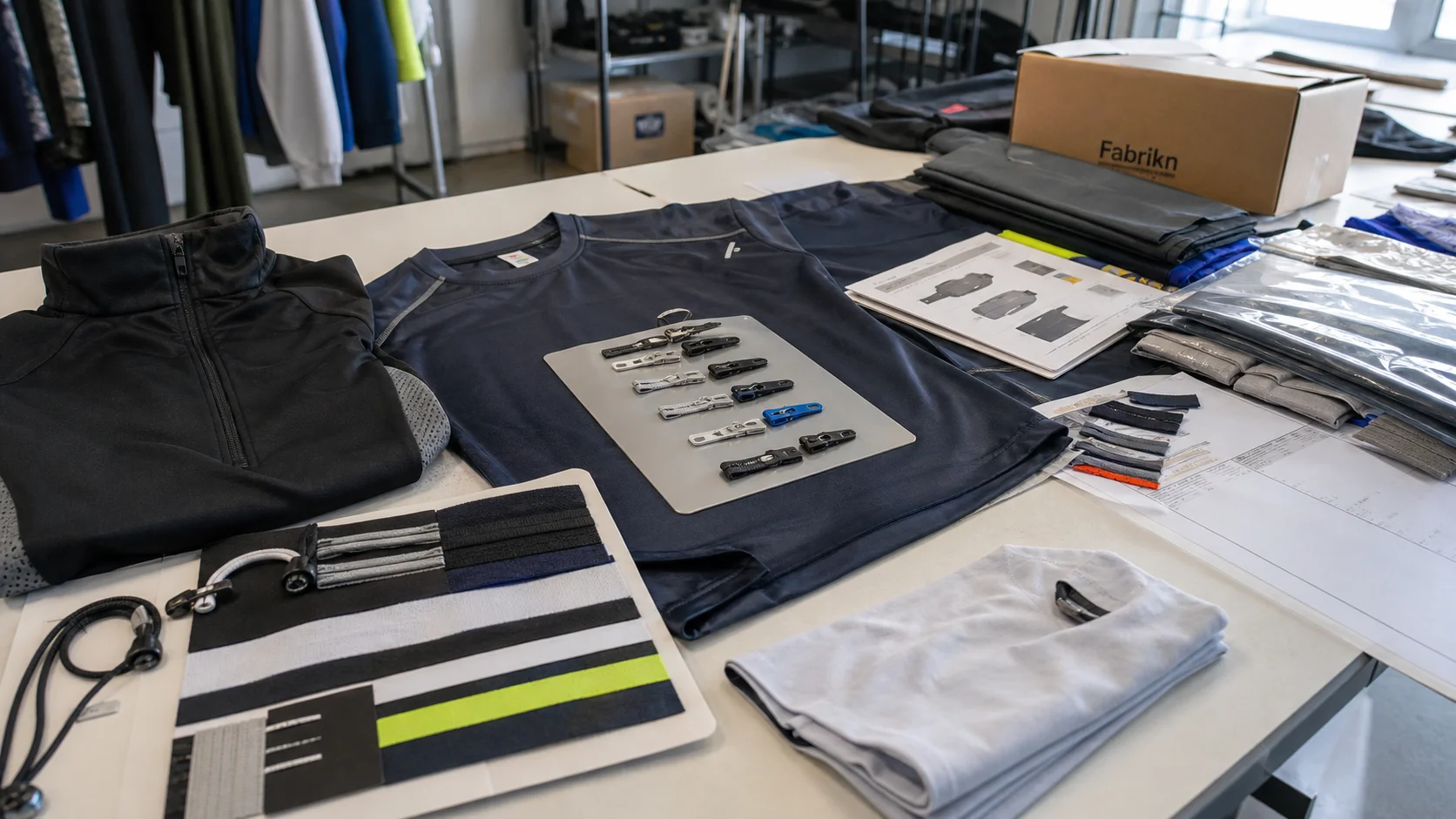
A practical outline for sportswear startups to control shrinkage in private label tracksuits through fiber choice, fabric prep, construction, testing, and...
Private Label Tracksuit Shrinkage Control - Fabrikn production reference
Private label tracksuit shrinkage control is one of those topics that looks technical on paper and commercial in practice. For sportswear startups, it sits at the intersection of fabric selection, decoration method, wash performance, and customer return risk. A tracksuit can look right at bulk approval and still fail after the first home wash if shrinkage was not controlled from the start. That is a product problem, a margin problem, and a brand trust problem, especially when a 2 cm sleeve loss or 3 cm inseam loss pushes a size medium into a small after one wash.
In private label sportswear, shrinkage control is not a single fix. It is a chain of decisions made before production begins: fiber content, knit structure, pre-treatment, pattern allowance, trim compatibility, print cure, wash testing, and final inspection. A startup that treats shrinkage as an afterthought usually pays for it later in size complaints and rework. A better approach is to write shrinkage expectations into the development brief and confirm them at sample stage, not after shipment. For typical fleece or interlock tracksuits, buyers should ask for pre-bulk wash test results before approving fabric cutting, not only a finished garment photo.
Tracksuits are worn as sets, which makes shrinkage visible in a way a single garment often is not. If the jacket hem pulls up after washing while the pants keep their length, the set looks mismatched. If cuffs twist, seams torque, or logos distort, the product feels low grade even if the stitching is clean. Buyers notice this quickly, and so do end customers. Common inspection points include jacket body length from high shoulder point, sleeve length from shoulder seam, half chest, waistband relaxed width, inseam, outseam, and cuff opening before and after laundering.
Sportswear startups are especially exposed because their first order is usually small, their product page promises a fit story, and their cash flow leaves little room for costly remakes. A size chart based only on unstressed measurements is not enough. The real issue is post-wash stability. That means accounting for the fabric’s behavior after heat, moisture, and repeated agitation. For a typical first private label run of 300 to 800 sets, even a 6% shrinkage failure can create dozens of returns if the size chart was built from unwashed samples.
For private label programs, the shrinkage target should be defined in writing. Common commercial targets for tracksuits often sit in the range of 3% to 5% warp or length shrinkage and up to around 5% to 7% in some knit structures, depending on the fabric and end use. The exact tolerance should be confirmed against the construction and the customer’s sizing standard. A low-cost knit that cannot hold shape within those limits may still be acceptable for promotional use, but it is a poor choice for a premium sportswear label. Buyers commonly request one washed size set from SMS or pre-production samples before authorizing bulk cutting.
Practical rule: if the fit depends on exact sleeve or inseam length, do not treat shrinkage as a minor defect. Build it into the pattern and test it before bulk fabric is approved.
Most shrinkage problems trace back to a small number of causes. Knowing them makes it easier to decide where to spend money and where to accept tradeoffs. In sourcing discussions, the most useful supplier answer is not “low shrinkage,” but the actual tested result, such as “2.8% length and 1.9% width after 3 wash cycles at 40°C tumble dry low.”
Polyester-heavy tracksuits usually shrink less than cotton-rich ones, but that does not make them risk free. Heat can still cause dimensional change, especially in brushed surfaces, composite fabrics, and stretch blends. Cotton-poly blends often offer a useful middle ground, but they still need controlled finishing and wash testing. The more stretch the fabric has, the more important it becomes to check recovery as well as shrinkage. A garment that shrinks little but loses shape is still a failed product. For elastane blends, buyers should ask the factory to confirm spandex percentage, heat setting conditions, and whether the fabric was finished on a stenter frame or compacting machine.
Fabric specification is the first real control point. Sportswear startups often focus on handfeel and color first. Those matter, but shrinkage performance should sit near the top of the approval criteria. The right fabric can reduce later problems more effectively than any inspection note. A practical tech pack should state fiber content, GSM tolerance, knit structure, finishing route, colorfastness expectation, and post-wash shrinkage target.
For private label tracksuits, common fabric options include polyester interlock, polyester-spandex jersey, cotton-poly fleece, brushed back fleece, and bonded or composite performance fabrics. Each brings a different shrinkage profile. Typical sourcing specs include 220-260 GSM polyester interlock for lightweight sets, 280-320 GSM French terry for midweight athleisure, and 320-380 GSM brushed fleece for winter-weight tracksuits.
Fabric Type Typical Shrinkage Risk Commercial Notes 100% Polyester Interlock Low Stable if heat is controlled; good for consistent sizing and print clarity. Common private label cost range is about $9.50-$15.00 per full set at 500 MOQ, depending on GSM, zipper quality, and decoration. Polyester-Spandex Blend Low to moderate Better stretch and recovery, but heat can affect fit if curing is too aggressive. Buyers commonly specify 92/8 or 95/5 polyester-spandex and request recovery testing at knees, elbows, and cuffs. Cotton-Poly Fleece Moderate Comfortable and popular, but needs pre-shrink control and wash testing. A common blend is 80/20 or 65/35 cotton-poly fleece at 300-360 GSM with rib cuffs in matching or slightly higher elastane content. Brushed Back Fleece Moderate to higher Soft handfeel can come with more visible dimensional change after laundering. Brushing, shearing, and compaction settings should be consistent between sample and bulk lots. Pure Cotton Knit Higher Often cheapest upfront, but the highest discipline is needed in pre-treatment and grading. Buyers should expect tighter sampling work and may see 4%-8% shrinkage unless pre-shrinking is well controlled.Fabric weight also matters. A heavy fleece may feel more premium, yet a denser construction can behave differently from a lighter knit when exposed to wash and dry cycles. GSM alone does not solve shrinkage. Finishing quality, yarn twist, and knitting tension matter just as much. Startups should ask suppliers not only for the GSM, but also for fabric composition, knit structure, finishing method, and expected wash performance. Common document requests include fabric test reports, shade band approval, bulk roll inspection records, and a signed fabric spec sheet matching the purchase order.
A good supplier will discuss pre-shrinking, compaction, and relaxation time before cutting. If that conversation does not happen, the buyer is probably carrying more risk than the purchase order suggests. For sourcing support and production coordination, see the services page at fabrikn.com.
Because this article sits in the Decoration & Printing category, the decoration method deserves direct attention. Shrinkage control is not only a fabric issue. Print and embellishment choices can amplify or hide fabric movement, and that has consequences for brand presentation. Common decoration processes for tracksuits include plastisol screen printing, water-based screen printing, heat-transfer vinyl, DTF transfers, sublimation on polyester, embroidery, silicone patches, woven labels, and rubber badges.
Screen printing, heat transfer, embroidery, direct-to-garment style decoration, and silicone or rubber labels all interact differently with shrinkage. A large back print on a hoodie-style jacket panel can crack or misalign if the panel shrinks after curing. An embroidered chest logo can pucker if the base fabric moves more than the stabilizer can handle. Heat-transfer graphics can look clean at first and then fail around the edges if the garment sees repeated hot drying. For example, many heat presses run around 140°C-160°C for 8-15 seconds, while some plastisol curing tunnels target roughly 160°C ink cure; those temperatures must be checked against elastane, brushed fleece, and zipper tape heat tolerance.
Decoration should be planned after the fabric has been selected, not before. That sounds obvious, yet it is a common sourcing mistake. A startup may approve a logo placement that looks right on an unwashed sample, only to discover that the actual post-wash panel length shifts the artwork position. A 1 to 2 cm movement can matter on a tracksuit chest or thigh placement. Typical approval checkpoints include artwork size, placement distance from seam, print stretch test, wash test, crocking check, and inspection of logo position after pressing.
For printed tracksuits, the ink system and cure temperature should be matched to the fabric. Higher-cure systems can create extra risk on blends with elastane or on fabrics that are already near their heat limit. Lower-cure systems can protect fabric but may sacrifice wash durability if the supplier is not disciplined. The right answer is not universal. It depends on the substrate, the intended washing instructions, and the quality level the brand is trying to sell. Buyers should request a decorated wash sample, not only a blank garment wash result, because print panels and embroidered areas can behave differently from undecorated fabric.
Tradeoff to watch: lower-cost decoration often saves on factory quotes and increases risk in wear testing. A short-term savings can be erased by misaligned prints, cracked graphics, or rework after wash failures.
If you are still validating suppliers, the about us page can help frame how fabrikn.com positions its manufacturing support. For direct inquiries on sample development, fit, or decoration alignment, use the contact us page.
Shrinkage control works best when it is handled as a staged process. Each step reduces the chance of unpleasant surprises in bulk. A typical development path is fabric selection, lab dip or strike-off, fit sample, size set, pre-production sample, bulk fabric inspection, inline inspection, final random inspection, and carton audit.
Start with how the tracksuit will be worn and washed. Training wear, lifestyle athleisure, and premium retail sets do not need the same tolerance. A performance set expected to go through frequent laundering needs a tighter dimensional target, commonly 3% or less after 3 wash cycles for polyester-rich fabrics and 3%-5% for cotton-poly fleece. The buyer should also define care label assumptions, such as 30°C wash, do not tumble dry, or tumble dry low.
Confirm composition, GSM, knit structure, finishing method, and color before approving pattern grading. For knits, request roll-to-roll consistency checks and ask whether the fabric has been open-width compacted, tubular compacted, or heat set on a stenter. A common fabric approval tolerance is +/-5% GSM and no more than 4-point inspection grade defects above the agreed limit.
Measure the sample before and after laundering. Useful checkpoints include chest, body length, sleeve length, shoulder width, waist relaxed, hip, inseam, outseam, thigh, knee, leg opening, and rib cuff height. For a serious approval, wash at least one full size set and one decorated sample, then compare results against the spec sheet.
If fabric shrinkage is predictable, the pattern can include allowance. For example, if pants inseam loses 3% after washing, a 76 cm inseam may need roughly 78.3 cm before wash, depending on garment construction and finishing. This should be confirmed with a second sample rather than assumed across all sizes.
Before bulk cutting, fabric rolls should be relaxed on cutting tables or roll racks, usually 12-24 hours for stable knits and sometimes longer for heavy fleece. During sewing, factories commonly monitor seam torque, rib tension, zipper waviness, pocket opening distortion, and drawcord shrinkage. Inline inspection should catch panel twisting before the issue becomes a full shipment problem.
Testing should be specific enough that the factory, buyer, and inspection team are judging the same thing. Buyers commonly request dimensional stability testing using methods such as AATCC 135, ISO 6330, or comparable local lab procedures, depending on the target market and retailer requirement. These should be treated as buyer-requested documents, not assumed certifications from the supplier.
A practical testing plan for private label tracksuits usually includes pre-wash and post-wash measurements, appearance after laundering, seam twisting, print cracking, embroidery puckering, colorfastness to washing, colorfastness to rubbing, and pilling resistance. For fleece, buyers often add brushing-loss observation and surface handfeel checks because shrinkage is not the only post-wash failure mode.
Inspection should not rely only on AQL visual defects. A tracksuit can pass stitching inspection and still fail fit after laundering. Common final inspection checkpoints include measurement of randomly selected garments by size, shade matching between jacket and pants, zipper function, drawcord length after wash, rib cuff recovery, logo placement tolerance, care label accuracy, carton ratio, and polybag marking. Typical measurement tolerance is often +/-1 cm for smaller points and +/-2 cm for larger body dimensions, but post-wash tolerance must be agreed separately.
Buyer document requests may include fabric composition report, shrinkage test report, colorfastness test report, fabric roll inspection sheet, needle detection record if required by the sales channel, and restricted substance compliance documents such as OEKO-TEX, REACH, or CPSIA-related reports when applicable to the buyer’s market. These are requirements to request and verify; they should not be treated as automatic supplier credentials.
MOQ and lead time are directly connected to shrinkage control. A very low MOQ often means the supplier is using available fabric or limited stock, which can reduce development time but also reduce control over finishing, shade, and test history. A custom fabric program gives more control but usually increases MOQ and lead time.
For private label tracksuits, common startup MOQs are 300-500 sets per color for stock fabric programs and 800-1,500 sets per color for custom-dyed or custom-knit fabric. Typical sampling lead time is 7-12 business days for a simple blank tracksuit, 12-18 business days with embroidery or heat transfer, and 15-25 business days when custom fabric, lab dips, or multiple wash tests are involved. Bulk production commonly runs 18-22 business days after pre-production approval for stock fabric and 30-45 business days when knitting, dyeing, brushing, compaction, and lab testing are required.
Cost also changes with shrinkage control. A basic polyester interlock tracksuit may quote around $9.50-$15.00 per set at 500 MOQ, while cotton-poly fleece with zipper jacket, rib cuffs, drawcord pants, and one logo application often sits around $16.00-$28.00 per set at 500 MOQ. Decoration can add roughly $0.40-$1.20 for a small screen print, $0.80-$2.50 for embroidery depending on stitch count, and $1.50-$4.00 for larger DTF or heat-transfer artwork. Lab testing, if handled through a third-party lab, can add roughly $80-$250 per test package depending on method and country.
The main lead-time dependencies are fabric availability, dyeing queue, brushing and compaction schedule, trim sourcing, decoration approval, lab test turnaround, and buyer response time on sample comments. A one-day delay approving a washed pre-production sample can become a one-week delay if the cutting line or printing line moves to another order.
Before placing a tracksuit order, startups should make shrinkage control part of the commercial brief, not a side note. The sourcing checklist should be specific enough that a supplier can quote correctly and the buyer can compare factories on the same basis.
A clear checklist helps prevent the common startup problem of approving a good-looking sample that was made from a different fabric lot, different finishing route, or different decoration setup than the final bulk order.
Get a free quote from Fabrikn — your trusted B2B clothing manufacturer with 10+ years of experience. MOQ as low as 200 pieces.
Get a Free Quote →For many commercial tracksuits, buyers target 3%-5% shrinkage after washing, with polyester-rich fabrics often expected closer to 3% and cotton-rich fleece sometimes accepted up to 5% if the size chart and pattern allow for it. Premium retail programs may require tighter limits.
Yes. At minimum, wash one full sample set before fit approval and one decorated sample before bulk approval. Common practice is 1 to 3 wash cycles, with measurements recorded before and after laundering.
No. Polyester usually has better dimensional stability than cotton, but heat from tunnel dryers, heat presses, steam pressing, or poor fabric setting can still cause distortion, especially in polyester-spandex blends or brushed surfaces.
Useful requests include fabric composition, GSM, knit structure, finishing method, shrinkage test results, wash-tested sample photos, bulk fabric roll inspection sheets, decoration cure conditions, and buyer-required compliance documents where applicable.
For stock fabric, typical development and bulk lead time may be about 4-6 weeks after design confirmation. For custom-knit, custom-dyed, brushed, compacted, or lab-tested fabric, 6-9 weeks is more realistic because dyeing, finishing, testing, and approvals add time.