
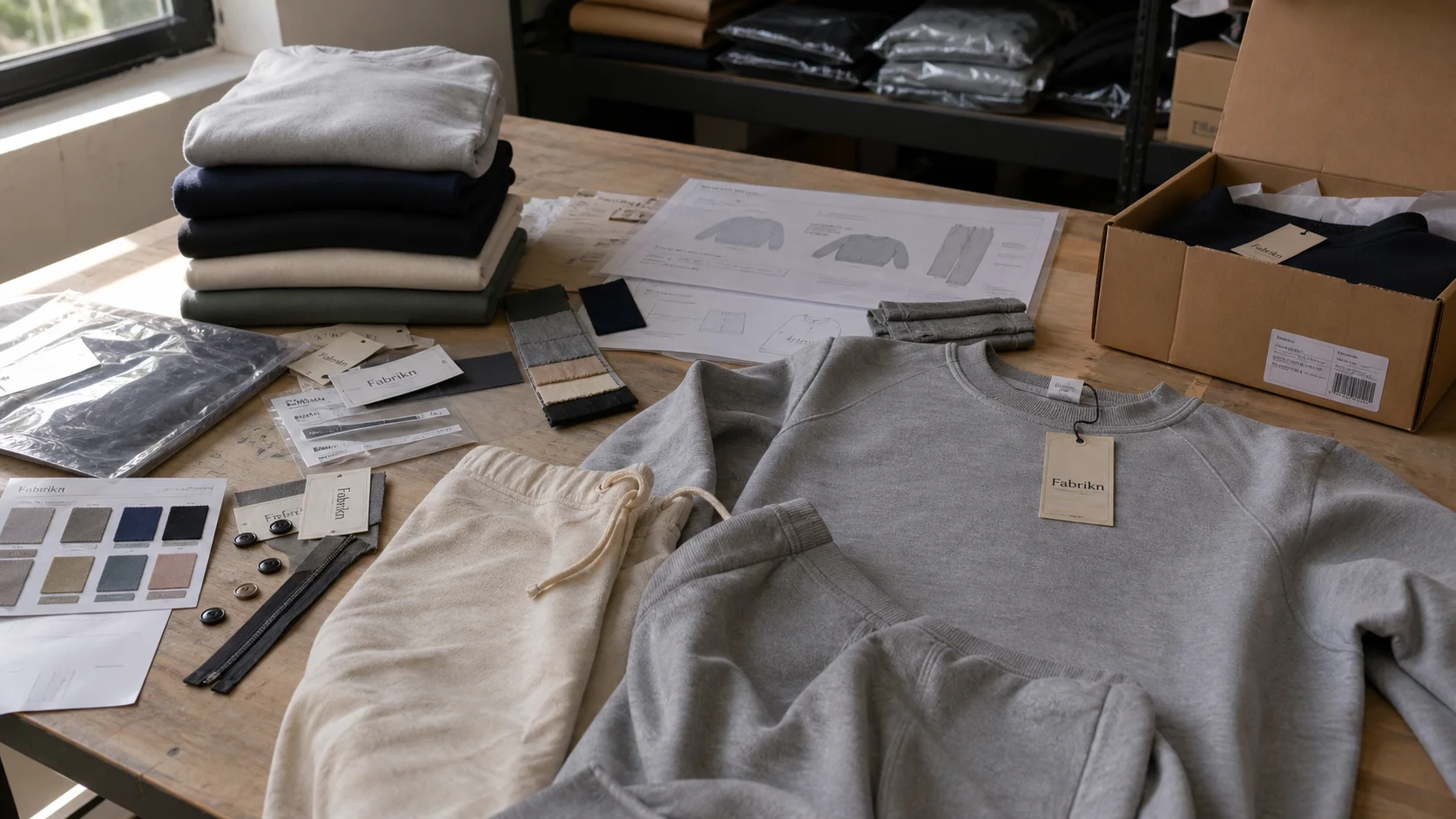
Production Timeline for Custom Hoodies with checks for samples, fit, MOQ, QC evidence, pricing terms, and delivery risk.
Fast answer: Production Timeline for Custom Hoodies: From Sample to Ship should be judged by production evidence, not by a generic sourcing promise. The buyer needs sample proof, cost breakdowns, QC checkpoints, and delivery buffers in writing.
Ask for recent sample photos, measurement tolerances, fabric or print test assumptions, decoration test notes, packing examples, and a named inspection checkpoint. These details show whether the team can repeat an approved sample at bulk volume.
Separate garment cost, decoration, labels, packaging, sampling, testing, freight, and rush charges. When every cost line is visible, it becomes easier to reduce colorways, adjust size depth, or reserve more time for sampling.
The clock on a hoodie order usually starts ticking long before a sewing machine does. A small-batch run can move in 10-14 days. A decorated bulk order often needs 25-45 days. I have seen both, and the difference is rarely caused by sewing alone. The production timeline for custom hoodies is usually shaped by fabric booking, trim sourcing, pattern approval, and decoration slots sitting upstream of the line.
In Vietnam, one buyer’s order for 800 fleece hoodies sat 3-7 days waiting for fabric because the mill had not finished the right 320 GSM French terry. In a domestic cut-and-sew shop, the same style could start cutting in 24-48 hours, but the unit price ran 20-50 percent higher. Speed has a bill attached, especially when a manufacturer is balancing production capacity against MOQ and quality targets.
Hidden handoffs matter more than most buyers expect. A tech pack might be approved on Monday, but if rib knit, drawcord tips, woven labels, and zipper pulls are coming from four suppliers, production can stall for 1-2 weeks before the first panel is cut. That is why a 14-day quote becomes a 28-day order so often. The paper schedule looks clean. The factory floor does not.
Decoration adds its own drag. Embroidery often adds 2-5 days, especially if the logo needs a new digitized file or a dense fill stitch on heavyweight fleece. Screen printing can add 3-7 days depending on color count and curing space. A 1-color chest print is one thing. A 4-color back graphic on 600 pieces is another. Half a shift can vanish while printers wait for dryer time because curing capacity is already booked.
Price, speed, and quality rarely move together. A low quote from a wholesale supplier may mean the factory is betting on stock fabric, limited inspection, or a queue that looks shorter than it really is. A better factory may quote a longer timeline, then hit it. That distinction matters far more than a flattering calendar.
For brands comparing regions, it helps to understand sourcing basics from the U.S. government at trade.gov textile sourcing and trade guidance. If sustainability claims matter, standards from OEKO-TEX certification resources can help you evaluate materials and testing expectations.
Every hoodie order passes through the same chain, even when the dates shift. I break the production timeline for custom hoodies into five stages: approval, materials, cutting and sewing, decoration, then packing and freight. Each stage has its own clock.
Tech pack and artwork approval: 1-5 days for a tidy order, 3-10 days if the logo needs redraws or size measurements are unclear. For a simple embroidered hoodie, samples can be ready in 3-10 days. Fully custom fits, special washes, or new fabrics take 2-4 weeks because the pattern, knit, and trim decisions are all linked.
Fabric knitting, dyeing, and pre-shrink testing: 5-15 days for stocked fabric, 2-4 weeks for custom colors or weights. This is where mills, dye houses, and trim suppliers create dependencies. One missing Pantone approval can hold a whole line. A dye lot mismatch can add 6 days, then another 4 days for lab dips and sign-off. According to AATCC, colorfastness and shrinkage checks are standard controls for textile performance, and they save brands from expensive returns later.
Cutting, sewing, decoration, and finishing: 5-14 days for a modest order, 10-20 days for larger runs. Sewing a hoodie is not the slow part. The line can move quickly once fabric and trims are ready. The delays live in setup, line balancing, and decoration queues. A 600-piece order with chest embroidery, sleeve prints, and woven labels will usually take longer than a plain fleece run, even if both use the same base pattern.
Final inspection, packing, and freight booking: 2-5 days for packing, 3-14 days for freight and customs depending on origin and destination. A shipment from Turkey to the UK may clear quickly. An ocean move from South China to the U.S. West Coast can absorb another week at the port. Data from trade.gov shows how route, mode, and customs handling can widen transit windows more than buyers expect.
Shrinkage tests, colorfastness checks, wash testing, and seam inspection each add time. They also prevent the ugly kind of delay, where 1,000 hoodies arrive and 300 fail after the first wash. That is a much costlier calendar.
Order size changes the clock. So does decoration. A 50-piece drop and a 900-piece team order do not behave the same way, even if the design is identical.
For 25-100 units, a simple order can ship in 7-21 days if the blank is in stock and the artwork is already approved. At 500-1,000 units, I usually plan on 20-35 days. Larger runs, especially 1,500 pieces or more, can stretch beyond 45 days because line capacity becomes the limiting factor. Price per unit often drops with volume, but lead time does not always fall with it.
Decoration method changes the schedule in measurable ways. Embroidery is usually quickest for small chest logos, adding 2-5 days. Screen printing can add 3-7 days, and multi-color art takes longer because of screen setup, drying, and curing. Puff print and appliqué need extra handling, heat, or stitch work, which can add 4-8 days if the factory is already busy.
Blank garment customization is faster than fully cut-and-sew construction. If a supplier can pull from an existing hoodie body, add labels, print, and pack, you may shave 1-2 weeks off the schedule. That is one reason a buyer studying product catalog options can move faster than a brand insisting on a new body shape, new rib knit, and custom wash in the same order.
Here is a practical way to compare speed by budget. If you need 50-100 hoodies for a launch, embroidery on stock blanks is the safest quick path. If you need 500-1,000 hoodies for wholesale, screen print or a single embroidery placement keeps the calendar manageable. If you need a fully custom silhouette with brushed-back fleece, the schedule should be treated like apparel development, not just decoration.
Brands save $1.20 per unit by adding a second print location, then lose 10 days because the decoration shop had only one curing tunnel available. Cheap and fast rarely share the same address.
Domestic factories can be 20-50 percent more expensive, but they may cut transit time by 1-3 weeks. Offshore sourcing lowers unit cost, yet it adds shipping risk, customs exposure, and port delay. I have seen a $12.80 hoodie from a domestic shop arrive before a $7.40 offshore version that sat 9 days at port.
Low-price factories often quote short lead times because they assume fabric is already in stock. That assumption breaks the moment you ask for a custom fleece weight, a special dye, or a particular zipper finish. A supplier may promise 14 days, then reveal on day 4 that the rib knit is not available in your color. I have heard that story in Guangdong, Ho Chi Minh City, and Dhaka.
Some mid-priced factories move faster than ultra-cheap suppliers because they keep better trim inventories and smaller queues. I have seen a factory charging 8-12 percent more beat a lower quote by 11 days simply because it stocked drawcords, labels, and care tags for 30 days of production. That extra inventory is not glamorous. It is useful.
Premium factories often spend more time on sampling and QC. They may take 5-7 days longer upfront, then reduce the odds of remakes by a full production week. That matters if your margin depends on avoiding defects, not on shaving three cents off a sewn seam.
For buyers considering private label clothing services, price point should be read as production certainty, not just unit cost. A factory that charges more but controls sampling, materials, and packing often delivers a more dependable production timeline for custom hoodies than a bargain supplier with three subcontractors and no visible inspection standard.
The biggest delays are usually small on paper and large in real life. One extra sample round can add 5-10 days. Custom fleece color matching can add another week, especially if the mill needs new lab dips. I have watched a green hoodie become a 12-day delay because the approved shade shifted under warehouse lighting.
Decoration is the other bottleneck. During back-to-school, holiday, and team-order windows, print and embroidery shops fill up first. A simple 200-piece logo run can sit behind two 800-piece jobs and lose 4-6 days without warning. If the factory has only one embroidery machine for dense logos, that queue becomes your calendar.
Inspection failures create the most expensive rework. Loose stitching, puckered neck ribs, misaligned prints, or shrinkage failures can push delivery back 3-14 days. If a 500-piece batch fails wash testing, the factory may need to resew, reprint, or recut panels. That is where a low-cost order becomes a costly one.
Buyers can spot risk early with a pre-production checklist. Ask for the fabric composition, GSM, size spec, acceptable tolerance, logo placement artwork, and wash standard before paying the deposit. A factory that answers those questions with numbers is usually safer than one that replies with vague reassurance. That is especially true on a cut-and-sew hoodie order, where tiny measurement drift shows up in fit, not just finish.
If a supplier cannot tell you their rework rate, sample turnaround, or fabric source within 24-48 hours, treat that as a warning sign. Delay rarely announces itself as delay. It arrives as “just one more approval.”
A reliable plan starts with buffer time. For standard orders, I build in 10-20 percent extra time. For first-time suppliers, custom washes, or complex decoration, I use 20-30 percent. A 25-day target should be treated like 30 days. A 40-day target deserves 48-52 days if the product matters to your launch date.
Send the right information upfront. I want the garment spec, size run, artwork files, Pantone references, target delivery date, and packing instructions in one packet. If the order includes branded tissue, barcode stickers, polybags, or hangtags, list those details before production starts. Missing packaging decisions can add 2-4 days late in the process, right when the factory is trying to close the carton count.
The fastest way to speed production without sacrificing quality is boring but effective. Approve samples quickly. Reduce color changes. Choose in-stock fabrics. Confirm print locations early. If you can accept a stocked 360 GSM fleece instead of waiting for a custom knit, you may save 7-14 days. If the brand can live with one print placement instead of three, the line moves faster and the inspection burden drops.
Last year in Portugal, the buyers who shipped on time were not the loudest negotiators. They were the most prepared. They sent final artwork, approved strike-offs within 48 hours, and had payment terms settled before cutting began. Those habits matter more than heroic last-minute calls.
Before production starts, I use a simple decision framework:
If you need a production timeline for custom hoodies that is actually predictable, ask the supplier to map each step with dates, not promises. A good factory can show where the 3-5 day risks live. A careless one hides them until the invoice is paid.
Most custom hoodie orders take 20-35 days from approved sample to shipment. Small runs of 25-100 pieces can move in 7-21 days if blanks and trims are ready, while 500-1,000 pieces often need 20-35 days. Fully custom fits or fabrics can push the schedule beyond 45 days.
Embroidery usually adds 2-5 days, especially for dense logos or new digitizing work. Screen printing often adds 3-7 days, and multi-color art takes longer because of setup and curing. Puff print and appliqué usually need extra handling and can add 4-8 days.
Domestic production is often 20-50 percent more expensive than offshore sourcing. In exchange, buyers may save 1-3 weeks on transit and reduce port risk. For urgent orders, that time savings can be worth more than the unit-cost gap.
Yes, but only if the order is simple. The safest rush path is stock fabric, one decoration method, and a size run of 25-100 units. If you need custom dyeing, multiple print locations, or cut-and-sew construction, rushing increases the chance of mistakes and rework.
The usual delays are sample revisions, fabric shortages, decoration bottlenecks, and inspection failures. One extra sample round can add 5-10 days, and color matching for custom fleece can add about a week. Rework from loose stitching or misaligned prints can delay delivery by 3-14 days.
When you manage a production timeline for custom hoodies, the safest move is plain: approve the sample fast, lock materials early, and ask for a dated production plan before paying a deposit. If the supplier cannot give you stage-by-stage timing with 3-14 day risk windows, keep shopping. A good timeline is not a guess. It is a contract with the factory floor.