
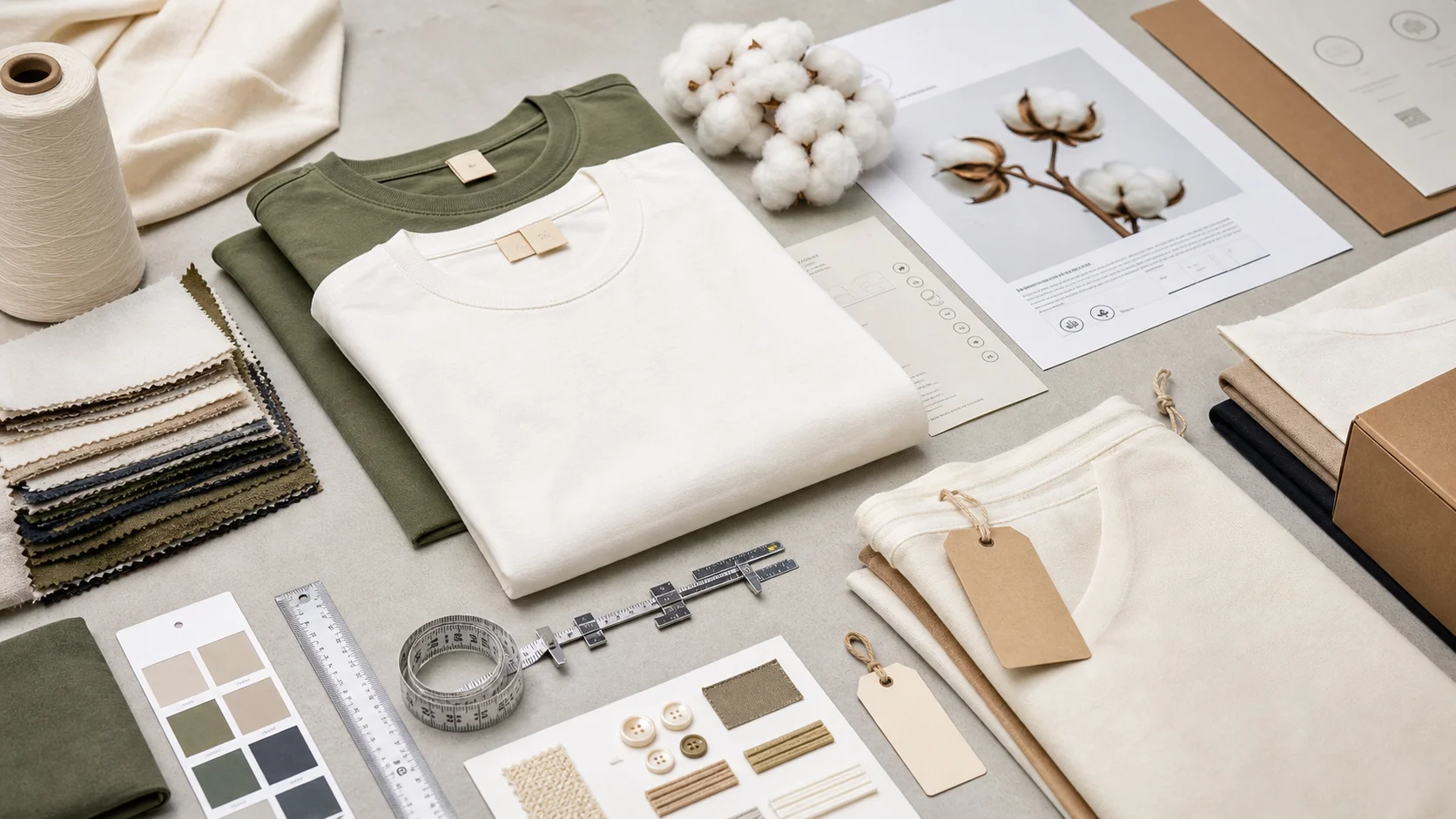
Quality Control Checklist for Apparel Production compared by sample evidence, fabric or trim specs, MOQ, AQL terms, cost lines, delivery timing, and rework...
Fast answer: Quality Control Checklist for Apparel Production: Sample Evidence, MOQ, Capacity, and Rework Terms should be judged by production evidence, not by a generic sourcing promise. The buyer needs sample proof, cost breakdowns, QC checkpoints, and delivery buffers in writing.
Ask for recent sample photos, measurement tolerances, fabric or print test assumptions, decoration test notes, packing examples, and a named inspection checkpoint. These details show whether the team can repeat an approved sample at bulk volume.
Separate garment cost, decoration, labels, packaging, sampling, testing, freight, and rush charges. Clear cost lines make it easier to reduce colorways, adjust size depth, or reserve more time for sampling.
If you manage apparel sourcing, wholesale orders, or private-label production, quality control is one of the most important parts of your buying process. A strong quality control checklist for apparel production buyers helps you reduce defects, protect your brand reputation, avoid costly returns, and keep production on schedule.
In apparel manufacturing, small mistakes can quickly become expensive. A color mismatch, inconsistent sizing, weak stitching, poor labeling, or fabric shrinkage can affect an entire order. That is why buyers need a practical, step-by-step quality control system that starts before production and continues until shipment.
This guide explains what to inspect, when to inspect it, and how to create a reliable quality control workflow for garment orders. Whether you are buying t-shirts, uniforms, activewear, fashion apparel, or promotional clothing, this checklist will help you make better decisions and reduce risk.
Quality control is not only about finding defects. For apparel buyers, it is also about preventing problems before they happen. A good QC process helps you ensure that the finished garments meet your expectations in fit, appearance, durability, labeling, packaging, and compliance.
Here are the main reasons quality control matters:
If you are working with a garment partner, it helps to confirm their production capabilities and inspection process early. You can learn more about Fabrikn’s manufacturing support on our services page and company background on our about us page.
Pre-production is the best time to prevent expensive mistakes. Before the factory starts bulk manufacturing, buyers should review all key materials, samples, specifications, and approvals.
Your tech pack or specification sheet should clearly define the product. It should include measurements, construction details, materials, color references, labeling requirements, and packing instructions.
The sample is your reference standard for production. Review it carefully for size, fit, color, hand feel, construction, and branding details. If changes are needed, make sure they are documented before bulk production begins.
Fabric and trims should meet agreed standards before cutting starts. Buyers should confirm the quality of main fabric, rib, lining, buttons, zippers, thread, elastic, and any special accessories.
For many apparel products, fabric performance matters as much as appearance. Ask the supplier to test shrinkage, washing stability, and colorfastness before production proceeds.
Incorrect labels or graphics can make a full order unusable. Double-check every artwork file, care label, size label, hangtag, and carton mark.
In-line inspection takes place during production, not after it. This stage helps identify issues while they are still easy to fix. Buyers who wait until the end of production often discover large-scale defects that are much harder to correct.
Cutting errors can affect the fit and symmetry of garments. During this stage, the factory should ensure that fabric layers are aligned correctly and patterns are cut according to the approved markers.
Stitching is one of the most visible signs of garment quality. Buyers should check seam strength, stitch density, thread tension, and the overall appearance of construction.
During garment assembly, small defects often appear in collar attachment, sleeve setting, pocket placement, zipper installation, and waistband finishing. These areas should be inspected frequently.
Shade variation is common when multiple fabric rolls or dye lots are used. Buyers should confirm that color remains consistent across the production run.
Do not wait until final inspection to check size. Measure in-line garments regularly so the factory can adjust immediately if dimensions drift from the approved range.
Final inspection usually happens after production is complete and before the goods are packed for shipping. This is the last opportunity to reject defective items, request corrections, or approve the shipment.
Check each garment or a statistically significant sample for visible defects. A good visual review includes overall appearance, construction, finishing, and cleanliness.
Fit problems are one of the most common reasons apparel orders are rejected. Measure finished garments against the size chart and approved tolerances.
Any part of the garment that opens, closes, stretches, or fastens should work correctly. Buyers should test all function-based elements during final inspection.
If your product includes printing, embroidery, heat transfer, or applique, inspect the decoration carefully. These elements are often the first thing customers notice.
The finished bulk order should match the approved sample in every important detail. If there are differences, they should be documented and reviewed before shipment.
Quality control does not end when the garment is finished. Packaging and shipping mistakes can still damage product quality, cause delays, or create problems upon delivery.
Proper folding keeps garments neat and reduces wrinkles, while the packing method protects the order during transit.
Carton labels must be accurate and readable to avoid logistics errors. Buyers should verify all outer carton information before shipment.
Weak cartons can lead to damaged goods during transport. This is especially important for export shipments and long-distance freight.
Documentation errors can delay customs clearance and delivery. Confirm that all shipping paperwork matches the order.
Even the best checklist will only work if it is used consistently. Here are practical ways to make your quality control process more effective.
Do not rely on vague terms like “good quality” or “premium finish.” Put your requirements in writing so the supplier knows exactly what is acceptable.
Define measurement tolerances for every critical dimension. This helps reduce disputes and ensures that everyone evaluates the product the same way.
When issues are found, take clear photos and record the defect type, location, and quantity affected. This makes corrective action faster and more accurate.
Strong communication is one of the best quality control tools. If a supplier knows what you expect, they are more likely to meet your standards.
A capable production partner should have in-house inspection processes, material verification, and experienced garment technicians. If you are looking for support with apparel manufacturing, you can contact Fabrikn to discuss your product requirements and quality expectations.
Many apparel buyers make avoidable mistakes that reduce product quality or create production delays. Watch out for these common issues:
Quality control works best when buyers and manufacturers share responsibility. The buyer defines the standard, and the factory executes it with consistency.
If you want a simple but effective system, use the same process for every order. That makes it easier to compare results, train your team, and improve over time.
Start with a complete tech pack, approved sample, and written quality standards.
Check fabric, trims, and accessories before bulk production begins.
Use in-line checks to catch stitching, sizing, and assembly issues early.
Review the finished garments for appearance, fit, function, and packaging.
Save inspection reports, photos, and defect logs so future production runs improve over time.
When you have a structured workflow, quality becomes easier to manage. That is especially valuable for growing brands that need reliable output across multiple product lines and seasons.
A strong quality control checklist for apparel production buyers helps you protect your investment, reduce defects, and deliver garments that meet customer expectations. The most effective approach is to inspect quality at every stage: pre-production, in-line production, final inspection, packaging, and shipping.
For apparel buyers, the goal is not only to identify problems but to prevent them. By using clear specifications, approved samples, measurable tolerances, and a disciplined inspection process, you can improve product consistency and build stronger supplier relationships.
If you are planning your next garment order and want a dependable manufacturing partner, explore our apparel manufacturing services or reach out through our contact page to discuss your project.
Get a free quote from Fabrikn — your trusted B2B clothing manufacturer with 10+ years of experience. MOQ as low as 200 pieces.
Get a Free Quote →It is a structured list of inspection points that buyers use to evaluate apparel quality before, during, and after production. It usually covers materials, measurements, stitching, labels, packaging, and shipping.
Buyers should inspect garments at multiple stages: before production starts, during production, after production is complete, and before shipment. This reduces the chance of missing serious defects.
The most important points are fabric quality, color consistency, sizing accuracy, stitching strength, labeling accuracy, and packaging integrity. These areas have the biggest impact on customer satisfaction.
Buyers can reduce defects by providing detailed specifications, approving samples carefully, doing in-line inspections, and maintaining clear communication with the supplier throughout the order.
Final inspection only catches problems at the end. By then, many defects may already be built into the order. In-line and pre-production checks help prevent issues earlier, when they are easier and cheaper to fix.
Yes. Fabrikn works with B2B apparel buyers to support production requirements, quality expectations, and manufacturing coordination. To learn more, visit our about us page or contact us directly.