
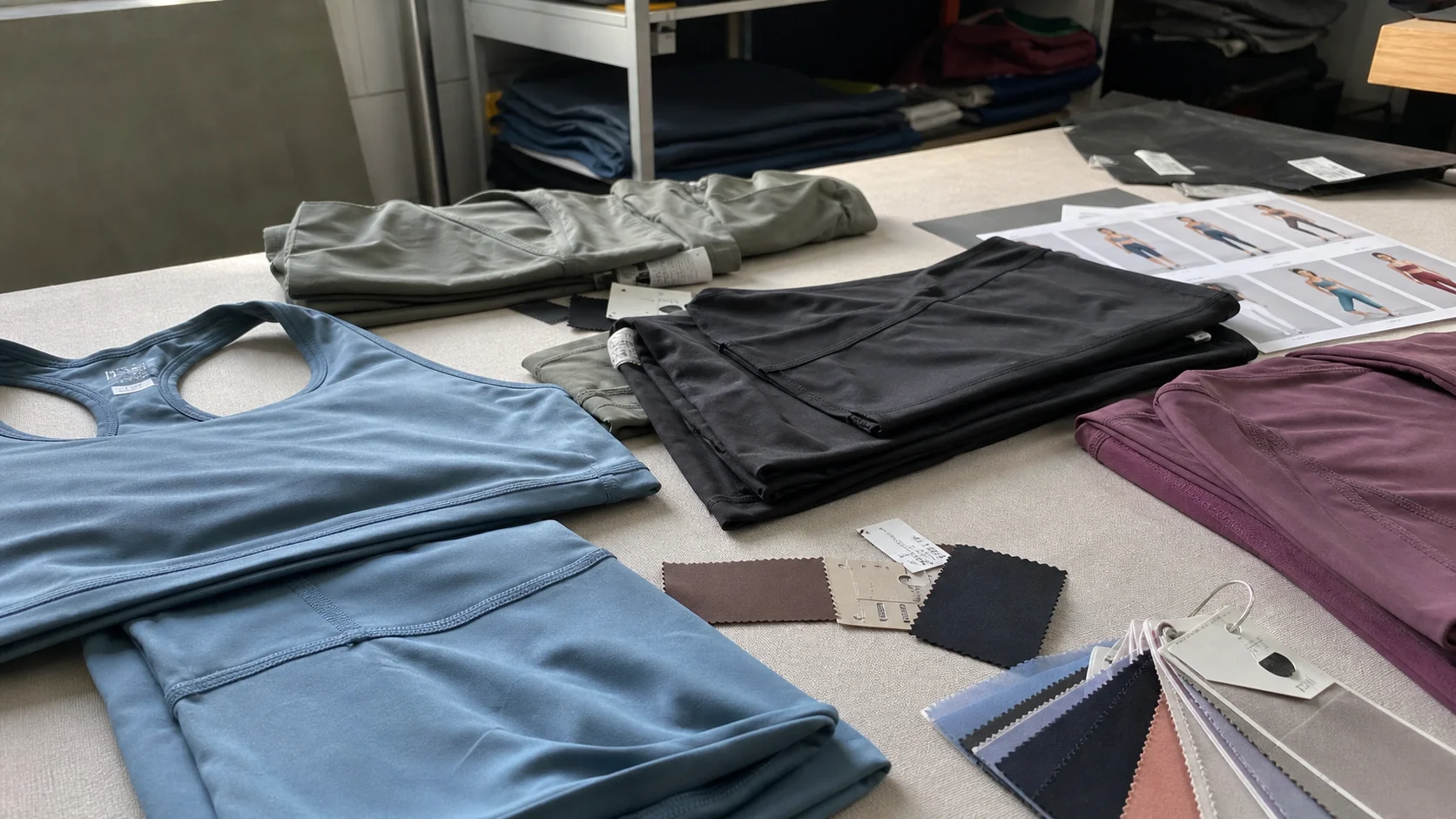
A production-focused outline for buyers sourcing rash guards for field service teams, covering fabric shrinkage risks, factory control points, wash...
Rash Guard Shrinkage Plan for Field Service Buyers - Fabrikn production reference
Field service teams put rash guards through a different workload than resort, surf, or fitness customers. A technician may wear the same top under a safety vest, inside a vehicle, around salt air, in a plant room, or during long outdoor shifts. The garment is washed often, dried quickly, and expected to stay presentable with a company logo still sitting in the right position. Shrinkage control is not a cosmetic detail for this category. It affects fit, mobility, branding, reorder consistency, and uniform compliance.
For buyers sourcing rash guards from a factory, shrinkage planning should start before the first sample is cut. The fabric, dyeing method, heat setting, print process, sewing tension, packing condition, and care label all influence dimensional stability. If the factory only checks shrinkage at final inspection, the buyer is already late. A reliable plan builds shrinkage targets into fabric approval, sample review, bulk cutting, production inspection, and after-wash verification.
This guide is written for field service uniform buyers, sourcing managers, teamwear distributors, and operations teams that need practical control points when ordering rash guards in bulk. It focuses on factory shrinkage control for activewear and teamwear, especially polyester-spandex and nylon-spandex rash guard programs used by technicians, mobile service crews, marine staff, utility teams, outdoor maintenance teams, and branded field personnel.
A rash guard for field service use is not just a fitted performance shirt. It is part of a work uniform system. The buyer needs consistent sizing across multiple team members, repeatable reorder lots, and a garment that does not become too short after five washes. A small shrinkage issue in retail may lead to a return. In field service, it can become a rollout problem across hundreds or thousands of workers.
Length shrinkage is usually the first visible issue. A rash guard that loses too much body length may ride up when a technician reaches overhead, bends, or climbs in and out of a vehicle. Sleeve shrinkage creates wrist exposure and can make layering uncomfortable. Width shrinkage is equally important because tight rash guards can restrict shoulder movement or make the uniform look undersized.
Logo placement is another practical concern. If the front chest, sleeve, or back print moves after washing because the garment shrinks unevenly, the uniform loses its clean appearance. This is especially relevant for heat transfer logos, silicone prints, reflective details, and sublimation panels. Buyers should test shrinkage before approving print placement for bulk production.
The best purchasing decision is not always the lowest garment price. For field teams, the better buy is usually the rash guard that keeps its size, logo position, and hand feel after repeated washing.
Field service buyers should treat shrinkage as a measurable quality requirement, not a vague expectation. A purchase order should define maximum accepted shrinkage after washing, the test method, the wash temperature, the drying method, and the measurement points. Without those details, the factory and buyer may both believe they agreed on “stable fabric” while using different standards.
Most rash guards for activewear and teamwear are made from synthetic stretch fabrics. Common compositions include 82% polyester 18% spandex, 88% polyester 12% spandex, 80% nylon 20% spandex, and recycled polyester-spandex blends. GSM ranges often sit between 160 and 240 gsm, depending on compression level, opacity, climate, and durability needs.
Polyester-spandex is widely used because it supports sublimation printing, dries quickly, and usually performs well for colorfastness. It can be a strong choice for field service teams that need logos, high-visibility color blocking, and frequent washing. Shrinkage control depends heavily on heat setting and fabric relaxation before cutting.
A practical shrinkage target for polyester-spandex rash guards is often within 3% in length and width after one to three wash cycles, though stricter programs may request 2% or less. The right tolerance depends on fabric weight, pattern fit, and end-use. Tight compression styles need tighter dimensional control because small changes are felt immediately by the wearer.
Nylon-spandex usually has a softer hand and strong stretch recovery. It may feel more premium, but it is less suitable for sublimation than polyester. It can also show more sensitivity to heat and drying conditions. If a field service buyer wants a matte, soft, durable rash guard without full sublimation, nylon-spandex can work well.
Buyers should be cautious with dryer instructions. Nylon-spandex garments can distort if exposed to excessive heat. A factory may pass shrinkage under line-dry testing, while the garment fails in real use if field teams use commercial dryers. The care label must match actual team laundry habits.
Recycled polyester-spandex is increasingly requested for corporate uniform programs. It can perform well, but buyers should avoid assuming recycled yarn automatically behaves like virgin polyester. The factory should provide fabric test data and confirm shrinkage results after dyeing, heat setting, printing, and washing.
For larger uniform rollouts, recycled fabric should be approved by lot. Shade, stretch, recovery, and shrinkage may vary if the mill changes yarn source or finishing conditions. This does not mean recycled fabric is a poor choice. It means buyers need tighter documentation and consistent mill control.
Some field teams need rash guards for cooler weather or layered uniforms. Brushed polyester-spandex or thermal knit constructions can add comfort, but the brushed surface may behave differently in washing. The pile can compress, the fabric may torque, and panels can relax unevenly. Pre-production wash testing is important before committing to a bulk order.
Fabric Type Typical Use Shrinkage Risk Buyer Judgment Polyester-spandex, 160-220 gsm Standard field service rash guards, sublimation, teamwear Moderate if heat setting is weak Best general option for branded programs and repeat orders Nylon-spandex, 180-240 gsm Softer premium uniforms, non-sublimated designs Moderate to high under heat drying Good comfort tradeoff, but care instructions must be controlled Recycled polyester-spandex Sustainability-focused uniforms Variable by yarn and finishing Use with documented fabric testing and lot consistency checks Brushed polyester-spandex Cool-weather field layers Higher risk of surface and dimensional change Approve only after repeated wash testingA good rash guard factory shrinkage control plan covers each stage where the garment can change size. The plan should not rely on a single final test. Final inspection can confirm compliance, but it cannot fix poor heat setting, rushed fabric relaxation, or unstable trims after the garments are already sewn.
The buyer should define the expected shrinkage tolerance before the development sample. A common commercial standard for synthetic stretch rash guards is maximum 3% shrinkage in length and width after washing. Some premium field service programs may require 2% or less. Budget orders may accept up to 5%, but that is risky for fitted uniforms and repeat sizing.
The standard should include the test method. For example, the buyer may request a home laundry test at 30°C or 40°C, mild detergent, no bleach, and line dry. If the field team uses tumble drying, the test should include low tumble dry or the buyer should clearly state that tumble drying is not permitted. The worst plan is to approve a garment under gentle lab conditions while employees wash it under harsher conditions.
Heat setting is one of the most important controls for polyester-spandex and nylon-spandex fabrics. It stabilizes the fabric after knitting and dyeing. If heat setting is inconsistent, the fabric can shrink, twist, or lose recovery after washing. The buyer should ask the factory or fabric mill to confirm heat-setting conditions and provide fabric shrinkage test results before cutting.
Exact heat-setting temperatures vary by fabric composition, spandex content, dyeing process, and mill equipment. Buyers do not need to dictate every machine setting unless they have a technical textile team. They do need to require documented stability results and reject fabric lots that fail agreed shrinkage tolerance.
Stretch fabric should be relaxed before cutting. If rolls are opened and cut immediately, the panels may shrink or distort after sewing. Many factories relax stretch fabric for 12 to 24 hours, while some heavier or highly elastic fabrics may need longer. The required time depends on roll tension, fabric construction, and factory environment.
For field service rash guards, fabric relaxation should be listed in the production control plan. The factory should avoid pulling fabric tightly during spreading. Excessive spreading tension can produce panels that look correct on the cutting table but shrink back after sewing or washing.
If fabric shrinkage is known and consistent, pattern makers can allow for controlled dimensional change. This is not the same as guessing. A factory should not simply add length because a sample came back short. Pattern adjustment should be based on fabric test data, fit comments, and washed sample measurements.
For fitted rash guards, key measurement points usually include body length, chest width, sweep, shoulder width if applicable, sleeve length, bicep, cuff opening, neck opening, and hem opening. Raglan sleeve styles may need a different measurement map than set-in sleeve styles. The buyer should approve a measurement chart with tolerances for each size.
Sewing can create shrinkage-like problems even when the fabric itself is stable. If the operator stretches one panel while attaching another, the seam may pucker or relax unevenly after washing. Overlock, flatlock, coverstitch, and binding operations all need proper tension settings.
Flatlock seams are common in rash guards because they reduce bulk and improve comfort. They can look technical and premium, but they require skilled machine control. Poor flatlock tension can cause wavy seams, panel distortion, and uneven recovery after laundering. For field teams wearing garments for long shifts, seam comfort and stability matter more than decorative stitching complexity.
Shrinkage control is not only about the base fabric. Prints and trims can restrict fabric movement or fail after washing. A large heat transfer on a stretch rash guard can create a stiff area that behaves differently from the rest of the panel. Reflective tapes, silicone logos, zipper garages, neck labels, and binding tapes should be tested after wash and stretch.
For field service teams, sleeve logos and back logos are common. Buyers should check whether the logo cracks, lifts, wrinkles, or changes placement after repeated washing. Heat transfer application temperature and pressure can also affect fabric stability. Too much heat can distort spandex. Too little heat can create poor adhesion.
The factory should wash test a pre-production sample made from bulk fabric, bulk trims, and the intended print method. Development samples made from substitute fabric are not enough. A pre-production sample is the buyer’s best chance to verify shrinkage before bulk cutting and sewing.
A practical process is to measure the garment before washing, wash according to the agreed method, dry according to the agreed method, condition the garment flat, and remeasure the same points. Photos should be taken before and after washing, especially for logo placement, seam twisting, puckering, and neck shape.
During production, inline inspection should verify cutting accuracy, sewing tension, measurement consistency, and panel matching. Final inspection should include random measurement checks and washed garment checks if required by the buyer. For large field service orders, buyers should consider pulling garments from early, middle, and late production for wash testing.
Inspection should not only check whether garments fit the measurement chart before washing. A rash guard can pass final measurements and still fail in the field if it shrinks after the first laundry cycle. For repeat uniform programs, post-wash performance is often more valuable than fresh-from-carton appearance.
Clear specifications reduce arguments and improve factory accountability. A vague order such as “polyester spandex rash guard, quick dry, logo print” leaves too much room for substitution. Field service buyers should lock the fabric composition, GSM, stretch direction, color, finish, trim quality, print method, care label, and shrinkage tolerance.
If the buyer is working through a manufacturer or sourcing partner, the technical package should be confirmed before sample development. Buyers comparing programs can review manufacturing capabilities through service pages such as fabrikn.com/services/ and use that discussion to align sampling, production, and inspection expectations.
Sampling is where shrinkage problems should be found, not hidden. Buyers should avoid approving a rash guard only because the first sample looks good on a mannequin or model. The approval process should include measurement, wash testing, logo testing, and fit review.
The development sample confirms general design, fabric direction, fit intention, seam construction, and logo placement. It may use available fabric if the final bulk fabric is not ready, but that limitation must be documented. Buyers should not treat a substitute-fabric development sample as proof of shrinkage performance.
The fit sample should be reviewed on a body type close to the intended wearer group. Field service teams may need a less aggressive compression fit than surf athletes. A technician wearing a rash guard for a 10-hour shift needs mobility, breathability, and enough comfort for repeated movement.
The buyer should check arm lift, reach, torso length, neck comfort, sleeve rotation, and hem behavior. If the garment is too tight before washing, shrinkage will make it worse. A slightly more forgiving fit is often the better tradeoff for workwear-style rash guards.
The pre-production sample should use bulk fabric, bulk trims, bulk colors, and approved logo methods. This is the critical sample for shrinkage approval. The buyer should request pre-wash and post-wash measurements. If the sample fails, the factory should identify whether the issue comes from fabric finishing, pattern allowance, sewing tension, print application, or drying conditions.
A size set confirms grading across the full size range. Shrinkage may not affect all sizes equally if grading or sewing handling changes. Small sizes can become too tight quickly, while larger sizes may show more visible length loss or hem distortion. Buyers ordering uniforms for broad teams should not approve only a medium sample.
A top of production sample is taken from the actual production line. It verifies that the approved sample standard is being followed. For larger programs, this step helps catch fabric lot changes, operator handling issues, wrong print placement, or trim substitution before the full order is completed.
Sample Stage Main Purpose Shrinkage Action Development sample Confirm design and construction direction Note fabric limitations if not bulk material Fit sample Check comfort, movement, and sizing Wash and remeasure if fabric is close to final Pre-production sample Approve bulk fabric, trims, logo, and workmanship Mandatory wash test before bulk release Size set Confirm grading across sizes Check high-risk sizes after wash if budget allows Top of production Verify production line execution Pull early garments for measurement and wash reviewMOQ depends on fabric availability, color requirements, print method, factory capacity, and size spread. For custom rash guards, typical MOQs may range from 100 to 300 pieces per style for stock fabric with simple decoration. Custom-dyed fabric often starts around 300 to 500 pieces per color, and some mills may require 800 to 1,000 pieces or more depending on yarn, GSM, and finishing.
Sublimated rash guards can sometimes support lower minimums because the design is printed on white polyester fabric. That can be useful for field teams with multiple departments, logos, or color versions. The tradeoff is that sublimation requires polyester-rich fabric and may not deliver the same hand feel as nylon-spandex. It also needs careful color approval because bright corporate colors may shift between screen view, paper print, and fabric output.
Cut-and-sew color blocking may require higher MOQ because each fabric color needs sourcing, dyeing, and inventory control. It can create a more premium uniform look and reduce the plastic feel of large prints. The tradeoff is more seam lines, more cutting complexity, and more risk of panel mismatch or shrinkage variation between colors.
Typical lead times for rash guard programs often fall into these ranges:
Buyers should treat these as planning ranges, not guarantees. Lead time changes when fabric fails shrinkage testing, logos need reapproval, colors do not match, or the buyer delays sample comments. A careful shrinkage plan can add several days to development, but it reduces the chance of a much larger delay after bulk production.
For programs that need help scoping production requirements, buyers can start with a structured inquiry through fabrikn.com/contact-us/. A clear inquiry should include quantity, size range, fabric preference, logo method, delivery date, wash expectations, and any required testing standard.
Inspection for rash guards should focus on both visible workmanship and hidden performance risks. A garment can look acceptable in the carton and still fail after washing. Field service buyers should give inspectors clear instructions instead of relying only on generic AQL checks.
A factory that cannot explain fabric relaxation, heat setting, or wash testing may still be able to sew simple stretch garments, but it is a risky choice for uniform programs. Buyers should be cautious if the supplier only says “no shrinkage” without test data. All knitted stretch fabrics have some dimensional movement. The question is whether it is controlled and acceptable.
Another red flag is reluctance to test bulk fabric before cutting. Fabric testing costs time and money, but it is cheaper than replacing a failed uniform order. If a factory pushes for immediate bulk cutting before pre-production approval, the buyer should slow down the program.
Buyers should also watch for inconsistent measurement methods. Stretch garments can measure differently depending on how much the inspector smooths or pulls the fabric. The measurement guide should specify that garments are laid flat, relaxed, and measured without stretching unless a specific stretch measurement is required.
Standard AQL inspection can catch workmanship defects, stains, skipped stitches, holes, incorrect labels, packing mistakes, and measurement failures. It does not automatically prove wash stability unless wash testing is included in the inspection protocol. For field service rash guards, buyers should add a wash test requirement to the inspection checklist for new styles, new fabrics, or new suppliers.
A practical approach is to conduct wash testing during pre-production and again on random finished goods for large orders. The buyer should define how many garments are tested, which sizes are included, and what happens if one garment fails. The failure protocol should be agreed before production, not after a dispute begins.
Print choice affects shrinkage performance, comfort, appearance, and MOQ. Field service buyers often need company logos, role labels, safety marks, or department colors. The right decoration method depends on fabric, quantity, wear conditions, and budget.
Sublimation is strong for polyester rash guards because it dyes the print into the fabric surface rather than placing a thick layer on top. It works well for full-body designs, team graphics, and multi-color branding. It also keeps stretch and breathability better than many large heat transfers.
The limitation is fabric choice. Sublimation needs polyester content, usually a polyester-rich white base. It is not suitable for nylon in the same way. Color matching can also be tricky, especially for corporate brand colors. Buyers should approve printed fabric swatches, not just digital artwork.
Heat transfers are common for chest logos, sleeve marks, and back branding. They are flexible for smaller production runs and can work on many fabric colors. The risk is adhesion failure, cracking, or stiffness if the wrong transfer type is used.
Stretch transfers should be specified for rash guards. The factory should test application temperature, pressure, and time. A transfer that works on cotton polos may fail on spandex-rich rash guards. Buyers should stretch the printed area after washing to check cracking and edge lift.
Screen printing can be cost-effective for repeat graphics and larger quantities. For stretch garments, ink selection matters. Standard ink can crack when stretched. Stretch ink or silicone ink may perform better, but cost and hand feel vary.
Large screen prints can reduce breathability and change the way the fabric relaxes after wash. For field service teams working in heat, big solid prints may be uncomfortable. A smaller logo or sublimated panel may be the better long-term choice.
Care labels are often treated as a compliance detail, but they are part of shrinkage control. If the rash guard is only stable under cold wash and line dry, the label should not imply it can handle hot tumble drying. Field teams may use industrial laundry, hotel-style laundry, home washing, or vehicle-based storage in warm conditions. The buyer should match care instructions to real behavior as closely as possible.
Common care instructions for synthetic rash guards include machine wash cold or warm, wash with similar colors, do not bleach, do not iron decoration, do not dry clean, and line dry or tumble dry low if tested. If tumble dry low is not tested, it should not be casually approved. Dryer heat can damage spandex and distort prints.
For uniform rollouts, buyers may need a simple laundry guidance sheet for employees. The sheet should explain why high heat is not recommended. This reduces blame between wearer, buyer, and factory when garments are damaged by care conditions outside the approved label.
A good buying process keeps the shrinkage plan visible from inquiry to final delivery. The checklist below can be used when comparing factories, issuing purchase orders, or approving samples.
Not every rash guard program needs the most expensive fabric or strictest testing protocol. A small promotional order for a short event can accept different risks than a year-round field service uniform. The buyer’s job is to spend money where failure would be expensive.
Spend more on fabric stability when the garment is fitted, used frequently, washed often, or part of a multi-location uniform program. Spend more on pre-production testing when the order uses custom dyeing, recycled yarn, high spandex content, large heat transfers, or reflective trims. Spend more on size set approval when the workforce includes a broad body-size range.
There are areas where buyers can save without creating major shrinkage risk. Stock fabric can reduce MOQ and lead time if the fabric has proven test results. Sublimation can reduce color-blocking complexity for polyester styles. A clean logo placement can be more durable than a large full-panel transfer. A standard raglan pattern may be safer than a highly engineered panel design if the team mainly needs comfort and consistent fit.
The weakest buying decision is to chase a low unit price while removing the controls that protect the order. Skipping bulk fabric testing, skipping pre-production wash approval, or accepting vague fabric substitutions can erase any savings. For field service teams, garment failure is not just a product issue. It creates replacement cost, employee dissatisfaction, and brand inconsistency.
Repeat orders should be easier than first orders, but they still need control. Fabric lots can change, trims may be substituted, and production may move to a different line. Buyers should not assume that a reorder will automatically match the first shipment unless the factory follows the same specifications and testing process.
A repeat-order file should include approved fabric details, finished garment measurements, shrinkage results, color standards, print artwork, trim references, care label wording, packing method, and inspection notes. If a supplier changes fabric mill, dye house, print film, or transfer supplier, the buyer should request confirmation before production.
Companies evaluating manufacturing partners may also review general company information and operating focus through pages such as fabrikn.com/about-us/. The useful question is not whether a supplier claims to make activewear. The useful question is whether they can document the controls needed for a stable field service uniform program.
Buyers can use the following structure in a tech pack or purchase order. The numbers should be adjusted to the fabric, fit, and end use, but the format helps prevent misunderstanding.
Item Recommended Requirement Garment type Long sleeve or short sleeve rash guard for field service uniform use Fabric Polyester-spandex or nylon-spandex, approved composition and GSM Fabric relaxation Minimum 12 to 24 hours before cutting, adjusted by fabric behavior Shrinkage tolerance Maximum 3% length and width after agreed wash and dry method, unless otherwise approved Wash method Machine wash cold or warm with mild detergent; exact temperature stated in order Dry method Line dry or tumble dry low only if tested and approved Measurement points Body length, chest, sweep, sleeve length, cuff, neck opening, and key logo placement Print test No cracking, lifting, major wrinkling, or unacceptable distortion after wash and stretch review Approval condition Bulk cutting begins only after approved pre-production sample and shrinkage resultA rash guard shrinkage plan is not complicated, but it must be disciplined. The buyer needs measurable standards, stable fabric, proper relaxation, controlled sewing, tested decoration, and wash-verified samples. Each step reduces the risk of receiving garments that look fine at delivery but fail after the first month of use.
For field service teams, the best rash guard is not simply the stretchiest or cheapest option. It is the garment that keeps its shape, supports movement, protects the brand image, and can be reordered with confidence. A factory that understands shrinkage control will be more valuable than one that only quotes a low price and promises that everything will be fine.
Get a free quote from Fabrikn — your trusted B2B clothing manufacturer with 10+ years of experience. MOQ as low as 200 pieces.
Get a Free Quote →Many buyers target maximum 3% shrinkage in length and width after the agreed wash and dry method. Premium or tight-fit programs may require 2% or less. The tolerance should be stated in the tech pack and confirmed through pre-production wash testing.
Yes, polyester-spandex rash guards can shrink or distort if the fabric is not properly heat set, relaxed, cut, sewn, or washed. The shrinkage is usually controllable, but buyers should request test data rather than relying on verbal claims.
Not always. Nylon-spandex can feel softer, but it may be more sensitive to heat drying and is not ideal for sublimation. Polyester-spandex is often the safer choice for branded field service rash guards, especially when full-color graphics are needed.
New styles, new fabrics, new print methods, and large uniform orders should be wash tested before bulk release. Repeat orders should still be checked if the fabric lot, mill, trim, or decoration supplier changes.
Typical MOQs may range from 100 to 300 pieces for stock fabric and simple decoration. Custom-dyed fabric often starts around 300 to 500 pieces per color, while some mills require 800 to 1,000 pieces or more. MOQ depends on fabric, color, print method, and factory setup.
Yes, sublimated polyester rash guards can perform well when the base fabric is stable and properly heat set. Buyers should approve printed fabric, not just artwork, and should wash test the pre-production sample before bulk production.
Body length loss can come from unstable fabric, poor heat setting, insufficient fabric relaxation, excessive cutting tension, sewing tension, or drying heat. A proper factory control plan checks each of these points before final production.
Only if the fabric, trims, and print method have been tested for tumble drying. Many synthetic stretch rash guards are safer with line drying or low heat. High heat can damage spandex, distort fit, and reduce logo durability.
The tech pack should include fabric composition, GSM, color standard, stretch direction, measurement chart, shrinkage tolerance, wash method, dry method, seam construction, print artwork, trim details, care label, packing method, and inspection requirements.
The biggest mistake is approving bulk production without a washed pre-production sample made from bulk fabric and trims. A good-looking sample is not enough if the buyer has not confirmed post-wash measurements and logo performance.