
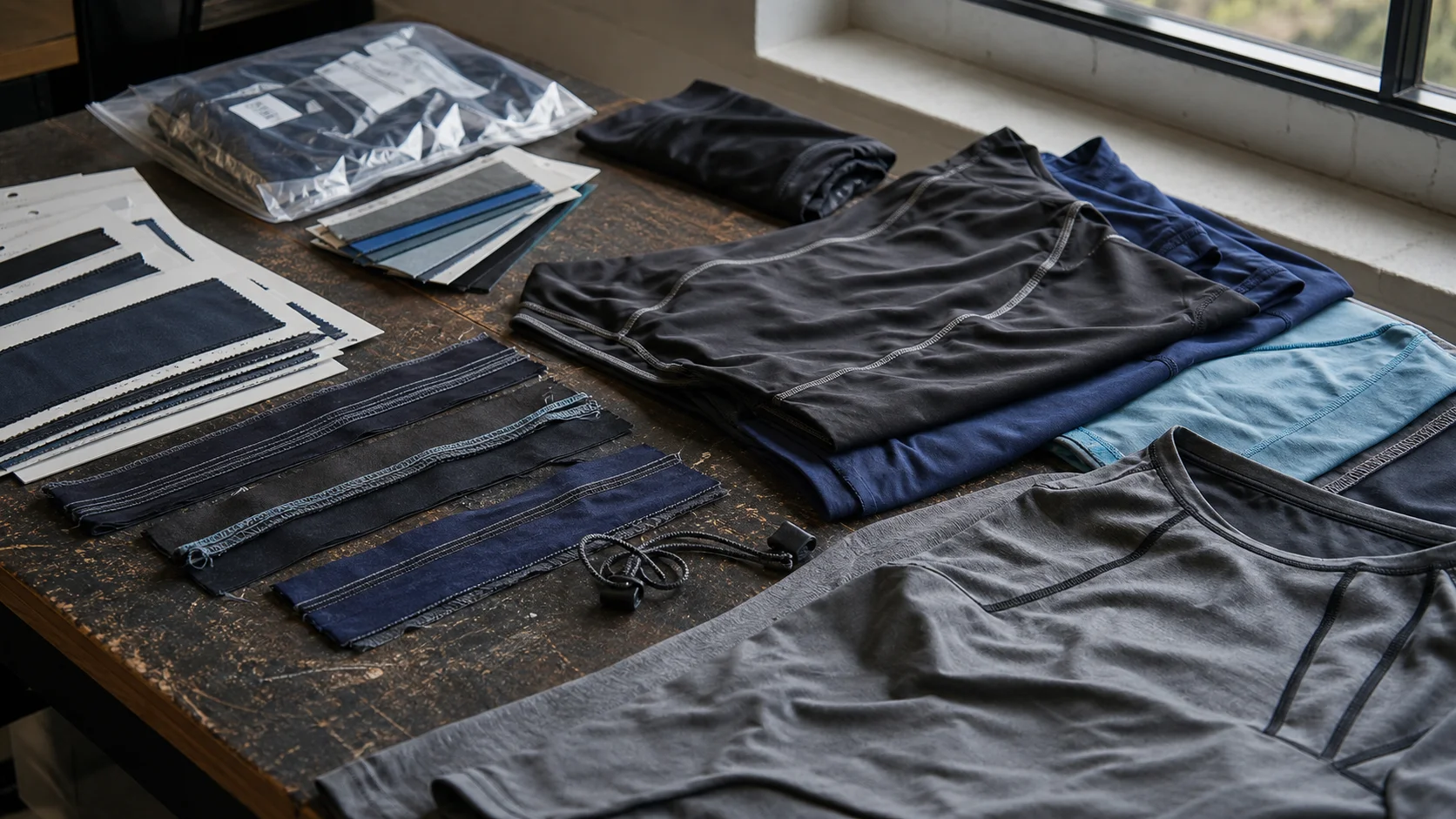
A practical SEO outline for field service buyers reviewing rash guard seam strength, order quality checks, and production details that affect durability,...
Rash Guard Seam Strength Review for Teams - Activewear & Teamwear manufacturing guide
For field service teams, a rash guard is not just a branded layer. It is workwear that has to survive repeated wear, frequent laundering, stretch at the shoulder and underarm, and the kind of movement that comes with bending, lifting, climbing, and driving all day. A rash guard order seam strength review should be treated as a practical sourcing step, not a cosmetic one. Weak seams can lead to blown stitches, split hems, curl at the neckline, and early replacement costs that add up fast across a crew.
This article covers how to review seam strength for rash guard programs ordered for field service teams, what construction details matter, what buyers should ask for in samples, and where production risk usually appears. The focus is activewear and teamwear, but the buying logic is the same: if the seam cannot survive the job, the garment fails before the uniform cycle is complete.
For buyers comparing garment programs, it also helps to understand the supplier’s broader capability. A manufacturer that can manage sampling, material sourcing, and repeat production with discipline is usually a better fit than one offering a low price without much technical control. Start with the supplier’s capabilities on services, then verify company background on about us, and use contact us when you are ready to request spec support or a quotation.
Field service teams do not wear rash guards in controlled conditions. Garments see friction from tool belts, repeated arm movement, heat, perspiration, and intermittent contact with rough surfaces. That means seam performance is more than a lab metric. It affects fit retention, comfort, and the length of time the garment stays presentable enough for customer-facing work.
In teamwear procurement, seam weakness shows up in a few predictable ways. A seam may pop after the first laundry cycle if the thread tension is too loose. Coverstitch hems may wave or tunnel if the knit is too light for the stitch type. Overlock seams can feel bulky or scratchy if seam allowance and thread count are not balanced. These are small issues in a sample room. In a team rollout, they become warranty claims, reorders, and inconsistent appearance across the crew.
Buyers should also remember that seam strength is tied to fabric choice. A high-stretch polyester-spandex knit can look excellent on first fit, but if the seam construction is not matched to the stretch level, the garment will fatigue quickly. This is especially important for field service teams that reach overhead, kneel, or wear the garment as a base layer under outerwear.
A seam strength review should combine visual inspection, sample wear testing, and a clear approval process. The goal is not to find the strongest possible seam in the abstract. The goal is to confirm that the chosen seam construction is suitable for the exact fabric, size range, branding method, and working conditions.
Ask for a pre-production sample that reflects the final fabric, stitch type, trim package, label placement, and decoration method. A prototype made with substitute fabric can hide issues. A strong knit sample may pass easily, while the production fabric may behave differently under load. If possible, request one sample in a lighter color and one in a darker color if different dye lots or print processes may affect seam area finishing.
Inspect seams after stretching them by hand. Look for stitch popping, seam grin, puckering, and thread breakage. Pay attention to the shoulder seam, side seam, sleeve hem, and neckline. These are the most common stress points. For field service teams, the underarm area deserves special attention because repeated lift-and-reach movement will expose weak construction quickly.
A rash guard can look acceptable on a hanger and still fail in motion. Have multiple testers wear the sample through arm raises, forward bends, torso twists, and repeated shoulder extension. If the garment rides up excessively or if seams distort after movement, the pattern and construction likely need revision. A good seam should support movement without creating visible stress lines or opening at the stitch points.
Wash testing is a practical part of seam review. A garment that survives one fitting may not survive ten laundry cycles. Check whether seams remain flat, whether hems twist, and whether thread shrinkage changes the garment shape. For teamwear programs, laundering expectations should be written into the spec, especially if the rash guards will be washed frequently and dried on standard commercial cycles.
Review point What to look for Why it matters Shoulder seam Stretch recovery, no stitch pop High movement and load during reach Underarm seam Flat finish, no bulk or irritation Frequent friction area Hem seam No tunneling or waviness Controls appearance after wash cycles Neckline Stable shape, no stretching out Visible part of the uniformNot every seam construction fits every rash guard. Buyers should judge seam strength in relation to fabric weight, stretch content, and the end use of the garment. A stronger-looking seam is not always the right seam if it creates discomfort or limits elasticity.
For rash guards, the most common fabrics are polyester-spandex or nylon-spandex blends. The exact ratio matters. Higher spandex content improves stretch and fit, but it also raises the bar for seam recovery. Fabric weight is another factor. Light fabrics around the lower end of the activewear range can be comfortable in heat, but they are more likely to show distortion if seam design is weak.
Thread choice should not be treated as an afterthought. Textured polyester or high-tenacity polyester thread is often selected for activewear because it offers better durability and wash performance than low-grade alternatives. Thread count, stitch density, and needle type should be discussed in the tech pack. A buyer who ignores these details usually gets inconsistent results across batches.
Trim specs also matter. Neck binding, care labels, size labels, and printed logos can all affect the seam area. If a heat transfer is placed too close to a high-stress seam, it may crack or cause stiffness. If binding is too narrow or too loose, the neckline can warp after wash cycles. The best purchasing judgment is to treat the full garment as a system, not a set of isolated parts.
There is no single universal seam strength target for every rash guard order. The acceptable level depends on use case, fabric stretch, and quality budget. Still, buyers should be cautious if a supplier cannot explain how their construction choices support the garment’s use case. In practical sourcing terms, a supplier should be able to show how the seam construction supports both movement and longevity.
Field service team orders often sit between retail activewear and fully custom uniform programs. That means minimum order quantity and lead time can vary. Typical MOQ ranges for custom rash guards often start around 100 to 300 pieces per color or style, though some factories will quote lower for simpler programs and higher for more complex decoration or fabric sourcing. Buyers should expect the MOQ to rise when multiple colorways, custom trims, or special packaging are included.
Sampling should be staged. A clear approval path reduces expensive revision cycles later. A sensible sequence is: concept brief, fabric suggestion, pattern confirmation, prototype sample, fit approval, pre-production sample, and then bulk production release. Skipping any one of those steps often pushes errors into the main order.
Lead time depends on more than sewing capacity. Fabric availability, color matching, print or embroidery complexity, sample revisions, and inspection scheduling all affect delivery. A straightforward order may move faster than a complex one, but buyers should still allow room for approval delays. For team programs, a two-step review process is usually safer than rushing straight to bulk cut.
If the supplier offers end-to-end support, ask what part of the workflow they manage directly and what they outsource. That question matters because seam consistency can suffer when fabric, cutting, and sewing are split across too many hands without strong coordination. A well-run services team should be able to explain production control, not just quote a price.
In a rash guard order seam strength review, the biggest risks are often simple manufacturing errors rather than exotic technical failures. Uneven stitch tension, poor fabric relaxation before cutting, wrong needle selection, and weak QC at the sewing line are common reasons garments fail early.
Inspection should include both garment-level checks and seam-specific checks. A normal final inspection may catch visible defects, but it may not reveal whether the seam will survive repeated movement. Buyers ordering for field service teams should ask for a targeted test list that includes stretch recovery, seam appearance after laundering, and physical stress points by size. Larger sizes can place different loads on the seam than smaller ones, so one size cannot always validate the whole range.
Inspection risk also rises when the order is split across multiple production runs. A second batch may use a different thread lot, a new operator, or a slightly changed fabric source. If the first run passed and the second run does not, the issue is often process drift, not design error. That is why approved reference samples should be retained and compared before each repeat order.
When sourcing rash guards for field service teams, price should be considered alongside control, responsiveness, and repeatability. The lowest quote is rarely the lowest total cost if it leads to rework, replacements, or complaints from the crew.
A good supplier will ask practical questions: how often the garments will be worn, how they will be washed, whether the team needs high-visibility branding, and whether the garment will be worn alone or layered under other workwear. That kind of questioning usually signals a more mature production process.
Buyers should also review how the supplier handles revisions. If a sample requires seam or fit changes, how quickly can the factory turn the update? Is there a clear contact point? Is the tech pack reviewed carefully before cutting? A teamwear order benefits from a supplier that treats approvals as a control system, not a formality.
Before placing a larger run, it is reasonable to ask for documentation, production photos, or specification clarification. That is not overcautious. It is good procurement. Use contact us to request project support, and review the broader company background on about us before committing to a bulk program.
For buyers managing a new rash guard order, the following checklist helps keep seam strength review grounded in practical sourcing decisions.
For many teams, the right decision is not the most technical-looking spec sheet. It is the one that balances comfort, durability, and cost with enough production discipline to hold quality steady over time. That balance matters even more when the garment is part of a uniform program rather than a one-off retail-style drop.
A rash guard seam strength review for field service teams should be treated as a procurement safeguard, not a design luxury. The seams determine whether the garment stays wearable, presentable, and cost-effective after repeated movement and washing. Buyers who review seam construction early, insist on proper samples, and check the production details behind the quote usually get better long-term results.
The strongest sourcing decisions are rarely the loudest. They are the ones that ask the right questions about fabric, thread, stitch type, sample approval, and inspection control before the first bulk cut. That is where seam strength becomes a business issue, not just a garment detail.
Get a free quote from Fabrikn — your trusted B2B clothing manufacturer with 10+ years of experience. MOQ as low as 200 pieces.
Get a Free Quote →There is no single best seam for every program. Flatlock is often preferred for comfort, while overlock is common for efficiency. The right choice depends on fabric stretch, budget, and whether the garment is worn as a standalone top or layered under other workwear.
Typical MOQs often start around 100 to 300 pieces per color or style, though the real number depends on fabric sourcing, decoration method, and factory capacity. Simpler programs may be more flexible, while highly customized designs usually need higher volume.
Most teamwear programs need at least one prototype sample and one pre-production sample. If fit, seam, or branding changes are required, additional rounds may be necessary. Rushing past sample approval is one of the fastest ways to create bulk defects.
Check stitch pop, seam recovery, puckering, hem waviness, neckline stability, and how the garment behaves after wash cycles. Movement testing is important because a seam may look fine when static and fail during real use.
Yes. Fabric weight, stretch content, and thread quality all affect how well a seam holds. A high-stretch knit usually needs more careful stitch selection and tension control than a more stable fabric.
Yes, if the supplier manages sampling, material coordination, and production control carefully. A full-service setup can reduce handoff errors, but only if the team communicates clearly and verifies the sample against the final spec before bulk ordering.