
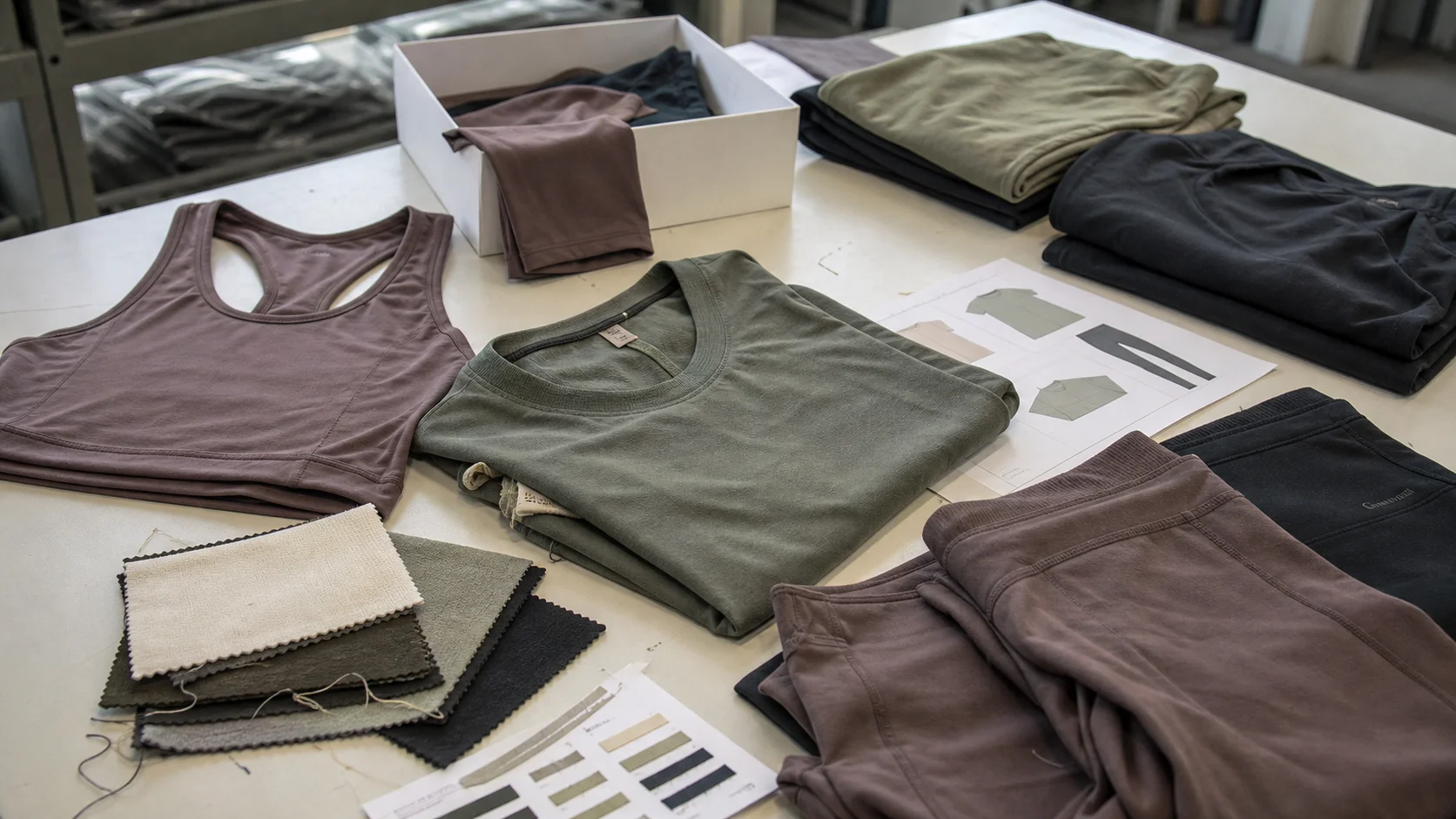
A distributor-focused outline for evaluating rash guard suppliers using a practical scorecard tied to fabric performance, decoration readiness, fit...
Buying rash guards for distribution is not the same as placing a one-off apparel order. A distributor buyer has to judge fit consistency, fabric recovery, print durability, production reliability, and how well a supplier can repeat the same result across multiple seasons. A strong rash guard supplier scorecard gives structure to that decision. It helps separate a capable manufacturing partner from a vendor that only looks competitive on price.
This guide is written for distributor buyers in Activewear & Teamwear who need a practical way to compare rash guard suppliers. The focus is on what matters in sourcing: construction quality, material options, MOQ realities, development lead times, compliance requests, and the risks that often show up after the first order. If you are building a sourcing process for retail, wholesale, club programs, or regional distribution, a scorecard is one of the simplest ways to reduce avoidable mistakes.
Rash Guard Supplier Scorecard for Buyers - Fabrikn production reference
Rash guards appear straightforward on paper, yet they are one of those products where a small mistake can affect an entire program. Fit problems create returns. Fabric issues create complaints. Weak color fastness creates customer distrust. Inconsistent sewing creates sizing variance between reorder lots. For a distributor, those issues are expensive because the damage reaches more than one end customer.
A supplier scorecard creates a repeatable evaluation method. Instead of relying on a polished sample and a competitive quote, the buyer can score the supplier on objective factors such as construction capability, testing documentation, order communication, and repeat-order stability. The purpose is not to find the “best” supplier in the abstract. The purpose is to find the supplier best suited to your distribution model, target margin, and product positioning.
A low unit price is only useful if the supplier can hold fit, color, and construction across repeat orders. For distributor buyers, repeatability matters more than a one-time sample win.
Before the scorecard starts, the buyer should be clear on the product type. Rash guards can vary by use case, and the supplier should understand the difference. A supplier serving distributor buyers should typically be able to offer several options:
Not every supplier should be expected to offer every construction method, but a good supplier should be transparent about what they can and cannot do. If the answer is vague at the sampling stage, the production stage usually brings the real problem.
A practical rash guard supplier scorecard should cover at least eight categories. These categories are weighted differently depending on whether the buyer prioritizes retail presentation, technical performance, or wholesale cost control.
This measures whether the supplier can actually make the product range you need. A capable rash guard supplier should understand stretch ratios, seam construction, thread selection, print compatibility, and fit grading. If your program requires multiple fits or age ranges, ask how they handle grading and whether they can maintain measurement consistency across sizes.
Rash guards live or die by fabric performance. A reliable supplier should be able to quote fabric weight, composition, stretch direction, and recovery behavior with clarity. Buyers should ask for a fabric specification sheet that includes:
Claims should be treated carefully. If a supplier states performance features, ask what test method supports them. Distributor buyers should avoid building a program around unsupported marketing language.
The sample is not just a preview; it is the first quality test. A strong supplier should send a sample that matches the intended production spec as closely as possible. The buyer should evaluate:
If the sample is already inconsistent, it is rarely wise to assume mass production will improve on its own. In practice, a poor sample often signals weak control of specification details.
For distributor buyers, responsiveness matters because one delayed answer can stall the whole program. The supplier should reply clearly on measurements, timelines, packaging options, artwork requirements, and sample revision steps. Strong communication is not about friendliness. It is about the ability to resolve technical questions quickly and keep the order moving.
Rash guard production can be straightforward when the line is set up properly, but delays happen when capacity is overloaded or the supplier underestimates the complexity of fabric handling, stitching, or print sequencing. Ask how many production stages are involved and whether the supplier has control over cutting, sewing, printing, and packing in-house or through subcontractors.
Distributors should score how well a supplier prepares for inspection. This includes carton labeling, size ratio packing, measurement consistency, needle control, and defect handling. A supplier that cannot show structured pre-shipment inspection discipline will often create expensive surprises later.
Price matters, but only as part of the full commercial package. A good scorecard includes payment terms, sample charges, freight assumptions, color change costs, and the supplier’s approach to repeat orders. Buyers should also note whether the supplier can support split shipments, hold stock fabric, or produce smaller replenishment lots.
This is one of the most important categories for distributors. A supplier may produce a strong first order and still fail on the reorder. Color consistency, trim availability, and measurement stability should all be part of the score. A reliable supplier will keep production records and be able to repeat the construction without redesigning the product every time.
Rash guards are performance garments, so the fabric check deserves special weight. Buyers should not rely on generic terms such as “premium stretch fabric” without asking for the exact blend and weight. Typical market options often fall into the following range:
Fabric type Typical use What to check Polyester-spandex blend General activewear and water sports Stretch recovery, colorfastness, print performance Nylon-spandex blend Softer hand feel and premium positioning Durability, pilling resistance, dye consistency Recycled performance blend Sustainability-led retail or team programs Certification support, hand feel, color matching Compression-weight fabric Sport and training use Stretch ratio, seam stress, opacityConstruction is equally important. A rash guard intended for repeated water and training use should have seam construction that can handle stretch and movement. Flatlock seams are commonly preferred for comfort and reduced chafing, but they can raise cost. Overlock construction may be acceptable for lower-cost programs, though it is less premium in feel. The right choice depends on target channel and retail price point.
Trim quality should also be reviewed. Labels, hangtags, zipper pulls where relevant, size markers, and thread quality all affect the finished garment. If the supplier uses heat transfer labels instead of woven labels, check whether the print remains legible after stretch and laundering. If the product includes a zipper, inspect the guard, tape quality, and smoothness under motion.
Sampling should follow a clear sequence. A supplier that rushes directly to bulk without controlled sample approval creates avoidable risk. Distributor buyers should ask for a development path with defined checkpoints.
This process may feel slower, but it saves money when the order volume is meaningful. If the supplier cannot support a structured approval workflow, the buyer should treat that as a warning sign. Distributor programs rely on consistency, not improvisation.
Typical sample lead times vary by complexity and material availability. A simple rash guard sample may be ready faster if fabric is in stock, while custom prints, specialty trims, or recycled materials can add time. Lead time also depends on how fast the buyer responds with comments. Delays on either side will move the delivery schedule.
One useful practice is to specify what level of revision is included. Some suppliers quote one free sample round and charge for additional rounds. Others include sample costs in the order. That should be clarified before development starts, not after revisions accumulate.
MOQ is one of the first commercial filters for distributor buyers. Rash guard MOQ can vary widely depending on the supplier’s setup, fabric type, and whether the program is stock-supported or fully custom. Typical MOQ ranges often fall from a few hundred pieces per style and color for smaller development programs to much higher minimums for fully custom production. Buyers should ask whether MOQ is set by style, color, fabric, size ratio, or print method.
In many cases, a lower MOQ comes with tradeoffs:
That tradeoff is not always negative. For distributors testing a new market, a lower MOQ may be preferable to overcommitting inventory. The key is to understand what is being sacrificed in exchange for flexibility.
Lead time depends on several linked variables:
A supplier that promises a very fast lead time without asking about fabric availability or approval steps should be reviewed carefully. Rush commitments can be useful, but only if the supplier explains the dependencies clearly.
Price should be compared on landed program value, not just ex-factory cost. A slightly higher unit price may be justified if the supplier reduces defect rates, holds color better, or supports smoother reorders. For a distributor, fewer claims and fewer returns often matter more than a small initial savings.
Rash guard quality issues are often predictable if the buyer knows what to inspect. A sourcing scorecard should flag these risks early.
Pre-shipment inspection should include measurement checks, wash testing where feasible, seam review, and carton verification. Buyers may also request random sample retention from production lots. Keeping a retained sample on file is useful when reviewing reorders or handling customer complaints.
The table below is a practical starting point. Buyers can adjust the weighting based on channel needs. A wholesale distributor supplying retail accounts may give more weight to presentation and repeatability. A teamwear distributor may prioritize durability and turnaround time.
Category Weight What strong performance looks like Red flags Product capability 15% Clear understanding of fits, seams, and print methods Generic replies, limited style knowledge Fabric control 15% Exact composition, GSM, and performance specs provided Vague fabric descriptions, no test references Sampling accuracy 15% Sample matches tech pack and revision notes Measurement drift, poor print placement Communication 10% Fast, clear, technical responses Delayed answers, unclear approvals Production reliability 15% Realistic lead times, stable capacity, process control Overpromising, unexplained delays Inspection readiness 10% Measured pre-shipment checks and clean packing Poor carton discipline, unresolved defects Commercial terms 10% Transparent pricing, MOQ, and payment structure Hidden charges, unclear revision costs Reorder stability 10% Repeatable fit, color, and trim availability Spec drift across bulk and reorderTo score properly, rate each category on a 1 to 5 scale, then multiply by the weight. The result is more useful than a simple “approved” or “not approved” answer. It shows where a supplier is strong and where risk still remains.
Not every distributor should buy from the same type of supplier. The scorecard should support a decision, not replace commercial judgment. A high-score supplier may still be wrong if the minimum order is too large, the lead time is too long, or the communication style does not suit your team.
Use the scorecard to sort suppliers into three groups:
This structure gives distributors flexibility. It also reduces dependence on one factory, which is useful when demand changes or production bottlenecks appear. A dual-source approach is often practical for activewear and teamwear programs, especially when color continuity and seasonal reorders matter.
When a supplier offers a good sample but weak commercial discipline, the score should reflect that reality. When a supplier is technically sound but expensive, the buyer should compare that cost against the likely service level and defect risk. The lowest quote is not always the lowest total cost.
For buyers still shaping their sourcing process, it can help to review supplier capabilities directly on the factory side, such as the approach described on Fabrikn’s services page, or to clarify development and order requirements through contact. Brand background and company overview can also be useful when assessing whether a supplier fits your sourcing method; see the about page.
Get a free quote from Fabrikn — your trusted B2B clothing manufacturer with 10+ years of experience. MOQ as low as 200 pieces.
Get a Free Quote →For distributor buyers, repeatability is usually the most important factor. A supplier must be able to reproduce fit, fabric feel, color, and construction across bulk orders and reorders. A strong sample is useful, but stable production matters more.
MOQ varies by supplier and customization level. Some programs may start in the low hundreds per style or color, while fully custom builds can require much higher minimums. Ask whether MOQ is tied to fabric, print method, or size ratio, since that can change the quote significantly.
Sampling lead time depends on fabric availability, print complexity, trim sourcing, and how quickly comments are returned. A simple sample can move quickly if materials are ready, while custom artwork or special fabrics often take longer.
There is no single best fabric for every buyer. Polyester-spandex works well for general performance and water use. Nylon-spandex may feel softer and more premium. Recycled blends can support sustainability-led programs if the supplier can control quality and documentation.
Common issues include size variation, seam defects, print cracking, color inconsistency, and incorrect packing. These are especially important for distributors because even a small defect rate can affect multiple customer accounts.
Multiple suppliers are often safer for distributor programs. One supplier can be used for main volume, while another serves as a backup or development source. This reduces risk if capacity, lead time, or quality problems appear.
For distributor buyers, the best rash guard supplier is not simply the cheapest or the fastest. It is the one that can deliver a repeatable product, explain its process clearly, and support your reorder model without constant correction. A good scorecard keeps that decision grounded in facts rather than sales language.