
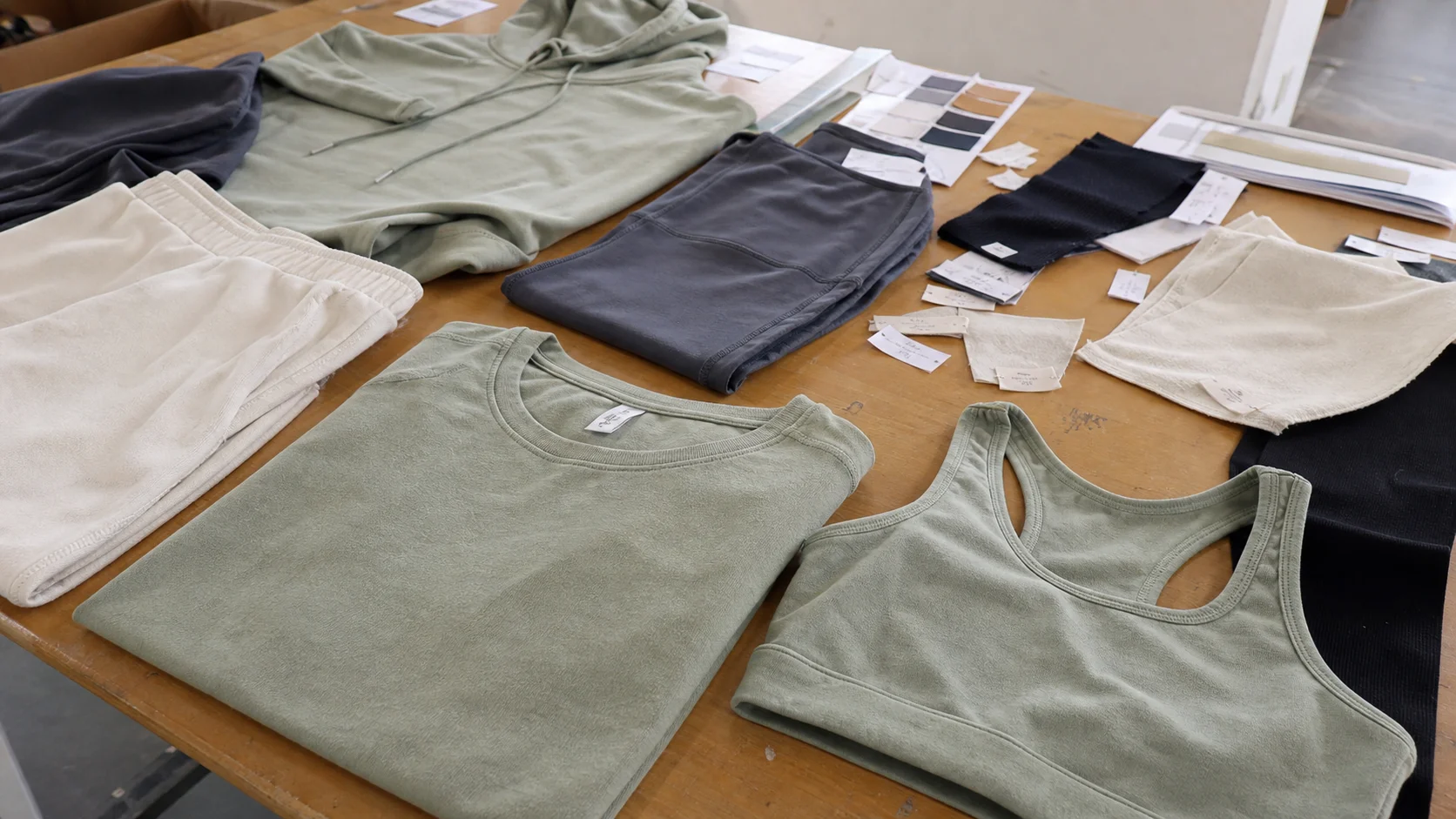
A product-specific outline for evaluating rash guard manufacturers through wash testing, fabric performance checks, print durability, sizing stability, and...
For distributor buyers, a rash guard is not just an athletic item with a print. It is a repeat-order product that has to survive chlorine, saltwater, sweat, sunscreen, UV exposure, and repeated laundering without losing shape, stretch, opacity, or color consistency. A rash guard that looks fine on delivery but fails after a few wash cycles creates a slow problem: customer complaints, markdowns, and return pressure that can spread across an entire program.
This rash guard wash test review is written for buyers sourcing from a rash guard manufacturer with distributor requirements in mind. The focus is practical: what to test, what commonly fails, what specifications matter, and how to judge whether a supplier is building for retail and teamwear distribution or just passing a sample stage.
For broader manufacturing support, see Fabrikn services, or learn more about the company on About Us. If you are comparing supply options or preparing a development brief, the Contact Us page is a practical starting point.
Rash Guard Wash Test Review for Distributor Buyers - Fabrikn production reference
Rash guards are sold into demanding channels: surf shops, swimwear programs, teamwear distributors, resort retailers, and online stores where customers expect the garment to last. A distributor buyer needs a style that can hold up under normal consumer care, not only one wash-house cycle in the lab.
The practical problem is simple. Rash guards are usually made from synthetic blends such as polyester-spandex or nylon-spandex. These fabrics offer stretch and quick-dry performance, but they are sensitive to heat, chemical exposure, abrasion, and poor printing or sewing processes. If a manufacturer misses the mark on fabric stabilization, thread choice, print method, or finishing, wash performance drops quickly.
A wash test review is useful because it checks real selling risk:
For distributors, these questions matter more than a simple “passes initial inspection” result. A rash guard that performs well in one sample round may still fail after volume production if the factory changes fabric lots, trims, or stitching tension.
A reliable rash guard manufacturer should be able to discuss wash performance before production starts, not after complaints appear. The supplier should not only promise “good quality.” They should provide a clear specification package and a sensible test plan.
At minimum, buyers should expect the manufacturer to confirm the following:
Rash guard programs also need clarity on end use. A child swim top sold for beachwear has different risk exposure than a competitive team rash guard used under repeated chlorine exposure. If the buyer does not define the use case, the manufacturer may optimize for the wrong standard.
Practical sourcing rule: if a supplier cannot explain how the fabric, print, and stitching behave after multiple wash cycles, the program is not ready for bulk approval.
Not every distributor needs a complex laboratory protocol, but a practical wash test matrix is essential. The point is not to over-engineer the process. The point is to catch the failures that create commercial damage.
This is the first and most useful test. It simulates consumer care under normal conditions. Use a defined temperature, detergent, wash duration, and drying method. Many buyers prefer a cycle structure that reflects the actual care label, since mismatch between label and real product behavior is a frequent issue.
Look for these outcomes after 1, 3, 5, and 10 washes:
If the rash guard is sold into swimwear or water-sport channels, chlorine resistance matters. Some fabrics hold up reasonably in fresh-water wash testing yet degrade much faster in chlorinated environments. This is especially important for printed garments, bonded trims, and garments with exposed elastic.
Buyers should ask whether the supplier has tested the fabric for repeated chlorine exposure, not just a single soak. The response should include expected performance limits. If the supplier cannot explain expected degradation points, the product may not be fit for competitive swim use.
Rash guards spend time in sun and seawater, and many are worn in high-exposure environments. While UV performance is not a wash test in the narrow sense, it should be considered alongside laundering because the same buyer often needs both. Color shift, yellowing, and print dulling can all happen quickly when fabrics are exposed to sun, salt, and repeated washing.
Rash guards are worn close to the body and often under wetsuits, life vests, or training gear. Friction can damage surface prints, expose weak stitching, and reduce fabric smoothness. Wash testing should therefore be read together with abrasion results. A garment that survives laundering but pills or roughens badly in use is still a weak product.
Distributor buyers usually discover rash guard issues in a few predictable areas. These problems are common enough that they should be discussed during development, not left to post-shipment surprises.
Polyester-spandex and nylon-spandex blends are meant to be stable, but poor heat control during cutting, printing, pressing, or drying can change the finished dimensions. If the garment grows in width or shortens in body length after washing, fit complaints follow quickly. For distributors, even minor dimensional drift can disrupt size consistency across reorders.
Stretch recovery is one of the most important performance measures in a rash guard. The garment should return to its original shape after being stretched during wear and laundering. Poor recovery leads to bagging at the torso, sleeve distortion, and a loose look that makes the product appear old before its time.
Print failure is a common problem on rash guards because the fabric is flexible and smooth. Not every print method works well. Heat transfers, sublimation, screen prints, and silicone prints each have different wash behavior. A distributor should insist on the exact method being tested on the exact fabric base. A print that looks sharp on a lab sample can fail if the underlayer fabric behaves differently in bulk production.
Stitch quality is easy to overlook at the sample stage. After repeated washing, loose tension, poor seam type, or weak thread can create puckering around the armholes, side seams, and collar edges. This is not only cosmetic. It can also affect comfort and durability.
Some lighter-colored or thinner fabrics become more transparent when wet or stretched. That is a commercial risk in swim and youth programs. Buyers should check wet opacity as part of the approval process, especially for white, pastel, and light heather shades.
Wash results depend heavily on the raw materials and how the garment is built. Distributors often focus on design and price first, then discover that the low-cost option used materials that were never suitable for repeated laundering.
Typical rash guard fabrics often fall into a medium-weight stretch category, though the exact GSM depends on the market. Lighter fabrics can feel more comfortable in hot weather, but they raise the risk of transparency and faster wear. Heavier fabrics improve coverage and durability, but may feel less breathable and cost more to ship.
Common blends include polyester-spandex and nylon-spandex. Polyester usually offers stronger colorfastness and print compatibility for sublimation. Nylon can deliver a softer hand feel and a premium finish, but may require more careful dye and color control. The right choice depends on the channel, pricing, and wash expectations.
Stretch content affects fit and recovery. Too little spandex can make the garment rigid and reduce comfort. Too much can create instability, especially if the fabric is not well heat-set. Most distributor buyers should ask for a clear tolerance range rather than a vague reference to “stretch fabric.”
Stitching must match the wash and wear profile. Flatlock seams are common in performance wear because they reduce chafing and can improve comfort. Overlock or coverstitch construction may be used depending on style and price point. The key is consistency. Weak thread choice or uneven stitch density will show up after washing, often in the first few cycles.
Decoration drives many returns. Sublimation generally performs well on polyester-based fabrics and offers good wash durability when properly executed. Screen prints and heat transfers can be more variable. If the distributor is placing a private-label order, the safe approach is to test the decoration method under the same wash conditions expected in market use.
Even small components can create failure. Poor elastic can lose recovery. Labels can curl or irritate skin. Heat transfer care labels can wear away too quickly. The buyer should treat trims as part of the wash test, not as an afterthought.
A clean sampling process saves money later. The common mistake is approving a visual sample without checking how it behaves after laundering. Distributor buyers should use a simple but disciplined workflow.
The tech pack should define fabric composition, GSM, construction, seam type, print method, size range, color standards, and care instructions. If the document is incomplete, the sample review will be unclear. A vague tech pack also makes later disputes harder to resolve.
The first sample should be assessed for fit, hand feel, coverage, and decoration placement. This is the stage to catch obvious issues. Buyers should not wait until wash testing to notice problems such as poor neckline opening, sleeve length imbalance, or mismatched panel shading.
Wash several units, not just one. Use a baseline and compare results after multiple cycles. If possible, test across different sizes and colors, since some issues show up more quickly in lighter shades or larger garments. Record each cycle and compare against approved reference samples.
Measure chest width, body length, sleeve length, and hem opening before and after washing. Small changes can be acceptable depending on the spec, but the tolerance should be pre-agreed. If the supplier resists providing tolerances, treat that as a warning sign.
The garment should be judged on whether it can be sold and repeatedly reordered without introducing quality drift. That means the buyer should review wash results together with packaging, labeling, carton packing, and color consistency across the production lot.
Distributor buyers often need a practical balance between wash performance and buying volume. Better fabrics, tested trims, and more controlled decoration methods usually raise cost. Cutting corners may reduce first-order pricing, but the downstream cost of failures is usually higher.
Typical MOQ ranges vary by factory structure and customization level, but a common range for private-label rash guards may start around 300 to 1,000 pieces per color or style, with higher requirements for custom prints, specialized fabrics, or multiple size runs. Smaller test orders are sometimes possible, but buyers should expect higher unit pricing and less flexibility on trim selection.
Lead time also depends on variables that affect wash stability:
A buyer who rushes production may end up approving a weaker substitution. That tradeoff is rarely worth it for a distributor program. A slightly longer lead time can be a better commercial decision if it preserves fabric consistency and reduces returns.
Wash testing is important, but it is not the only checkpoint. Inspection during and after production still matters because one weak batch can undermine an otherwise solid sample.
Even when the same fabric specification is used, small differences in dye lot, knitting tension, or finishing can change wash performance. This is especially relevant when a supplier splits production across multiple fabric lots. Buyers should ask whether the factory plans to maintain lot continuity for the full order.
Print positioning can drift across sizes, especially when grading has not been handled carefully. A design that sits correctly on a medium may appear low or crowded on an extra-small or extra-large. This becomes more obvious after washing if the print shifts or distorts.
If the care label suggests a wash routine that the product cannot handle, the buyer inherits the risk. Care instructions must match the fabric and decoration method. A low-temperature wash recommendation is often safer for performance garments, but it should be honest and practical.
Garments packed too tightly or with excess moisture can develop odor, creasing, or pressure marks that buyers notice on receipt. These issues do not always appear in wash testing, yet they affect commercial presentation and can trigger unnecessary claims.
Good rash guard sourcing is not about finding the cheapest unit price. It is about reducing avoidable failures in a product category where consumers notice fit and durability immediately. A supplier is safer when they can explain not only what they make, but how they control risk.
Look for the following signs of a strong manufacturer:
Look for these warning signs:
For distributors, the right choice is usually the supplier who is slightly more disciplined, even if the first quote is not the lowest. In rash guard sourcing, conservative quality control often protects margin better than aggressive cost cutting.
Get a free quote from Fabrikn — your trusted B2B clothing manufacturer with 10+ years of experience. MOQ as low as 200 pieces.
Get a Free Quote →For most distributor programs, the most important test is repeated home-laundry washing followed by measurement of shrinkage, stretch recovery, print durability, and color retention. If the product is intended for swim use, chlorine resistance should be added.
A useful baseline is 3, 5, and 10 cycles, with initial checks after the first wash. Higher-risk programs may need more cycles, especially if the style will be used in chlorine-heavy environments or sold at a premium price point.
There is no single best option. Polyester-spandex is often preferred for sublimation and color stability. Nylon-spandex can offer a softer, more premium hand feel. The right choice depends on price target, decoration method, and the intended usage.
Typical MOQ ranges often start around 300 to 1,000 pieces per style or color, though this changes based on customization, fabric type, and decoration. Smaller test runs may be possible, but usually at a higher unit cost.
Common reasons include fabric lot variation, poor heat setting, weak print adhesion, unstable seams, and substitution of trims or materials during bulk production. A sample only proves the exact sample configuration, not the entire production system.
Only if the fabric and trims have been tested for it. Many performance garments are safer with low-heat or air-dry instructions. The care label should reflect the actual product behavior, not a generic retail template.
For distributor buyers, the safest rash guard programs are built on controlled specifications, honest wash testing, and disciplined approval. That approach is slower than a rushed buy, but it is usually far cheaper than managing returns, complaints, and reorders of a weak product line.