
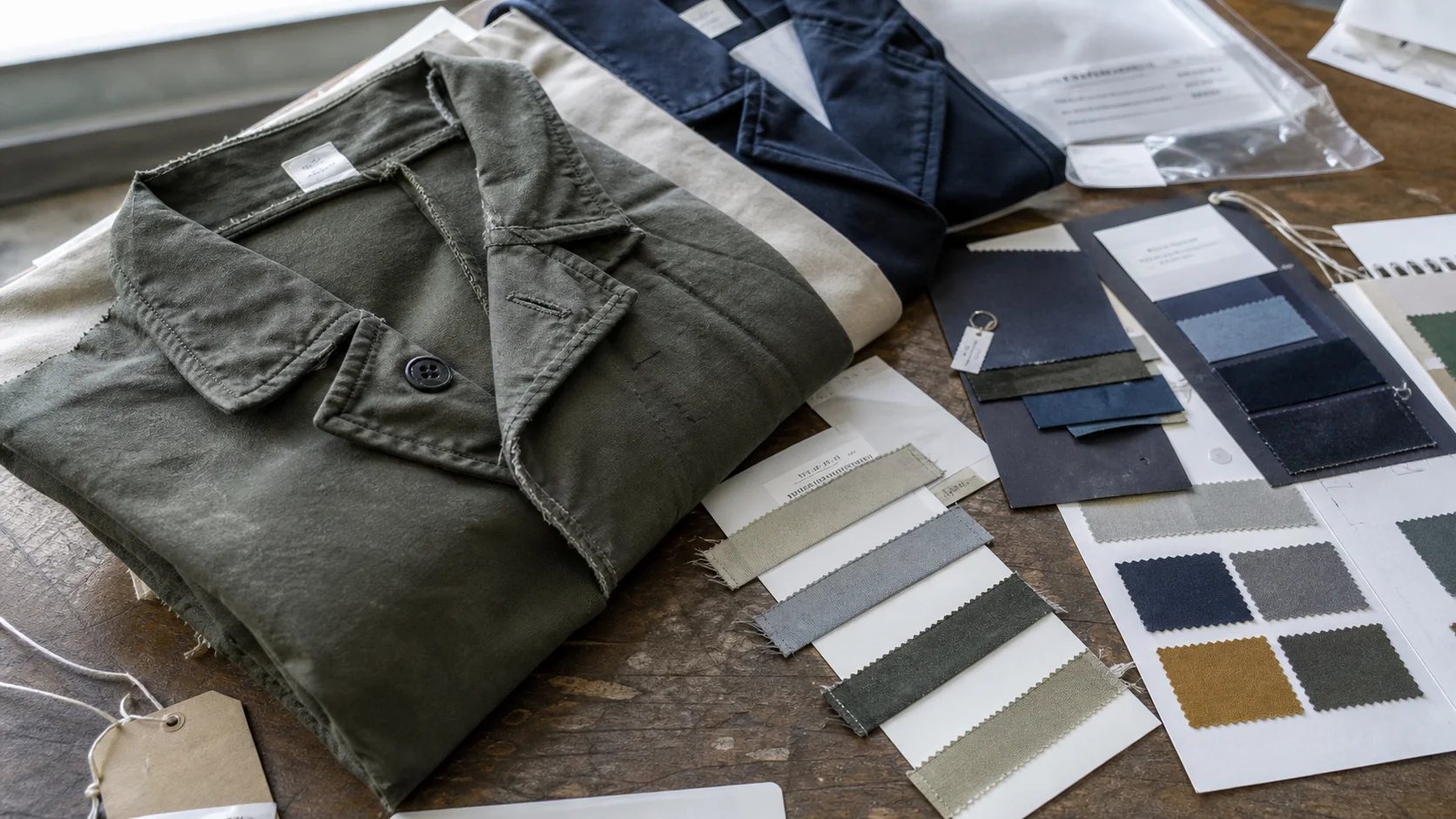
A practical SEO outline for retail operations teams auditing reclaimed cotton coat colorfastness before store rollout, returns exposure, and customer wear...
Reclaimed Cotton Coat Colorfastness Audit for Retail Ops - Sustainable Fashion manufacturing guide
Reclaimed cotton coats can support a credible sustainable fashion assortment, but only if the product survives normal retail handling, customer wear, cleaning, and post-purchase expectations. For retail operations teams, colorfastness is not a lab-only issue. It affects returns, markdowns, customer complaints, warehouse handling, store presentation, and brand trust.
A reclaimed cotton coat colorfastness audit gives retail teams a structured way to check whether color performance is acceptable before bulk goods move into stores, e-commerce fulfillment centers, or wholesale channels. It connects fabric sourcing, dyeing, washing, trims, packaging, quality control, and care labeling into one practical approval process.
This guide is written for retail operations, sourcing, production, QA, and merchandising teams managing reclaimed cotton outerwear. It explains what to audit, when to test, which risks matter most, and how to make purchasing decisions without overengineering the program.
Colorfastness is the ability of a fabric, garment, or trim to retain color and avoid staining other materials during rubbing, washing, perspiration, light exposure, storage, and wear. For coats, the risk is broader than a simple wash test. A coat rubs against light-colored tops, car seats, handbags, scarves, store fixtures, and packaging. It may also be exposed to rain, snow, sweat at the collar, and prolonged light in display windows.
Reclaimed cotton adds another layer of complexity. The cotton source may include pre-consumer cutting waste, post-industrial yarn waste, or mechanically recycled cotton fibers blended with virgin fibers. Shade consistency, fiber length, absorbency, and prior dye history can vary more than in conventional virgin cotton fabrics.
Retail operations teams should treat colorfastness as a commercial risk, not just a technical specification. A coat that passes initial visual inspection can still fail in-store if dark dye transfers to pale lining, white tissue paper, hangtags, or neighboring garments. E-commerce teams may see higher returns if customers find crocking on hands, bags, or upholstery.
Practical purchasing judgment: reclaimed cotton coats are viable for retail programs, but dark saturated shades, brushed surfaces, garment washes, and contrast linings require tighter colorfastness controls than basic natural or undyed styles.
“Reclaimed cotton” is often used as a broad commercial term. Retail teams should define it before quoting, sampling, or approving marketing claims. In production, reclaimed cotton may refer to recycled cotton fiber, recovered cotton waste, or cotton-rich fabric made with a specified recycled content percentage.
The most common formats include:
For coats, reclaimed cotton may appear in canvas, twill, denim, corduroy, fleece-back fabric, quilted shells, bonded fabrics, or heavy brushed constructions. Each substrate behaves differently under dyeing, finishing, abrasion, and cleaning.
Retail operations teams should ask suppliers for a fabric composition breakdown by percentage, recycled content documentation where applicable, and dyeing method. A coat marketed as sustainable can still create operational problems if the color standard is vague or if bulk lots are not controlled against an approved lab dip and pre-production sample.
Brands developing sustainable outerwear can coordinate sourcing, development, and production support through apparel manufacturing partners such as Fabrikn services, especially when material selection, sampling, and quality control need to be aligned early.
A reclaimed cotton coat colorfastness audit should cover more than a single fabric test report. The audit needs to review materials, dyeing, garment construction, finishing, lab testing, care labels, packing, and inspection results.
The minimum audit scope should include:
A narrow audit may look cheaper, but it often misses the actual failure point. For example, the shell fabric may pass washing, while dark corduroy rubs onto a cream lining at the underarm. A pigment-dyed coat may pass dry rubbing but fail wet rubbing after rain exposure. A garment-dyed coat may look attractive but show inconsistent shade across panels if fabric lots are mixed.
Retail operations teams do not need to become laboratory technicians, but they should know which tests matter and how results affect purchasing decisions. Test requirements depend on product type, selling market, customer expectations, and care instructions.
Crocking is one of the highest-priority tests for reclaimed cotton coats. It measures color transfer when fabric is rubbed with a dry or wet white cloth. Dark navy, black, charcoal, brown, olive, burgundy, and indigo shades need particular attention.
Dry crocking matters for normal wear and store handling. Wet crocking matters for rain, snow, perspiration, damp hands, and cleaning. Reclaimed cotton fabrics with brushed surfaces, pigment dye, garment dye, or denim effects may perform worse than smooth reactive-dyed cotton twill.
Retail judgment: if a dark reclaimed cotton coat has weak wet crocking, it may still be sellable only with clear care and wear warnings, darker linings, and acceptance of higher complaint risk. For premium retail, weak wet crocking is usually not worth the margin exposure.
Washing tests evaluate color change and staining of adjacent fabrics. Even if the coat is labeled “dry clean only,” washing performance can still matter if customers ignore care instructions or if the coat contains removable washable components.
Retail teams should check whether the test method matches the care label. A machine-washable reclaimed cotton coat requires more robust validation than a dry-clean-only style. Testing should evaluate both color change of the shell and staining onto lining, labels, drawcords, and contrast panels.
Water exposure is important for outerwear. A coat may not be rainwear, but customers expect it to tolerate light moisture without heavy bleeding. Water testing can reveal dye migration when damp fabric is pressed against another surface.
This test is especially useful for dark shell fabrics paired with pale linings, light topstitching, white labels, natural cotton cords, or light-colored packaging.
Perspiration testing matters at collars, cuffs, underarms, waist tabs, and inner facings. Cotton coats worn in transitional weather can absorb sweat, sunscreen, fragrance, and body oils. Acid and alkaline perspiration tests help identify risk of staining or color change.
If a reclaimed cotton coat has a dark collar facing against a light lining, perspiration staining should be checked before bulk approval.
Lightfastness is often overlooked for coats, but it affects store windows, showroom samples, and customer use. Earth tones, vegetable-inspired colors, garment-dyed shades, and some pigment effects may fade under prolonged light exposure.
Retail operations should treat lightfastness as a merchandising issue. A coat displayed near a window can fade on one shoulder or sleeve, creating an unsellable unit even if it never left the store.
Dry cleaning tests are relevant when the care label recommends professional cleaning. Coats with structured fronts, interlinings, quilting, wool-blend trims, leather patches, or complex linings may not be suitable for home washing.
The audit should confirm that dry cleaning does not cause shell fading, trim staining, adhesive bleed, lining puckering, or contrast transfer.
Test Area Why It Matters for Reclaimed Cotton Coats Retail Risk if Ignored Dry Crocking Checks transfer during normal rubbing and handling Stains on tops, store fixtures, tissue, or hands Wet Crocking Checks transfer when damp from rain, sweat, or cleaning Customer complaints, bag staining, upholstery marks Washing Confirms shade change and staining under care conditions Returns after first wash, lining discoloration Water Checks dye migration under moisture pressure Bleeding during storage, rain, or transit humidity Perspiration Checks collar, cuff, and underarm staining risk Visible discoloration after short wear Light Checks fading in windows and daily use Markdowns from uneven fading in storeColorfastness failures often come from the interaction between components. A reclaimed cotton shell may be acceptable by itself, but the finished coat fails because the lining, label, zipper tape, drawcord, or interlining reacts differently.
Coats usually use heavier fabrics than shirts or dresses. Common weights may range from about 250 gsm to over 450 gsm depending on the style. Heavy twill, canvas, denim, and corduroy can hold more dye and finish, which may increase transfer risk if not properly washed off or fixed.
Brushed and peached surfaces feel soft but expose fiber ends. These fiber ends can release loose dye more readily during rubbing. If the product brief requires a soft handfeel, the audit should include wet and dry rubbing after finishing, not only before finishing.
Reactive dyeing can offer strong wash performance when properly processed, but reclaimed cotton blends may absorb dye unevenly. Pigment dyeing gives a casual, worn-in look but often has weaker rubbing performance. Garment dyeing creates attractive depth and variation, yet it can cause shade inconsistency across lots and panels.
Yarn-dyed reclaimed cotton fabrics can provide pattern interest and stronger shade control in some cases, but they may have higher MOQs and longer development timelines. Piece dyeing is flexible for solid colors, though shade continuity across bulk lots must be managed carefully.
Light linings are a common source of visible staining. A cream, white, pale grey, or pastel lining inside a dark reclaimed cotton coat creates a predictable transfer risk at seams, underarms, and facings.
Retail teams should consider darker linings for saturated shell colors. If a pale lining is required for design reasons, lab testing should include shell-to-lining contact under moisture and pressure. The same caution applies to contrast binding, pocket bags, internal labels, and hang loops.
Trims can stain or be stained. Cotton drawcords may absorb shell dye. Metal trims may react during washing or finishing. Leather patches can bleed oils or dyes. Zipper tape may show shade mismatch, and snap backing can leave marks under pressure.
Care labels and brand labels should be checked after washing or dry cleaning. A sustainable product story can be undermined by a label that bleeds, curls, yellows, or stains the garment.
A disciplined sample process reduces colorfastness problems before they reach bulk production. Retail operations teams should not wait until final inspection to discover rubbing or staining issues.
Classify each style before lab dips are approved. A dark garment-dyed reclaimed cotton coat with pale lining is high risk. A natural undyed cotton-blend chore coat with tonal lining is lower risk. This classification determines how many tests, samples, and inspection checkpoints are needed.
Approve the shade under agreed lighting conditions. Common retail practice may use D65 daylight and a store-light condition where relevant. The team should confirm color tolerance, metamerism risk, and whether the approved standard is a lab dip, fabric strike-off, or garment-washed sample.
The proto sample checks design, fit direction, fabric handfeel, construction feasibility, and obvious staining risk. At this stage, colorfastness testing may be preliminary if final fabric and trims are not yet available.
Salesman samples should be closer to production quality. If they are used for wholesale selling, photography, or retail previews, color should be controlled carefully. Testing at this stage helps avoid selling a color that cannot be reliably produced.
The pre-production sample should use bulk-intended fabric, trims, lining, label, thread, wash, and finish. This is the key checkpoint for colorfastness approval. Lab testing should be based on this version or on directly representative bulk materials.
A small pilot run can reveal shade variation, panel mismatch, seam abrasion, pressing marks, and lining transfer. For reclaimed cotton coats, this step is useful when the fabric has a complex finish or when the order uses multiple dye lots.
Bulk shipment should not be released only on visual approval. The file should include approved standards, lab results, inspection reports, packing approval, and any concession notes. If a weakness is accepted, retail operations should know the downstream risk before goods enter stores.
Minimum order quantities for reclaimed cotton coats vary by fabric development, dyeing method, trim customization, and factory setup. Retail teams should avoid treating MOQs as fixed across all styles.
Typical MOQ ranges may look like this:
Lead times also depend on the production route. A straightforward coat using available fabric may move from approved sample to bulk shipment faster than a custom reclaimed cotton fabric that needs yarn procurement, weaving, dyeing, finishing, testing, and garment production.
Development Stage Typical Time Range Main Dependency Fabric sourcing and quotation 1 to 3 weeks Available fabric, composition, certification needs Lab dips or strike-offs 1 to 3 weeks Dye method, color complexity, mill capacity Proto or development sample 2 to 4 weeks Pattern, trims, fabric arrival, coat complexity Pre-production sample 2 to 5 weeks Bulk fabric, trims, wash, test corrections Bulk production 5 to 10 weeks Order quantity, quilting, lining, finishing, inspections Testing and final inspection 1 to 2 weeks Lab booking, retesting, corrective actionsCost tradeoffs are direct. Better colorfastness may require higher-quality dyes, extra washing, improved fixing agents, darker linings, additional lab tests, or rejected fabric lots. These costs are usually lower than the cost of customer returns, emergency relabeling, store markdowns, or reputational damage.
Retail teams planning a sustainable coat program can review development and manufacturing options through Fabrikn’s company background and decide whether the supplier structure fits their operational needs.
A reclaimed cotton coat colorfastness audit should extend into inspection. Lab results reduce risk, but they do not replace bulk checks. Production variation can still occur from dye lot changes, mixed rolls, finishing differences, or improper packing.
Before cutting, inspect fabric rolls for shade variation, side-to-side shading, end-to-end shading, stains, odor, handfeel inconsistency, and roll labeling. A simple roll map can prevent mixed-shade panels from being cut into the same garment.
For high-risk colors, rubbing checks can be performed on production fabric before cutting. These checks are not a substitute for lab tests, but they can catch obvious failures early.
During sewing, inspectors should check panel shade matching, lining contact points, seam abrasion, pressing marks, and trim staining. Coats have more components than basic garments, which increases the chance of color interaction.
Special attention should go to collars, pocket flaps, cuffs, plackets, sleeve seams, belt loops, and underarm areas. These areas experience repeated friction during wear.
If the coat is garment-washed, dyed, softened, enzyme treated, or tumbled, color should be checked after finishing. A sample approved before finishing does not guarantee final performance.
Inspectors should compare finished garments against the approved standard and check for streaks, fold marks, localized fading, panel mismatch, and residue. Wet processing can expose hidden fabric variation.
Final inspection should include visual shade review under consistent lighting, measurement checks, workmanship review, packaging review, and simple rubbing checks where appropriate. Any signs of staining on tissue paper, polybags, labels, or light linings should trigger investigation.
AQL levels depend on brand policy and order size. Many apparel programs use general inspection levels with critical, major, and minor defect classifications. For colorfastness-related findings, classification should be strict because staining and dye transfer can create customer-facing defects.
Retail operations should monitor early deliveries. Open cartons from different lots and check whether folded garments show pressure marks or dye transfer onto tissue. If coats are hung in stores, review whether dark shells touch pale garments nearby.
Store teams should avoid placing untested dark reclaimed cotton coats directly against white denim, pale knitwear, or light leather accessories. This is a practical merchandising control, not a substitute for proper testing.
A scorecard helps operations teams make consistent decisions across suppliers and styles. It also avoids emotional decision-making when a sustainable fabric has a good story but weak performance.
Audit Area Pass Expectation Warning Sign Action Reclaimed cotton documentation Composition and recycled content are clearly stated Vague “eco cotton” claim without breakdown Request documentation before approval Color standard Approved physical standard with tolerance Only digital color reference provided Approve lab dip or strike-off Dry rubbing Meets brand requirement for shade and use Visible transfer on white cloth Retest, improve finish, or reject Wet rubbing Acceptable for outerwear exposure Heavy transfer on dark shades Review dye method and lining choice Washing or dry cleaning Matches care label claim Care label selected after testing gap Align testing with final care instruction Lining and trims No staining at contact points Pale lining stained after rubbing or moisture Change lining color or improve shell fastness Bulk shade control Rolls and lots segregated and traceable Mixed lots without roll records Strengthen cutting and inspection controls Packaging No transfer to tissue, labels, or polybags Staining after compression or humidity Change packing method or hold shipmentThe scorecard should be part of the buy file. Merchandising may prioritize color and sustainability story, while operations must protect sell-through and customer satisfaction. Both positions matter. The best decision balances design intent with measurable risk.
Supplier communication should be specific. Broad questions such as “Is the colorfastness good?” do not produce useful answers. Retail teams should ask for evidence tied to the final garment.
Retail teams seeking help with supplier coordination, product development, or production planning can use Fabrikn’s contact page to start a discussion about manufacturing requirements.
This is one of the most predictable failures. The coat passes a basic visual inspection, but the inner facing or underarm lining picks up dye after rubbing, moisture, or compression. The risk increases when the shell is black, navy, indigo, dark olive, or burgundy.
Better options include tonal linings, improved fixation, extra washing, or a less risky dye method. If design requires a pale lining, the decision should be backed by testing.
Garment-dyed coats can have an appealing casual look, but shade control is harder. Seams, thick areas, pockets, and facings may absorb dye differently. Reclaimed cotton blends can increase variation.
This is not always a defect if the design brief allows a washed, irregular appearance. The problem starts when merchandising expects a clean uniform shade while the production method naturally creates variation.
Pigment dye sits more on the fabric surface than some other dye systems. It can create attractive faded effects but may have weaker rubbing performance. Brushed pigment-dyed cotton coats are especially risky.
Retail teams should be cautious with pigment-dyed dark coats sold at premium price points unless testing supports the claim.
Goods may pass inspection at the factory but show staining after weeks in cartons. Compression, humidity, and temperature changes can encourage dye transfer to tissue, labels, drawcords, or folded contact points.
Transit simulation or packed-garment checks are useful for high-risk shades and long shipping routes.
Care labeling should be based on test evidence, not convenience. A dry-clean-only label may reduce washing risk, but it can also reduce customer appeal and increase dissatisfaction if the coat is casual or everyday-priced. A machine-washable claim can improve sellability, but only if the garment genuinely performs under the stated conditions.
If a reclaimed cotton coat has an intentional washed or faded effect, product copy may explain that slight variations are part of the design. This does not excuse dye transfer. Customers may accept natural shade variation, but they rarely accept staining on other garments or furniture.
Retail teams should avoid vague disclaimers that shift responsibility to the customer. If wet crocking is weak, the better solution is usually material correction, color adjustment, lining change, or product repositioning.
Not every colorfastness weakness requires cancellation. The decision depends on product positioning, shade, customer use, price point, channel, and brand tolerance.
Situation Recommended Decision Reason Natural or light reclaimed cotton coat with good test results Approve with standard inspection Low transfer risk if shade and trims are stable Dark coat with acceptable dry rubbing but borderline wet rubbing Correct or add controls before approval Outerwear can encounter rain and moisture Dark shell staining pale lining during testing Change lining, improve fastness, or reject Defect is visible and likely to worsen Garment-dyed coat with controlled shade variation Approve if variation is defined and marketed accurately Variation may be acceptable by design Pigment-dyed brushed coat with heavy rubbing transfer Reject for premium retail High complaint and return exposure Care label does not match test performance Hold approval Legal, customer service, and operational riskThe strongest retail operations approach is to set requirements early, test representative samples, inspect bulk carefully, and make commercial decisions with full visibility. Sustainable materials deserve disciplined execution. A reclaimed cotton coat with poor colorfastness is not a responsible product if it creates avoidable waste through returns and markdowns.
Get a free quote from Fabrikn — your trusted B2B clothing manufacturer with 10+ years of experience. MOQ as low as 200 pieces.
Get a Free Quote →It is a structured review of fabric, dyeing, trims, lab tests, care labels, and bulk inspection controls to confirm that a reclaimed cotton coat resists fading, bleeding, and color transfer during retail handling and customer use.
Crocking, also called rubbing, is usually the highest-priority test for dark reclaimed cotton coats. Wet crocking is especially important because coats may be exposed to rain, snow, perspiration, and damp handling.
They can be, depending on fiber source, blend, dye method, surface finish, and shade. Reclaimed cotton may have more variation than virgin cotton, so testing and bulk controls are important.
Typical MOQs may range from about 100 to 300 pieces per color for stock fabrics, 300 to 800 pieces for custom dyed fabrics, and 800 to 1,500 pieces or more for custom woven or specialty reclaimed cotton fabrics. Actual MOQ depends on supplier, fabric, trims, and certification needs.
A simple program using available fabric may move faster, while custom reclaimed cotton fabric can require several months from sourcing to bulk shipment. Lab dips, sampling, testing, corrections, production capacity, and inspections all affect lead time.
It can, but it is a higher-risk choice. The shell should be tested against the actual lining under rubbing, moisture, and cleaning conditions before approval. A tonal or darker lining is usually safer.
Garment dyeing can work when the brand accepts a casual, washed look and controls shade variation. It requires careful testing because seams, panels, and reclaimed fiber blends may absorb dye unevenly.
Not always, but weak wet crocking on dark outerwear is a serious warning. The team should consider the price point, shade, lining, customer use, care label, and complaint risk. Premium retail programs should usually correct the issue before approval.
The file should include the approved color standard, fabric composition, reclaimed cotton documentation, lab test reports, pre-production sample approval, trim approvals, care label confirmation, inspection reports, packing approval, and any accepted concessions.
Sustainable fashion depends on usable, durable products. If a reclaimed cotton coat fades badly, stains other items, or is returned after limited wear, the sustainability benefit is weakened by waste, reverse logistics, and markdown losses.