
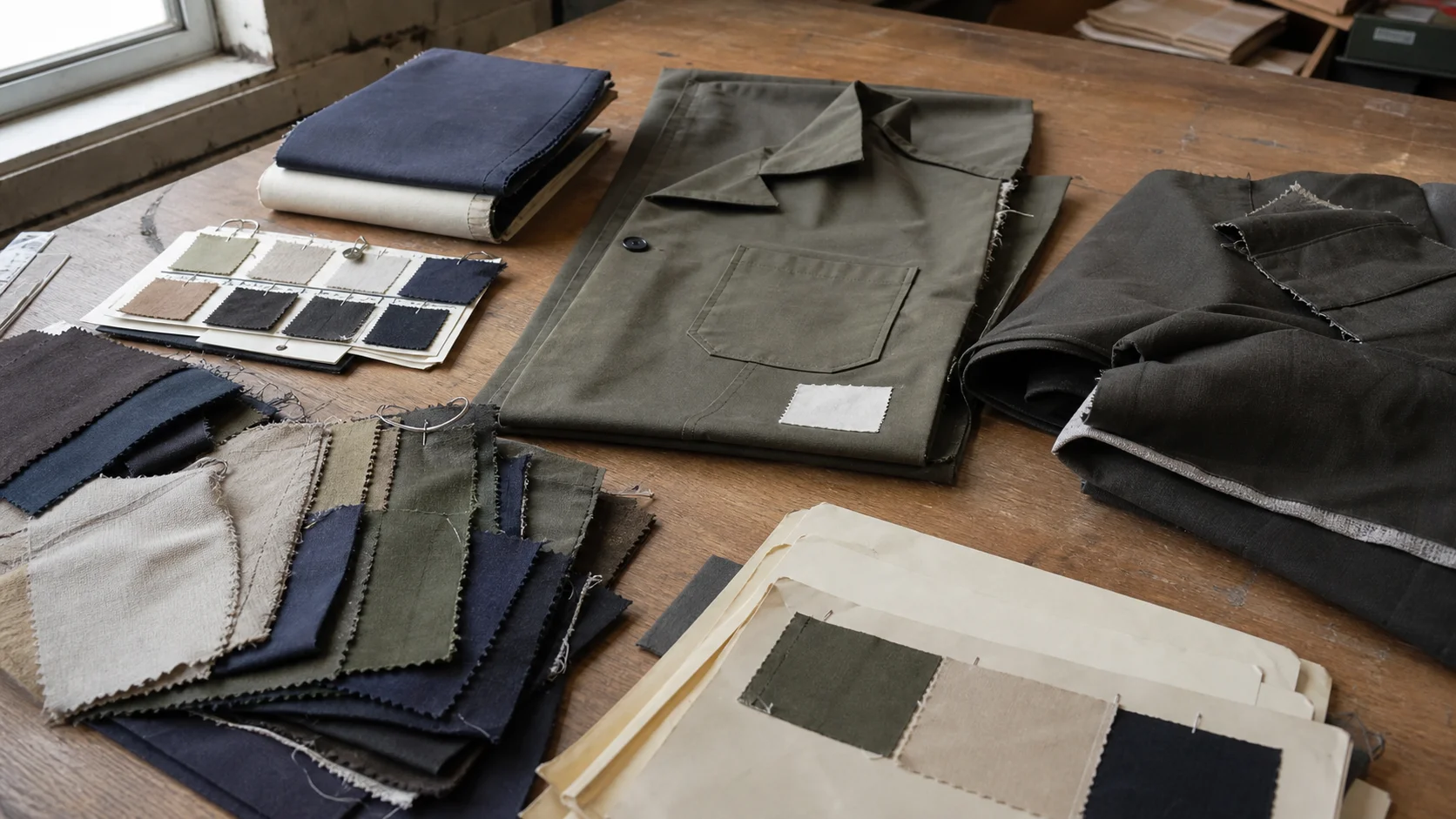
A practical testing-focused outline for outdoor school buyers evaluating reclaimed cotton coat fabric for durability, weather performance, safety, comfort,...
Reclaimed Cotton Coat Fabric Tests for School Buyers - Sustainable Fashion manufacturing guide
Outdoor schoolwear is a demanding category. A coat fabric may look sustainable on a tender document, but it still has to survive wet playgrounds, overloaded backpacks, repeated washing, name-label heat application, rough storage, and a full academic year of daily use. For school buyers, the right question is not whether reclaimed cotton sounds responsible. The practical question is whether the reclaimed cotton coat fabric has been tested against the actual risks of school use.
This reclaimed cotton coat fabric testing guide for outdoor school buyers focuses on the checks that matter before bulk purchase. It is written for procurement teams, school uniform coordinators, distributors, and private-label buyers who need a clear testing framework before placing orders. Reclaimed cotton can be a useful material choice in sustainable fashion, especially when blended carefully and specified correctly. It can also become a complaints problem if buyers rely only on recycled-content claims, soft handfeel, or a supplier’s general assurance.
Good fabric testing protects more than product quality. It protects budgets, parent confidence, brand reputation, and the credibility of a school’s sustainability policy. Reclaimed cotton coat fabric needs careful assessment for fiber composition, strength, colorfastness, dimensional stability, weather resistance, seam performance, abrasion, pilling, safety, and care-label accuracy. The best results come when these checks are built into the buying process before prices are finalized, not after shipment is already booked.
School outerwear has a different risk profile from fashion outerwear. A retail jacket may be bought for occasional wear, but a school coat is often worn five days a week, carried in bags, dragged across hooks, left in damp corridors, and washed under inconsistent home-laundry conditions. The wearer may not treat the garment gently. The buyer still has to answer for failures.
Reclaimed cotton can support sustainability goals, but the reclaiming process usually changes fiber length, fiber uniformity, and strength potential. Mechanically reclaimed cotton, in particular, may contain shorter fibers than virgin cotton. Shorter fibers can affect abrasion resistance, tensile strength, pilling, and surface appearance. These issues are manageable, especially with the right blend and construction, but they should be tested rather than assumed.
Outdoor school buyers also have to balance comfort and protection. A fabric with a high cotton content may feel familiar and breathable, yet it may not repel rain without a finish, laminate, coating, or engineered blend. A fabric promoted as “eco” may still need polyester, nylon, elastane, or a polyurethane coating to meet performance expectations. That tradeoff is not a failure. It is part of honest product development.
A reclaimed cotton school coat should be judged as a performance product first and a sustainability product second. If the coat fails in use, the sustainability claim will not rescue the purchase.
Testing gives buyers a common language for evaluating suppliers. Instead of asking whether the fabric is “good quality,” the buyer can ask for test results against defined standards and acceptable tolerances. That shift reduces ambiguity during quotation, sampling, production approval, and final inspection.
Reclaimed cotton usually refers to cotton recovered from textile waste and reprocessed for new yarns, fabrics, or blended materials. The source may be pre-consumer waste, such as cutting scraps and spinning waste, or post-consumer waste, such as used garments. For school coat fabric, pre-consumer reclaimed cotton is often easier to manage because the input material can be more consistent. Post-consumer cotton can still be viable, but it needs stronger controls for sorting, contamination, color variation, and fiber quality.
Buyers should not assume that “reclaimed cotton” means 100% reclaimed cotton. Many practical coat fabrics use a blend. Common examples include reclaimed cotton with virgin cotton, polyester, recycled polyester, nylon, or small percentages of elastane. In some constructions, reclaimed cotton is used in the face fabric while weather protection comes from a coating, membrane, lining, or bonded layer.
The exact blend matters because it affects every test result. Cotton content influences breathability, absorbency, handfeel, and dye behavior. Polyester and nylon can improve strength, abrasion resistance, drying time, and dimensional stability. Coatings and membranes can improve water resistance but may affect breathability, handle, noise, and long-term wash durability.
For school buyers, the safest approach is to request a complete fabric breakdown. A vague description such as “recycled cotton blend” is not enough. The specification should state the percentage of reclaimed cotton, other fibers, fabric weight, yarn count or construction where available, weave or knit type, finishing process, coating or laminate details, color standard, and intended care method.
The testing plan should match how the coat will be used. A nursery coat, a primary school winter parka, and a secondary school blazer-style outer jacket do not need identical requirements. Outdoor school buyers should start by ranking the main performance risks.
Testing should not be limited to fabric swatches. Swatch testing is useful at development stage, but finished garments reveal risks that lab dips and fabric rolls cannot show. A fabric may pass tensile testing and still fail at pocket corners if the garment construction is weak. A water-repellent face may perform well before sewing and then leak through needle holes if seam sealing or construction is not suitable.
Buyers should separate mandatory tests from nice-to-have tests. Mandatory tests are those tied to safety, legal compliance, customer complaints, and core function. Nice-to-have tests help compare suppliers or support premium claims. For a budget school coat, the best purchasing judgment is often to specify fewer claims but enforce them properly.
A fabric specification is the control document for sourcing. It should be specific enough to prevent substitution, but not so narrow that it blocks realistic production. For reclaimed cotton coat fabric, the specification should cover content, construction, appearance, performance, compliance, and packaging conditions.
Specification Area What to Define Buyer Judgment Fiber content Percentage of reclaimed cotton, virgin cotton, polyester, recycled polyester, nylon, elastane, or coating components Ask whether percentages are by total fabric weight and whether coating weight is included. Fabric weight GSM or oz/yd² with tolerance A typical tolerance may be around 5%, but confirm based on fabric type and supplier capability. Construction Woven, twill, canvas, ripstop, brushed back, bonded, coated, or laminated Do not approve only by handfeel. Construction affects durability and weather performance. Finish Water repellent, coating, peach finish, anti-pilling, softener, stain resistance, or anti-crease treatment Check wash durability of finishes before accepting performance claims. Color Pantone, lab dip reference, approved bulk standard, or brand color card Navy, black, bottle green, and burgundy need tight shade control across repeat orders. Care Wash temperature, drying method, ironing restriction, coating caution, and label wording Care labels must match test outcomes, not marketing preference.Coat fabrics need trim compatibility as well. A buyer should check whether zips, snaps, hook-and-loop tape, reflective piping, elastic cuffs, binding, drawcords, toggles, labels, and thread perform with the selected fabric. Reclaimed cotton blends can have a softer or more textured surface, which may catch lint or show abrasion near trims. Dense coatings may need different needle size, thread type, or seam tape.
Practical trim specifications should include zip brand or performance level, slider pull strength, snap corrosion resistance, reflective trim wash durability, thread composition, label attachment method, and pocket reinforcement. For schoolwear, metal trims should be checked for rust risk after washing and wet storage. Hook-and-loop tape should be placed carefully because it can damage cotton-rich surfaces during laundering.
Testing needs to be appropriate to the country of sale, product claim, and buyer risk tolerance. The exact standard should be confirmed with the supplier, laboratory, and local compliance advisor. The following tests are commonly relevant for reclaimed cotton coat fabric used in outdoor schoolwear.
Fiber composition testing confirms whether the fabric matches the claimed blend. This matters for legal labeling and for sustainability reporting. If a supplier states 40% reclaimed cotton and 60% recycled polyester, buyers should request supporting documents and, where feasible, composition verification. Laboratory testing can confirm fiber types, but verifying the reclaimed origin may require chain-of-custody documents, transaction records, or certification depending on the claim.
Buyers should be cautious with unsupported recycled-content percentages. A statement on a hangtag is not the same as a verified supply chain. If the school tender includes sustainability scoring, ask for documentation before awarding the order.
Fabric weight affects warmth, durability, price, freight cost, and garment appearance. For coats, cotton-blend outer shell fabrics may vary widely, from lighter shells around 150-220 GSM to heavier canvas or twill constructions around 250-400 GSM. Bonded or coated fabrics may sit higher. A heavier fabric is not automatically better. It may be more durable, but it can also reduce comfort and increase drying time.
Width testing matters because it affects consumption and costing. If actual usable width is narrower than quoted, the factory may need more fabric per garment. That can lead to cost increases, shortages, or pressure to accept lower cutting efficiency.
Tensile strength checks resistance to pulling forces. Tear strength checks how easily a small cut or puncture spreads. These are important for school coats because children pull sleeves, pockets, hoods, and hems during daily use. Reclaimed cotton blends with short fibers may need polyester or nylon support to meet strength targets.
Ask for test results in both warp and weft directions for woven fabrics. Weakness in one direction can show up later as seam distortion, pocket tearing, or fabric splitting around stress points. For coated fabrics, also consider whether coating cracks or delaminates after flexing.
Abrasion testing is one of the most useful checks for school outerwear. Backpack straps, playground benches, desk edges, and repeated sleeve movement create constant friction. Cotton-rich surfaces can become fuzzy or worn if the yarn quality, weave density, or finish is not suitable.
Abrasion requirements should reflect the price point and expected use period. A premium school coat expected to last multiple seasons should meet a tougher abrasion target than a low-cost seasonal jacket. Buyers should ask the lab to assess appearance after abrasion, not only hole formation. Parents often complain about visible wear before the fabric technically fails.
Pilling is common in cotton blends, especially where shorter fibers are present. Reclaimed cotton can be more vulnerable if the blend and spinning quality are not well controlled. Pilling is not always a structural failure, but it quickly makes a school coat look old.
Surface testing should include high-rub areas such as sleeves, underarms, side panels, and backpack-contact zones. Buyers should compare pilling results against approved production samples so that visual expectations are clear.
School uniforms rely on consistent colors. Navy, grey, black, burgundy, green, and red need careful colorfastness testing. Reclaimed cotton may include pre-colored fibers, depending on the recycling process, or it may be re-dyed. Both routes can produce acceptable results, but color control must be verified.
Colorfastness to washing checks whether dye bleeds or fades. Colorfastness to rubbing checks whether color transfers to shirts, hands, seats, or backpack straps. Light fastness matters for coats worn outdoors. Poor light fastness can make shoulder panels, sleeves, and hoods fade unevenly.
Dark shades should be tested in wet and dry rubbing. Wet rubbing is often the more difficult result. If the coat has contrast lining or reflective trim, check staining onto adjacent materials.
Dimensional stability affects fit, seam appearance, lining compatibility, and zipper alignment. Cotton-rich fabrics can shrink if they are not pre-shrunk or properly finished. Coated and bonded fabrics can also change after washing if the layers respond differently.
Ask for shrinkage results after the intended number of wash cycles. One wash may not be enough for schoolwear. Testing after three or five cycles gives a more realistic view, especially for garments marketed as washable. If the fabric shrinks but the lining does not, puckering and twisting may appear.
Fabric tests do not replace seam tests. A coat may pass fabric strength tests but fail when stitched. Seam slippage is a risk in loosely woven fabrics. Seam strength is critical at shoulders, armholes, pockets, hoods, side seams, and zip guards.
Buyers should request seam performance testing on the actual garment construction. Needle size, stitch density, thread type, seam allowance, seam tape, and reinforcement all affect results. If the fabric is coated, poor needle choice can create perforation lines that weaken the seam or increase leakage.
School garments should be treated as sensitive products because they are worn by children for long periods. Testing requirements vary by market, but buyers should consider restricted substances, azo dyes, formaldehyde, heavy metals in trims, phthalates in prints or coatings, nickel release from metal parts, and other applicable regulations.
Drawcords, toggles, and hood features need careful review for children’s safety. Reflective trims should not create sharp edges or peel after washing. Zips should be smooth enough for younger children to operate but strong enough for daily use.
Reclaimed cotton itself is not naturally waterproof. Cotton absorbs moisture, which can increase drying time and weight. To make a cotton-rich coat suitable for outdoor schoolwear, suppliers may use a durable water-repellent finish, a coating, a membrane, a bonded construction, or a weather-resistant blend. Each option has tradeoffs.
Weather Option Strength Tradeoff DWR finish Improves water beading and light rain resistance Performance may reduce after washing and abrasion. PU coating Can improve water resistance at reasonable cost May reduce breathability and can crack or peel if poor quality. Membrane or laminate Can support higher water resistance and wind protection Usually higher cost and needs careful seam construction. Polyester or nylon blend Improves strength, drying time, and abrasion resistance Reduces cotton content and may affect sustainability scoring if not recycled.Water repellency tests show whether water beads on the fabric surface. This is useful for light rain and short exposure. It does not prove waterproofness. For school coats described as shower-resistant, water repellency may be acceptable if the claim is clear and the buyer does not promise full rain protection.
Ask for water repellency results before and after washing. A fresh finish may perform well at first but drop quickly after home laundering. If the garment will be washed frequently, post-wash performance is more important than initial performance.
Water resistance testing measures how much water pressure the fabric can withstand before leakage. This matters for coats marketed as waterproof or suitable for heavier rain. The target level depends on the product claim and local weather expectations.
Buyers should avoid overstating the claim. A coat with a water-resistant shell but unsealed seams may leak through stitching. If the final garment has no seam sealing, waterproof marketing can create avoidable complaints.
Breathability affects wearer comfort. Children may run outside, sit in warm classrooms, and then go back into cold weather. A non-breathable coated fabric can feel clammy, especially if the lining traps moisture. Cotton content can support comfort, but coatings and membranes change the balance.
For school buyers, breathability is often a practical comfort issue rather than a premium technical claim. If the coat is padded, lined, and coated, ask for a realistic view of moisture management. Parents may not use the word breathability, but they will report that the coat feels sweaty or uncomfortable.
Wind resistance is useful for outdoor playground use and walking to school. Dense woven fabrics, coatings, laminates, and bonded constructions can reduce wind penetration. A very open or soft fabric may feel comfortable indoors but less protective outdoors.
Wind resistance should be considered alongside breathability. A fully blocked fabric may protect against wind but hold heat and moisture. The right decision depends on climate, age group, and wearing season.
Sample approval should be structured. Rushing from a nice prototype to bulk production is a common sourcing mistake. Reclaimed cotton coat fabric needs several checks because shade, handfeel, strength, and finish can vary between development fabric and bulk fabric.
Start with swatches that show the proposed fabric in the target colors. Check handfeel, weight, surface texture, lining compatibility, and initial color match. Request the fabric composition, GSM, finish details, and available test results at this stage. Swatches are not enough for approval, but they help eliminate unsuitable options early.
Lab dips should be reviewed under controlled lighting. School colors need consistency across sizes, repeat orders, and matching garments such as trousers, skirts, sweatshirts, or bags. If the reclaimed cotton fabric uses undyed recycled color blends, shade variation may be part of the material story. That is acceptable only if the school and parents are prepared for visible variation.
The proto sample checks styling, fit direction, construction logic, trim placement, and fabric behavior in garment form. For school coats, inspect sleeve mobility, hood shape, pocket access, zip operation, cuff comfort, name-label position, and backpack clearance. If the fabric is stiff, heavy, or noisy, this is where the buyer will notice.
Fit samples should cover key sizes, not just one middle size. Children’s outerwear needs room for shirts, jumpers, and movement. A coat that fits neatly over a T-shirt may be too tight over winter uniform layers. Reclaimed cotton blends with limited stretch need proper ease at shoulders, chest, elbows, and hips.
The pre-production sample should be made from bulk or production-intent fabric and trims. This is the most important approval sample before cutting. Check shade, fabric weight, lining, padding, trims, stitching, seam sealing if used, label content, care label, packaging, and measurements. Lab testing should be completed or underway before this sample is signed off.
A small wear trial can be useful for higher-volume school programs, though it adds time. At minimum, run controlled wash trials. Check shrinkage, twisting, seam puckering, print durability, reflective trim, zip function, coating condition, and surface pilling. Do not rely on one clean-looking sample straight from the factory.
Minimum order quantities vary by fabric, mill setup, dyeing process, color, coating, and trim customization. For reclaimed cotton coat fabric, typical fabric MOQs may range from around 500 to 1,000 meters for stock-supported materials, 1,000 to 3,000 meters for custom colors or finishes, and 3,000 to 5,000 meters or more for fully customized constructions or certified recycled-content programs. Finished garment MOQs may sit around 300 to 1,000 pieces per style and color for flexible suppliers, with higher MOQs for complex outerwear or custom materials.
These ranges are indicative, not fixed. A supplier may accept a lower MOQ with a surcharge, longer lead time, limited color choice, or stock fabric substitution. Small school orders often work better with proven stock fabrics than with a custom reclaimed cotton development. Larger school groups, distributors, or multi-academy trusts may have enough volume to justify custom fabric testing and dedicated production.
Lead times depend on whether the fabric is available, whether dyeing is needed, whether performance finishing is required, whether lab testing is completed, and whether trims are custom. A practical timeline for a new reclaimed cotton coat program may include two to four weeks for fabric sourcing and swatches, one to three weeks for lab dips, two to four weeks for proto and fit samples, two to three weeks for testing depending on lab workload, and six to twelve weeks for bulk production after approval. Shipping and customs add more time.
Buyers should plan backwards from the school term. If coats need to be in stores or issued before autumn, development should not start in late summer. Testing failures can add several weeks because the supplier may need to adjust fabric, change finish, revise construction, or remake samples.
Cost tradeoffs should be made openly. A lower-cost fabric may pass basic appearance checks but fail abrasion or water resistance. A high recycled-content fabric may support sustainability messaging but require reinforcement or blending to meet durability targets. A coated fabric may improve rain performance but reduce softness and breathability. The best purchase is rarely the cheapest quote. It is the option with the fewest hidden complaint risks at the required price point.
Buyers building a broader responsible sourcing program can review support options through Fabrikn services. For supplier discussions, tender preparation, or coat development queries, the Fabrikn contact page is a practical next step. Buyers who need background on the company can also visit Fabrikn about us.
Bulk inspection should confirm that approved quality has been maintained. Reclaimed cotton fabric can vary between lots, especially if input fibers, shade sorting, or finishing controls are inconsistent. Inspection should happen at fabric stage and garment stage where possible.
Roll inspection should use an agreed point system or defect classification method. Buyers should define acceptable and unacceptable defects before production. For schoolwear, visible defects on front panels, sleeves, collars, and hoods should be treated more strictly than hidden areas.
Finished garment inspection should cover measurements, workmanship, function, labeling, packing, and appearance. Outerwear needs special attention around zip alignment, pocket symmetry, seam security, hood attachment, cuff finishing, hem shape, lining attachment, and reinforcement points. If the coat includes padding, check for migration, uneven thickness, and quilting tension.
Water-repellent or coated garments should be checked for needle damage, seam leakage risk, delamination, peeling, and press marks. Reflective trims should be straight, securely attached, and washable. Name labels and care labels must be readable and correctly placed.
Many buyers use AQL inspection for bulk garments. The chosen AQL level should reflect the order size, price point, and risk. Critical defects should not be accepted. Major defects may include broken zips, open seams, wrong shade, incorrect labels, severe stains, or failed measurements. Minor defects may include small loose threads or slight cosmetic issues within agreed limits.
Inspection should not replace lab testing. A visual inspector cannot confirm fiber composition, restricted substances, hydrostatic pressure, or wash durability by looking at the coat. Lab testing and inspection serve different roles and should be planned together.
Sustainability claims need evidence. A reclaimed cotton coat fabric may be described as recycled, reclaimed, regenerated, circular, low-impact, or eco-friendly. These terms are not interchangeable. School buyers should ask exactly what is being claimed and what documentation supports it.
Useful documents may include fiber composition reports, recycled-content certificates, transaction certificates where applicable, supplier declarations, chain-of-custody records, dyeing and finishing declarations, and restricted-substance test reports. Certification requirements depend on market, claim, and buyer policy. A small school may not need a complex certification program, but it still needs truthful labeling.
Do not approve broad claims such as “100% sustainable” or “environmentally friendly” without qualification. More cautious wording is usually safer, such as “made with reclaimed cotton blend” or “contains recycled cotton,” provided the percentage and evidence are accurate.
Quotation comparison should go beyond unit price. A supplier offering a lower price may be excluding testing, using a lower fabric weight, offering a weaker finish, or assuming a higher order quantity. School buyers should request a like-for-like quote sheet.
Quotation Item What to Check Risk if Ignored Fabric composition Exact reclaimed cotton percentage and blend Mislabeling, weaker durability, or unsupported claims Testing inclusion Whether lab tests are included, optional, or buyer-paid Unexpected cost or untested production MOQ MOQ per style, color, size, and fabric Stock pressure or forced overbuying Lead time Sampling, testing, production, and shipping timeline Late delivery before term start Trim quality Zip, snap, reflective, lining, padding, and thread specification Garment failure despite acceptable fabric Reorder terms Shade continuity and fabric availability for repeat orders Mismatch across school yearsA strong quote will state assumptions clearly. A weak quote may rely on vague phrases such as “standard quality,” “normal testing,” or “eco fabric.” Ask suppliers to define these terms before comparing prices.
The right supplier questions reduce mistakes early. Use them before sample approval and again before bulk production.
Buyers should keep answers in writing. If a quality issue appears later, written specifications and approvals are far more useful than verbal assurances.
Reclaimed cotton coat fabric is a good fit when the school wants a visible sustainability improvement and the product can still meet performance needs. It works best when buyers accept a balanced blend, allow enough time for testing, and avoid overclaiming weather protection.
It may not be the best option for every coat. If the required product is a highly waterproof technical jacket, a cotton-rich reclaimed fabric may need coatings or laminates that change the environmental and comfort profile. If the order volume is very small, stock recycled polyester outerwear may be more practical than custom reclaimed cotton. If the school requires exact shade continuity across many years, reclaimed fiber inputs need stricter shade control and supplier commitment.
The strongest buying strategy is to define the product honestly. A reclaimed cotton blend coat can be positioned as durable school outerwear with responsible material content, provided the tests support that claim. It should not be sold as a high-performance rain jacket unless the finished garment has been built and tested for that purpose.
For most outdoor school buyers, the following checklist gives a workable starting point. The final list should be adjusted for local regulations, buyer standards, and product claims.
This checklist is not excessive for a serious school coat program. It is cheaper to discover a weak fabric during sampling than after parents start returning coats in the first wet month of term.
Reclaimed cotton can be a responsible and commercially useful choice for school coat fabric, but only when the testing plan matches the real use case. Buyers should avoid treating sustainability claims as a substitute for performance evidence. Fiber origin, fabric construction, coating durability, colorfastness, seam strength, and wash stability all need attention.
The best sourcing decision is usually a balanced one: enough reclaimed cotton to support the sustainability goal, enough technical support from blending or finishing to meet outdoor use, and enough testing to reduce complaint risk. For school buyers, that is the difference between a good procurement story and a coat that actually performs through the school year.
Get a free quote from Fabrikn — your trusted B2B clothing manufacturer with 10+ years of experience. MOQ as low as 200 pieces.
Get a Free Quote →Yes, reclaimed cotton can be suitable when it is blended, constructed, and finished correctly. It should be tested for strength, abrasion, shrinkage, colorfastness, and weather performance before bulk production. A cotton-rich fabric may need a water-repellent finish, coating, membrane, or synthetic blend support for outdoor use.
The most important tests usually include fiber composition, tensile strength, tear strength, abrasion resistance, pilling, colorfastness, dimensional stability, water repellency, seam strength, and restricted-substance testing. If the coat is marketed as waterproof, water resistance and seam construction need special attention.
Typical fabric MOQs may range from around 500 to 1,000 meters for available stock options, 1,000 to 3,000 meters for custom colors or finishes, and 3,000 to 5,000 meters or more for custom developments. Finished garment MOQs often range from about 300 to 1,000 pieces per style and color, depending on supplier capability and trim requirements.
Reclaimed cotton by itself is not waterproof. A finished fabric can become water-resistant or waterproof only through construction choices such as coatings, laminates, membranes, seam sealing, or specialist finishes. Buyers should test the finished garment if making waterproof claims.
A new program can take several months when fabric sourcing, lab dips, sampling, testing, production, and shipping are included. Simple stock-fabric programs may move faster. Custom reclaimed cotton fabrics need more time because shade, performance finishing, testing, and MOQ planning must be controlled before bulk approval.
Not necessarily. A 100% reclaimed cotton coat fabric may struggle with strength, abrasion, shrinkage, drying time, or weather resistance depending on construction. A reclaimed cotton blend is often more practical for school outerwear because other fibers can improve durability and performance.
Buyers should request fiber composition reports, supplier declarations, chain-of-custody documents, recycled-content certificates where applicable, and transaction records if a certification system is used. Claims should be specific, evidence-based, and matched to the actual fabric content.
Common risks include shade variation, uneven texture, weak abrasion performance, pilling, coating inconsistency, shrinkage, odor, contamination, and seam weakness. Finished garments also need checks for zip function, pocket strength, lining attachment, label accuracy, and weather-performance construction.