
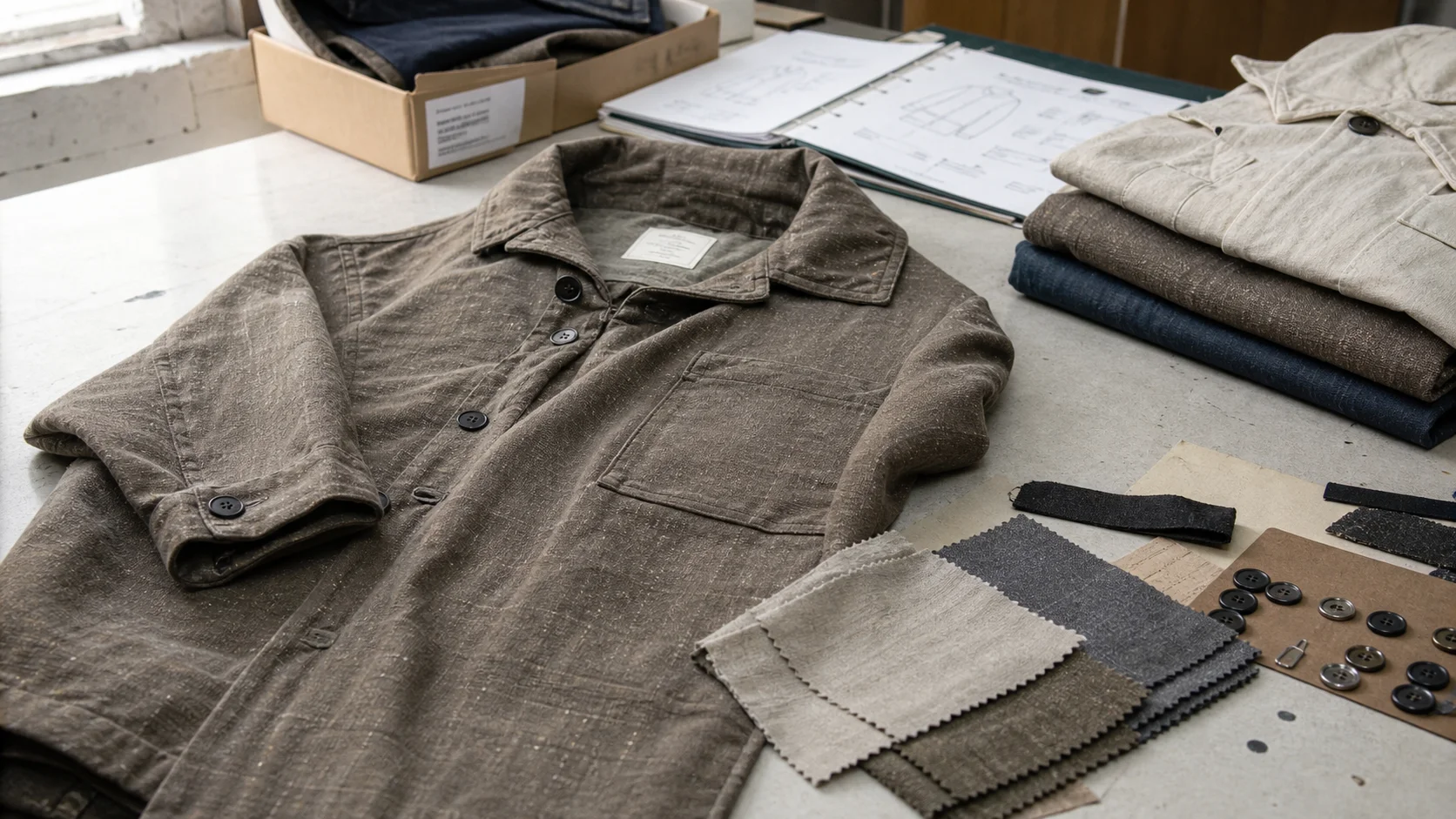
A buyer-focused checklist for distributor teams approving reclaimed cotton coat factory releases, covering quality, compliance, labeling, packing, and...
Category: Sustainable Fashion
Buying reclaimed cotton coats at scale is not just a design decision. It is a release decision. A distributor buyer has to decide whether the production lot is ready to leave the factory, whether the goods match the approved sample, and whether the risk of claims is low enough to ship without delay. In reclaimed cotton programs, that judgment matters even more because fiber variability, shade movement, surface irregularity, and trim substitution can affect consistency from lot to lot.
This checklist is written for distributor buyers, sourcing teams, and wholesale apparel teams who need a practical way to approve reclaimed cotton coat production before dispatch. Use it as a factory release guide, a QA reference, and a purchasing control sheet. It is also useful when working with a reclaimed cotton coat factory on repeat programs, private label launches, or seasonal replenishment.
Reclaimed Cotton Coat Release Checklist for Buyers - Fabrikn production reference
A factory release checklist is the final buyer-side control before goods are approved for shipment. For reclaimed cotton coats, it should cover fabric identity, garment measurements, workmanship, labeling, packing, and documentation. It should also confirm that the approved pre-production sample, size set, and bulk production fall within agreed tolerances.
Reclaimed cotton is not the same as conventional virgin cotton. Depending on the sourcing route, reclaimed content can come from pre-consumer cutting waste, post-industrial textile recovery, or mechanically recycled fibers blended back into yarn. That means the buyer has to manage more variation in yarn quality, surface appearance, shade depth, and shrinkage behavior. A release checklist keeps those variables from becoming a dispute after shipment.
Distributor buyers carry a different risk profile than a single retail brand launch. Inventory needs to be consistent across channels, and returns can hit margin quickly. A small defect rate can become expensive when the same coat is distributed through multiple wholesale accounts.
In reclaimed cotton coat production, release failure usually shows up in one of five areas:
A careful distributor buyer does not only ask whether the goods are finished. The real question is whether they are releasable without creating downstream claims.
If you are still shortlisting suppliers, start with the factory’s process scope and sustainability support. A practical first step is to review the services page and compare it with your coat program requirements. If you need a direct sourcing conversation, use the contact page.
The best release checklist begins before cutting starts. Buyers should not wait until the shipment stage to define what “acceptable” means. In reclaimed cotton programs, the pre-production phase is where most avoidable errors can be prevented.
Keep a clear record of the buyer-approved sample hierarchy:
If the factory changes even one visible element, the buyer should know whether it was re-approved. A coat can look “close enough” to a production team and still be wrong for wholesale release.
For reclaimed cotton coat orders, typical MOQ ranges vary widely by pattern complexity, fabric availability, and trim sourcing. Many factories will quote lower quantities for simple silhouettes and higher quantities for custom fabrics, complex lining, or special washes. A cautious buyer should treat very low MOQs as a signal to inspect process control carefully, not as a guarantee of flexibility.
Lead time also depends on whether the reclaimed fabric is in stock, whether the yarn or woven cloth needs to be developed, and whether dye lots must be matched. If the factory is sourcing reclaimed fiber through a third party, raw material lead time can become the critical path.
Fabric is the core risk in a reclaimed cotton coat program. Before release, buyers should verify that the actual bulk fabric matches the approved composition and appearance as closely as the technical package allows.
Ask for the confirmed fiber breakdown and confirm the allowable tolerance in writing. If the garment spec calls for reclaimed cotton blended with virgin cotton or polyester for stability, the percentage should be stated on the tech pack and label plan. Do not rely on vague descriptions such as “eco cotton” or “recycled cotton.”
Useful buyer questions include:
Reclaimed cotton fabrics often show more natural variation than standard mill runs. That can be part of the appeal, but it still needs control. The buyer should define whether visible slub, nep, speckling, or tonal variation is acceptable and where it is not acceptable.
A sustainable fabric story is not a substitute for consistency. If the shade range is too wide, the distributor absorbs the claim risk even when the factory says the variation is “natural.”
Reclaimed cotton coatings, brushed fabrics, and garment-washed finishes can move after washing or pressing. Request wash test results for shrinkage, skew, torque, and color fastness if the coat will be sold in a washed or casual finish. Buyers should confirm whether measurements were taken before or after the intended finishing process.
For outerwear, even a small change in chest, sleeve, or body length can affect sell-through and size complaints. A release lot should stay inside the approved tolerance range on the spec sheet.
A coat can pass fabric inspection and still fail release if trims are inconsistent. This is especially true for reclaimed cotton outerwear, where buyers often specify natural-looking trims to support the sustainability story.
Confirm that all visible and functional trims match the approved sample for color, finish, size, and strength. For distributor programs, substitution is a common issue when factories switch to “equivalent” stock trims without formal approval.
If the coat has a lining or facing, confirm the composition and weight. A lining that is too lightweight can affect drape and warmth. A lining that is too heavy can distort the silhouette and alter the garment’s intended seasonality. Interlining and fusible components should be checked for bubbling, strike-through, and adhesion failure after pressing.
For a distributor, label mistakes create serious claims. Check the following before release:
If multiple markets are involved, the buyer should confirm that label versions are separated correctly by carton and PO. Mixed labeling in one shipment is a preventable failure.
Construction quality determines whether the coat will survive wear, laundering, and channel handling. Release checks should focus on visible defects and functional stress points.
Inspect seam appearance, stitch density, thread tension, and seam alignment. Common weak points include armhole joins, collar seams, pocket openings, and hem finish. Loose threads, skipped stitches, and puckering should be counted and classified, not brushed aside as minor issues.
Outerwear pockets are high-touch features. A pocket that is off-position by even a small amount can make the coat look unbalanced. Buyers should also check pocket bar tacks, pocket bag strength, and whether any decorative stitching matches the approved sample.
Where the design includes structured elements, check symmetry and roll. A collar that sits unevenly or a placket that twists after pressing is a sign of process weakness. For hooded coats, verify drawcord exits, hood shape, and edge finishing.
Distributor buyers should not approve based on one perfect sample. A size set is essential because reclaimed cotton coats can behave differently across sizes, especially when the pattern has multiple panels or a shaped silhouette.
The buyer should ask whether measurements were taken flat or on form, because that affects interpretation. Any major deviation should be reviewed before release. It is cheaper to stop a lot at the factory than to sort claims after distribution.
Finishing controls how the coat presents on arrival. Even a well-made coat can look unacceptable if pressing, folding, or packing is mishandled.
Check that the garment is pressed without shine, seam impression, or heat damage. Reclaimed cotton fabrics can be more sensitive to finish marks if the surface is brushed or lightly textured. Pressing should enhance shape, not flatten character or leave glossy patches.
For wholesale distribution, packing is part of release quality. Check carton strength, size ratio, folding method, and packing count. Polybags should be clean, properly sized, and compliant with market rules if applicable. Cartons should be labeled clearly with style, color, size, quantity, PO, and carton number.
Before release, confirm that the factory has prepared the correct shipment documents for the agreed terms. Missing or inconsistent paperwork can delay customs clearance and create warehouse problems even if the garments are technically acceptable.
Document Buyer check Common risk Commercial invoice Matches PO values and product description Wrong SKU or unit pricing Packing list Carton count and size breakdown are correct Mixed counts or missing cartons Test reports Linked to the actual bulk lot Old report reused for a new production lot Label artwork Matches approved market version Compliance mismatchRelease should be based on inspection data, not optimism. The inspection method can vary depending on order size, product criticality, and factory history.
The inspection plan should reflect the real cost of failure. A lower inspection cost can look efficient, but it may transfer risk to the distributor after goods leave the factory.
If the order is strategic, buyers should consider a pre-shipment inspection with a clear pass/fail threshold and documented defect categories. For reclaimed cotton products, visual standards should be defined carefully so natural variation is not confused with defects, and defects are not excused as variation.
Lead time for a reclaimed cotton coat is usually longer than for a basic woven garment if fabric development or sourcing is involved. A buyer should plan around the slowest link in the chain: reclaimed fiber sourcing, yarn production, fabric weaving or knitting, dyeing, coating, sample approvals, and final inspection.
Typical production lead times can move significantly depending on fabric availability and trimming complexity. Buyers should treat any quote as conditional until samples and material approvals are complete. Rush production may be possible, but it often increases the risk of shade inconsistency, trim substitution, and packing errors.
There is also a tradeoff between MOQ and control. Small quantities can be useful for market testing, but they may come with higher unit cost, fewer fabric options, and less room for process stabilization. Larger orders usually improve cost efficiency, though they also raise exposure if release controls are weak.
Practical buyers tend to ask one question before release: is the cost of a short delay lower than the cost of a bad shipment? In sustainable fashion, that question is often answered in favor of delay, because rework and returns can erase the sustainability and margin story at the same time.
A clean release workflow prevents confusion between “approved with notes” and “approved for shipment.” Those are not the same thing.
Every approval stage should leave a paper trail. If the buyer has to explain a dispute later, the record should show exactly what was accepted, what was conditional, and what was rejected.
Use this checklist as a final gate before authorizing shipment from the reclaimed cotton coat factory.
Some problems show up repeatedly in recycled and reclaimed programs. Buyers can reduce risk by watching for them early.
Not every variation is acceptable. Buyers should define which changes are part of the material character and which changes are defects.
If the approved sample is not tied to a measurement sheet, trim list, and material spec, release becomes subjective.
This can happen when mills or fabric stock are mixed. Lot control matters, especially when shade matching is tight.
Packing errors are common when goods are finished late. A strong release checklist should treat packing as part of quality, not an afterthought.
Reports should relate to the actual production lot when possible. Old reports can provide false comfort.
If you are qualifying a reclaimed cotton coat factory, ask direct questions about control, not just capability. The answers should tell you how much release risk you are taking on.
For supplier background and operational positioning, buyers can also review the company profile on the about page. That helps when you need to compare service scope against your commercial and sustainability requirements.
A reclaimed cotton coat release checklist is not paperwork for its own sake. It is a buying control that protects margin, reduces claims, and keeps sustainable sourcing from turning into a quality problem. The best distributors use release criteria that are strict enough to prevent avoidable faults and practical enough to account for the nature of reclaimed materials.
When fabric, trims, fit, finishing, packing, and documentation are all checked against the approved reference, the shipment has a real chance of performing well in the market. That is the standard buyers should aim for: not just shipped, but fit to sell.
Get a free quote from Fabrikn — your trusted B2B clothing manufacturer with 10+ years of experience. MOQ as low as 200 pieces.
Get a Free Quote →It is a buyer-side control list used to confirm that reclaimed cotton coats are ready for shipment. It covers fabric, trims, measurements, workmanship, labeling, packing, and documents.
Reclaimed cotton can vary more in shade, handfeel, and stability than standard cotton. Those differences can affect consistency, fit, and customer acceptance if they are not controlled before shipment.
MOQ depends on the factory, fabric availability, and style complexity. Simple styles may start lower, while custom fabric or complex outerwear often requires higher minimums. Buyers should confirm MOQ early because recycled and reclaimed materials can limit flexibility.
Lead time depends on whether the reclaimed fabric is already available, whether custom dyeing is needed, and how complex the coat construction is. Sample approval, material sourcing, and final inspection can all extend the schedule.
Fabric lot identity, shade consistency, garment measurements, trim accuracy, and packing correctness are the main release risks. If any of those are off, the shipment can create claims after distribution.
Some variation is normal and may be part of the product appeal. Buyers should still define acceptable limits in writing so “natural variation” is not used to excuse real defects.
It is possible, but not advisable for most distributor programs. Final inspection gives the buyer one last chance to catch measurement errors, trim substitution, and packing issues before the goods leave the factory.