
A product-specific SEO outline for security contractors reviewing reorder risks, supplier controls, and continuity safeguards for reclaimed cotton coats.
Reclaimed Cotton Coat Reorder Risk Review - Fabrikn production reference
For security contractors, a reclaimed cotton coat is not only a sustainability statement. It is part of a uniform system that must remain consistent across guard teams, sites, seasons, and repeat purchase cycles. A coat that looks acceptable on the first order can become a procurement problem when the reorder arrives with different shade depth, weaker lining, altered pocket placement, or a heavier fabric that does not match the approved uniform standard.
This reorder risk review is written for buyers, operations managers, and uniform sourcing teams evaluating a reclaimed cotton coat supplier for security contractor programs. The focus is practical: repeatability, fabric control, trim continuity, inspection points, MOQ planning, sample approvals, and the tradeoffs that come with recycled or reclaimed cotton supply.
Security contractors usually buy uniforms under operational pressure. New sites open, guards transfer between contracts, seasonal weather changes, and client branding requirements may shift quickly. A coat reorder that misses the approved standard can create immediate problems: mismatched guard appearance, delayed deployment, higher alteration costs, and disputes between procurement and operations.
The risk is higher when the coat uses reclaimed cotton. Reclaimed cotton can support sustainability goals and reduce reliance on virgin fiber, but it introduces variability. Fiber origin, color feedstock, yarn strength, spinning consistency, and fabric finishing can change between production batches. A supplier that manages this well can deliver a credible sustainable uniform product. A supplier that treats reclaimed cotton as a generic fabric substitute can create inconsistent repeat orders.
Security uniforms also have a sharper performance requirement than many casual fashion coats. The garment must look professional after repeated wear, support movement during long shifts, and carry functional details such as badge tabs, radio loops, storm flaps, reflective piping, inner pockets, or removable liners. If the first order was approved by the end client, the reorder must match it closely enough that new coats do not stand out on the same site.
The central sourcing question is not whether a supplier can make one acceptable reclaimed cotton coat. The better question is whether the supplier can reproduce the same coat across reorder cycles while keeping fabric, trims, fit, and appearance within controlled tolerances.
For B2B buyers, reorder risk should be assessed before the first bulk order is placed. Once a supplier has shipped the initial batch, changing factories can become expensive because patterns, fabric references, trim sourcing, and client approvals are already tied to the original development route. The safest purchasing approach is to build repeat-order controls into the first tech pack, first purchase order, and first inspection plan.
Reclaimed cotton generally refers to cotton fiber recovered from textile waste. It may come from pre-consumer cutting waste, post-industrial fabric remnants, yarn waste, or post-consumer garments. The recovered material is mechanically processed back into fiber and then blended, spun, woven or knitted, and finished into new fabric. In coat manufacturing, reclaimed cotton is often blended with virgin cotton, recycled polyester, conventional polyester, nylon, or other fibers to improve strength, stability, and abrasion resistance.
Security contractor coats are rarely made from 100% reclaimed cotton if the garment needs high durability, weather resistance, or stable color performance. A 100% reclaimed cotton fabric can be possible in some applications, but it may have lower tensile strength, shorter fiber length, and more shade variation. For uniform coats, blended constructions are often more practical.
Common reclaimed cotton coat fabric options include cotton-rich twill, canvas, ripstop, brushed cotton blends, and laminated or coated shell fabrics. Some programs use reclaimed cotton mainly in the outer shell. Others use it in lining, pocketing, or detachable inner layers. The best choice depends on the use case. Static indoor security may accept a lighter cotton blend coat, while outdoor patrol teams may need a more weather-resistant shell with reclaimed content used selectively.
Fabric Route Typical Use Reorder Risk Buyer Comment Reclaimed cotton-rich twill Smart uniform coats, light outerwear Medium Good appearance, but shade and handfeel must be controlled. Reclaimed cotton canvas blend Durable work-style coats Medium to high Useful for rugged styling, but weight and shrinkage can vary. Reclaimed cotton/polyester blend General security uniform coats Medium Often more stable than cotton-only reclaimed fabric. Reclaimed cotton lining or pocketing Sustainability content with lower visual risk Low to medium Safer for buyers who need consistent outer appearance. Coated reclaimed cotton blend Weather-resistant coats High Coating quality, cracking, and water resistance require testing.Buyers should ask suppliers to define the reclaimed content clearly. A vague claim such as “eco cotton” is not enough for a uniform contract. The purchase file should specify fiber composition, reclaimed content percentage, fabric weight, yarn count or construction where available, finishing method, color standard, and test requirements. If certification is required, confirm whether the supplier can support the specific claim with valid documentation. Not every reclaimed cotton fabric will carry the same certification path.
Reorder risk comes from several points in the supply chain. The cut-and-sew factory may be stable, but the fabric mill may change fiber input. The fabric may match, but the zipper supplier may discontinue a puller. The pattern may remain unchanged, but the lining shrinkage may affect finished measurements. A good supplier manages these risks before the buyer sees them.
Reclaimed cotton depends on available waste streams. If the supplier or mill cannot secure similar feedstock for the next order, the fabric may vary in color, strength, or texture. For dark security coats, this may be manageable because dyeing can cover some fiber variation. For lighter shades, heather effects, or undyed natural looks, batch variation is more visible.
Direct purchasing judgment: reclaimed cotton is easier to reorder when the buyer accepts a controlled shade tolerance and avoids overly delicate colors. Black, navy, charcoal, and deep olive are usually more forgiving than beige, stone, light grey, or uniform-specific custom shades.
A supplier may source the first fabric from one mill and the reorder from another if the original mill is out of stock or unwilling to run a small repeat quantity. This is a common cause of reorder mismatch. Even if the fabric composition looks the same on paper, the handfeel, surface hairiness, width, shrinkage, and dye absorption can differ.
Buyers should require the supplier to disclose whether the same mill, construction, and finishing route will be used for repeat orders. If this is not possible, the supplier should submit a new fabric lab dip and pre-production sample before bulk cutting.
Coats depend heavily on trims. Zippers, snaps, buttons, elastic cords, toggles, hook-and-loop closures, reflective tape, drawcord tips, sleeve tabs, labels, badges, and lining materials all affect the finished product. Trim changes are often noticed by security contractor clients because uniforms are compared side by side.
The reorder risk is high when the original coat uses custom zipper pullers, branded snaps, special reflective elements, or imported trims with long replenishment cycles. Standard trims reduce risk, but they may make the coat less distinctive.
Factories sometimes make small production adjustments that are not documented. A sleeve is widened to improve sewing efficiency. A pocket is moved slightly to avoid seam bulk. A lining length is shortened to reduce pulling. These changes may look minor at sample stage but become noticeable across a uniform fleet.
A locked pattern, graded measurement chart, and approved production sample are essential. For reorders, the factory should compare the new pre-production sample against the original approved sample, not only against the latest digital tech pack.
Coats are more complex than basic shirts or trousers. Collar setting, sleeve insertion, lining attachment, zipper alignment, pocket symmetry, quilting, binding, and topstitching all require consistent workmanship. If the reorder is placed during peak season or moved to a different sewing line, defects may increase.
Security contractors should treat coat reorders as controlled production, not simple replenishment. The supplier should confirm line allocation, key operation controls, and inline inspection frequency before bulk sewing begins.
A strong reclaimed cotton coat reorder starts with a clear specification pack. The pack should be detailed enough that a new production team can understand what was approved, but practical enough that it does not demand impossible consistency from reclaimed materials.
For security contractor programs, fabric strength should not be treated as optional. Ask for tensile strength, tear strength, seam slippage, and abrasion resistance where relevant. A reclaimed cotton blend can perform well, but the buyer should not assume performance from composition alone.
Trim continuity matters because buyers often underestimate how visible small changes become in uniform deployment. A zipper puller change may be acceptable for retail replenishment, but it can be questioned when guards stand together at a managed site. If exact trims cannot be reserved, the supplier should provide approved alternatives before the first bulk order, not during the reorder emergency.
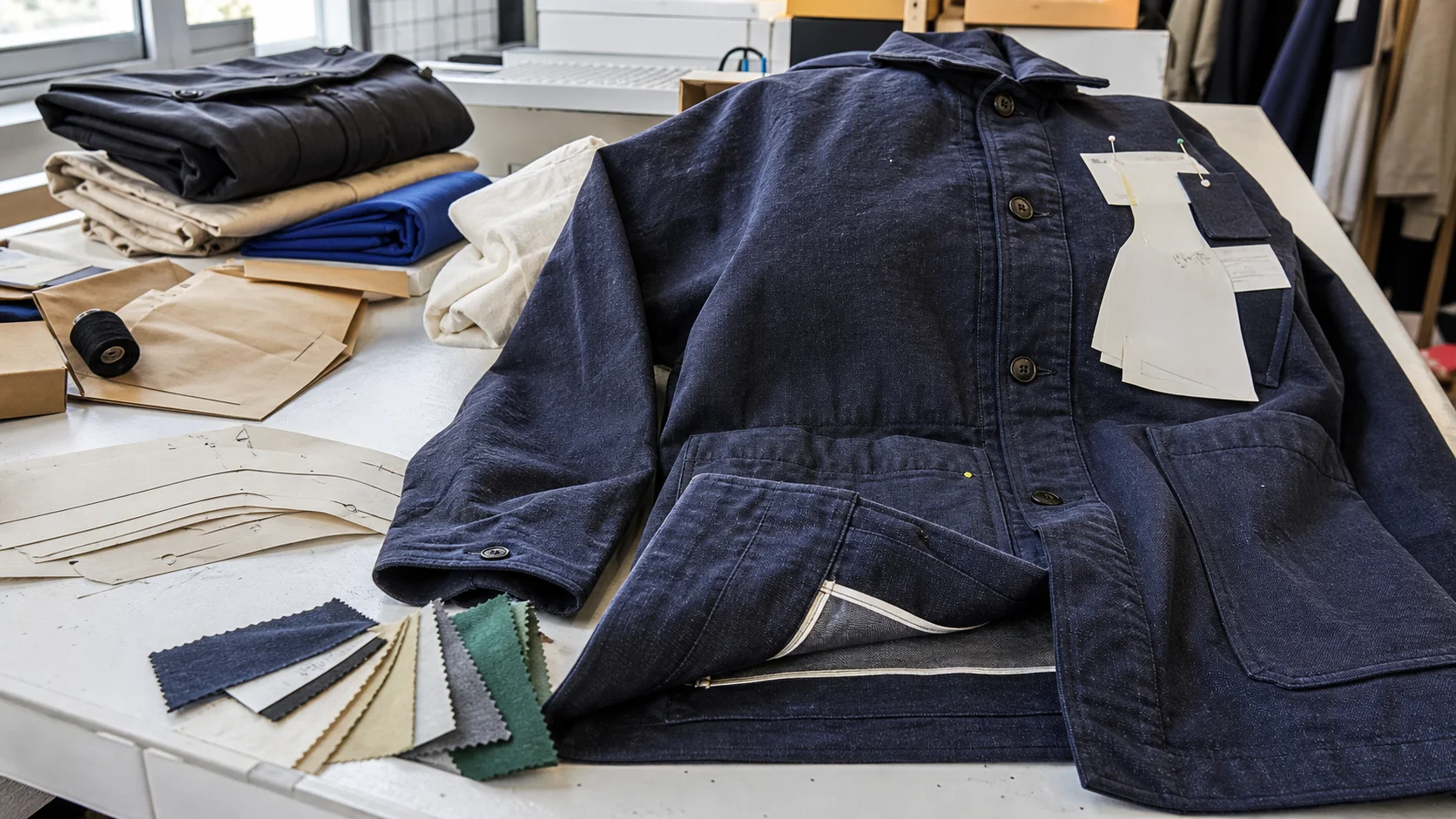
The best practice is to create a physical and digital standard library. This should include an approved fabric swatch, lab dip, bulk shade band, trim card, original production sample, size set, measurement chart, construction photos, and packing standard. The supplier should keep one set, and the buyer should keep one set. For multi-year contracts, this library is more useful than relying only on email threads.
Buyers working on broader apparel manufacturing programs can review supplier development support through Fabrikn’s services page to understand how structured sourcing, production management, and quality control can reduce avoidable repeat-order issues.
Minimum order quantity is one of the biggest reorder constraints for reclaimed cotton coats. A supplier may accept a small first sample order, but bulk production depends on fabric mill MOQ, dye lot MOQ, trim MOQ, and factory line efficiency. Buyers should separate garment MOQ from fabric MOQ when reviewing supplier capability.
Order Type Typical MOQ Range Risk Level Purchasing Note Development samples 1 to 5 pieces per style Low Useful for design review, not proof of reorder capacity. Salesman or approval samples 5 to 30 pieces Medium May use sample yardage that differs from bulk fabric. Small bulk order 100 to 300 pieces per style/color High Possible with stock fabric, but custom reclaimed fabric is harder. Standard bulk order 300 to 800 pieces per style/color Medium More realistic for uniform coat production. Custom fabric program 800 to 2,000+ pieces per color Lower if planned Better fabric control, but higher inventory commitment.These ranges are typical, not universal. A factory using stock reclaimed cotton fabric may offer lower MOQs. A mill-dyed custom fabric may require higher commitments. Heavy coats with lining, quilting, or water-repellent finishing usually need more production planning than simple woven jackets.
Security contractors often prefer smaller reorders because headcount changes by site. That preference conflicts with the fabric economics of reclaimed cotton. If a buyer needs 75 coats every two months, the supplier may struggle to maintain the exact same fabric lot. If the buyer can forecast 600 coats across the season and release them in scheduled drops, the supplier has a better chance of controlling material consistency.
Direct purchasing judgment: if uniform appearance must be highly consistent, buy larger planned lots and hold controlled inventory. If cash flow and storage are the priority, accept higher variation risk or use reclaimed cotton in less visible components.
Reorders should not skip sampling. The approval process can be shorter than first development, but it should still confirm that fabric, trims, fit, and workmanship remain aligned with the original standard.
For urgent reorders, buyers may be tempted to approve by photo only. That can work for low-risk repeats using identical stock materials, but it is weak protection for reclaimed cotton coats. Photos do not reliably show handfeel, fabric weight, lining noise, shrinkage, or seam puckering. At minimum, ask for physical swatches and a pre-production sample for any material change.
Security contractor uniforms should also include wearer feedback where time allows. A coat may pass a visual review but fail in field use because the sleeve restricts movement, the pocket is too shallow for required items, or the collar rubs during long shifts. Reorders are a good time to fix minor functional issues, but changes must be documented clearly. Silent improvements create mismatch risk.
Lead time for reclaimed cotton coats depends on fabric readiness, trim sourcing, sample approvals, production complexity, and inspection scheduling. Buyers should avoid treating the reorder as a simple repeat unless all materials are already reserved.
Stage Typical Time Range Main Dependency Material availability check 2 to 7 days Supplier response from mill and trim vendors Lab dip or shade approval 5 to 14 days Dyeing route and buyer approval speed Pre-production sample 7 to 21 days Actual fabric and trim readiness Fabric production 15 to 45 days Mill MOQ, dyeing, finishing, testing Bulk garment production 20 to 45 days Order quantity, coat complexity, line capacity Inspection and packing 2 to 7 days Defect rate, rework need, carton preparationA realistic reorder lead time may range from 45 to 90 days when fabric must be produced. If the supplier holds approved fabric in stock, repeat production can be faster, sometimes 25 to 45 days depending on capacity and trims. Heavy winter coats, quilted linings, detachable hoods, seam sealing, coating, or reflective applications can extend the timeline.
Buyer-side approval speed is often the hidden bottleneck. If lab dips sit unapproved for ten days, the supplier cannot responsibly proceed. If trim substitutions are debated after production should have started, the reorder schedule becomes unstable. Security contractors with strict deployment dates should set internal approval deadlines before issuing the purchase order.
Freight planning also affects risk. Air freight may rescue a late order, but coats are bulky and costly to fly. Sea freight is more economical but requires earlier planning. For local or regional production, transport may be simpler, but fabric and trim sourcing can still create long lead times.
Inspection should be built around the actual risks of the product. Reclaimed cotton coats need checks for material consistency, structural strength, appearance, sizing, and functional details. A standard final random inspection is useful, but it may not catch all problems if defects are already embedded in fabric or early sewing operations.
Fabric inspection should happen before cutting. Key risks include shade variation within rolls, shade variation between rolls, slubs beyond approved tolerance, holes, oil marks, uneven coating, bowing, skewing, and inconsistent width. Reclaimed cotton may naturally show more texture than virgin cotton. The question is whether that texture was approved and whether it is consistent enough for uniform use.
Ask the supplier how fabric rolls are numbered, relaxed, inspected, and allocated to sizes or production lines. If a coat has large panels, shade variation is more visible. Roll-to-roll shade control matters more on long body panels and sleeves than on small accessories.
Cutting errors can create major reorder inconsistency. Pattern alignment, nap direction, fabric face direction, sleeve pairing, pocket placement, and panel shade matching should be controlled. Cotton-rich fabrics may shrink or relax after spreading. If the fabric is not relaxed properly, finished measurements can drift after sewing or washing.
For dark uniform coats, shade grouping during cutting is important. Mixing panels from different rolls can create sleeves that do not match the body. This defect is hard to fix after sewing.
Coat sewing has predictable defect zones. Inspect collar points, zipper alignment, pocket symmetry, storm flap straightness, sleeve pitch, lining attachment, hem level, cuff closure, and topstitching. Security-specific features need careful placement because they affect use in the field. A radio loop that sits too low or a badge tab that tilts visibly can make the coat look unprofessional.
Thread tension is another common issue. Heavy reclaimed cotton blends can cause skipped stitches, needle damage, seam puckering, or uneven topstitching if the sewing setup is not adjusted. The factory should use suitable needles and thread for the fabric weight.
Final inspection should include AQL sampling or another agreed inspection method. Buyers should define critical, major, and minor defects before production. For security contractor coats, critical defects may include sharp objects, broken needles, unsafe snaps, incorrect branding, wrong reflective placement, or severe measurement failures. Major defects may include shade mismatch, broken zippers, open seams, incorrect size labels, twisted lining, visible stains, or missing functional features.
Inspection Area Common Defect Operational Impact Risk Control Fabric shade Panel mismatch Uniform team looks inconsistent Roll shade grouping and approved shade band Measurements Sleeve or chest out of tolerance Wearer discomfort and returns Inline measurement checks by size Zipper Wavy, stiff, or broken zipper Coat fails in daily use Trim testing and 100% function check Reflective trim Wrong placement or poor attachment Safety and compliance concern Placement template and pull test Lining Twisting or pulling Restricted movement Fit sample and movement reviewInspection is not a substitute for supplier capability. It catches defects; it does not create consistency by itself. The best reorder programs combine clear standards, controlled materials, in-process checks, and final inspection.
A structured scorecard helps buyers compare reclaimed cotton coat suppliers beyond price. The scoring does not need to be complicated. It should highlight whether the supplier can support repeat uniform production under real operating conditions.
Score Area Low Risk Indicator High Risk Indicator Fabric control Same mill, documented construction, shade band, test reports Vague fabric source, no roll control, no test data Trim continuity Trim card, approved substitutes, reorder availability checked Unconfirmed trims, frequent substitutions, no records Pattern control Locked pattern, graded spec, sealed sample Pattern changes by line or operator judgment MOQ flexibility Clear MOQ by fabric, color, and style Promises low MOQ without explaining fabric constraints Inspection system Incoming, inline, and final inspection records Only final visual check or no formal process Communication Material changes disclosed before production Substitutions revealed after shipment or during inspectionBuyers should be cautious with suppliers that promise everything: very low MOQ, custom reclaimed fabric, fast delivery, strict color matching, low price, and no need for sampling. One or two of those may be achievable. All of them together usually signal a misunderstanding of production reality.
A more credible supplier will explain constraints early. They may say that a 200-piece reorder can be made using available fabric, but exact shade matching is not guaranteed. They may recommend increasing the fabric buy to cover two release waves. They may ask the buyer to approve a trim substitute before confirming delivery. These conversations can feel slower, but they reduce expensive surprises.
Reclaimed cotton coats can be a strong fit for security contractors that want sustainable uniform options, but the product must be sourced with realistic controls. The best purchasing decision is not always the lowest unit price. It is the supplier and specification route that can support acceptable repeatability over the contract period.
One practical compromise is to use reclaimed cotton in selected parts of the coat. For example, a buyer may choose a more stable recycled polyester blend shell for weather performance and use reclaimed cotton in lining, pocketing, or internal panels. Another route is to use a reclaimed cotton blend for a mid-season coat while keeping a separate technical outerwear style for severe weather. This gives the contractor a credible sustainable option without forcing one fabric to solve every operational requirement.
Buyers should also think about end-of-contract continuity. If a security contractor wins a three-year site contract, the uniform coat may need multiple replenishment cycles. The sourcing plan should define whether the supplier will reserve fabric, keep trim records, maintain the pattern, and support future size additions. A reorder risk review is weak if it only covers the next purchase order.
For companies building a sustainable uniform program and needing a structured production partner, Fabrikn’s about page provides context on its apparel manufacturing focus. Buyers ready to discuss a specific reclaimed cotton coat requirement can also use the contact page to start a sourcing conversation.
Commercial terms influence quality more than many buyers expect. If the purchase order only states quantity, price, color name, and delivery date, the supplier has too much room to interpret the product. Reclaimed cotton coat reorders need more precise terms.
The purchase order should reference the approved tech pack, fabric standard, trim card, pre-production sample, testing requirements, packing method, inspection standard, and tolerance rules. It should also state what happens if the supplier needs to change fabric or trims. A simple clause requiring written approval for all material substitutions can prevent many disputes.
Payment terms also matter. A supplier may need a deposit to book fabric or reserve trims. Buyers that delay deposits may lose material availability, especially for lower-volume reclaimed cotton fabrics. At the same time, buyers should avoid paying in full before inspection unless there is a strong, established relationship and clear recourse for defects.
For larger programs, consider a framework agreement rather than isolated purchase orders. The agreement can define forecast quantities, call-off schedules, material reservation rules, quality standards, and reorder pricing logic. This gives both sides better planning visibility.
A reclaimed cotton coat supplier reorder risk review should be practical, not promotional. The product can support sustainable fashion goals within security contractor uniforms, but the supply chain must be controlled. Reclaimed cotton introduces natural variability, and coats add construction complexity. Together, those factors make repeatability the main sourcing challenge.
The safest route is to lock the specification early, verify material continuity before every reorder, approve actual bulk-material samples, and inspect at more than one stage. Buyers should be realistic about MOQ and lead time. Small, urgent replenishment orders are possible in some cases, but they carry more risk when the fabric is custom, reclaimed, dyed, coated, or trim-heavy.
Good suppliers will not hide these limitations. They will explain them, plan around them, and help the buyer choose the right balance between sustainability content, cost, consistency, and speed. For security contractors, that balance matters because the coat must do more than look responsible on a product sheet. It must perform as a uniform, reorder after reorder.
Get a free quote from Fabrikn — your trusted B2B clothing manufacturer with 10+ years of experience. MOQ as low as 200 pieces.
Get a Free Quote →The biggest risk is material inconsistency. Reclaimed cotton feedstock, yarn quality, dye absorption, fabric handfeel, and shade can vary between lots. Buyers should control this through approved fabric standards, shade bands, test reports, and pre-production samples before each reorder.
Typical garment MOQs may range from 100 to 300 pieces for small runs using available fabric, 300 to 800 pieces for standard bulk production, and 800 to 2,000+ pieces for custom fabric programs. Exact MOQ depends on fabric mill requirements, color, trims, and coat complexity.
Exact matching is difficult to guarantee, especially across separate fabric lots. A close commercial match is more realistic when the same mill, construction, dye process, trims, and finishing route are used. Buyers should define acceptable tolerances before production.
That is risky unless the supplier is using the same reserved fabric and trims from the original lot. For reclaimed cotton coats, a pre-production sample made from actual bulk materials is strongly recommended, even for repeat orders.
They can be, especially when reclaimed cotton is blended with stronger fibers and tested properly. Buyers should request tensile strength, tear strength, abrasion resistance, seam strength, shrinkage, and colorfastness results rather than relying only on sustainability claims.
Dark colors such as black, navy, charcoal, and deep green are usually easier to manage than light or highly specific brand colors. Light shades tend to show fiber variation, stains, and shade differences more clearly.
Forecast demand by season, reserve fabric where possible, approve alternate trims in advance, hold buffer stock for common sizes, and set a reorder calendar. Emergency buying increases the chance of shade mismatch, trim substitution, and air freight cost.
Using reclaimed cotton in the shell gives stronger sustainability visibility but higher appearance and performance risk. Using it in lining, pocketing, or internal components lowers visual risk and can be a practical compromise for strict uniform programs.
The tech pack should include fabric composition, reclaimed content, GSM, construction, color standard, trim details, measurement chart, graded specs, construction notes, label artwork, packing method, testing requirements, and approved sample references.
Buyers should be cautious if the supplier cannot identify fabric source, avoids testing, refuses pre-production samples, gives unclear MOQ answers, changes trims without approval, or promises exact repeatability without explaining how it will be controlled.